If you buy through our links, Amazon pays us a small commission at no extra cost to you. That’s how we keep the site running. How we choose.
Almost every fish will eat a shrimp if it fits in its mouth. This list is computed from our database and includes fish that meet three conditions at once:
- Marked as shrimp safe in their profile.
- Peaceful temperament.
- Adult size of 2.75 inches (7 cm) or less.
"Shrimp safe" means the fish will generally leave adult dwarf shrimp alone. Many of them will still eat baby shrimp when they find them. If you want a growing colony, plant heavily with moss, floating plants and dense bushes where shrimplets can hide, or keep a shrimp-only tank.
The safest combinations are usually tiny fish such as chili rasboras and ember tetras, peaceful grazers like otocinclus, and small corydoras. Remember that shrimp need stable, mature water, so add them after the tank is fully cycled and acclimate them slowly.
Fish not on this list are not necessarily shrimp eaters, but they did not pass all three criteria. Individual fish vary too: a hungry or large individual may hunt shrimp even if its species is usually peaceful. Use the compatibility checker to test a specific combination with the shrimp species you want.
Shrimp-safe fish
| Species | Min. liters | Size | Temp. | Difficulty |
|---|---|---|---|---|
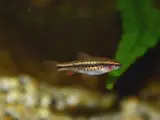 Cherry barb Puntius titteya | 16 gal (60 L) | 2 in (5 cm) | 73–81 °F (23–27 °C) | Easy |
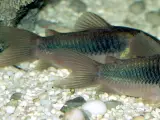 Bronze cory Corydoras aeneus | 21 gal (80 L) | 2.6 in (6.5 cm) | 72–81 °F (22–27 °C) | Easy |
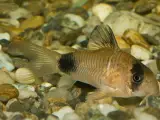 Panda cory Corydoras panda | 16 gal (60 L) | 1.8 in (4.5 cm) | 68–77 °F (20–25 °C) | Moderate |
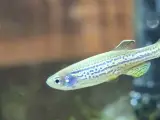 Zebra danio Danio rerio | 16 gal (60 L) | 2 in (5 cm) | 64–77 °F (18–25 °C) | Easy |
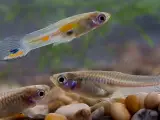 Guppy Poecilia reticulata | 14 gal (54 L) | 2 in (5 cm) | 72–82 °F (22–28 °C) | Easy |
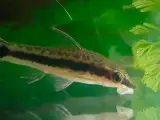 Otocinclus catfish Otocinclus vestitus | 16 gal (60 L) | 1.6 in (4 cm) | 70–79 °F (21–26 °C) | Moderate |
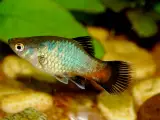 Platy Xiphophorus maculatus | 16 gal (60 L) | 2.4 in (6 cm) | 68–79 °F (20–26 °C) | Easy |
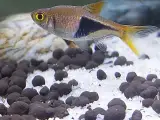 Harlequin rasbora Trigonostigma heteromorpha | 16 gal (60 L) | 1.8 in (4.5 cm) | 72–81 °F (22–27 °C) | Easy |
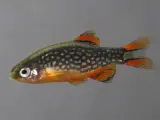 Celestial pearl danio Danio margaritatus | 11 gal (40 L) | 1 in (2.5 cm) | 68–77 °F (20–25 °C) | Moderate |
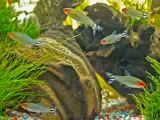 Rummy-nose tetra Hemigrammus rhodostomus | 26 gal (100 L) | 1.8 in (4.5 cm) | 75–82 °F (24–28 °C) | Moderate |
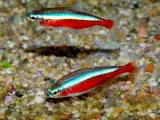 Cardinal tetra Paracheirodon axelrodi | 21 gal (80 L) | 1.8 in (4.5 cm) | 73–84 °F (23–29 °C) | Moderate |
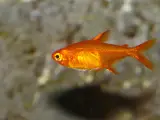 Ember tetra Hyphessobrycon amandae | 11 gal (40 L) | 0.8 in (2 cm) | 73–82 °F (23–28 °C) | Easy |
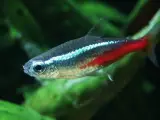 Neon tetra Paracheirodon innesi | 16 gal (60 L) | 1.4 in (3.5 cm) | 68–79 °F (20–26 °C) | Easy |
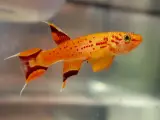 Lyretail killifish Aphyosemion australe | 11 gal (40 L) | 2.2 in (5.5 cm) | 70–77 °F (21–25 °C) | Moderate |
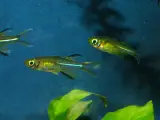 Celebes rainbowfish Marosatherina ladigesi | 26 gal (100 L) | 2.8 in (7 cm) | 75–82 °F (24–28 °C) | Moderate |
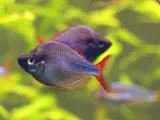 Dwarf neon rainbowfish Melanotaenia praecox | 32 gal (120 L) | 2.4 in (6 cm) | 75–82 °F (24–28 °C) | Easy |
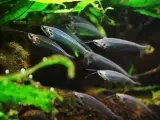 Glass catfish Kryptopterus vitreolus | 32 gal (120 L) | 2.6 in (6.5 cm) | 72–79 °F (22–26 °C) | Moderate |
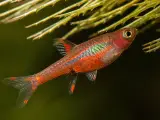 Chili rasbora Boraras brigittae | 8 gal (30 L) | 0.8 in (2 cm) | 72–82 °F (22–28 °C) | Moderate |
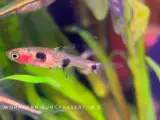 Dwarf rasbora Boraras maculatus | 11 gal (40 L) | 1 in (2.5 cm) | 75–82 °F (24–28 °C) | Moderate |
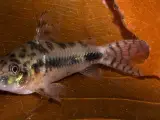 Salt and pepper cory Corydoras habrosus | 11 gal (40 L) | 1.2 in (3 cm) | 72–79 °F (22–26 °C) | Moderate |
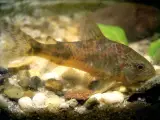 Peppered cory Corydoras paleatus | 21 gal (80 L) | 2.6 in (6.5 cm) | 64–75 °F (18–24 °C) | Easy |
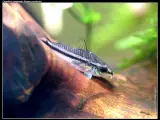 Pygmy cory Corydoras pygmaeus | 11 gal (40 L) | 1 in (2.5 cm) | 72–79 °F (22–26 °C) | Moderate |
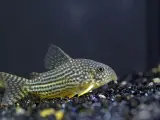 Sterbai cory Corydoras sterbai | 21 gal (80 L) | 2.6 in (6.5 cm) | 75–82 °F (24–28 °C) | Easy |
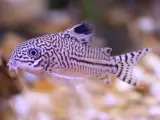 Three-stripe cory Corydoras trilineatus | 18 gal (70 L) | 2.2 in (5.5 cm) | 72–79 °F (22–26 °C) | Easy |
 Pearl danio Danio albolineatus | 21 gal (80 L) | 2.4 in (6 cm) | 68–79 °F (20–26 °C) | Easy |
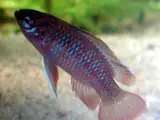 Scarlet badis Dario dario | 11 gal (40 L) | 0.8 in (2 cm) | 64–79 °F (18–26 °C) | Moderate |
 Endler's livebearer Poecilia wingei | 11 gal (40 L) | 1.2 in (3 cm) | 72–82 °F (22–28 °C) | Easy |
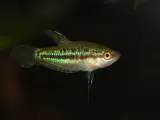 Sparkling gourami Trichopsis pumila | 12 gal (45 L) | 1.4 in (3.5 cm) | 72–82 °F (22–28 °C) | Moderate |
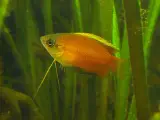 Honey gourami Trichogaster chuna | 14 gal (54 L) | 1.8 in (4.5 cm) | 72–82 °F (22–28 °C) | Easy |
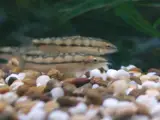 Dwarf chain loach Ambastaia sidthimunki | 21 gal (80 L) | 2.2 in (5.5 cm) | 77–82 °F (25–28 °C) | Moderate |
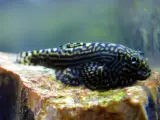 Reticulated hillstream loach Sewellia lineolata | 21 gal (80 L) | 2.4 in (6 cm) | 68–75 °F (20–24 °C) | Moderate |
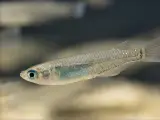 Medaka (Japanese ricefish) Oryzias latipes | 11 gal (40 L) | 1.4 in (3.5 cm) | 50–79 °F (10–26 °C) | Easy |
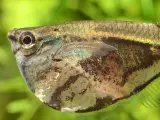 Marbled hatchetfish Carnegiella strigata | 21 gal (80 L) | 1.4 in (3.5 cm) | 75–82 °F (24–28 °C) | Moderate |
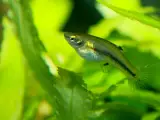 Least killifish Heterandria formosa | 8 gal (30 L) | 1 in (2.5 cm) | 68–79 °F (20–26 °C) | Easy |
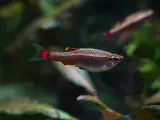 White cloud mountain minnow Tanichthys albonubes | 16 gal (60 L) | 1.6 in (4 cm) | 57–72 °F (14–22 °C) | Easy |
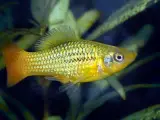 Variatus platy Xiphophorus variatus | 21 gal (80 L) | 2.6 in (6.5 cm) | 64–77 °F (18–25 °C) | Easy |
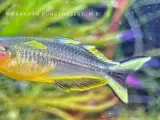 Forktail blue-eye Pseudomugil furcatus | 16 gal (60 L) | 2 in (5 cm) | 75–82 °F (24–28 °C) | Moderate |
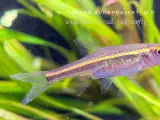 Red-line rasbora Rasbora pauciperforata | 26 gal (100 L) | 2.4 in (6 cm) | 73–82 °F (23–28 °C) | Moderate |
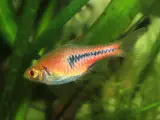 Lambchop rasbora Trigonostigma espei | 14 gal (54 L) | 1.4 in (3.5 cm) | 73–82 °F (23–28 °C) | Easy |
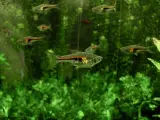 Hengel's rasbora Trigonostigma hengeli | 14 gal (54 L) | 1.2 in (3 cm) | 73–82 °F (23–28 °C) | Moderate |
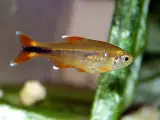 Copper tetra Hasemania nana | 16 gal (60 L) | 1.6 in (4 cm) | 72–82 °F (22–28 °C) | Easy |
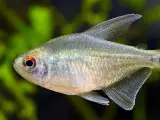 Diamond tetra Moenkhausia pittieri | 26 gal (100 L) | 2.4 in (6 cm) | 75–82 °F (24–28 °C) | Easy |
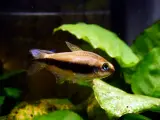 Emperor tetra Nematobrycon palmeri | 21 gal (80 L) | 2 in (5 cm) | 73–81 °F (23–27 °C) | Easy |
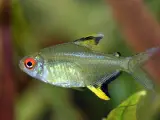 Lemon tetra Hyphessobrycon pulchripinnis | 21 gal (80 L) | 1.8 in (4.5 cm) | 72–82 °F (22–28 °C) | Easy |
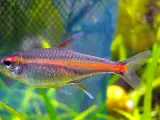 Glowlight tetra Hemigrammus erythrozonus | 16 gal (60 L) | 1.6 in (4 cm) | 75–82 °F (24–28 °C) | Easy |
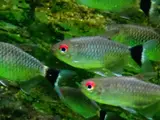 Red eye tetra Moenkhausia sanctaefilomenae | 26 gal (100 L) | 2.4 in (6 cm) | 72–82 °F (22–28 °C) | Easy |
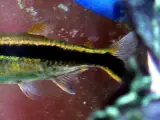 Penguin tetra Thayeria boehlkei | 21 gal (80 L) | 2.4 in (6 cm) | 72–82 °F (22–28 °C) | Easy |
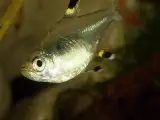 X-ray tetra Pristella maxillaris | 16 gal (60 L) | 1.8 in (4.5 cm) | 75–82 °F (24–28 °C) | Easy |
No species match those filters.
Frequently asked questions
Will tetras eat cherry shrimp?
Small tetras such as embers usually ignore adult shrimp but eat babies. Larger tetras may hunt adults, so they are not on this list.
What is the safest fish to keep with shrimp?
Otocinclus and tiny rasboras such as chili rasboras are among the safest. Even so, dense cover is needed if you want shrimp to breed.
Can bettas live with shrimp?
It depends on the individual betta. Some ignore cherry shrimp, others hunt them. Amano shrimp are larger and usually safer, and plenty of plants help.