If you buy through our links, Amazon pays us a small commission at no extra cost to you. That’s how we keep the site running. How we choose.
Contents
Overview
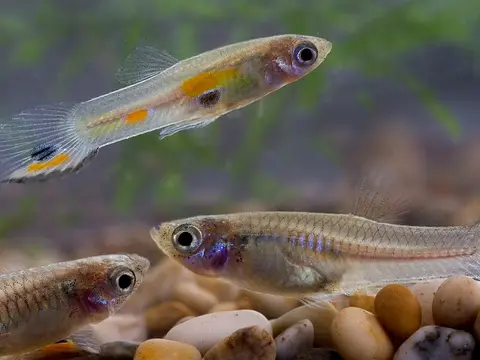
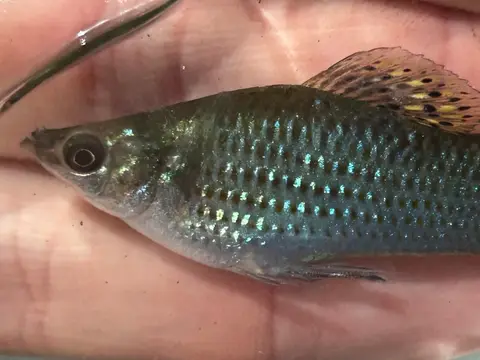
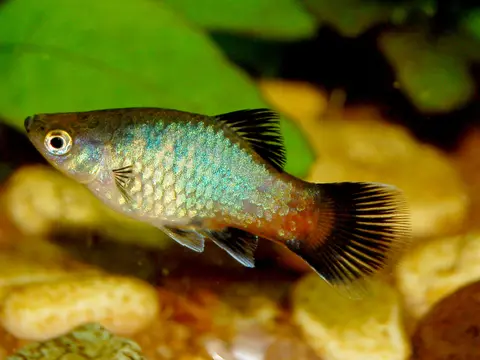
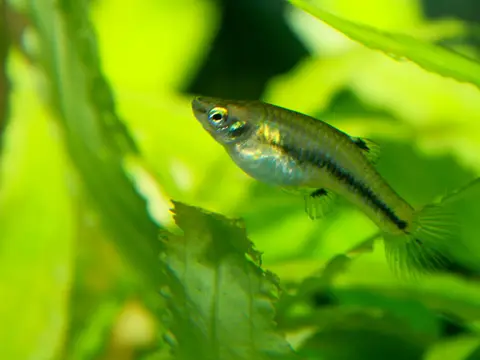
The least killifish (Heterandria formosa) is one of the smallest vertebrates you can keep: males reach about 0.8 inch (2 cm) and females just over 1.2 inches (3 cm). Despite the name it is not a killifish but a livebearer, native to heavily vegetated ponds, ditches and swamps in the southeastern US, especially Florida.
It is also not the invasive mosquitofish (Gambusia): it is peaceful and unobtrusive, with a dark lateral stripe and a small spot on the dorsal fin. It is perfect for planted nano tanks and shrimp tanks because it bothers no one. It just needs suitable company; among big fish it goes hungry and ends up as food.
Care and tank setup
A small group does well in an 8-gallon (30 L) tank or larger, heavily planted and with gentle flow. Coming from subtropical waters, it tolerates slightly cooler temperatures than most livebearers; in a mild room a low-wattage heater is mostly a safety net.
- Water: ideally hard and neutral to alkaline; it does poorly in very soft, acidic water.
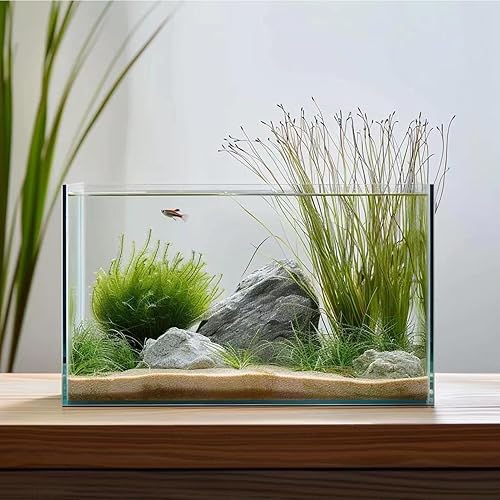
- Plants: lots of them, including floaters and moss. That is where adults feel safe and fry survive.
- Filter: a sponge filter is perfect, cleaning the water without strong current or sucking up fry.
Keep it in a species tank or with tiny companions: dwarf shrimp, snails and perhaps very small rasboras. Avoid any fish big enough to eat it, bettas included. The typical mistake is adding it as a "filler" fish to a regular community tank, where it is barely seen and cannot compete for food. Never release it into the wild.
Feeding
In nature it eats tiny invertebrates, algae and microorganisms. In the aquarium it accepts crushed flakes and micro pellets, but thrives on tiny live or frozen foods: baby brine shrimp, daphnia, cyclops and microworms.
Its mouth is very small, so crush food finely and split it into two or three meals a day. A mature planted tank also provides natural food between feedings.
Breeding
Its breeding is unusual: it practices superfetation, meaning a female carries several broods at different stages and gives birth to one or two fry almost every day for weeks instead of one large batch.
Adults rarely chase their young, so in a well-planted tank the colony grows on its own. Fry eat baby brine shrimp and powdered flakes from birth.
Compatible tank mates
Species from our database that share water parameters, size and temperament with the Least killifish. Calculated from the data in each profile.
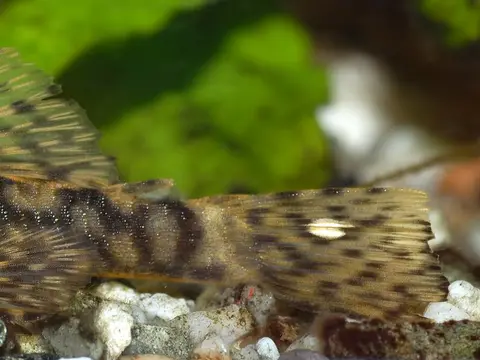 Bristlenose pleco Ancistrus sp. 26 gal (100 L) · 72–81 °F (22–27 °C)
 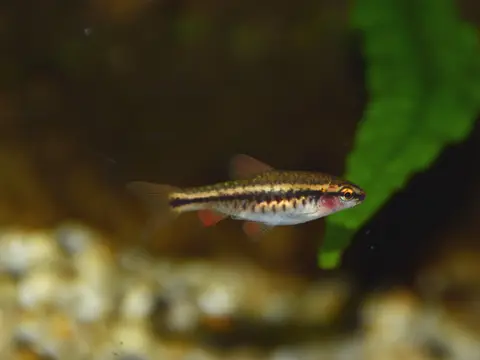 Cherry barb Puntius titteya 16 gal (60 L) · 73–81 °F (23–27 °C)
 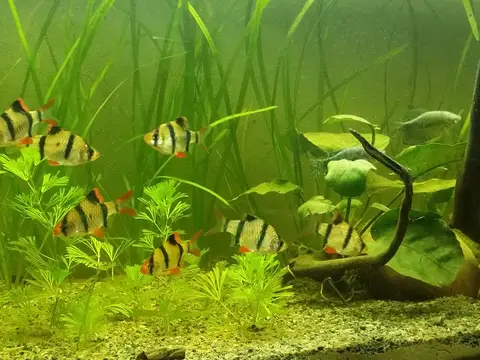 Tiger barb Puntigrus tetrazona 26 gal (100 L) · 72–79 °F (22–26 °C)
 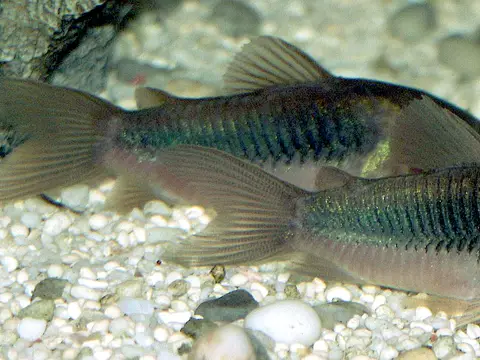 Bronze cory Corydoras aeneus 21 gal (80 L) · 72–81 °F (22–27 °C)
 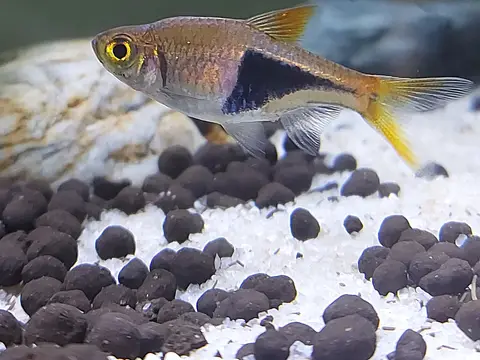 Harlequin rasbora Trigonostigma heteromorpha 16 gal (60 L) · 72–81 °F (22–27 °C)
 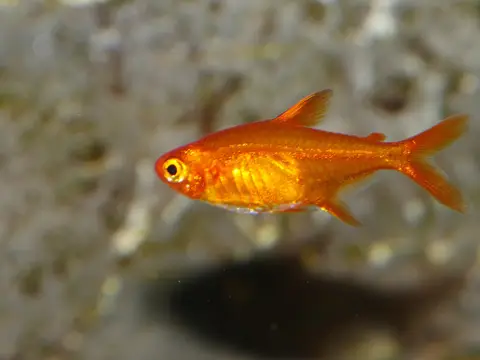 Ember tetra Hyphessobrycon amandae 11 gal (40 L) · 73–82 °F (23–28 °C)
 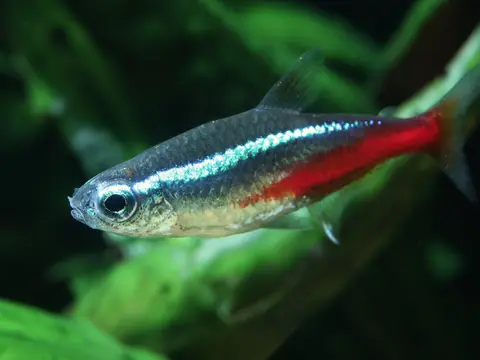 Neon tetra Paracheirodon innesi 16 gal (60 L) · 68–79 °F (20–26 °C)
 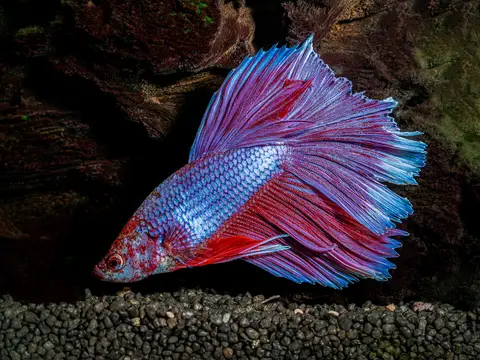 Betta fish Betta splendens 7 gal (25 L) · 75–82 °F (24–28 °C)
 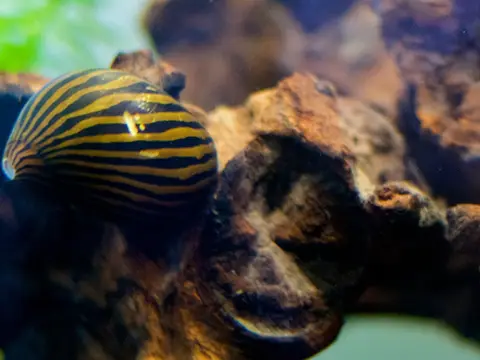 Nerite snail Neritina natalensis 5 gal (20 L) · 72–82 °F (22–28 °C)
 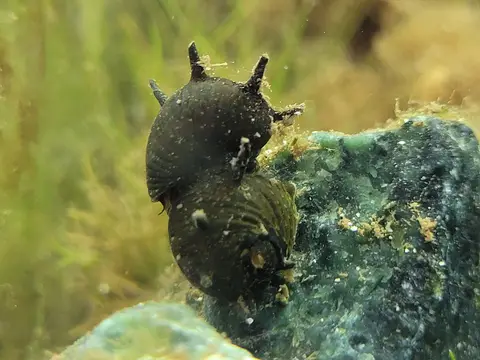 Horned nerite snail Clithon corona 5 gal (20 L) · 72–82 °F (22–28 °C)
 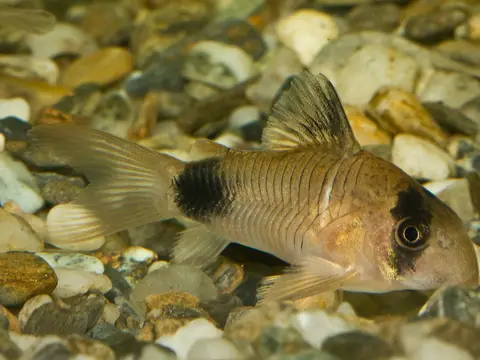 Panda cory Corydoras panda 16 gal (60 L) · 68–77 °F (20–25 °C)
 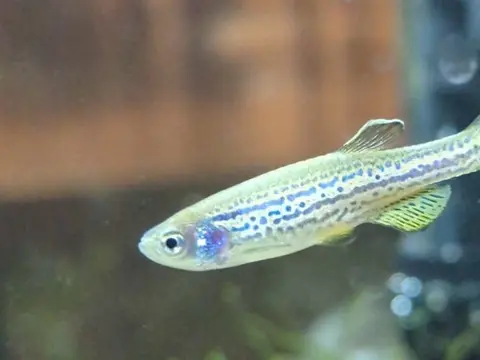 Zebra danio Danio rerio 16 gal (60 L) · 64–77 °F (18–25 °C)
 Check the compatibility of your whole tank →
What not to keep it with
Popular species you shouldn’t house with the Least killifish, and why.
- Common goldfish: one may eat the other due to size
- Discus: incompatible temperatures, incompatible pH, one may eat the other due to size
- Angelfish: one may eat the other due to size
- Yellow lab cichlid: one may eat the other due to size
- Clown loach: incompatible temperatures, one may eat the other due to size
- Oranda goldfish: one may eat the other due to size
- Oscar: one may eat the other due to size, incompatible temperaments
- Swordtail: one may eat the other due to size
Recommended equipment
What you need to keep the Least killifish healthy, checked against Amazon stock.


Frequently asked questions
How many liters does a Least killifish need?
At least about 30 liters for a group of at least 6 fish. More space always helps keep the water stable.
What water temperature does the Least killifish need?
Between 20 and 26 °C, with a pH of 7 to 8.
What fish can live with the Least killifish?
Based on water, size and temperament, it fits with species such as Bristlenose pleco, Cherry barb, Tiger barb, Bronze cory and Harlequin rasbora. Use our compatibility calculator to check your whole tank.
Can the Least killifish be kept with shrimp?
Yes: it usually won’t eat adult shrimp, though some shrimplets may get picked off. A tank with plenty of moss gives the babies cover.