If you buy through our links, Amazon pays us a small commission at no extra cost to you. That’s how we keep the site running. How we choose.
Contents
fish flakes and micro pellets comparison, in stock
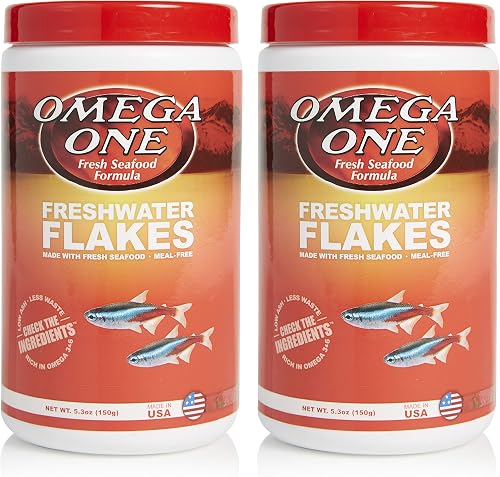
Omega One Freshwater Flakes, 5.3 oz, Pack of 2
AcuarioSano rating: combines the average rating and the number of buyer reviews on Amazon. No brand pays to be featured.
Flakes or micro pellets: which to choose
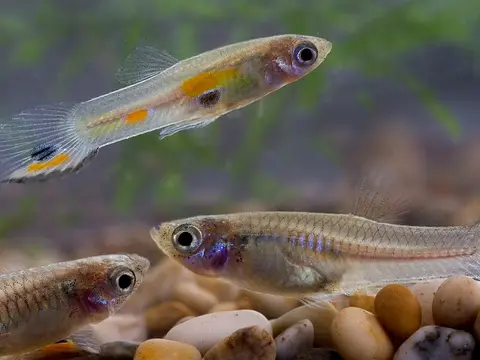
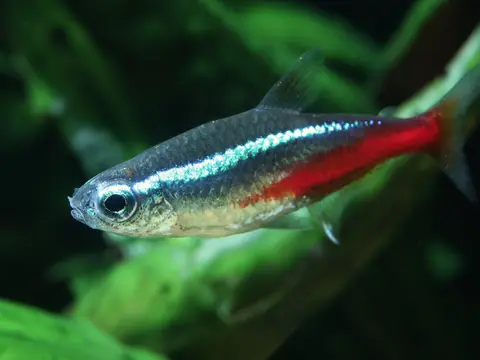
Flakes are the classic fish food: they float for a few seconds, sink slowly and reach every level of the tank. They suit surface and mid-water fish such as guppies, platies and neon tetras. Micro pellets (granules of roughly 0.3-1 mm) do the same job as a staple, but they cloud the water less, hold their vitamins longer and are easier to portion accurately.
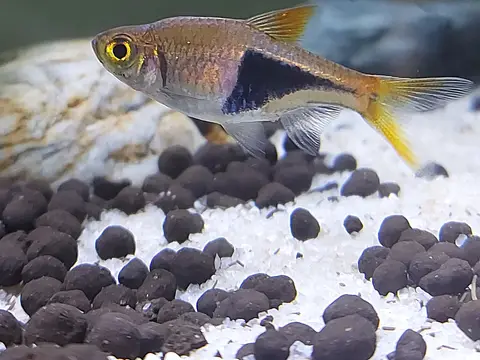
In a typical community tank the most practical setup is to use both: flakes for the fish that feed at the surface and a slow-sinking micro pellet for mid-water fish like the harlequin rasbora. Bottom dwellers also need wafers or tablets that actually reach the substrate; flakes and micro pellets alone won't cover them.
How to read the ingredients and guaranteed analysis
Ingredients are listed from most to least abundant. In a good staple food the top spots go to whole fish meal, krill, shrimp or insect meal. If the first item is wheat flour, soybean meal or vague "cereals" and "vegetable by-products", you are mostly paying for filler: fish will eat it, but they digest it less efficiently and produce more waste.
- Protein: as a general guide, 40-50% for omnivores and small carnivores; a bit lower in spirulina-rich foods meant for plant-eating species.
- Fat: around 5-10%. More fat isn't better: it makes fish fat and clouds the water.
- Fiber: below 3-5% in a food you feed daily.
- Useful extras: spirulina, garlic, stabilized vitamins and natural color enhancers such as astaxanthin.
Common brands like Tetra, Hikari, Fluval, Omega One, Ocean Nutrition and API offer basic lines and "premium" lines with more seafood and less grain. Always compare the label, not the packaging.
| Format | Pros | Cons | Best for |
|---|---|---|---|
| Flakes | accepted by almost all fish, reach every level | break up and foul the water if left over, lose vitamins sooner | surface and mid-water fish |
| Floating micro pellets | easy to portion, little mess | shy fish may miss out | guppies, mollies, surface feeders |
| Slow-sinking micro pellets | feed the mid-water, keep well | leftovers end up on the bottom | tetras, rasboras, small barbs |
| Spirulina flakes | plant matter and fiber | less protein | mollies, platies and omnivores |
Freshness: how long an open container lasts
Once opened, fish food oxidizes and loses vitamins (vitamin C especially) within a few weeks. A sensible target is to use it up within 1-3 months. That's why small containers make sense even if the big tubs are cheaper per ounce: a 2 oz (about 60 g) tin lasts a long time in a 15-gallon (57 l) tank, and a giant tub ends up going stale.
Tip: keep the container tightly closed in a cool, dry place, never on top of the tank lid, where heat and humidity ruin it. If you buy a large tub, decant a small amount into a little jar and keep the rest sealed.
How much to feed and how to avoid overfeeding
The rule of thumb is to feed what your fish finish in 2-3 minutes, once or twice a day, with one fasting day a week. Anything left over rots, pushes up ammonia and nitrate and feeds algae. In a brand-new tank, or one that is still cycling, it's even more important to err on the low side. There's more detail in our guide on how much and how often to feed fish.
Watch out: fish always look hungry and beg every time you walk past. That doesn't mean they're underfed. Overfeeding is one of the most common causes of cloudy water and fish deaths in new tanks.
Common mistakes
- Tossing in a pinch "by eye" without checking whether it all gets eaten.
- Using the same open tub for a year.
- Feeding only flakes and forgetting bottom dwellers like the panda cory, which need sinking wafers.
- Dropping in vacation blocks or doubling the food before a trip: a feeder or nothing at all is better, as we explain in what to do with your aquarium on vacation.
- Choosing by the color of the can instead of the ingredient list.
We compare spec sheets, verified reviews and real-world use criteria, but we don't physically test the products: treat the foods above as a starting point and always check the ingredient list and the best-by date.
Frequently asked questions
Are flakes or pellets better for tropical fish?
Both work as a staple. Flakes reach every level of the tank and nearly all fish accept them; micro pellets cloud the water less and are easier to portion. In a community tank the best approach is to use both.
How long does fish food last once opened?
Aim to use it within one to three months of opening. Over time it oxidizes and loses vitamins, so buy small containers and keep them sealed in a cool, dry place.
How many times a day should I feed fish flakes?
Once or twice a day, as much as the fish finish in two or three minutes. One fasting day a week is common and good for digestion and water quality.
What ingredients should good fish flakes have?
The first ingredients should be whole fish, krill, shrimp or insect meal rather than grains. Look for roughly 40 to 50 percent protein, moderate fat and low fiber.