If you buy through our links, Amazon pays us a small commission at no extra cost to you. That’s how we keep the site running. How we choose.
Contents
Our top 3 picks
Stock checked on October 7, 2026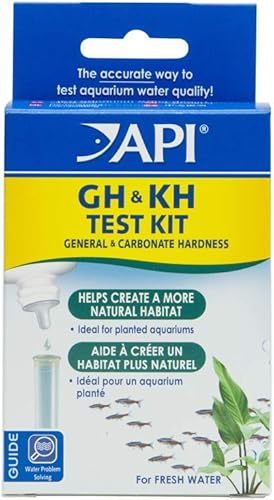


aquarium water test kits comparison, in stock
GH & KH TEST KIT Freshwater Aquarium Water Test Kit, 2.5 oz.
EasyStrips 6-in-1 Aquarium Water Test Strips, 25 Count

EasyStrips 6-in-1 Aquarium Water Test Strips, 100 Count
8-Way Aquarium Test Strips with Ammonia, 50PCS Fish Tank Test Kit
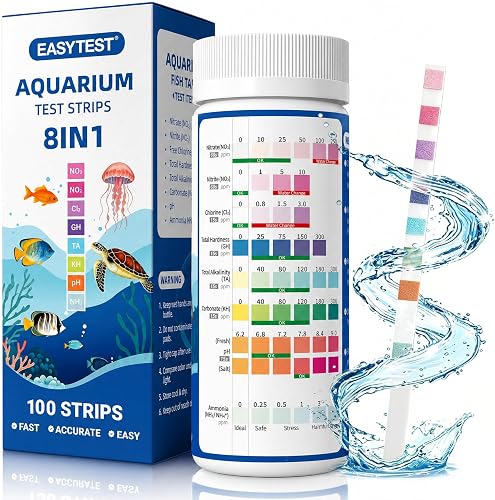
EASYTEST 8-Way Aquarium Test Strips with Ammonia, 100PCS Fish Tank Test Kit

EASYTEST 8-Way Aquarium Test Strips with Ammonia, 150PCS Fish Tank Test Kit

EasyStrips Complete Aquarium Water Test Kit, 25 Count

Tetra EasyStrips Complete Aquarium Water Test Kit, 25 Count (6 Pack)
AcuarioSano rating: combines the average rating and the number of buyer reviews on Amazon. No brand pays to be featured.
Why you should test your aquarium water
Fish rarely die from cloudy water. They die from what you can't see: ammonia and nitrite building up while the filter still lacks enough bacteria, or nitrate creeping up week after week when water changes fall short. A test kit tells you in five minutes what you'd otherwise find out from fish gasping at the surface.
Testing is essential during tank cycling, after adding new fish, after a filter failure and any time your fish act strangely. Once the tank is stable, periodic checks are enough.
Which parameters matter and what to aim for
- Ammonia (NH3/NH4): should read 0. It's toxic even in small amounts, more so at high pH and warm temperatures.
- Nitrite (NO2): should read 0. This is the key number that tells you whether cycling is finished.
- Nitrate (NO3): ideally below 25-40 ppm (mg/l), and below 20 ppm for shrimp and sensitive species. You control it with water changes and plants.
- pH: most tropical fish do fine between 6.5 and 7.8. Stability matters more than hitting an exact number.
- KH (carbonate hardness): the buffer that prevents sudden pH crashes. With very low KH, pH becomes unstable.
- GH (general hardness): calcium and magnesium. It matters a lot for shrimp, snails and fish from very hard or very soft water.
For a deeper look at each value, see our guides on aquarium water parameters and nitrite and nitrate.
Liquid, strips or digital: comparison
| Type | Accuracy | Speed | Cost per test | Best for |
|---|---|---|---|---|
| Liquid drop kits (reagents) | good | 5-10 min | low | cycling, shrimp, anyone who wants reliable numbers |
| Test strips (5-in-1, 6-in-1…) | rough guide | 1 min | medium-high | quick checks on an established tank |
| Digital meters (pH, TDS) | high when calibrated | instant | low, but need calibration | pH with CO2, soft-water shrimp |
| Continuous sensor monitors | variable | continuous | high | advanced hobbyists, as an add-on |
Liquid kits are the benchmark. In the US the API Freshwater Master Test Kit is the classic starting point, and brands like Seachem, JBL, Sera and Tetra also sell kits covering ammonia, nitrite, nitrate, pH, KH and GH at a very low cost per test. Strips are convenient, but they read low nitrite and ammonia levels poorly, degrade with humidity and many don't test ammonia at all. Digital meters shine for pH and TDS, but they can't read nitrite or ammonia, and an uncalibrated pH pen will be confidently wrong.
Tip: if you only buy one test, make it a liquid nitrite test. It tells you whether the tank is cycled and whether something is going wrong with the filter. Add ammonia and nitrate next.
What to test and when
- While cycling: ammonia and nitrite every 2-3 days; nitrate once a week to confirm it's showing up.
- First month with fish: nitrite and ammonia twice a week; nitrate right before your weekly water change.
- Established tank: nitrate and pH every 2-4 weeks, KH and GH monthly or whenever you change water source.
- When something's off (gasping fish, deaths, milky water): ammonia, nitrite and pH immediately.
Test your tap water at least once, too. Some municipal supplies carry nitrate or a very high pH, and you want to know that before blaming the tank. If your water utility uses chloramine, remember that a conditioner locks the ammonia but many ammonia tests will still read it.
Warning: reagents expire. An old nitrate bottle can read 0 when the water actually holds 50 ppm. Check the date, store the kit somewhere cool and dry, and shake the bottles that say so (nitrate bottle #2 is the classic culprit for false readings when it isn't shaken hard).
Common testing mistakes
- Relying only on strips while cycling and adding fish with nitrite still present.
- Reading colors under warm artificial light or in front of the LED fixture: always compare in daylight against a white background.
- Ignoring the manufacturer's wait times or the exact number of drops.
- Rinsing tubes with tap water instead of tank water, or capping the tube with a finger.
- Testing right after a water change, which only shows the new water, not the real situation.
- Obsessing over an exact pH and dosing products to move it, when stability matters more.
For a tank with cherry shrimp, add GH and KH from day one: they're far more sensitive to hardness than most fish. And remember that testing never replaces your weekly water changes.
For this comparison we review spec sheets, verified reviews and real-world use criteria, but we don't physically test the products.
Frequently asked questions
Are aquarium test strips accurate?
They're fine for quick checks on an established tank, but they're less accurate than liquid kits, especially at low nitrite and ammonia levels. For cycling and shrimp tanks, use liquid drops.
Which test do I need to know if my tank is cycled?
At minimum ammonia and nitrite. The tank is cycled when both stay at 0 for several days in a row after adding an ammonia source, and nitrate starts to appear.
How often should I test my aquarium water?
Every 2-3 days while cycling. In an established tank, nitrate and pH every 2-4 weeks and KH and GH monthly, plus a test any time your fish look unwell.
How long do liquid test reagents last?
It depends on the brand, but usually one to two years from manufacture if stored somewhere cool and dry. Check the printed expiration date: expired reagents give false readings.
You may also like
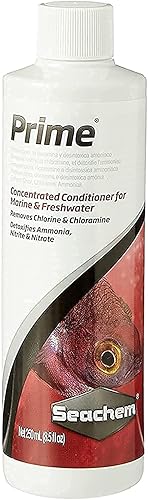 Gear reviewAquarium water conditioners
 Gear reviewAquarium bacteria starters
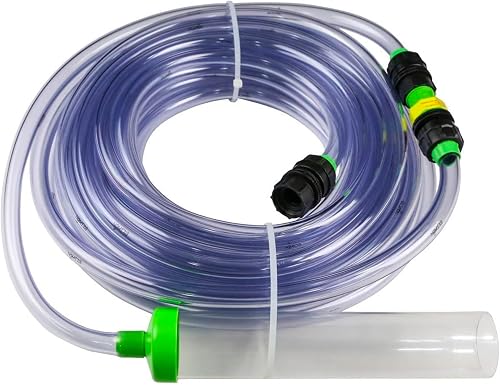 Gear reviewAquarium gravel vacuums
- GuideAquarium Cycling: The Nitrogen Cycle, Testing and When to Add Fish
- GuideAquarium Water Parameters: Ideal Ranges and How to Test
- GuideAmmonia, Nitrite and Nitrate in Aquariums: Safe Levels and Fixes
- GuideHow to Raise or Lower Aquarium pH Safely (Plus KH and GH)
- GuideHow to Acclimate Fish: Floating, Drip Method and Quarantine