If you buy through our links, Amazon pays us a small commission at no extra cost to you. That’s how we keep the site running. How we choose.
Contents
Breeding guppies is so easy that the usual question isn't how to make it happen but how to keep it under control. Guppies, like platies, mollies and swordtails, are livebearers: the female doesn't lay eggs but gives birth to fully formed fry that swim and eat from their first minute. With a cycled tank, stable water and some dense vegetation, you'll get fry almost without trying. This guide covers how to set up a breeding group, how to tell a female is about to drop, how to protect and feed the fry and, above all, what to do once you have more fish than you need.
The short version: 1 male for every 2-3 females, cycled water at 75-81 °F (24-27 °C), plenty of moss or floating plants for cover, and powdered food several times a day for the fry. Each female can give birth roughly every 4 weeks, so plan from day one where the babies will go.
The breeding group: ratio and tank
Male guppies chase females almost nonstop. With as many males as females, or more males, the females live stressed, eat poorly and may get sick or abort. The recommended ratio is 1 male for every 2 or 3 females, which spreads the attention around. If you only want males for their colors, a male-only group works well and produces no fry.
For comfortable breeding, aim for at least a 15-gallon (55-60 l) tank with gentle filtration (a sponge filter is ideal because it won't suck up fry), a heater and lots of plants. Guppies prefer moderately hard to hard water with a pH of 7 to 8. Once a female has been with a male she stores sperm and can have several broods in a row without mating again, so a female bought at the store almost always arrives already pregnant.
| Fact | Typical value |
|---|---|
| Ratio | 1 male : 2-3 females |
| Temperature | 75-81 °F (24-27 °C); warmer speeds up gestation but shortens lifespan |
| Gestation | 21-30 days, about 28 on average |
| Fry per brood | 5-20 for young females; 20-60 for large adults |
| Sexual maturity | 2-3 months |
| Sexing | From 4-6 weeks (the male's anal fin turns into a gonopodium) |
Gestation and signs of labor
Gestation takes about 28 days at 77 °F (25 °C), a little less in warmer water and noticeably longer in cooler water. The best-known sign is the gravid spot, a dark patch on the belly just in front of the anal fin that grows larger and darker as the days pass. In light-colored guppies you can sometimes see the fry's eyes through the skin.
In the final days the belly looks boxy from the side, the female keeps to herself, hangs around quiet planted areas or near the heater, may stop eating and breathes a little faster. Birth usually takes one to several hours; the fry come out one at a time, curled up, and straighten out within seconds. Adults, including the mother, will eat fry they find. That's normal behavior, not cruelty.
Breeder box or cover: plastic breeder boxes that hang on the glass look convenient, but confining a pregnant female for days stresses her, and stress can cause premature births, stillborn fry or even the female's death. If you use one, put her in only when birth is imminent and take her out as soon as she's done. For most hobbyists, a corner of dense vegetation gives better results.
How to protect the fry
There are three approaches, from most natural to most controlled:
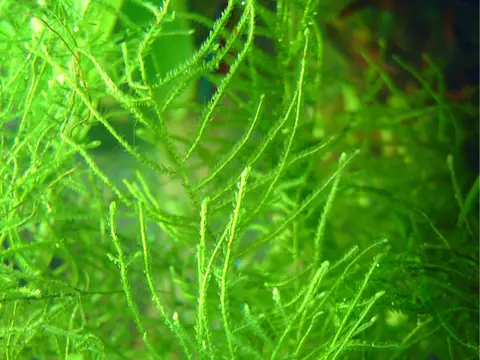
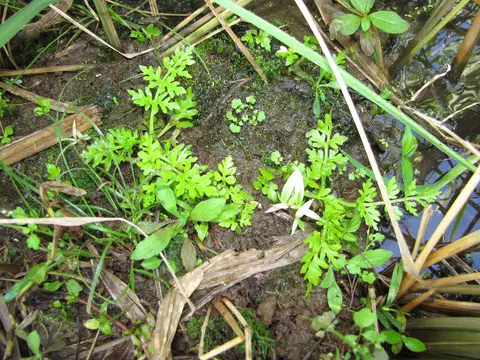
- Dense vegetation in the main tank: a good clump of Java moss, tightly packed stem plants and floaters such as water sprite (Ceratopteris) give hiding places. Part of each brood survives, which is exactly what keeps the population in check naturally.
- Breeder box or net: useful during birth or to hold newborns for a few days. Fine mesh nets cause less stress than closed boxes because water flows through.
- Separate grow-out tank: a cycled 5-10 gallon (20-40 l) tank with a heater and a sponge filter, where fry grow until they no longer fit in adult mouths. It's the most effective option if you want to breed seriously or select for color.
Fry can go back in with adults once they reach about 0.6-0.8 in (1.5-2 cm), usually at 4-6 weeks. If the grow-out tank isn't cycled, you'll lose them to ammonia before predators ever get the chance.
Feeding and growing the fry
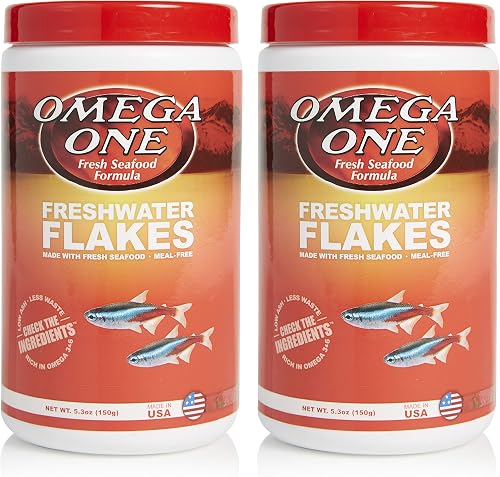
Guppy fry are born with mouths big enough for fine food from day one. The key is small amounts, often: 3 to 5 feedings a day for the first weeks, removing or siphoning leftovers so the water stays clean.
| Age | Food | Feedings per day |
|---|---|---|
| 0-2 weeks | Powdered fry food, flake food crushed between your fingers, baby brine shrimp, microworms | 3-5 |
| 2-6 weeks | Fine flakes, micro pellets, brine shrimp | 3-4 |
| Over 6 weeks | Adult diet in small sizes | 2 |
With a steady 77-79 °F (25-26 °C), 20-30% weekly water changes and good food, fry grow fast. By 4-6 weeks you can pick out the males, which start to color up and develop the gonopodium. If you want to avoid unplanned crosses or siblings breeding with each other, separate males and females at that point, because they're fertile by 2-3 months.
What to do with surplus guppies
A single female can have hundreds of descendants in a year. Sooner or later you'll have more guppies than your tank can hold, and going over capacity hurts water quality for everyone (see how many fish fit in a tank). Responsible options:
- Local fish stores: many take healthy guppies for store credit or for free, especially from good lines.
- Other hobbyists: aquarium clubs, forums, local groups and fish swaps or auctions.
- Controlling breeding: keep males only, or let plants and tankmates limit how many fry survive.
Never release them into creeks, lakes, fountains or public ponds. Guppies are invasive in many warm regions, compete with native fish and can spread disease. Releasing aquarium fish is also illegal in most US states and across the EU. If you can't rehome your fish, the answer is to slow down breeding, not to set them free.
Common guppy breeding mistakes
- Keeping more males than females, which wears the females out.
- Locking the female in a breeder box for days "just in case."
- Setting up an uncycled grow-out tank right when the fry are born.
- Feeding fry adult-sized portions and fouling the water (see how much to feed fish).
- Mixing guppies with Endlers if you want pure lines: they interbreed.
- Not thinking about where the fry will go until the tank is overstocked.
Recommended gear for this guide


Frequently asked questions
How long are guppies pregnant?
Between 21 and 30 days, about 28 on average at 77 °F (25 °C). Warmer water shortens it and cooler water stretches it out. After giving birth, a female can drop another brood about 4 weeks later thanks to stored sperm.
How can I tell my guppy is about to give birth?
The gravid spot in front of the anal fin looks large and dark, the belly turns boxy from the side, and the female hides, hangs alone near the bottom or the heater and may stop eating. Birth usually follows within a day or two.
Is a breeder box better than a planted tank?
For most hobbyists a tank with lots of moss and floating plants is better because it doesn't stress the female. A breeder box only makes sense for a few hours around the birth itself, and the female should always come out as soon as she's finished.
What do newborn guppy fry eat?
Powdered fry food, finely crushed flakes, baby brine shrimp or microworms, in small amounts 3 to 5 times a day. From about 6 weeks they can eat the same food as adults in smaller sizes.
Can I release extra guppies into a pond or creek?
No. It's illegal in most places and harmful: guppies are invasive in many areas and push out native species. Offer them to fish stores or other hobbyists, and if no one wants them, limit breeding by keeping only males or adding cover so fewer fry survive.
You may also like
- GuideHow Many Fish Can You Put in a Tank? Stocking Done Right
- GuideHow to set up a coldwater aquarium: tank size, filter, plants, fish
- GuideCleaner fish for aquariums: the clean-up crew myth explained
 ProfileGuppy
 ProfileJava moss
 ProfileWater sprite
- Gear reviewFish flakes and micro pellets
- Gear reviewSponge filters