If you buy through our links, Amazon pays us a small commission at no extra cost to you. That’s how we keep the site running. How we choose.
This list is not a matter of opinion: it is calculated from our species database. A fish appears here when its profile meets three conditions:
- Difficulty rated easy (tolerates a range of water conditions and accepts prepared foods).
- Temperament that is not aggressive.
- An honest minimum tank size of 30 gallons (120 L) or less.
"Easy" does not mean indestructible. Even the hardiest fish depend on a tank that has been cycled for 4 to 6 weeks, with ammonia and nitrite at zero, a heater for tropical species, a filter and weekly water changes of 20-30 %. Most beginner losses come from adding fish too early or too many at once, not from the species chosen.
Check each profile before buying: some fish in this list are schooling species that need groups of 6 or more, and the minimum tank size already accounts for that group. Others, like some livebearers, breed constantly. Combine them with the compatibility checker to make sure your selection works together, and use the stocking calculator to avoid overcrowding.
A good first plan: one school of a small midwater species, a group of bottom dwellers such as corydoras and, if the tank allows it, one centerpiece fish.
Beginner fish
| Species | Min. liters | Size | Temp. | Difficulty |
|---|---|---|---|---|
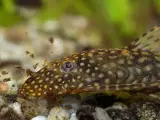 Bristlenose pleco Ancistrus sp. | 26 gal (100 L) | 5.1 in (13 cm) | 72–81 °F (22–27 °C) | Easy |
 Cherry barb Puntius titteya | 16 gal (60 L) | 2 in (5 cm) | 73–81 °F (23–27 °C) | Easy |
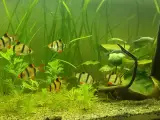 Tiger barb Puntigrus tetrazona | 26 gal (100 L) | 2.4 in (6 cm) | 72–79 °F (22–26 °C) | Easy |
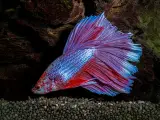 Betta fish Betta splendens | 7 gal (25 L) | 2.4 in (6 cm) | 75–82 °F (24–28 °C) | Easy |
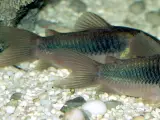 Bronze cory Corydoras aeneus | 21 gal (80 L) | 2.6 in (6.5 cm) | 72–81 °F (22–27 °C) | Easy |
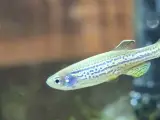 Zebra danio Danio rerio | 16 gal (60 L) | 2 in (5 cm) | 64–77 °F (18–25 °C) | Easy |
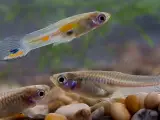 Guppy Poecilia reticulata | 14 gal (54 L) | 2 in (5 cm) | 72–82 °F (22–28 °C) | Easy |
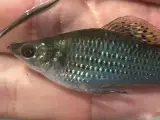 Molly Poecilia sphenops | 26 gal (100 L) | 3.1 in (8 cm) | 75–82 °F (24–28 °C) | Easy |
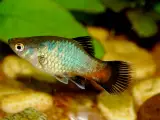 Platy Xiphophorus maculatus | 16 gal (60 L) | 2.4 in (6 cm) | 68–79 °F (20–26 °C) | Easy |
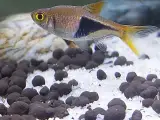 Harlequin rasbora Trigonostigma heteromorpha | 16 gal (60 L) | 1.8 in (4.5 cm) | 72–81 °F (22–27 °C) | Easy |
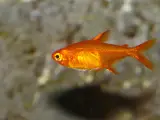 Ember tetra Hyphessobrycon amandae | 11 gal (40 L) | 0.8 in (2 cm) | 73–82 °F (23–28 °C) | Easy |
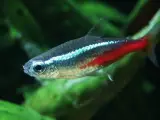 Neon tetra Paracheirodon innesi | 16 gal (60 L) | 1.4 in (3.5 cm) | 68–79 °F (20–26 °C) | Easy |
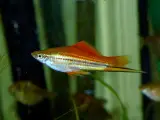 Swordtail Xiphophorus hellerii | 32 gal (120 L) | 4.7 in (12 cm) | 72–81 °F (22–27 °C) | Easy |
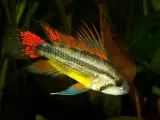 Cockatoo dwarf cichlid Apistogramma cacatuoides | 16 gal (60 L) | 3.1 in (8 cm) | 75–82 °F (24–28 °C) | Easy |
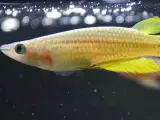 Golden wonder killifish (striped panchax) Aplocheilus lineatus | 26 gal (100 L) | 3.9 in (10 cm) | 72–81 °F (22–27 °C) | Easy |
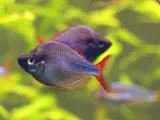 Dwarf neon rainbowfish Melanotaenia praecox | 32 gal (120 L) | 2.4 in (6 cm) | 75–82 °F (24–28 °C) | Easy |
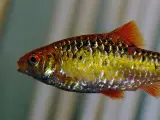 Gold barb Barbodes semifasciolatus | 26 gal (100 L) | 2.8 in (7 cm) | 64–75 °F (18–24 °C) | Easy |
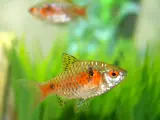 Odessa barb Pethia padamya | 26 gal (100 L) | 2.4 in (6 cm) | 68–79 °F (20–26 °C) | Easy |
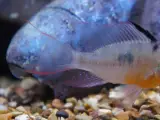 Bolivian ram Mikrogeophagus altispinosus | 26 gal (100 L) | 3.1 in (8 cm) | 72–79 °F (22–26 °C) | Easy |
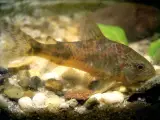 Peppered cory Corydoras paleatus | 21 gal (80 L) | 2.6 in (6.5 cm) | 64–75 °F (18–24 °C) | Easy |
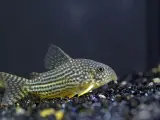 Sterbai cory Corydoras sterbai | 21 gal (80 L) | 2.6 in (6.5 cm) | 75–82 °F (24–28 °C) | Easy |
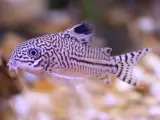 Three-stripe cory Corydoras trilineatus | 18 gal (70 L) | 2.2 in (5.5 cm) | 72–79 °F (22–26 °C) | Easy |
 Pearl danio Danio albolineatus | 21 gal (80 L) | 2.4 in (6 cm) | 68–79 °F (20–26 °C) | Easy |
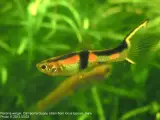 Endler's livebearer Poecilia wingei | 11 gal (40 L) | 1.2 in (3 cm) | 72–82 °F (22–28 °C) | Easy |
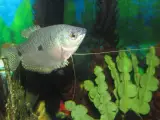 Blue gourami Trichopodus trichopterus | 32 gal (120 L) | 4.7 in (12 cm) | 72–82 °F (22–28 °C) | Easy |
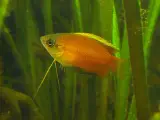 Honey gourami Trichogaster chuna | 14 gal (54 L) | 1.8 in (4.5 cm) | 72–82 °F (22–28 °C) | Easy |
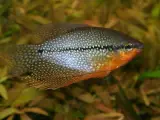 Pearl gourami Trichopodus leerii | 32 gal (120 L) | 4.3 in (11 cm) | 75–82 °F (24–28 °C) | Easy |
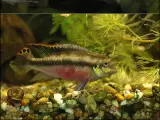 Kribensis Pelvicachromis pulcher | 21 gal (80 L) | 3.5 in (9 cm) | 75–82 °F (24–28 °C) | Easy |
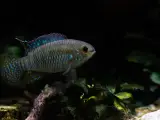 Flag acara Laetacara curviceps | 21 gal (80 L) | 2.8 in (7 cm) | 75–82 °F (24–28 °C) | Easy |
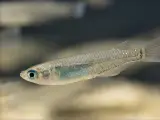 Medaka (Japanese ricefish) Oryzias latipes | 11 gal (40 L) | 1.4 in (3.5 cm) | 50–79 °F (10–26 °C) | Easy |
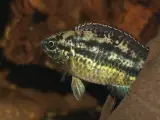 Golden dwarf cichlid Nannacara anomala | 16 gal (60 L) | 2.8 in (7 cm) | 72–81 °F (22–27 °C) | Easy |
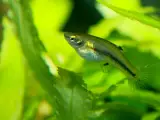 Least killifish Heterandria formosa | 8 gal (30 L) | 1 in (2.5 cm) | 68–79 °F (20–26 °C) | Easy |
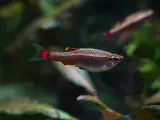 White cloud mountain minnow Tanichthys albonubes | 16 gal (60 L) | 1.6 in (4 cm) | 57–72 °F (14–22 °C) | Easy |
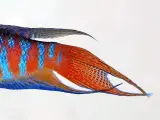 Paradise fish Macropodus opercularis | 21 gal (80 L) | 3.5 in (9 cm) | 61–79 °F (16–26 °C) | Easy |
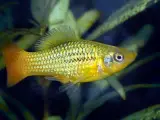 Variatus platy Xiphophorus variatus | 21 gal (80 L) | 2.6 in (6.5 cm) | 64–77 °F (18–25 °C) | Easy |
 Clown pleco (L104) Panaqolus maccus | 21 gal (80 L) | 3.5 in (9 cm) | 75–82 °F (24–28 °C) | Easy |
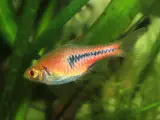 Lambchop rasbora Trigonostigma espei | 14 gal (54 L) | 1.4 in (3.5 cm) | 73–82 °F (23–28 °C) | Easy |
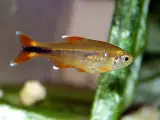 Copper tetra Hasemania nana | 16 gal (60 L) | 1.6 in (4 cm) | 72–82 °F (22–28 °C) | Easy |
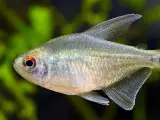 Diamond tetra Moenkhausia pittieri | 26 gal (100 L) | 2.4 in (6 cm) | 75–82 °F (24–28 °C) | Easy |
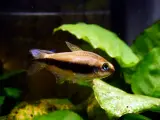 Emperor tetra Nematobrycon palmeri | 21 gal (80 L) | 2 in (5 cm) | 73–81 °F (23–27 °C) | Easy |
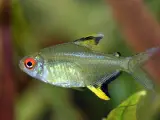 Lemon tetra Hyphessobrycon pulchripinnis | 21 gal (80 L) | 1.8 in (4.5 cm) | 72–82 °F (22–28 °C) | Easy |
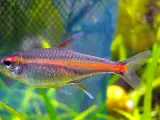 Glowlight tetra Hemigrammus erythrozonus | 16 gal (60 L) | 1.6 in (4 cm) | 75–82 °F (24–28 °C) | Easy |
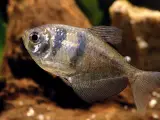 Black skirt tetra Gymnocorymbus ternetzi | 26 gal (100 L) | 2.2 in (5.5 cm) | 70–81 °F (21–27 °C) | Easy |
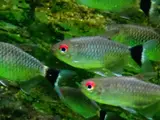 Red eye tetra Moenkhausia sanctaefilomenae | 26 gal (100 L) | 2.4 in (6 cm) | 72–82 °F (22–28 °C) | Easy |
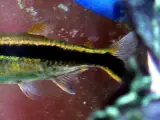 Penguin tetra Thayeria boehlkei | 21 gal (80 L) | 2.4 in (6 cm) | 72–82 °F (22–28 °C) | Easy |
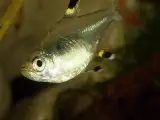 X-ray tetra Pristella maxillaris | 16 gal (60 L) | 1.8 in (4.5 cm) | 75–82 °F (24–28 °C) | Easy |
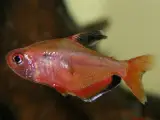 Serpae tetra Hyphessobrycon eques | 21 gal (80 L) | 1.6 in (4 cm) | 72–82 °F (22–28 °C) | Easy |
No species match those filters.
Frequently asked questions
What is the easiest fish for a beginner?
Zebra danios, platies, white clouds, cherry barbs and bronze corydoras are among the most forgiving species. Still, any fish needs a cycled tank, a filter and regular water changes.
How many fish can I add at first?
Add a few at a time, waiting one or two weeks between groups, so the bacteria in the filter can adjust to the extra waste. Test ammonia and nitrite after each addition.
Is a betta a good beginner fish?
Yes, if it gets at least 5 gallons (20 L), a heater and a gentle filter. Bettas are not bowl fish, and males cannot share a tank with each other.
Why is a bigger tank easier than a small one?
More water dilutes waste and buffers temperature changes, so mistakes take longer to become dangerous. A 20-30 gallon tank is usually easier to keep stable than a 5 gallon one.
