If you buy through our links, Amazon pays us a small commission at no extra cost to you. That’s how we keep the site running. How we choose.
Contents
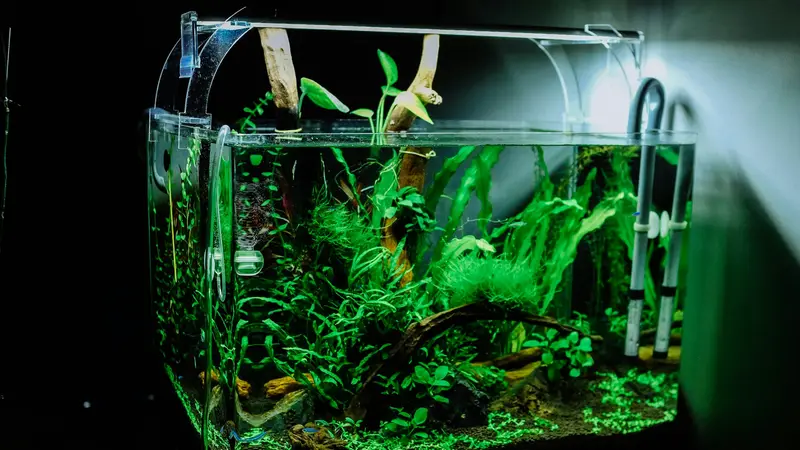
Freshwater dwarf shrimp have become one of the hobby's favorite animals: they are small, colorful, spend all day picking over every surface and, in the right conditions, breed on their own. They are also far more sensitive than most fish to sudden changes, ammonia and certain chemicals. The good news is that nearly every failure comes down to the same four or five mistakes. This guide covers which shrimp to choose, what water they need, how to prepare the tank and what to do so the colony keeps growing year after year.
The short version: start with Neocaridina (cherry shrimp and relatives) in a tank of at least 5-8 gallons (20-30 L), fully cycled and mature, with a sponge filter, nitrate under 20 ppm, drip acclimation and small, regular water changes. No copper, ever.
Neocaridina vs Caridina: which shrimp to choose
Almost every dwarf shrimp on sale belongs to one of two groups. Neocaridina (Neocaridina davidi) include the cherry shrimp, the blue dream and the yellow, orange and chocolate strains. They are hardy, cope with most municipal tap water and breed readily. Caridina such as the crystal red shrimp (plus Taiwan bees, tigers and similar) are showier and pricier, but they need soft, acidic, very stable water, which in practice means remineralized RO water and an active substrate.
| Aspect | Neocaridina (cherry…) | Caridina (crystal red, bee…) |
|---|---|---|
| Difficulty | Low, ideal for beginners | Medium to high |
| Water | Dechlorinated tap water in most areas | RO water + remineralizing salts |
| Substrate | Any inert sand or fine gravel | Active soil that lowers pH |
| Breeding | Very easy | Easy only with stable parameters |
| Cost | Budget | Mid-range to very expensive |
The Amano shrimp is a special case: bigger, an excellent algae eater and very tough, but its larvae need brackish water, so it will not breed in a freshwater tank. Don't mix Neocaridina color strains if you want to keep the colors: they interbreed and within a few generations revert to a translucent brown.
Water parameters for shrimp
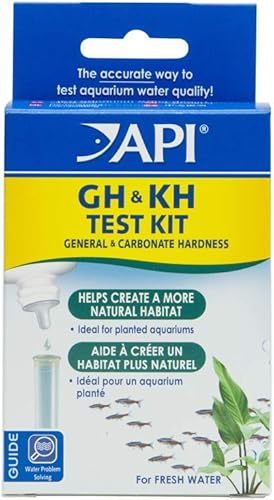
More than any exact number, shrimp need stability. A steady pH of 7.5 is far better than one that swings between 6.8 and 7.6 every week. Use a liquid test kit or reliable strips and, if you plan to keep Caridina, add a TDS meter (total dissolved solids).
| Parameter | Neocaridina | Caridina (crystal red) |
|---|---|---|
| Temperature | 64-79 °F / 18-26 °C (ideal 68-75 °F) | 68-75 °F / 20-24 °C (ideal 70-73 °F) |
| pH | 6.5-8 | 5.8-6.8 |
| GH (general hardness) | 6-12 dGH | 4-6 dGH |
| KH (carbonate hardness) | 2-8 dKH | 0-2 dKH |
| TDS | 150-300 ppm | 100-180 ppm |
| Ammonia / nitrite / nitrate | 0 / 0 / under 20 ppm | 0 / 0 / under 20 ppm |
Shrimp don't need a heater in a comfortable home, but summer heat is dangerous: above 82 °F (28 °C) losses climb. If your tank runs hot, see our aquarium temperature guide.
A mature tank, a sponge filter and no copper
A freshly cycled tank reads zero ammonia and nitrite, but it isn't yet a good home for shrimp. They feed mainly on biofilm, the thin layer of bacteria, fungi and microalgae coating rocks, plants and wood, and that layer takes weeks to build up. Ideally, finish cycling the tank and then wait another 3-4 weeks (or add shrimp to a tank that has already been running for months).
- Size: 5-8 gallons (20-30 L) at minimum; 10-15 gallons (40-60 L) is more stable and more forgiving. Nano tanks work well if you keep up with maintenance.
- Filter: a sponge filter is the classic choice because it can't suck up babies and gives shrimp an extra surface to graze. With any other filter, cover the intake with a pre-filter sponge.
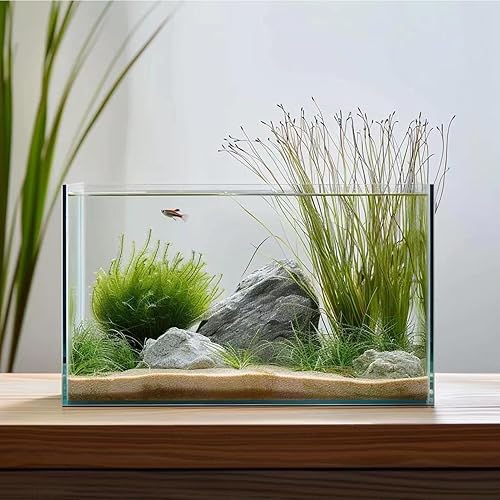
- Plants and mosses: Java moss, ferns and floating plants shelter babies and freshly molted shrimp.
- Dried leaves: Indian almond or oak leaves add biofilm surface and extra food.
Copper kills shrimp, even in tiny amounts. It is found in many fish medications (especially anti-parasite treatments), some algaecides and certain plant fertilizers. Always read the ingredients before adding any product, keep copper pipes and decor away from the tank and never medicate a shrimp tank: move sick fish to a hospital tank first.
Drip acclimation step by step
Sudden swings in hardness and pH are the most common cause of deaths in the first days. That is why shrimp are drip acclimated, more slowly than fish (see our general guide on how to acclimate fish):
- Turn the light off and float the bag for 15-20 minutes to match the temperature.
- Pour the shrimp and their water into a clean container.
- Using airline tubing with a knot or a valve, drip tank water into the container at 2-3 drops per second.
- Once the volume has tripled (usually 1-2 hours), move the shrimp into the tank with a net or spoon.
- Throw away the water in the container: never pour it into the tank.
It's normal for shrimp to hide or look pale for a few days. Skip feeding on day one.
Safe tankmates and feeding
Almost any fish will eat a newborn shrimp, and many will eat adults too. A shrimp-only tank produces the most babies. If you want company, pick small, peaceful species: otocinclus, nerite snails, Boraras or pygmy corydoras. Small tetras and celestial pearl danios live with adults but will pick off babies. Avoid cichlids, barbs, large gouramis and generally any fish whose mouth a shrimp fits into. A betta is a gamble: some ignore shrimp, others hunt them one by one.
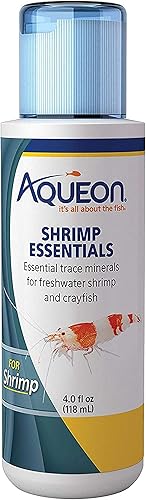
Shrimp graze biofilm all day, so food is a supplement: an amount they finish within 2-3 hours, once a day or every other day, removing leftovers. Rotate a dedicated shrimp food with blanched vegetables (zucchini, spinach) and a mineral supplement. Overfeeding is the fastest route to high nitrate and planaria.
Breeding and molting problems
With stable water, Neocaridina breed on their own. The female carries eggs under her abdomen (she is "berried") for about 3-4 weeks, and fully formed shrimplets hatch with no larval stage. All they need is cover, biofilm and a filter that won't suck them up. A colony of ten can become a hundred within a few months.
Shrimp grow by shedding their exoskeleton. Finding an empty molt is a good sign: leave it in the tank, because they eat it to reclaim minerals. The real problem is a failed molt, where the shrimp gets stuck and a white ring appears between head and body. It is usually caused by sudden parameter changes, GH that is too low or too high, or large water changes.
Common mistakes
- Adding shrimp to a newly cycled tank with no biofilm.
- Doing big, sudden water changes: 10-15% weekly with water of similar parameters and temperature works better.
- Using medications or fertilizers that contain copper.
- Skipping drip acclimation.
- Overfeeding "so they grow faster".
- Keeping shrimp with fish that hunt them and expecting a breeding colony.
- Chasing perfect numbers with chemicals instead of aiming for stability.
Keep the water stable, with small, well-matched changes, and a shrimp tank is one of the most rewarding and inexpensive setups to run. To fine-tune your numbers, our guide to aquarium water parameters explains how to test and adjust GH, KH and pH without shocks.
Recommended gear for this guide

Frequently asked questions
How many shrimp can I keep in a 5-gallon tank?
To start, 10 to 15 Neocaridina is a good number for 5 gallons (about 20 liters). Over time the colony grows on its own and self-regulates according to the food available. Water stability and not overfeeding matter far more than the exact count.
Do shrimp need a heater?
Neocaridina do well between 64 and 79 °F (18 to 26 °C), so in a comfortable home they don't need one. Caridina prefer a stable 70 to 73 °F (21 to 23 °C). A small heater helps in cold rooms in winter; the real danger is usually summer heat above 82 °F (28 °C).
Why do my shrimp die after a few days?
The most common causes are acclimating too fast, a tank that isn't mature yet, big differences in hardness or pH compared with the store water, copper in some product, or a large water change. Test ammonia, nitrite, nitrate, GH and KH to rule things out.
Can I keep cherry shrimp with a betta?
Some bettas ignore them and others hunt them. If you try, use a tank of at least 8 gallons (30 liters) with plenty of moss and dense plants, add the shrimp first so they settle in, and have a backup plan if the betta turns out to be a hunter.
Can I mix different Neocaridina colors?
They get along fine, but they interbreed and the offspring lose their color within a few generations, reverting to brown or clear. If you want to keep a color line, stick to one strain per tank.
You may also like
- GuideHow Many Fish Can You Put in a Tank? Stocking Done Right
- GuideHow to set up a coldwater aquarium: tank size, filter, plants, fish
- GuideCleaner fish for aquariums: the clean-up crew myth explained
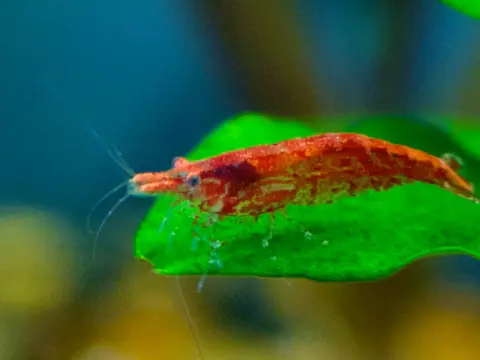 ProfileCherry shrimp
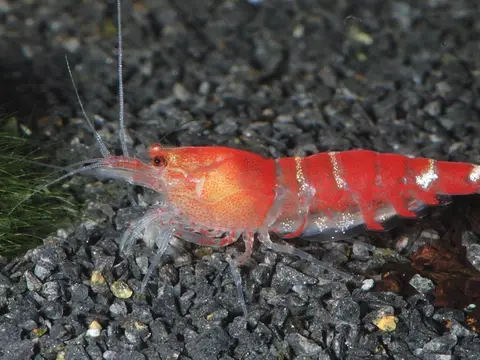 ProfileCrystal red shrimp
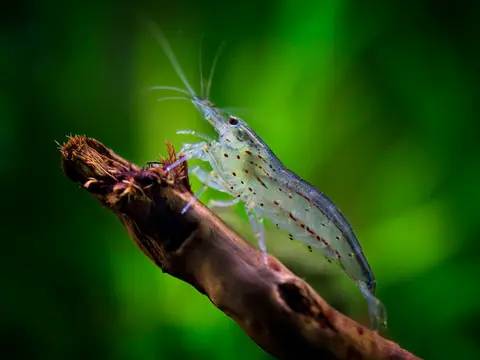 ProfileAmano shrimp
- Gear reviewShrimp food
- Gear reviewSponge filters