If you buy through our links, Amazon pays us a small commission at no extra cost to you. That’s how we keep the site running. How we choose.
Contents
Overview
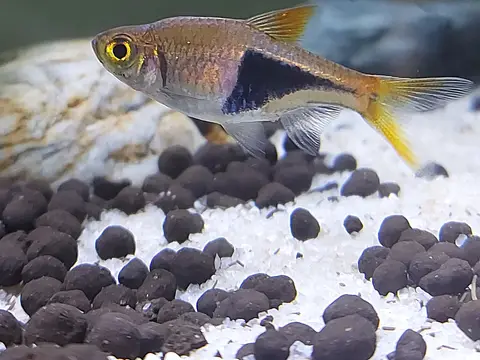
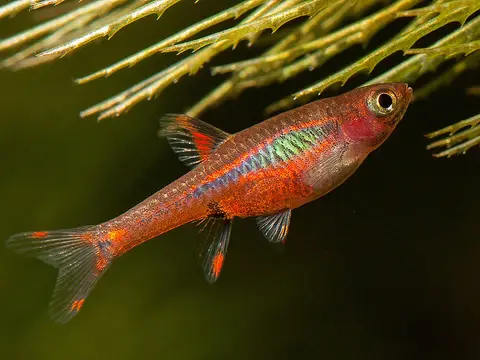
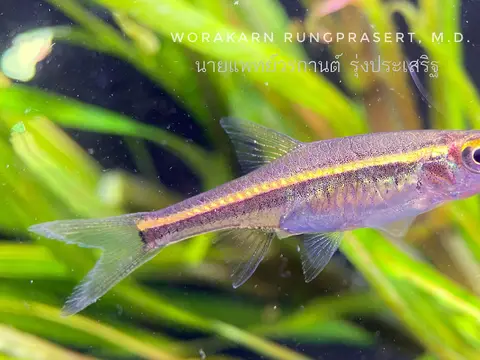
The red-line rasbora is a slender fish of about 2.4 in (6 cm) with a golden-green body and a coppery-red line running from eye to tail, underlined by a thin dark stripe. Under good side lighting the line glows almost like a neon's. It comes from blackwater streams and swampy areas of the Malay Peninsula, Sumatra and Borneo, always in soft, acidic water.
It is calm, a little shy and swims in the upper part of the tank, so it pairs well with bottom and midwater fish. It is less common in stores than other rasboras, and many specimens are wild-caught, which makes it better suited to hobbyists with some experience and a mature planted tank.
Care and tank setup
A school of 8-10 needs a tank of 26 gallons (100 L) or more, at least 30 in (80 cm) long, because it is an active swimmer that likes to cruise near the surface as a group.
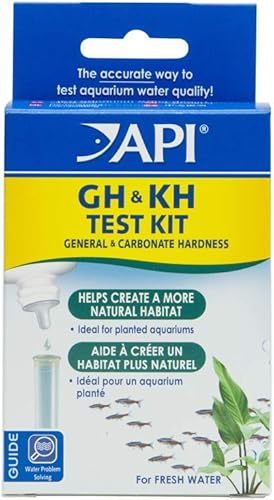
- Water: soft, acidic and very clean at 73-82 °F (23-28 °C). Driftwood, catappa leaves or peat recreate its blackwater; in hard water it fades and gets sick more easily.
- Decor: plenty of plants at the back and sides, floaters for shade without covering the whole surface, and open space up top.
- Lid: recommended, since it jumps when startled.
- Tank mates: peaceful small to medium fish such as rasboras, larger Boraras, calm tetras, corydoras, kuhli loaches, honey gouramis and shrimp.
Avoid large or rough fish and sudden water changes. Acclimate it slowly and always keep the tank cycled, with moderate filtration and a heater.
Feeding
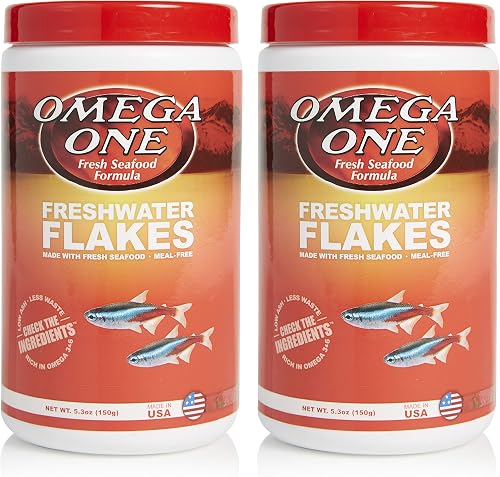
In the wild it eats insects that land on the water, larvae and small crustaceans, mostly at the surface. It accepts floating flakes and micro pellets, but supplement with frozen or live foods such as bloodworms, brine shrimp, daphnia or flightless fruit flies. Several small feedings a day work better than one large one. Do not rely on fast-sinking foods: it tends to ignore them and they end up rotting on the bottom.
Breeding
It scatters eggs among fine plants or moss and gives no parental care. Aquarium spawnings are uncommon and require very soft, acidic water, a separate well-planted tank and removal of the adults after spawning. Fry need infusoria first, then newly hatched brine shrimp. Most fish in the trade are still wild-caught, so captive-bred stock is worth seeking out.
Compatible tank mates
Species from our database that share water parameters, size and temperament with the Red-line rasbora. Calculated from the data in each profile.
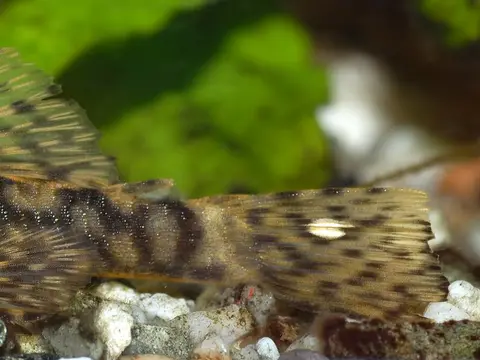 Bristlenose pleco Ancistrus sp. 26 gal (100 L) · 72–81 °F (22–27 °C)
 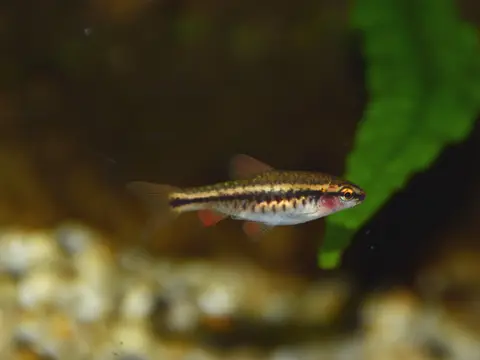 Cherry barb Puntius titteya 16 gal (60 L) · 73–81 °F (23–27 °C)
 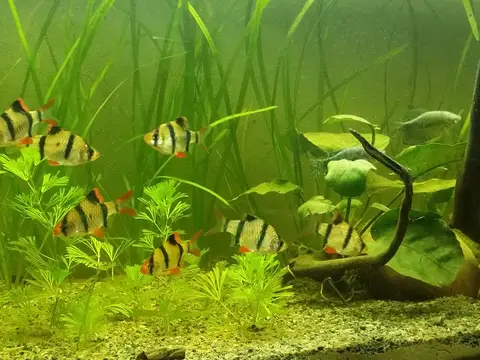 Tiger barb Puntigrus tetrazona 26 gal (100 L) · 72–79 °F (22–26 °C)
 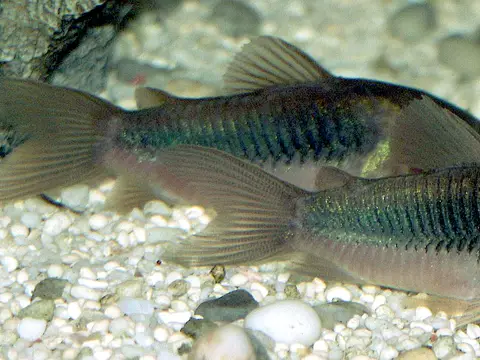 Bronze cory Corydoras aeneus 21 gal (80 L) · 72–81 °F (22–27 °C)
 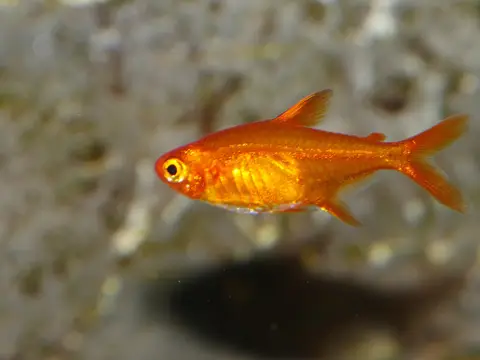 Ember tetra Hyphessobrycon amandae 11 gal (40 L) · 73–82 °F (23–28 °C)
 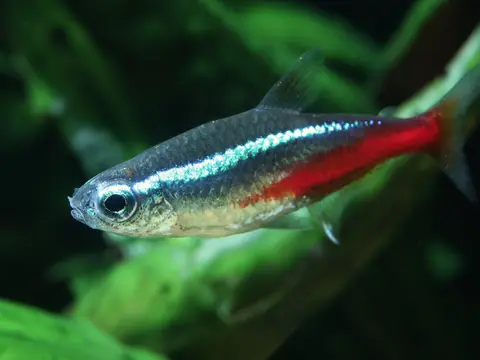 Neon tetra Paracheirodon innesi 16 gal (60 L) · 68–79 °F (20–26 °C)
 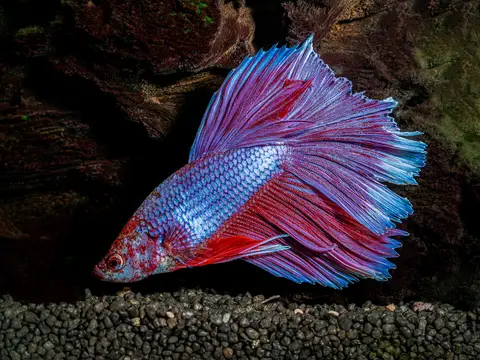 Betta fish Betta splendens 7 gal (25 L) · 75–82 °F (24–28 °C)
 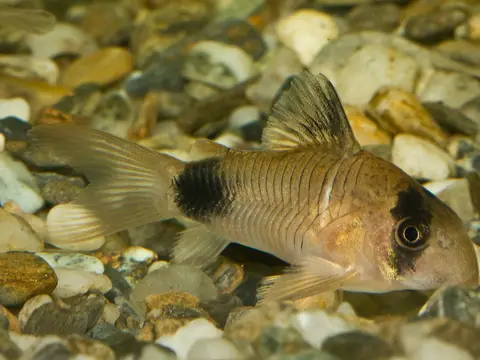 Panda cory Corydoras panda 16 gal (60 L) · 68–77 °F (20–25 °C)
 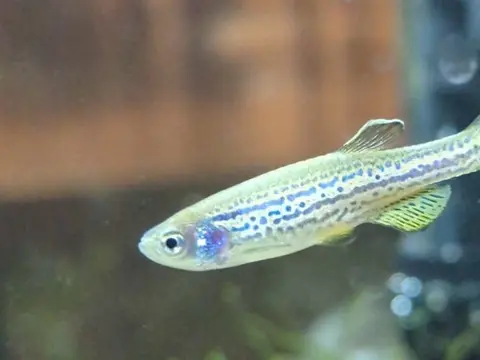 Zebra danio Danio rerio 16 gal (60 L) · 64–77 °F (18–25 °C)
 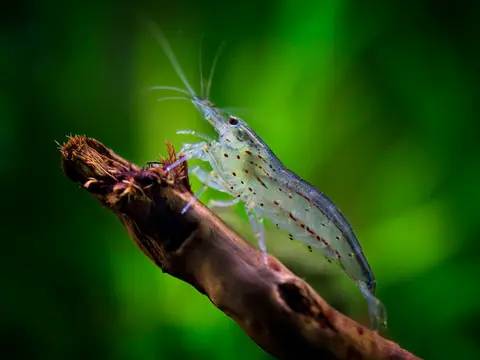 Amano shrimp Caridina multidentata 11 gal (40 L) · 64–82 °F (18–28 °C)
 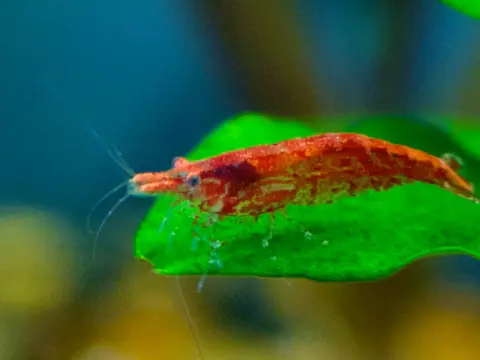 Cherry shrimp Neocaridina davidi 5 gal (20 L) · 64–81 °F (18–27 °C)
 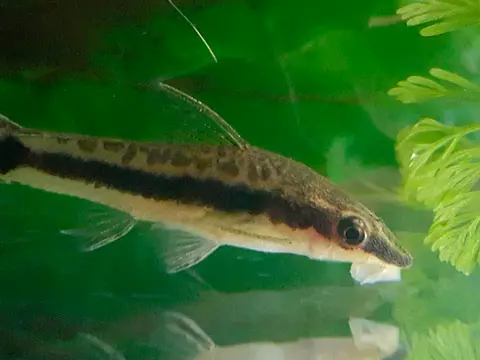 Otocinclus catfish Otocinclus vestitus 16 gal (60 L) · 70–79 °F (21–26 °C)
 Check the compatibility of your whole tank →
What not to keep it with
Popular species you shouldn’t house with the Red-line rasbora, and why.
- Yellow lab cichlid: incompatible pH, incompatible water hardness
- Clown loach: one may eat the other due to size
- Molly: incompatible pH, incompatible water hardness
- Oscar: one may eat the other due to size, incompatible temperaments
- Platy: incompatible pH, incompatible water hardness
- Swordtail: incompatible pH, incompatible water hardness
Recommended equipment
What you need to keep the Red-line rasbora healthy, checked against Amazon stock.


Frequently asked questions
How many liters does a Red-line rasbora need?
At least about 100 liters for a group of at least 8 fish. More space always helps keep the water stable.
What water temperature does the Red-line rasbora need?
Between 23 and 28 °C, with a pH of 5 to 7.
What fish can live with the Red-line rasbora?
Based on water, size and temperament, it fits with species such as Bristlenose pleco, Cherry barb, Tiger barb, Bronze cory and Ember tetra. Use our compatibility calculator to check your whole tank.
Can the Red-line rasbora be kept with shrimp?
Yes: it usually won’t eat adult shrimp, though some shrimplets may get picked off. A tank with plenty of moss gives the babies cover.