If you buy through our links, Amazon pays us a small commission at no extra cost to you. That’s how we keep the site running. How we choose.
Contents
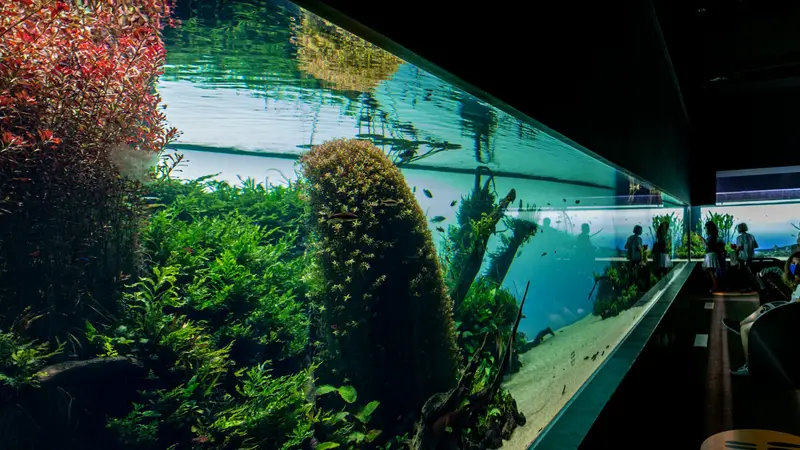
CO2 is what separates a planted tank where the plants are just "getting by" from one with straight, dense stems, deep reds and thick carpets. Plants build their tissue from carbon, and aquarium water holds very little dissolved CO2: only about 2-5 ppm (mg/l) at equilibrium with the air. Adding CO2 can multiply growth, but it is also the part of a planted tank with the least room for error: too little does nothing, too much can suffocate your fish within hours. This guide covers when it is worth it, which systems exist, how a setup goes together, how to measure CO2 with a drop checker and how to dial it in safely.
The essentials: aim for 20-30 ppm of CO2 while the lights are on, never above ~30 ppm. Use a drop checker (green = right), switch CO2 on 1-2 hours before the lights and off 1 hour before they go out, with a solenoid on a timer. Raise the dose slowly and watch your fish.
When do you need CO2?
Not every planted tank needs it. Light sets the demand: the brighter it is, the faster plants try to grow and the sooner carbon becomes the limiting factor. With low or moderate light and slow plants, the CO2 your fish produce plus what enters at the surface is enough.
- You don't need it with moderate light and hardy plants: Anubias nana, Java fern, crypts, mosses, Vallisneria or floating plants. That is the low-tech setup we recommend in our planted tank for beginners guide.
- It will help if you keep stem plants and want denser, more compact growth, or you are fighting algae caused by a light-to-carbon imbalance.
- It is almost mandatory with high light, demanding red plants and carpeting plants such as Monte Carlo or Dwarf baby tears (HC Cuba), and in aquascapes.
Systems: pressurized, DIY yeast or liquid carbon
There are three ways to add carbon, with clear differences in cost, stability and control:
| System | Best for | Pros | Cons |
|---|---|---|---|
| Pressurized cylinder with regulator | 10-15 gal (40-60 l) and up, demanding planted tanks | Stable, adjustable dose, shuts off at night, low running cost | Higher upfront cost, cylinder needs refills |
| Small disposable cartridges | Nano tanks up to about 15 gal (60 l) | Compact and easy to set up | Expensive gas, runs out quickly |
| DIY yeast (sugar and yeast or gel) | Nano tanks up to about 15 gal (60 l) | Very cheap way to try it | Uneven output, can't shut off at night, lasts 2-4 weeks |
| Liquid carbon (glutaraldehyde) | Low-tech tanks that want a boost | No equipment, dosed with fertilizer | Not equal to real CO2; harms sensitive plants and shrimp when overdosed |
For anything over 15 gallons (60 l) that you plan to keep, a refillable cylinder is the most stable option and the cheapest over time. 5 lb and 10 lb cylinders can be refilled at welding supply shops, fire extinguisher services or homebrew stores; paintball and soda-maker adapters work for small tanks. Our comparison of aquarium CO2 systems explains what to look for in a complete kit.
The parts of a CO2 setup
- Cylinder: holds liquid CO2 under high pressure. Always upright and secured.
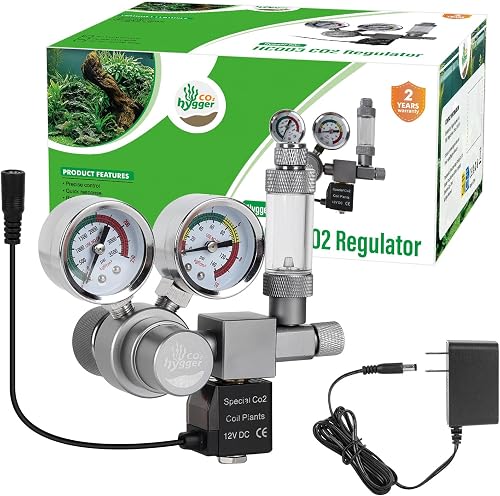
- Regulator: lowers the working pressure. Dual-gauge regulators are best.
- Needle valve: fine-tunes the bubble rate. It is the part that makes the difference between a cheap setup and a stable one.
- Solenoid: shuts off the gas when plugged into a timer.
- Bubble counter: shows how much CO2 is flowing.
- Check valve: stops water from siphoning back into the regulator and ruining it.
- Diffuser or reactor: dissolves the gas in the water. Ceramic or membrane diffusers create a mist of micro-bubbles; inline diffusers and reactors connect to the hose of a canister filter and dissolve close to 100 %.
Place the diffuser near the filter outflow or in a spot with good flow, so the micro-bubbles travel around the tank before they reach the surface.
How much CO2: drop checker, bubbles and pH
Bubbles per second are not a measurement: they depend on bubble size, the diffuser, surface agitation and your plants. They are only a starting point and a way to compare day to day in your own tank. As a rough guide, start with 1 bubble per second for 15-25 gallons (60-100 l) and adjust.
The reliable measurement is a drop checker: a small glass bulb filled with 4 dKH reference solution and bromothymol blue that changes color with the CO2 level in the water. Place it on the opposite side from the diffuser, at mid-height.
- Blue: too little CO2 (under ~15 ppm). Raise the dose slightly.
- Green: about 30 ppm, the target. If the fish are fine, leave it.
- Yellow: too much CO2. Lower the dose right away.
A drop checker lags by about 2 hours: make small changes, one per day, and check the color near the end of the photoperiod. Another way to check is pH: a drop of about 1 full point compared with degassed water (tank water left for 24 hours with an air stone) equals roughly 30 ppm. The textbook pH/KH/CO2 chart is unreliable in tanks with active substrates, driftwood or peat; we explain why in our guide to aquarium pH.
Light, CO2 and fertilizer: the balance
Plants grow at the pace of whatever is scarcest. Add CO2 without fertilizing and they run out of nitrogen, potassium or iron and stall; turn up the light without CO2 and algae move in. When you add CO2, increase fertilization (plants will use a lot more) and keep the photoperiod at 6-8 hours. CO2 has to be stable: daily swings are a classic trigger for black beard and brush algae. If you already have them, see our guide to aquarium algae.
Fish safety and turning CO2 off at night
Excess CO2 stops fish from offloading carbon dioxide from their blood, even when there is oxygen in the water. The classic sign is obvious: fish gasping at the surface, rapid breathing, fish hanging still or disoriented, and shrimp climbing the glass or the filter intake. If you see it, shut off the CO2, add an air stone and increase surface agitation.
Warning: at night plants stop using CO2 and respire instead. A system left running overnight can build CO2 up to dangerous levels by morning. Always use a solenoid on a timer: on 1-2 hours before the lights and off 1 hour before they go out. Check the pressure after each refill: a regulator that fails as the cylinder empties ("end-of-tank dump") can release all the remaining gas at once.
Keep a gentle ripple on the surface for gas exchange, and watch how your fish behave in the first weeks, especially after every adjustment. Shrimp such as Red Cherry shrimp and fish from calm waters are the first to show signs of excess.
Common mistakes
- Relying on bubbles per second alone: without a drop checker you don't know how much CO2 is actually in the water.
- Cranking the dose up in one go: the drop checker takes hours to react; sudden jumps end with suffocated fish.
- Running CO2 day and night: the most common cause of CO2-related deaths.
- Too much surface agitation: the gas gasses off and you burn through the cylinder for nothing; too little cuts oxygen.
- Adding CO2 without fertilizing: plants can't use it, algae can.
- Overdosing liquid carbon: it melts sensitive plants like Vallisneria and Riccia and can kill shrimp.
- Skipping the check valve: water reaches the regulator and destroys it.
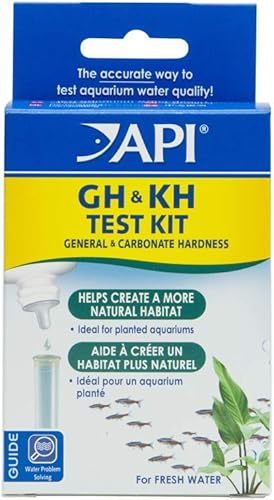
Recommended gear for this guide

Frequently asked questions
Does a planted tank need CO2?
No. With moderate light and hardy plants such as Anubias, Java fern, crypts or mosses, a tank without added CO2 grows well. CO2 becomes necessary with high light, demanding red plants and carpeting plants.
How many bubbles per second of CO2 does my tank need?
As a starting point, 1 bubble per second for 15-25 gallons (60-100 l), but bubble counts are not a reliable measure. Adjust slowly with a drop checker until it turns green near the end of the photoperiod, and make sure your fish breathe normally.
Should I turn CO2 off at night?
Yes. At night plants stop using CO2 and the gas builds up. Use a solenoid on a timer that switches it on 1-2 hours before the lights and off 1 hour before they go out. An air stone running at night adds a safety margin.
What do the drop checker colors mean?
Blue means too little CO2, green means about 30 ppm, which is the target, and yellow means too much. It takes about two hours to show changes, so adjust slowly and read the color near the end of the day.
Can liquid carbon replace CO2?
Only partly. Glutaraldehyde products add some carbon and suppress certain algae, but they don't match a pressurized CO2 system. They can also harm Vallisneria, Riccia and shrimp when overdosed.
You may also like
- GuidePlanted Tank for Beginners: Light, Substrate, Fertilizer and CO2
- GuideHow Many Fish Can You Put in a Tank? Stocking Done Right
- GuideHow to set up a coldwater aquarium: tank size, filter, plants, fish
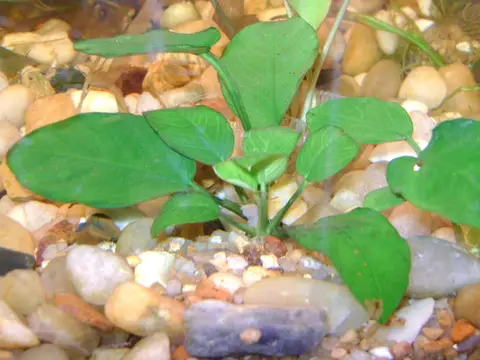 ProfileAnubias nana
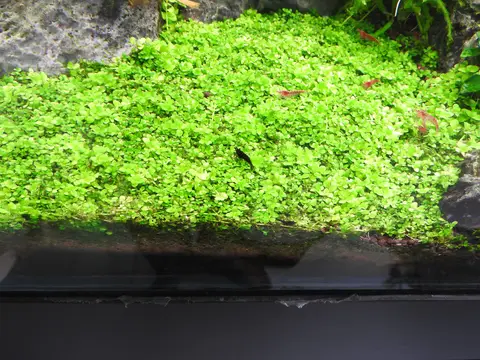 ProfileMonte Carlo
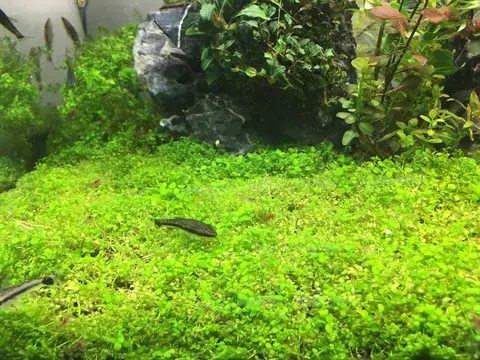 ProfileDwarf baby tears
- Gear reviewAquarium CO₂ systems
- Gear reviewPlanted aquarium LED lights
CO₂, fertilizers & aquascaping → See all guides → Complete aquarium guide →