If you buy through our links, Amazon pays us a small commission at no extra cost to you. That’s how we keep the site running. How we choose.
Contents
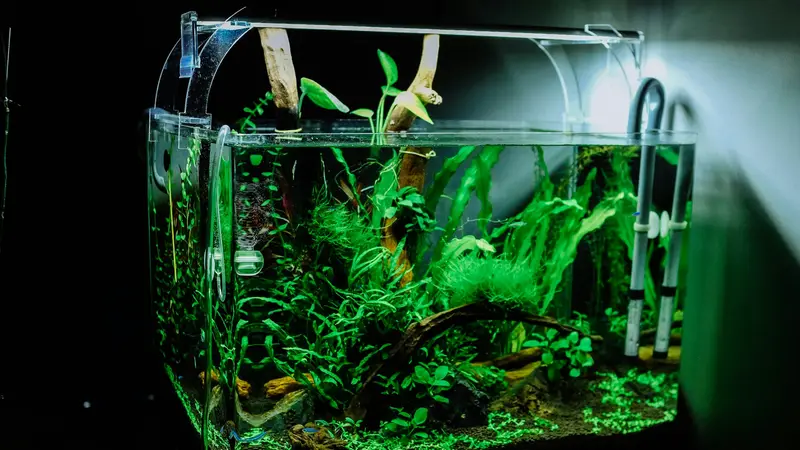
"How many fish can I put in my tank?" is probably the most common question in any fish store or aquarium forum. The short answer: fewer than you think, and not by the formula you were taught. Overstocking is one of the leading causes of cloudy water, algae, stress and fish deaths in beginner tanks. This guide explains why the famous "one inch of fish per gallon" rule doesn't work, which factors really matter, and gives you concrete stocking examples for 15-16, 26 and 53 gallon tanks (60, 100 and 200 L).
In short: always plan around a fish's adult size, respect its minimum school size, factor in territory and behavior, and stay below the maximum so you have a safety margin. A slightly understocked tank is always healthier than one at the limit.
Why the "one inch per gallon" rule fails
The rule says you can keep one inch of adult fish for every gallon of water (in Europe the same idea appears as 1 cm per liter). It sounds handy, but it has serious flaws:
- Not all inches are equal. A 4-inch fish doesn't produce twice the waste of a 2-inch fish, it produces many times more, because volume and body mass grow much faster than length. Ten 1.2-inch neon tetras are nothing like one 12-inch goldfish.
- It ignores tank shape. A 6-inch fish can't live in a tank that is 16 inches long, even if the gallons "add up". Length and footprint matter as much as volume.
- It ignores behavior. Some small fish are very territorial and some big fish are very peaceful. A 5-inch convict cichlid can claim an entire 26-gallon tank when it is breeding.
- It ignores filtration and maintenance. At the same volume, a tank with a good filter, live plants and weekly water changes can handle a much heavier bioload than one with a small filter and irregular care.
- It uses the nominal volume. A "20-gallon" tank actually holds around 16-17 gallons of water once you subtract substrate, rocks and the gap at the top.
It can work as a very rough guide for small, peaceful fish under 2 inches, but never as an absolute rule.
The factors that really matter
1. Adult size
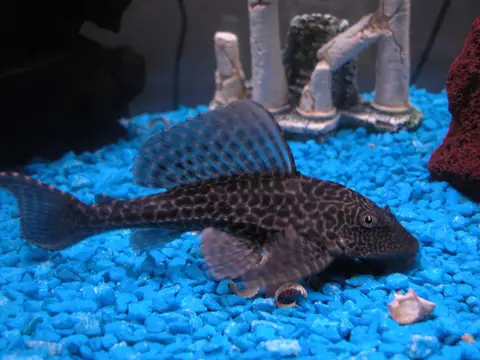
Fish are sold as juveniles. The 2-inch common pleco you bring home will reach 16-20 inches (40-50 cm), a carnival goldfish can grow past 8 inches, and an angelfish reaches 6 inches long and more than 8 inches tall. Always use the adult size listed on each species profile, not the size you see at the store.
2. Minimum school size
Many popular fish live in groups and get stressed alone or in pairs. That shapes your plan: if your tank doesn't have room for a full group of a species, skip that species.
| Species | Adult size | Minimum group | Rough minimum tank |
|---|---|---|---|
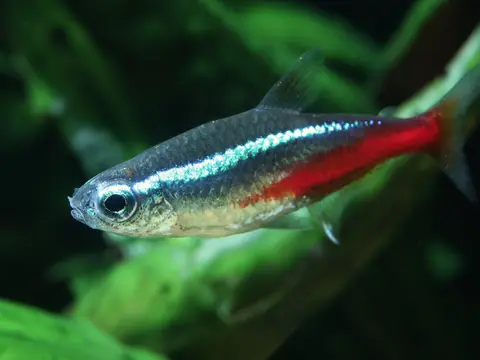
| Neon / cardinal tetra | 1.2-2 in (3-5 cm) | 8-10 | 15 gal (60 L) |
| Harlequin rasbora | 1.6-2 in (4-5 cm) | 8-10 | 15 gal (60 L) |
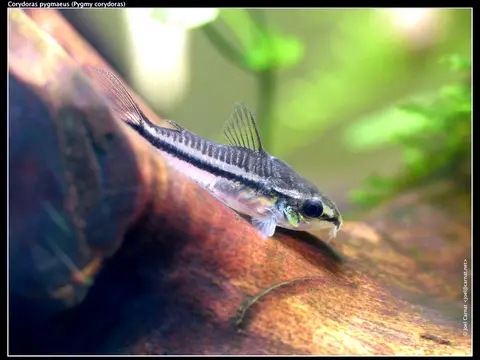
| Pygmy cory | 0.8-1.2 in (2-3 cm) | 8-10 | 10-15 gal (40-60 L) |
| Medium corydoras (peppered, bronze) | 2-2.8 in (5-7 cm) | 6 | 20-26 gal (80-100 L) |
| Otocinclus | 1.6-2 in (4-5 cm) | 5-6 | 15 gal (60 L), mature |
| Tiger barb | 2.4-2.8 in (6-7 cm) | 8-10 | 26-30 gal (100-120 L) |
| Zebra danio | 2 in (5 cm) | 8 | 20 gal long (60-80 L) |
| Cherry shrimp | 0.8-1.2 in (2-3 cm) | 10 | 5-8 gal (20-30 L) |
3. Territory and swimming level
Fish use different zones: top, middle and bottom. Spreading your stock across all three lets you keep more fish without conflict. Cichlids, male gouramis and bettas, on the other hand, defend territory and need their own space; two males of the same species in a small tank usually end badly. Bottom dwellers like pygmy corydoras count against floor area, not gallons.
4. Filtration and maintenance
Your filter should turn over 3 to 5 times the tank volume per hour, more for messy fish. From around 26-30 gallons (100-120 L) up, a canister filter gives you more biological capacity and more stocking headroom. Even so, no filter removes nitrate: your maximum stocking also depends on doing your weekly 20-30% water changes.
5. Plants and decor
Live plants absorb some waste and provide cover, which lowers stress. Large rocks and driftwood, by contrast, take up water volume and swimming space.
Stocking examples for 15, 26 and 53 gallon tanks
These are rough suggestions for cycled, well-filtered tanks with weekly maintenance. Pick one option per tank; don't combine them.
| Tank | Option A | Option B |
|---|---|---|
| 15-16 gal / 60 L (24 in) | 10 neon tetras + 8 pygmy corys + 10 cherry shrimp | 1 male betta + 8 harlequin rasboras + 6 otocinclus (mature tank) |
| 26 gal / 100 L (30-32 in) | 12-15 cardinal tetras + 6 sterbai corys + 1 pair of German blue rams + 1 bristlenose pleco | 6-8 platies (more females than males) + 10 zebra danios + 6 bronze corys |
| 53 gal / 200 L (40 in) | 1 pair of angelfish + 15 lemon tetras + 8 peppered corys + 2 bristlenose plecos | 1 pair of pearl gouramis + 15 harlequin rasboras + 10 cherry barbs + 8 corys + 6 otocinclus |
Notice that no option includes common plecos, oscars, goldfish or clown loaches: these species get too big or need much larger groups and volumes. Goldfish, for example, need their own spacious coldwater setup, not a tropical community tank.
Don't add all your fish at once. Even in a cycled tank, the filter bacteria need time to adjust to a bigger bioload. Add fish in small groups 1-2 weeks apart, starting with the hardiest. If the tank is new, finish the 4-6 week cycle first.
How to work out your tank's stocking
- Find the real volume: subtract 15-20% from the nominal gallons for substrate and decor.
- Measure the front length: as a rule, the tank should be at least 5-6 times the adult length of your biggest fish, and longer for active swimmers.
- Choose your centerpiece fish first (the largest or most demanding) and make sure your tank meets its needs.
- Add full groups of compatible species, spread across swimming levels.
- Check compatibility of temperature, pH and temperament across all species.
- Leave a margin: aim for around 70-80% of what you consider the maximum.
To make it easier, you can use our stocking calculator: enter your tank dimensions and the species you want, and it tells you whether the combination is reasonable, taking adult size, minimum groups and filtration into account.
Common stocking mistakes
- Planning around store size instead of adult size.
- Buying a single fish of a schooling species, or two "so they have company".
- Filling the tank in the first week, before the filter has matured.
- Impulse buying without checking size, temperament or water needs.
- Thinking cleanup crew doesn't count: plecos and corys eat and produce waste too.
- Forgetting about fry: guppies, platies and mollies breed nonstop and can overrun a small tank in a few months.
- Fixing overstocking with a bigger filter: it helps with ammonia, but not with stress, aggression or nitrate.
Signs your tank is overstocked
- Nitrate climbs above 40 ppm just a few days after a water change.
- Ammonia or nitrite show up in a tank that used to be stable.
- Cloudy water or persistent algae despite regular maintenance.
- Fish chasing each other, nipped fins, or fish hiding all the time.
- Fish gasping at the surface, especially in the morning.
If you recognize several of these signs, the fix is to reduce your stock (rehoming fish through a store or another hobbyist, never releasing them into rivers or ponds) or move up to a bigger tank.
Recommended gear for this guide


Frequently asked questions
How many fish can I keep in a 15 or 20 gallon tank?
It depends on the species, but a reasonable setup for about 15 gallons would be a school of 10 neon tetras, 8 pygmy corys and some cherry shrimp, or one male betta with a group of harlequin rasboras. Always choose fish that stay small as adults, in full groups.
Does the one inch per gallon rule work?
Only as a very rough guide for small, peaceful fish. It ignores the fact that big fish produce far more waste, and it doesn't account for territory, tank shape or filtration. It is better to plan around adult size, minimum group size and each species' behavior.
Can I add all my fish on the same day?
It is not a good idea. Even in a cycled tank, the filter bacteria need to adjust to the new bioload. Ideally, add fish in small batches 1-2 weeks apart while testing for ammonia and nitrite.
Does the cleanup crew count toward stocking?
Yes. Corydoras, plecos, otocinclus and snails eat, produce waste and take up space. Some, like the common pleco, grow to 16-20 inches, so they are not suitable for medium-sized tanks.
What happens if my tank is overstocked?
Nitrate rises quickly, algae and cloudy water appear, and fish become stressed, more aggressive and more prone to disease. If that happens, reduce your stock by rehoming fish through a store or another hobbyist, or upgrade to a bigger tank.
You may also like
- GuideHow to set up a coldwater aquarium: tank size, filter, plants, fish
- GuideCleaner fish for aquariums: the clean-up crew myth explained
- GuideHow to Breed Guppies: Ratio, Gestation, Fry Care and Surplus Fish
 ProfileNeon tetra
 ProfileCommon pleco
 ProfilePygmy cory
- Gear review15 gallon aquariums
- Gear review29 gallon aquariums