If you buy through our links, Amazon pays us a small commission at no extra cost to you. That’s how we keep the site running. How we choose.
Contents
Feeding is the part of fishkeeping we enjoy most, and it is also the part that causes the most trouble. Most fish that get sick or die in beginner tanks are not starving: they are overfed. Leftover food rots, drives up ammonia and nitrate, clouds the water and feeds algae. In this guide we cover how much and how often to feed your fish, how to adjust the diet for each type, what to do about bottom feeders, fry and vacations, and how to tell when you are overdoing it.
The golden rule: feed only what your fish eat in 2-3 minutes, once or twice a day, and skip one day a week. If food is still on the bottom after those minutes, give less next time.
How much food: the 2-3 minute rule
There is no weight in grams that works for every tank, because it depends on how many fish you have, how big they are and how active they are. That is why hobbyists use a simple rule: drop in a small pinch, watch, and add a little more only if it is gone in under a minute. After 2-3 minutes, anything still floating or on the substrate is too much. Another useful rule of thumb: a fish's stomach is roughly the size of its eye. A sensible portion for a neon tetra is just two or three tiny bits of flake.
A few guidelines:
- Start small: you can always add more, but you cannot take back food that has already dissolved.
- Crush flakes for small fish; large pieces end up on the bottom.
- Remove leftovers with a net or gravel vac if you overdo it.
- Watch everyone: in a community tank the fast fish hog the food while shy fish go without.
How often to feed each type of fish
For most adult tropical fish, 1-2 feedings a day is plenty. Splitting the same amount into two small meals is better than one big one. Some groups have different needs:
| Fish type | Frequency | Notes |
|---|---|---|
| Community fish (tetras, rasboras, guppies, platies) | 1-2 times a day | Quality flakes or micro pellets, with variety |
| Betta | 1-2 times a day, tiny portions | Very prone to obesity and constipation |
| Goldfish and coldwater fish | 1-2 times a day; less in cold water | Heavy waste producers; below 54-57°F (12-14°C) they eat very little |
| Large cichlids | Once a day or every other day (adults) | Large pellets; juveniles eat more often |
| Bottom feeders (corydoras, plecos, loaches) | Once a day, at lights out | Sinking wafers or tablets |
| Shrimp | Every 1-2 days, very little | They live largely on biofilm and algae |
| Fry | 3-5 times a day, tiny amounts | Powdered food or newly hatched brine shrimp |
Temperature matters: in warmer water metabolism speeds up and fish eat more, while in a cooler tank they eat less. Most tropical fish do best at 75-80°F (24-27°C); see our guide to aquarium temperature for details.
The fasting day and variety
One day a week without food is common and beneficial for healthy adult fish: it helps clear the gut, lowers the risk of constipation and gives the filter a break. Do not do it with fry, or with sick or newly added fish that have not yet recovered.
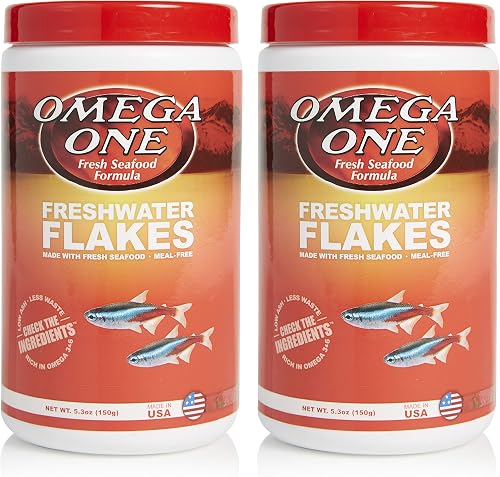
Variety matters as much as quantity. A good base of quality fish flakes or pellets (Tetra, Hikari, API, Omega One and similar brands) covers almost everything, but it is worth adding:
- Frozen food (brine shrimp, daphnia, bloodworms) once or twice a week, thawed in a little tank water.
- Vegetables for herbivores and omnivores: blanched zucchini or cucumber, spinach, or spirulina wafers.
- Freeze-dried food as an occasional treat; soak it first so it does not swell in the stomach.
Check the expiration date and keep food tightly sealed in a cool place: opened flakes lose vitamins within a few months. Buy small containers if you only have a few fish.
Bottom feeders, fry and shrimp
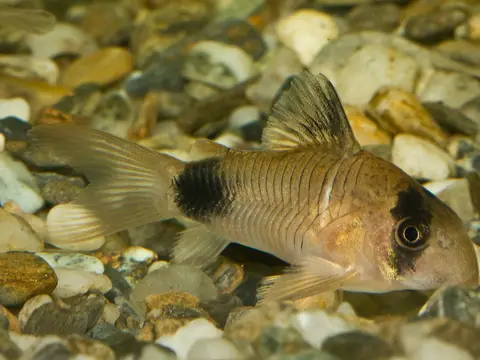
Bottom feeders do not live on leftovers. Panda corys and other corydoras, bristlenose plecos and loaches need their own food: wafers or pellets that sink quickly. Drop them in just before lights out, when the midwater fish are less active, and make sure they reach the bottom. See our roundup of food for bottom feeders for options. Plecos also need driftwood and vegetables.
Fry have tiny stomachs and grow very fast, so they need small, frequent meals: 3 to 5 feedings a day of powdered food, flakes ground between your fingers or baby brine shrimp. If you breed livebearers, our guide on how to breed guppies goes into detail. With fry, frequent water changes are even more important, because uneaten food piles up quickly.
Shrimp mostly graze on the biofilm that grows on plants, wood and glass. In a mature tank a very small pinch every day or two is enough.
What to do when you go on vacation
A healthy adult fish in a stable tank can easily go 3 to 7 days without food. For short trips the best plan is to do nothing: a little fasting is safer than too much food. For longer absences:
- Automatic feeder: automatic fish feeders dispense flakes or pellets at set times. Test it for a week before you leave and set it to half the usual portion.
- A neighbor or relative: leave food pre-portioned in a weekly pill organizer. That way they cannot overfeed with the best intentions.
- Vacation feeder blocks: plaster or gel blocks can cloud the water and upset parameters; use them with caution.
You will find more tips in our guide on what to do with your aquarium on vacation.
Signs that you are overfeeding
Watch out for overfeeding: it is the most common cause of high ammonia and nitrite in tanks that are already cycled. If you see several of these signs, cut the portion in half and do a 25-30% water change.
- Leftover food on the substrate or plants after 5 minutes.
- Cloudy or milky water and a bad smell.
- More algae and an explosion of small pest snails.
- Nitrate climbing fast between water changes, or detectable ammonia and nitrite.
- Bloated, sluggish fish or long strings of waste trailing behind them.
- An oily film on the water surface.
Common feeding mistakes
- Feeding every time the fish "beg": they always look hungry; it is instinct.
- Giving everyone the same food: bottom feeders and herbivores need their own diet.
- Using flakes opened a year ago: they lose nutritional value.
- Feeding heavily right after setting up the tank, before cycling is complete.
- Letting someone else feed without pre-measured portions while you are away.
- Not removing leftover vegetables or frozen food.
Feeding small, varied and regular meals is one of the simplest ways to keep the water clean and your fish healthy.
Recommended gear for this guide


Frequently asked questions
How many times a day should I feed my fish?
Most adult aquarium fish do well with one or two feedings a day, giving only what they eat in 2-3 minutes. Fry need 3 to 5 very small meals a day, and some large adult cichlids can eat once a day or every other day.
How long can fish go without food?
A healthy adult fish in a stable tank can easily go 3 to 7 days. Fry and very small fish tolerate fasting much worse. For longer absences use an automatic feeder or ask someone to help with pre-portioned food.
Is a weekly fasting day good for fish?
Yes, for healthy adult fish. It helps clear the gut, prevents constipation and reduces the load on the filter. Do not apply it to fry, sick fish or newly added fish.
Do bottom feeders live on leftovers?
No. Corydoras, plecos and loaches need their own sinking food, such as wafers or bottom pellets. It is best given at lights out so it reaches the bottom before other fish eat it.
How do I know if I am overfeeding?
If food is left after 5 minutes, the water turns cloudy, algae or snails multiply, or nitrate rises very quickly, you are feeding too much. Reduce the portion and do a water change.
You may also like
- GuideAquarium Water Changes: How Much, How Often and How To
- GuideHow Many Hours of Light Does an Aquarium Need? Photoperiod Guide
- GuideLeaving Your Fish Tank on Vacation: Food, Lights and Heat
- GuideAquarium Temperature: Ideal Range, Heaters, Summer and Outages
- Gear reviewFish flakes and micro pellets
 ProfilePanda cory
- Gear reviewFood for bottom feeders
- Gear reviewAutomatic fish feeders