If you buy through our links, Amazon pays us a small commission at no extra cost to you. That’s how we keep the site running. How we choose.
Contents
A planted tank isn't just prettier. Plants soak up nitrate and phosphate, compete with algae, give fish cover and make the water more stable. The trouble is that many beginners buy a handful of plants, push them into inert gravel under the stock light and, three weeks later, are looking at see-through leaves and algae everywhere. This guide covers the four pillars of a planted aquarium (light, substrate, fertilizer and carbon), the difference between a simple low-tech setup and a high-tech one, which plants to start with, how to plant and trim them, and how to keep the balance that keeps algae away.
The short version: start low-tech (moderate light, no CO2, slow and hardy plants), plant heavily from day one, run the light 6-8 hours a day on a timer and dose fertilizer lightly but consistently. Once that works, you can level up.
The four pillars: light, substrate, fertilizer and carbon
A plant needs light for photosynthesis, carbon (CO2) to build tissue, and nutrients it pulls from the water column and the substrate. The golden rule is that these factors have to be in balance: whatever is missing limits growth, and whatever is left over feeds algae. Lots of light with little CO2 and little fertilizer is the classic recipe for disaster.
Light
Light is the engine: the more light, the faster plants grow and the more CO2 and fertilizer they need. Plant-focused LED fixtures (Chihiros, Twinstar, Fluval Plant and similar) offer full-spectrum output and dimming. A low-tech tank does fine with moderate light; carpeting plants and red plants need a lot more. What doesn't change is the photoperiod: 6-8 hours a day, starting with 6 in a new tank. Extra hours don't make up for weak intensity and almost always bring algae. We go deeper in how many hours of light an aquarium needs, and our roundup of planted tank LED lights explains what to look for.
Substrate
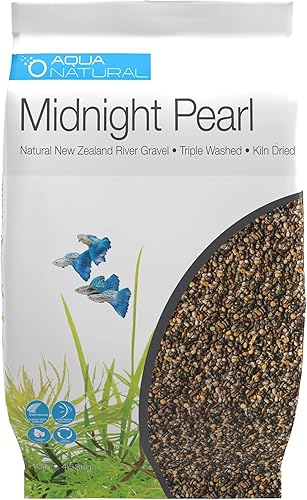
There are two routes. Aqua soil (from ADA, Tropica, Fluval Stratum, Dennerle and others) is baked, nutrient-rich clay granules that boost root growth, lower KH and pH a little and form the base of almost every aquascape. The downside: it leaches ammonia for the first few weeks and is spent after one or two years. The alternative is inert gravel or sand with a nutrient layer underneath, or with root tabs pushed in next to heavy root feeders. It works very well in simple setups. Compare options in our guide to planted tank substrates.
Fertilizer
Plants use macronutrients (nitrogen, phosphorus and potassium) and micronutrients (iron, magnesium, manganese and more). In a lightly stocked tank full of plants, fish waste doesn't supply enough, and potassium and iron are usually the first to run short. An all-in-one liquid fertilizer dosed once or twice a week after the water change covers most low-tech tanks. High-tech tanks are dosed almost daily. Always start at half the manufacturer's dose and increase if you see deficiencies.
Carbon (CO2)
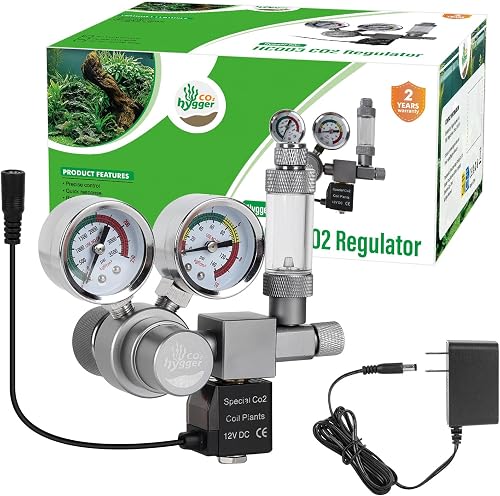
CO2 is the scarcest nutrient in aquarium water: a tank without injection sits around 3-5 ppm, while demanding plants perform best at 20-30 ppm (mg/L). That's why CO2 is the dividing line between the two kinds of planted tank.
Low-tech vs high-tech: do you need CO2?
No, not to get started. A huge number of plants grow well without added CO2, just more slowly. Here is how the two approaches compare:
| Aspect | Low-tech (no CO2) | High-tech (CO2) |
|---|---|---|
| Light | Low to medium | Medium-high to high |
| CO2 | None (liquid carbon at most) | Pressurized cylinder, 20-30 ppm |
| Fertilizer | Weekly, low doses | Daily or nearly, high doses |
| Growth | Slow: trim every few weeks | Fast: trim weekly |
| Plant options | Anubias, ferns, crypts, mosses, vallisneria | Plus carpets, red plants and fine stems |
| Algae risk when something slips | Low: forgiving system | High: imbalance shows within days |
| Maintenance | Light | Heavy and constant |
If you later want a carpeted foreground or deep reds, our guide to CO2 in the aquarium explains how to set up a system safely.
Easy plants to start with
For a first planted tank, pick hardy species that tolerate low light and don't need CO2. These are the most rewarding:
- Anubias nana: nearly indestructible, grows attached to wood or rock. Very slow.
- Java fern: an epiphyte like anubias, ideal for hiding filter intakes and dressing driftwood.
- Cryptocoryne wendtii: a rooted plant for the foreground and midground. It may "melt" after planting but grows back.
- Java moss: covers wood and rock and makes perfect cover for shrimp and fry.
- Vallisneria and Amazon sword: background plants; the sword appreciates root tabs.
- Hygrophila and Ludwigia: fast-growing stems that soak up nutrients and hold algae back in the first weeks.
- Floating plants such as Salvinia or red root floaters: heavy nitrate users that also give shade (keep them to a third of the surface).
Plants like Rotala rotundifolia grow without CO2 but only turn reddish under good light. Carpeting plants such as Hemianthus callitrichoides "Cuba", on the other hand, are high-tech territory.
How to plant
- Prep the plants: gently remove the pot and rock wool, trim overly long roots and pull off damaged leaves. For tissue-culture cups, rinse off the gel.
- Plant with the tank half full or with the substrate just damp: it's much easier. Use long tweezers to push in stems and small plants.
- Roots buried, crown free: with crypts and swords, bury the roots but leave the base of the leaves above the substrate.
- Never bury epiphytes: anubias, Java fern and Bucephalandra are tied on with thread or glued with cyanoacrylate gel to wood and rock. A buried rhizome rots.
- Stems one by one: separate the bunch and plant each stem individually, about half an inch to an inch (1-2 cm) apart, stripping the leaves from the buried part.
- Plant heavily from the start: the more plant mass, the less room and food for algae.
Important: never dump trimmings or spare plants down the drain, into a stream or into a pond. Many aquarium plants are invasive, and several are regulated or banned in some states. Give them away, trade them, or dry them out and put them in the trash.
Trimming and maintenance
Stem plants are trimmed by cutting off the top with long scissors; the cut top can be replanted and the stem left behind branches out. If the lower stems have gone bare, replant the tops and pull the old bases. With rosette plants (swords, crypts), cut the oldest outer leaves at the base. Epiphytes barely need trimming: just remove leaves that are yellow or covered in algae.
The weekly routine for a planted tank is simple: a 20-30% water change, remove dead leaves, trim anything shading the plants below, wipe the glass and dose fertilizer. A small cleanup crew helps a lot: otocinclus, shrimp and nerite snails eat algae without harming plants.
Keeping the balance: how to avoid algae
Algae don't show up simply because of "too many nutrients"; they appear because of imbalance: more light than the plants can use with the CO2 and fertilizer available, or plants that stall and leave nutrients unused. These signs help you adjust:
| Symptom | Likely cause | What to do |
|---|---|---|
| Yellow older leaves | Nitrogen or potassium deficiency | All-in-one fertilizer, check nitrate |
| Pale or white new leaves | Iron deficiency | Micronutrients with iron |
| Pinholes in leaves | Potassium deficiency | Fertilizer with potassium |
| Black beard or brush algae | Low or unstable CO2 under strong light | Dim the light or improve CO2 |
| Green spots on the glass | Too much light or high phosphate | Shorten the photoperiod |
If you already have a serious outbreak, see our guide to aquarium algae. And remember: the tank must be fully cycled before fish go in, even if it's packed with plants.
Common mistakes
- Planting sparsely "to test things out": algae fill the gap. Better to fill the tank from the start with cheap fast growers.
- Leaving the light on 10-12 hours: plants can't use it, algae can.
- Choosing demanding plants without CO2: carpets and red plants fall apart in a low-tech tank.
- Burying anubias and ferns: the rhizome rots.
- Fertilizing without watching or testing: neither blind dosing nor none at all; start at half dose and adjust to what the plants show you.
- Buying plants that aren't aquatic: some stores sell land plants (dracaena, "lucky bamboo", syngonium) that rot underwater.
- Changing everything at once: if you adjust light, fertilizer and CO2 on the same day, you won't know what worked.
Recommended gear for this guide

Frequently asked questions
Can you have a planted tank without CO2?
Yes. With moderate light and hardy plants such as anubias, Java fern, crypts, mosses or vallisneria, a tank without added CO2 grows well and needs very little work. Only carpeting plants, intense red plants and some fine stems truly need CO2.
What is the best substrate for aquarium plants?
Aqua soil is the easiest option for root feeders and carpeting plants. If you prefer inert gravel or sand, it works well with root tabs pushed in next to rooted plants. Epiphytes such as anubias and ferns don't depend on the substrate at all.
How many hours of light do aquarium plants need?
Between 6 and 8 hours a day on a timer. In a new tank, start with 6 hours and increase gradually if plants grow well and no algae appear. Extra hours won't make up for a weak light.
Why are my crypts melting?
It's a normal reaction to new conditions: leaves grown emersed or in another tank break down after transplanting. If the roots are healthy, leave the plant where it is; it usually grows back with submerged leaves in two or three weeks.
How often should I fertilize aquarium plants?
In a low-tech tank, liquid fertilizer once or twice a week after the water change is enough, starting at half the recommended dose. Tanks with CO2 and strong light are dosed almost daily because the plants use much more.
You may also like
- GuideCO2 in a Planted Tank: When You Need It and How to Dial It In
- GuideHow Many Fish Can You Put in a Tank? Stocking Done Right
- GuideHow to set up a coldwater aquarium: tank size, filter, plants, fish
- GuideHow Many Hours of Light Does an Aquarium Need? Photoperiod Guide
- Gear reviewPlanted aquarium LED lights
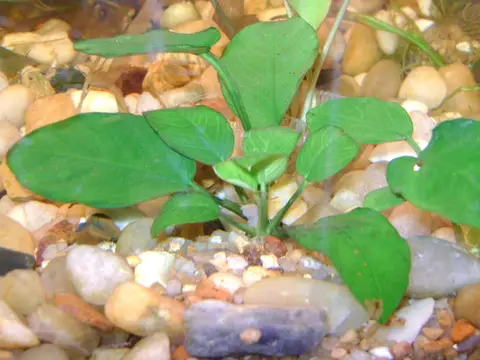 ProfileAnubias nana
- Gear reviewPlanted aquarium substrates
- Gear reviewAquarium plant fertilizers
CO₂, fertilizers & aquascaping → See all guides → Complete aquarium guide →