If you buy through our links, Amazon pays us a small commission at no extra cost to you. That’s how we keep the site running. How we choose.
Contents
Our top 3 picks
Stock checked on October 7, 2026

canister filters comparison, in stock
Fluval FX6 High Performance Canister Filter for Aquariums Up to 400 Gallons
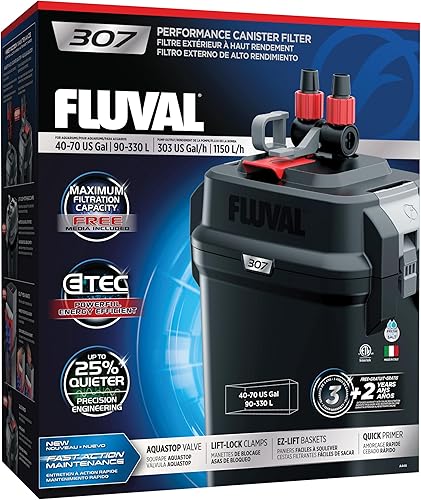
Fluval 307 Perfomance Canister Filter for Aquariums up to 70 Gallons

Fluval 207 Perfomance Canister Filter for Aquariums up to 45 Gallons

Fluval 407 Performance Canister Filter - For Aquariums Up To 100 Gallons

Fluval 107 Perfomance Canister Filter for Aquariums up to 30 Gallons
Penn-Plax Cascade 1000 Canister Filter - 265 GPH Aquarium Filter for Tanks Up to 100 Gallons - 360 Degree Flow Valves…
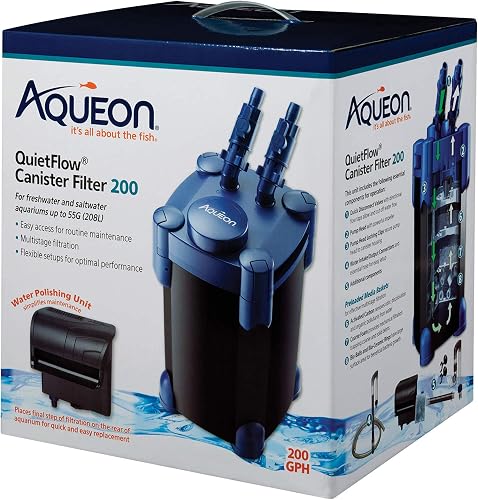
Aqueon QuietFlow Canister Aquarium Filter up to 55 Gallons

Aqueon QuietFlow Aquarium Fish Tank Canister Filter For 55-100 Gallon Aquariums
AcuarioSano rating: combines the average rating and the number of buyer reviews on Amazon. No brand pays to be featured.
How a canister filter works
A canister filter is a sealed container that sits in the stand, below the aquarium. An intake tube draws water down into the canister, pushes it through several media baskets, and a motor sends it back to the tank through the return line, usually via a spray bar or an outlet nozzle. Because the canister lives outside the tank, it can hold far more media than an internal filter without taking space from fish or decor.
That capacity is the big advantage: more surface for the bacteria that convert ammonia into nitrite and nitrite into nitrate. A properly sized canister keeps water stable, forgives the odd overfeeding and is the standard choice for tanks of about 30 gallons (110 l) and up, especially planted tanks and tanks with large fish.
What flow rate you need
The rule of thumb is a filter that turns over 3 to 5 times the tank volume per hour. For a 55-gallon (210 l) tank that is roughly 165-275 GPH (600-1,000 l/h). Keep in mind that the rated flow is measured with an empty filter and no hoses; once the baskets are full and dirt builds up, real flow drops a lot, often by 30-40%. So pick a model a step above the bare minimum.
| Tank | Real flow (approx.) | Canister volume | Notes |
|---|---|---|---|
| 15-25 gal (60-100 l) | 80-130 GPH (300-500 l/h) | 0.8-1.5 gal (3-6 l) | only if you want the filter out of sight |
| 25-55 gal (100-200 l) | 130-240 GPH (500-900 l/h) | 1.5-2.5 gal (6-10 l) | the most common range |
| 55-90 gal (200-350 l) | 240-400 GPH (900-1,500 l/h) | 2.5-4 gal (10-15 l) | three or four baskets |
| Over 90 gal (350 l) | 400 GPH (1,500 l/h) or more | 4 gal (15 l) or more | or two mid-size canisters |
There are exceptions: goldfish and large cichlids such as the oscar are messy and benefit from the top of the range or beyond. A goldfish tank should never get an undersized canister: oversizing is the safer bet.
What to check on the spec sheet
- Media baskets: more and larger baskets give you more freedom to combine sponge, ceramic rings and floss. Three or four is ideal.
- Priming system: a push button or hand pump that starts the filter without sucking on the hose. It saves a lot of time after every cleaning.
- Shut-off valves: they let you disconnect the hoses without draining anything. If they are not included, buy a set separately.
- Noise: models from established brands (Fluval, Eheim, Oase, Penn-Plax, Marineland) are usually very quiet; read reviews if the tank is in a bedroom.
- Power draw and parts: a filter runs 24/7, so a few watts make a difference over a year. Make sure impellers and O-rings are easy to find.
Tip: put coarse sponge in the first basket, ceramic rings in the middle ones and fine floss last. That keeps the biological media from clogging and gives you crystal-clear water. More detail in our guide to filter media.
Setup and maintenance
Place the canister below the waterline, inside the stand, and check that the O-ring is seated properly before plugging in. Fill the canister with water, open the valves and prime it. A new filter takes weeks to build a full bacterial colony: that is part of cycling the aquarium, so do not add all your fish on day one.
Maintenance is infrequent: every 4-8 weeks, or when you notice flow dropping clearly. Rinse the sponges in tank water removed during your water changes, replace the floss if it is very dirty and leave the ceramic media almost untouched.
Warning: never rinse biological media under the tap or replace all of it at once. Chlorine and a full clean-out kill the bacteria and can trigger an ammonia or nitrite spike. And do not leave the filter switched off for hours: without flow, the bacteria run out of oxygen.
Common mistakes
- Trusting the rated flow and buying a filter that only just matches your gallons.
- Placing the canister above the tank or far from it, with overly long hoses.
- Not checking the O-ring and fittings after opening it: a slow drip ends up as a flood.
- Deep-cleaning everything on the same day you change water and vacuum the gravel.
- Running a canister on full blast in a small betta tank: far too much current.
We compare spec sheets, verified reviews and real-world use criteria, but we do not physically test the products: treat the models above as a starting point and confirm flow rate, baskets and canister volume on each listing.
Frequently asked questions
What flow rate should a canister filter have?
Three to five times the tank volume per hour. Because rated flow drops once the media is in and dirt builds up, choose a model a little above that. For a 55-gallon tank, look for roughly 200-275 GPH rated.
How often should you clean a canister filter?
Usually every 4 to 8 weeks, or when flow drops noticeably. Rinse the sponges in tank water, replace the floss if it is very dirty and barely touch the ceramic media so you keep the beneficial bacteria.
Are canister filters noisy?
Good models are very quiet, often quieter than internal or hang-on-back filters. Noise usually comes from air trapped after cleaning, a dirty impeller or a badly seated O-ring, and is fixed by priming properly and cleaning the impeller.
Is a canister filter worth it on a 20-gallon tank?
It can make sense if you want to hide the equipment or run a planted tank, but it is not essential. Below about 30 gallons a good hang-on-back or internal filter does the job well and costs less.
You may also like
 Gear reviewAquarium filter media
 Gear reviewInternal aquarium filters
 Gear reviewHang-on-back filters
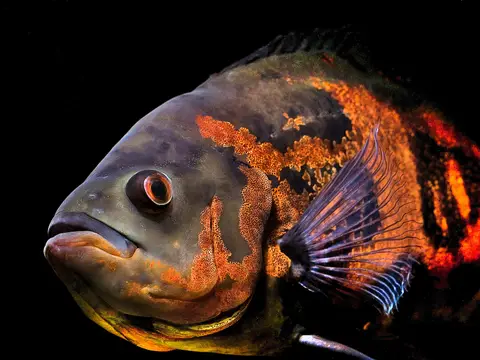 ProfileOscar
 ProfileCommon goldfish
- GuideAquarium Cycling: The Nitrogen Cycle, Testing and When to Add Fish
- GuideAquarium Without a Filter or Heater: Can You Do It Safely?
- GuideAquarium Temperature: Ideal Range, Heaters, Summer and Outages