If you buy through our links, Amazon pays us a small commission at no extra cost to you. That’s how we keep the site running. How we choose.
Contents
"Can I keep fish without a filter?" is one of the most common questions in the hobby, and it nearly always comes with a second one: "what about without a heater?". There are usually good reasons behind it: noise, power use, the look of a tank with no cables, or the appeal of an ecosystem that runs itself. The honest answer is that filterless aquariums that work do exist, but they are the exception, they come with a lot of conditions, and they are not suitable for most of the fish sold in stores. In this guide we explain what a filter actually does, how the Walstad method works, which species cope with unheated water and what the simplest, safest alternative is.
Bottom line: a heavily planted tank with a very light stocking, mostly shrimp and snails, can run without a filter if you set it up patiently. For everything else, the sensible answer is a sponge filter driven by a small air pump: it is quiet, uses very little power and keeps your animals safe. You can skip the heater only if you choose coldwater species and the room never drops below their range.
What a filter really does
Many people think a filter is there to keep the water clear. That is the least of it. Its main job is biological: the sponge or ceramic rings house millions of bacteria that convert highly toxic ammonia into nitrite and then into nitrate, which is far less harmful. That is the nitrogen cycle we explain in our guide to cycling an aquarium. A filter also moves the water, breaks the surface and improves gas exchange, so oxygen gets in and the CO₂ produced by the fish gets out.
Without a filter, those bacteria still live in the substrate, the decor and on the plants, but there are far fewer of them and the water barely moves. That is why a filterless tank handles a much smaller bioload: every fish, every pinch of food and every rotting leaf counts for more.
Can you have an aquarium without a filter? When yes and when no
| Situation | No filter? | Why |
|---|---|---|
| Heavily planted tank of 10-15 gallons (40-60 L) or more with shrimp and snails | Possible | Plants absorb ammonia and invertebrates produce very little waste |
| The same tank with a small group of tiny fish | Possible with experience | Needs a very light stocking and regular water testing |
| A typical community tank with medium-sized fish | No | Too much waste for plants alone to process |
| Goldfish, in any container | Never | They produce huge amounts of waste and need plenty of oxygen |
| Betta in a small bowl | Never | Little water, no stability and no warmth: it suffers and gets sick |
| A brand-new tank | No | There are no established bacteria or plants yet |
The Walstad method: a planted tank that almost runs itself
The best-known example of a filterless aquarium is the method popularized by biologist Diana Walstad. The idea is simple: let the plants do the filter's job. Fast-growing plants take up ammonia directly as food, long before it builds up, and a layer of soil on the bottom feeds them for months. It works, but only if you respect its conditions:
- Capped soil substrate: a thin layer (about 1 inch / 2-3 cm) of soil with no added fertilizers, capped with another inch of sand or fine gravel so it does not cloud the water.
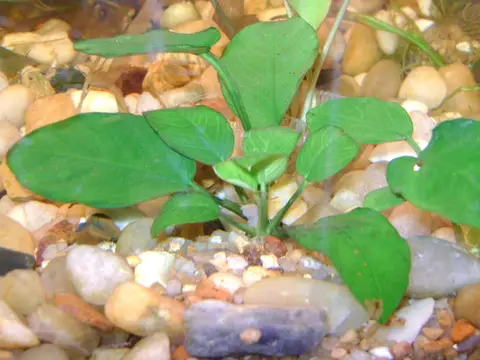
- Lots of plants from day one: ideally cover much of the bottom and add floating and fast-growing plants such as hornwort or salvinia, which absorb nutrients very quickly. Slow growers like Anubias nana look great but filter very little.
- Good lighting: without enough light the plants stop growing and stop using ammonia. A timer set to 6-8 hours is typical.
- Minimal stocking: the best inhabitants are cherry shrimp and small snails, which also clean up leftovers. If you add fish, keep them few and tiny.
- Patience: the tank needs at least 4-6 weeks to settle, just like a normal cycle, and several months to fully balance.
- Light feeding: the inhabitants find part of their food in the tank itself, so feed sparingly.
These tanks usually need fewer water changes, but not zero: you still top off evaporation with dechlorinated water, remove dead leaves and test for ammonia and nitrite now and then, especially in the first few months.
What about no heater? Coldwater species
The heater is a separate question. Most aquarium fish are tropical and need a stable 75-80 °F (24-27 °C). Indoors, room temperature often falls below 68 °F (20 °C) in winter, and that weakens their immune system. Some species, however, do well in unheated water as long as the room stays within their range:
| Species | Approximate temperature | Notes |
|---|---|---|
| White cloud mountain minnow | 57-72 °F (14-22 °C) | Small, schooling, ideal for cool water |
| Medaka (ricefish) | 59-82 °F (15-28 °C) | Very hardy and peaceful |
| Cherry shrimp | 64-79 °F (18-26 °C) | Breed more slowly in cool water |
| Small snails | 64-79 °F (18-26 °C) | Clean up leftovers and algae |
| Betta | 75-82 °F (24-28 °C) | Tropical: always use a heater |
A word on goldfish: they are coldwater fish, so they do not need a heater, but they do need plenty of space and a powerful filter. They are exactly the fish that copes worst with a filterless tank.
Important: no unfiltered bowls for goldfish or bettas. Bowls are small, unstable, short on oxygen and, for a betta, lack the warmth it needs. Surviving a few months does not mean the fish is fine: the suffering usually goes unnoticed until it gets sick.
The risks of going filterless
- Ammonia spikes: a hidden dead animal or overfeeding can poison the water within a day.
- Low oxygen: especially in summer, when the water is warm, and at night, when plants consume oxygen too.
- Surface film that cuts gas exchange even further.
- Algae if there is more light or nutrients than the plants can use.
- Less room for error: what would be a small slip in a filtered tank can cost lives here.
The safest alternative: a sponge filter with an air pump
If noise, power use or current is what puts you off, the answer is a sponge filter. It runs on a small air pump: bubbles rise through a tube and pull water through the sponge, where the bacteria live. It has plenty of advantages:
- Uses very little power, usually just a few watts.
- Creates a gentle flow, perfect for bettas, shrimp and small fish.
- Does not suck up baby shrimp.
- Oxygenates the water while it filters.
- Takes a minute to clean: just squeeze the sponge in tank water.
Paired with lots of plants, a sponge filter gives you the best of both worlds: the natural look of a planted tank and the safety of stable biological filtration. If your species are tropical, add a thermostatic heater of roughly 4 watts per gallon (about 1 watt per liter).
Common mistakes
- Removing the filter from an established tank and expecting the plants to take over overnight.
- Setting up a filterless tank and filling it with fish in the first week.
- Using few plants, or only slow growers, in a tank without filtration.
- Keeping goldfish in an unfiltered bowl because "they're coldwater fish".
- Keeping a betta without a heater in a room that drops below 72 °F (22 °C).
- Skipping water tests because the tank "looks" clean.
- Using invasive plants or dumping leftovers outdoors: never release plants or animals into the wild.
Recommended gear for this guide


Frequently asked questions
Can fish live without a filter?
A few tiny fish can live without a filter in a heavily planted, lightly stocked tank, but most fish need filtration so ammonia does not build up and the water stays oxygenated. For a typical aquarium, a sponge filter is the safest choice.
Which fish don't need a heater?
Coldwater and temperate species such as the white cloud mountain minnow or the medaka do well without a heater if the room stays within their range. Goldfish don't need one either, but they do need a large tank with a good filter.
Can a betta live without a filter or heater?
It is not recommended. Bettas are tropical and need a stable 75-82 °F (24-28 °C), so a heater is essential. A gentle sponge filter keeps the water healthy without blowing the fish around.
What is the Walstad method?
It is a way of setting up an aquarium with a layer of soil capped with sand and a very large number of plants, so the plants absorb waste instead of a filter. It works with a very light stocking and takes several weeks of patience before adding animals.
Is a sponge filter noisy?
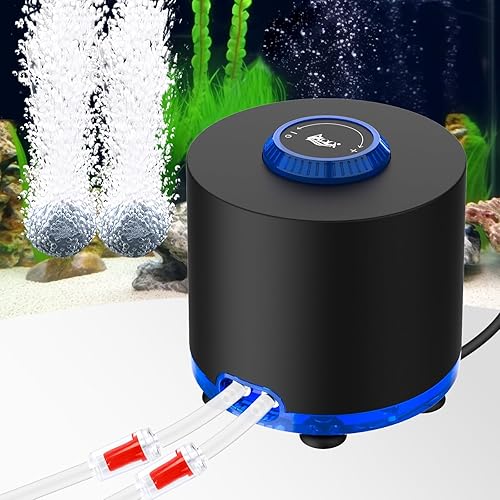
The filter itself is silent; what you hear is the air pump and the bubbling. A good-quality air pump placed on a soft surface, with a valve to adjust the airflow, is very discreet, even in a bedroom.
You may also like
- GuideAquarium Temperature: Ideal Range, Heaters, Summer and Outages
- GuideFirst Aquarium for Beginners: Tank Size, Equipment and Easy Fish
- GuideHow Much Does an Aquarium Cost? Setup Budget and Real Monthly Costs
- Gear reviewSponge filters
- GuideAquarium Cycling: The Nitrogen Cycle, Testing and When to Add Fish
 ProfileAnubias nana
- Gear reviewAquarium air pumps and air stones
- Gear reviewAquarium heaters
Filters & filtration → See all guides → Complete aquarium guide →