If you buy through our links, Amazon pays us a small commission at no extra cost to you. That’s how we keep the site running. How we choose.
Contents
Overview
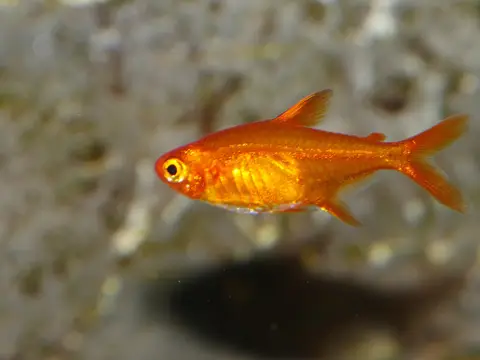
The ember tetra is a tiny fish, barely 0.8 inches (2 cm) long, with a fiery orange-red color that resembles a glowing ember, hence the name. Described in 1987, it comes from the Araguaia River basin in central Brazil, where it lives in calm, heavily vegetated water full of leaf litter. Today it is bred regularly, and almost all fish in the trade are captive-bred.
It has become a favorite for small planted tanks and aquascapes: its color stands out beautifully against green plants, it is peaceful and it gets along with shrimp. It suits beginners as long as the tank is cycled and you keep its small size in mind when choosing tank mates.
Care and tank setup
A school of ten can live in a well-planted tank of about 10 gallons (40 L), although they look and behave better in 16 gallons (60 L) or more. They need a heater and gentle filtration, with a sponge over the intake so the smallest fish are not sucked in.
- Aquascape: fine-leaved plants, mosses, driftwood, Indian almond leaves and some shade from floating plants. A dark background intensifies the orange.
- Tank mates: dwarf shrimp, chili rasboras, other Boraras, pygmy corydoras, otocinclus, pencilfish and snails. It is an excellent fish for a shrimp tank.
- Avoid: anything large enough to swallow it, such as angelfish or big gouramis, and boisterous barbs that intimidate it.
Common mistakes: keeping only four or five, which makes them shy, and feeding food that is too large. Do weekly water changes and never release them into the wild.
Feeding
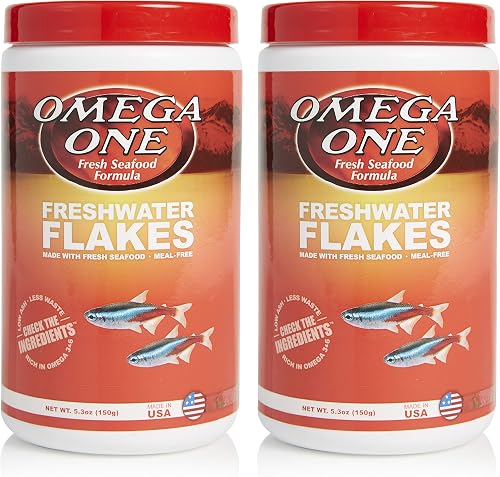
An omnivore with a very small mouth. Offer crushed flakes, micro pellets or powdered nano foods, and supplement with small live or frozen foods: baby brine shrimp, cyclops, daphnia or moina. Give small pinches once or twice a day. In heavily planted tanks it also grazes on microfauna among the leaves. If you keep shrimp with them, they will clean up what falls to the bottom, but do not overfeed.
Breeding
Ember tetras scatter their eggs among mosses and fine plants, with no parental care. In mature, densely planted tanks with plenty of moss and no other predators, fry sometimes appear on their own. For controlled breeding, use a separate tank with Java moss, soft water and dim lighting, and feed the fry infusoria. The parents and shrimp eat eggs and larvae, so only a few fry survive in a community tank.
Compatible tank mates
Species from our database that share water parameters, size and temperament with the Ember tetra. Calculated from the data in each profile.
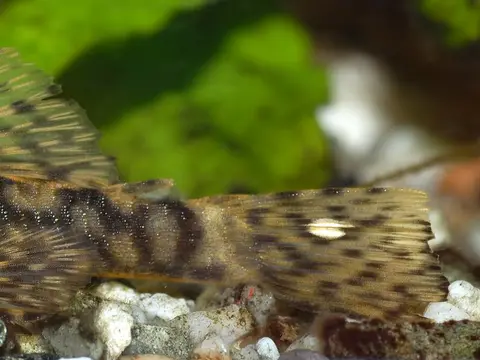 Bristlenose pleco Ancistrus sp. 26 gal (100 L) · 72–81 °F (22–27 °C)
 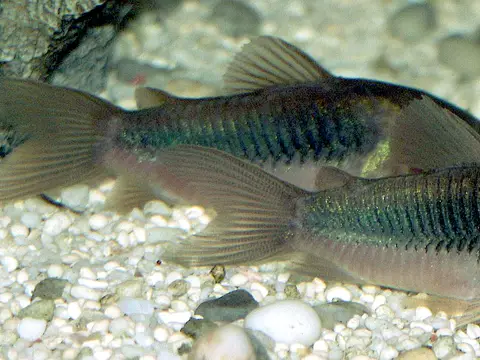 Bronze cory Corydoras aeneus 21 gal (80 L) · 72–81 °F (22–27 °C)
 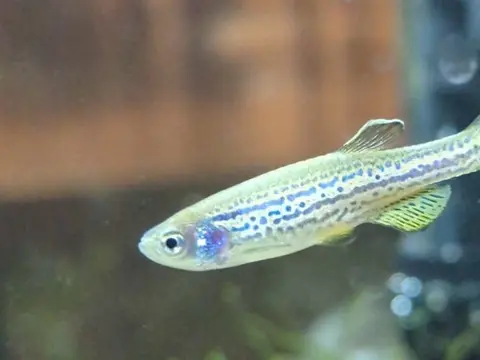 Zebra danio Danio rerio 16 gal (60 L) · 64–77 °F (18–25 °C)
 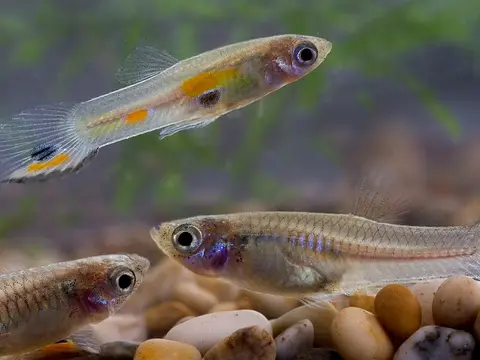 Guppy Poecilia reticulata 14 gal (54 L) · 72–82 °F (22–28 °C)
 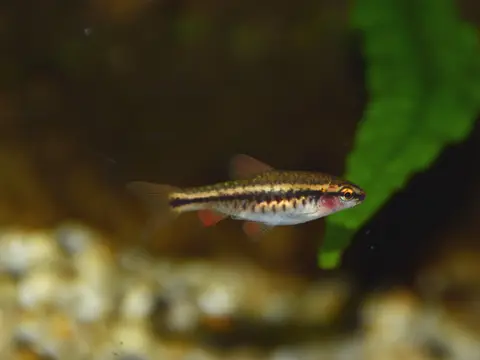 Cherry barb Puntius titteya 16 gal (60 L) · 73–81 °F (23–27 °C)
 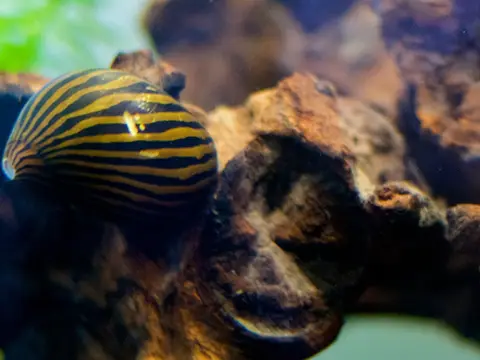 Nerite snail Neritina natalensis 5 gal (20 L) · 72–82 °F (22–28 °C)
 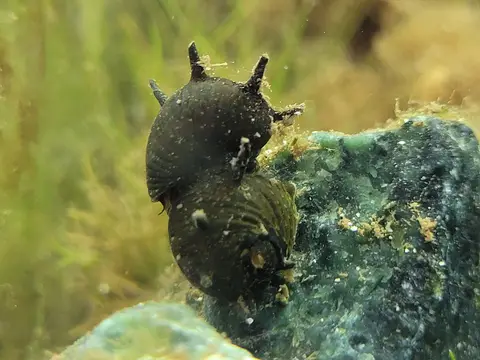 Horned nerite snail Clithon corona 5 gal (20 L) · 72–82 °F (22–28 °C)
 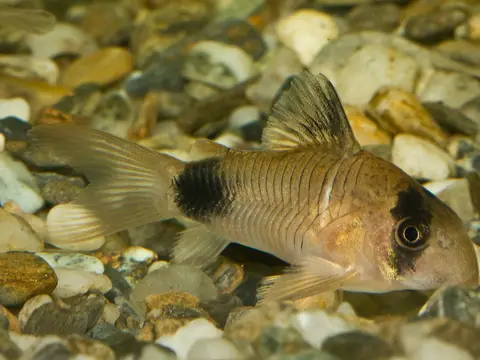 Panda cory Corydoras panda 16 gal (60 L) · 68–77 °F (20–25 °C)
 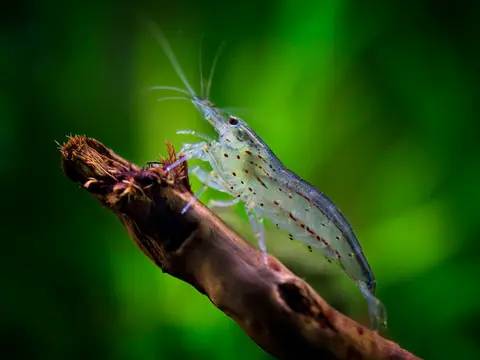 Amano shrimp Caridina multidentata 11 gal (40 L) · 64–82 °F (18–28 °C)
 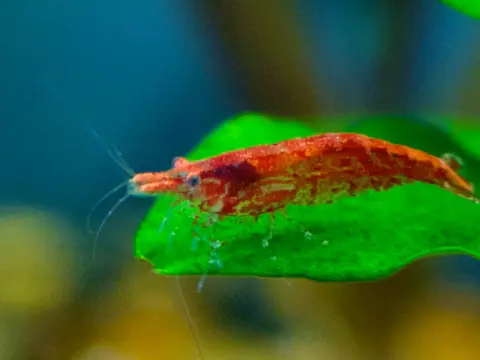 Cherry shrimp Neocaridina davidi 5 gal (20 L) · 64–81 °F (18–27 °C)
 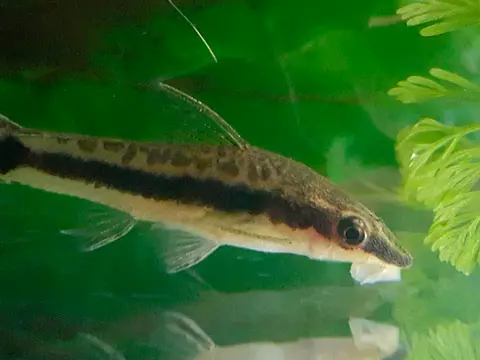 Otocinclus catfish Otocinclus vestitus 16 gal (60 L) · 70–79 °F (21–26 °C)
 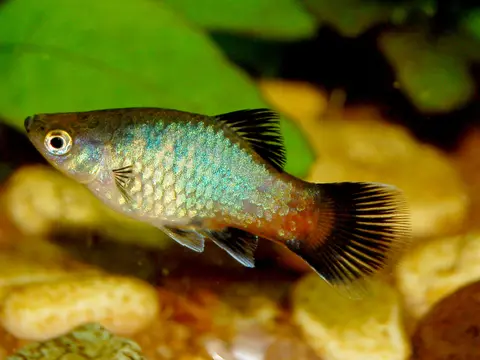 Platy Xiphophorus maculatus 16 gal (60 L) · 68–79 °F (20–26 °C)
 Check the compatibility of your whole tank →
What not to keep it with
Popular species you shouldn’t house with the Ember tetra, and why.
- Tiger barb: one may eat the other due to size
- Betta fish: one may eat the other due to size
- Common goldfish: incompatible temperatures, one may eat the other due to size
- Discus: incompatible temperatures, one may eat the other due to size
- Angelfish: one may eat the other due to size
- Dwarf gourami: one may eat the other due to size
- Yellow lab cichlid: incompatible pH, one may eat the other due to size
- Clown loach: one may eat the other due to size
Recommended equipment
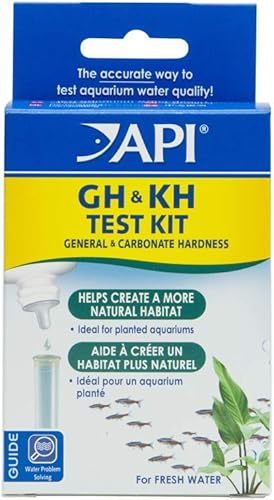
What you need to keep the Ember tetra healthy, checked against Amazon stock.


Frequently asked questions
How many liters does a Ember tetra need?
At least about 40 liters for a group of at least 10 fish. More space always helps keep the water stable.
What water temperature does the Ember tetra need?
Between 23 and 28 °C, with a pH of 5.5 to 7.5.
What fish can live with the Ember tetra?
Based on water, size and temperament, it fits with species such as Bristlenose pleco, Bronze cory, Zebra danio, Guppy and Cherry barb. Use our compatibility calculator to check your whole tank.
Can the Ember tetra be kept with shrimp?
Yes: it usually won’t eat adult shrimp, though some shrimplets may get picked off. A tank with plenty of moss gives the babies cover.