If you buy through our links, Amazon pays us a small commission at no extra cost to you. That’s how we keep the site running. How we choose.
Contents
Overview
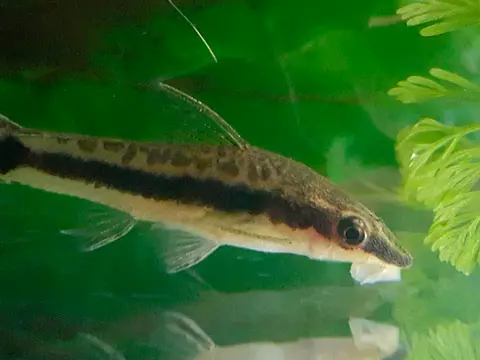
The otocinclus, or "oto", is a tiny loricariid catfish of about 1.5 in (4 cm), prized in planted tanks for the way it cleans: it works over leaves, glass and rocks, grazing the thin film of algae and biofilm without harming plants. It has a slender armored body, a cream base color with a dark lateral stripe and a small sucker mouth.
It comes from calm, heavily vegetated streams in South America. Several very similar species are sold as "otocinclus" or Otocinclus vestitus, and many are still wild-caught. Otos are peaceful, social and charming to watch, but more delicate than they look. They are not a fish for a brand-new tank.
Care and tank setup
Keep a group of at least 6 in a mature tank of 15 gallons (60 L) or more that has been running for a few months and already has plants and some algae. Many otos arrive at the store weak and underfed after shipping, so slow drip acclimation and the first couple of weeks are critical.
- Stable, clean, well-oxygenated water with no ammonia or nitrite spikes.
- Lots of plants, driftwood and dried leaves (catappa) to grow biofilm.
- Gentle flow and moderate light or shaded areas.
They get along beautifully with tetras, rasboras, corydoras, shrimp and other small, calm fish. Avoid large or boisterous tankmates and big parameter swings. The most common mistake is buying them to "clean up" a new setup: without enough food they waste away within weeks.
Feeding
Otos graze soft algae, diatoms and biofilm. When that runs short, supplement with spirulina wafers and blanched zucchini or cucumber, which they learn to accept over time. Check their bellies: they should look rounded, and a sunken belly means they are starving. In a very clean tank, feed every day.
Breeding
Otos have occasionally spawned in aquariums, with females sticking single eggs on leaves and glass after a cool water change. It is uncommon, though, and the fry are tiny and hard to raise. For most hobbyists, it is realistic to assume they will not breed at home and that most store fish are wild-caught.
Compatible tank mates
Species from our database that share water parameters, size and temperament with the Otocinclus catfish. Calculated from the data in each profile.
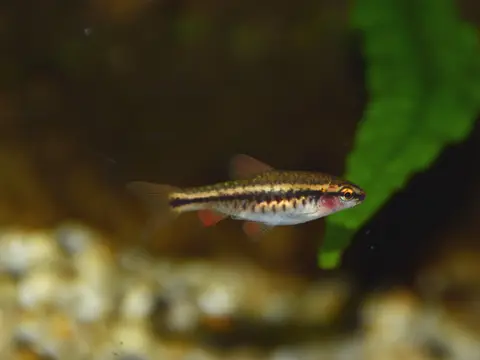 Cherry barb Puntius titteya 16 gal (60 L) · 73–81 °F (23–27 °C)
 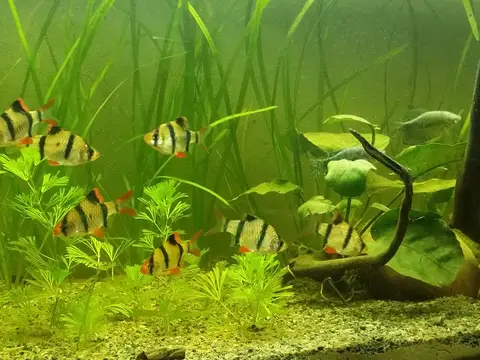 Tiger barb Puntigrus tetrazona 26 gal (100 L) · 72–79 °F (22–26 °C)
 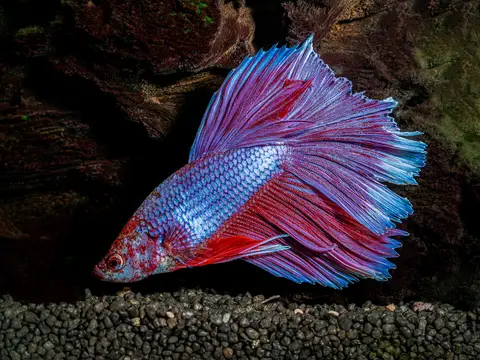 Betta fish Betta splendens 7 gal (25 L) · 75–82 °F (24–28 °C)
 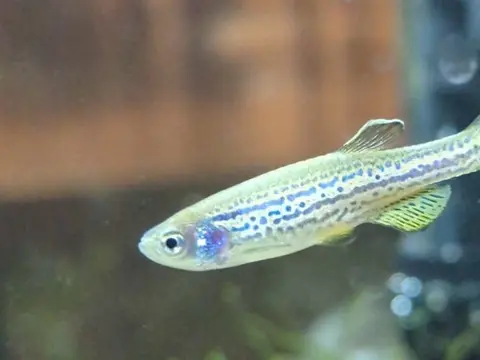 Zebra danio Danio rerio 16 gal (60 L) · 64–77 °F (18–25 °C)
 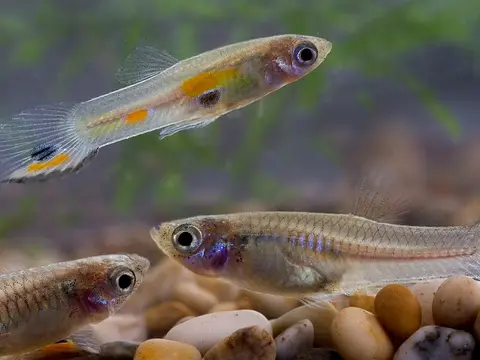 Guppy Poecilia reticulata 14 gal (54 L) · 72–82 °F (22–28 °C)
 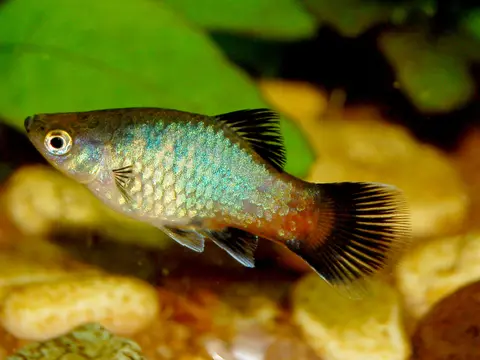 Platy Xiphophorus maculatus 16 gal (60 L) · 68–79 °F (20–26 °C)
 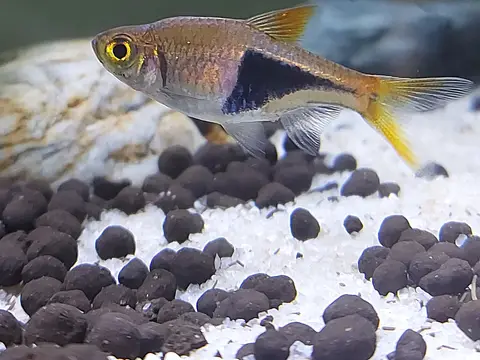 Harlequin rasbora Trigonostigma heteromorpha 16 gal (60 L) · 72–81 °F (22–27 °C)
 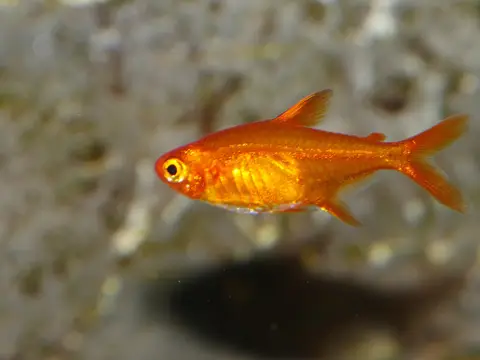 Ember tetra Hyphessobrycon amandae 11 gal (40 L) · 73–82 °F (23–28 °C)
 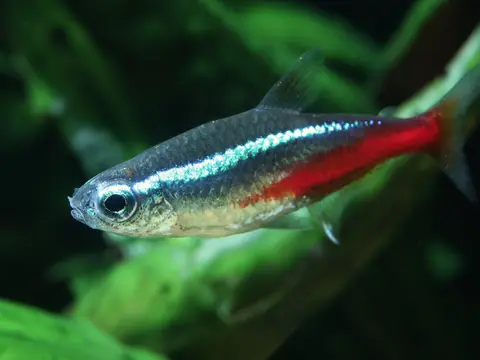 Neon tetra Paracheirodon innesi 16 gal (60 L) · 68–79 °F (20–26 °C)
 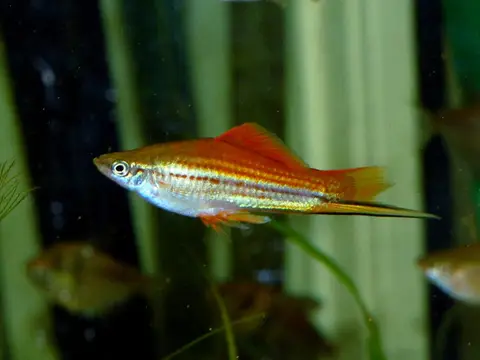 Swordtail Xiphophorus hellerii 32 gal (120 L) · 72–81 °F (22–27 °C)
 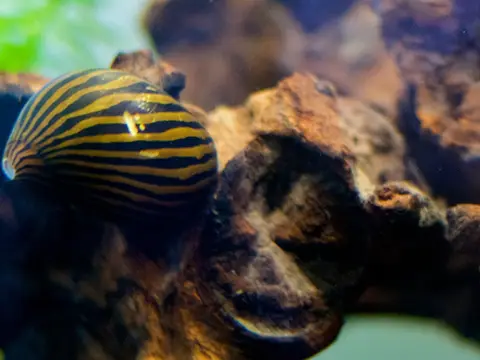 Nerite snail Neritina natalensis 5 gal (20 L) · 72–82 °F (22–28 °C)
 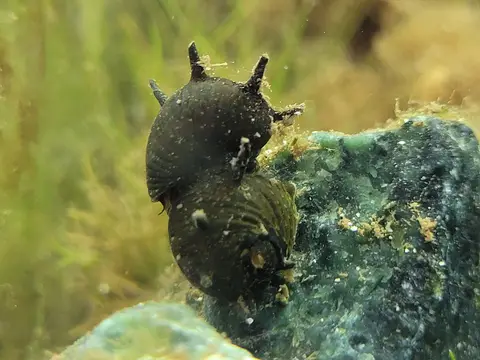 Horned nerite snail Clithon corona 5 gal (20 L) · 72–82 °F (22–28 °C)
 Check the compatibility of your whole tank →
What not to keep it with
Popular species you shouldn’t house with the Otocinclus catfish, and why.
- Common goldfish: one may eat the other due to size
- Discus: incompatible temperatures
- Angelfish: one may eat the other due to size
- Clown loach: incompatible temperatures, one may eat the other due to size
- Oranda goldfish: one may eat the other due to size
- Oscar: one may eat the other due to size, incompatible temperaments
Recommended equipment
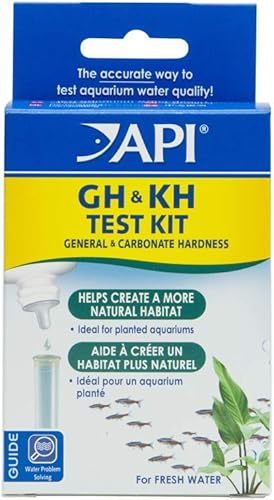
What you need to keep the Otocinclus catfish healthy, checked against Amazon stock.


Frequently asked questions
How many liters does a Otocinclus catfish need?
At least about 60 liters for a group of at least 6 fish. More space always helps keep the water stable.
What water temperature does the Otocinclus catfish need?
Between 21 and 26 °C, with a pH of 6 to 7.5.
What fish can live with the Otocinclus catfish?
Based on water, size and temperament, it fits with species such as Cherry barb, Tiger barb, Betta fish, Zebra danio and Guppy. Use our compatibility calculator to check your whole tank.
Can the Otocinclus catfish be kept with shrimp?
Yes: it usually won’t eat adult shrimp, though some shrimplets may get picked off. A tank with plenty of moss gives the babies cover.
You may also like
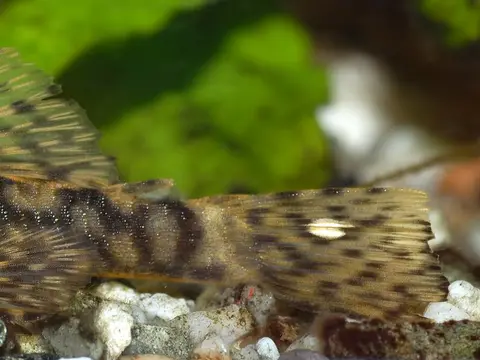 ProfileBristlenose pleco
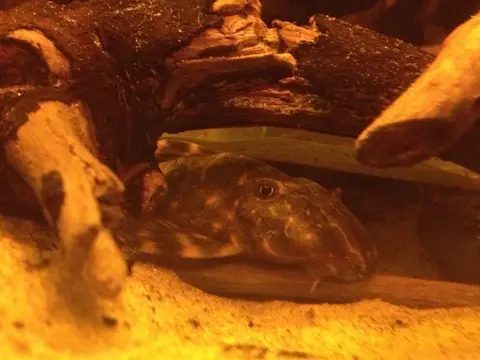 ProfileClown pleco (L104)
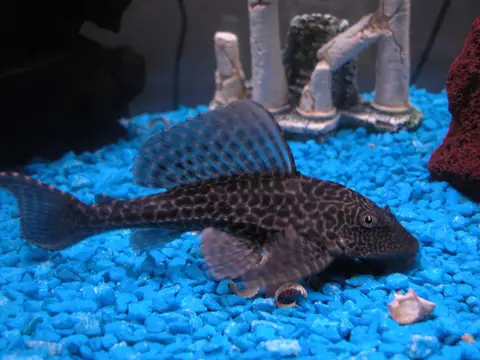 ProfileCommon pleco
- GuideShrimp tank guide: Neocaridina vs Caridina, water, breeding, molting
- GuideAquarium Algae: Types, Causes and How to Get Rid of Them
- Gear review15 gallon aquariums
- Gear reviewInternal aquarium filters
- CalculatorFish compatibility checker
Plecos and suckermouth catfish → Freshwater fish → Complete aquarium guide →