If you buy through our links, Amazon pays us a small commission at no extra cost to you. That’s how we keep the site running. How we choose.
Contents
Water changes are the single most important maintenance job in a fish tank, and the most underrated. No filter, however good, removes the nitrate, phosphate, hormones and dissolved organics that build up every day. The only way to get rid of them is to take old water out and put fresh water in. This guide covers how much water to change, how often, how to do it step by step without stressing your fish, and the mistakes to avoid.
The golden rule: change 20 to 30% of the water every week, using tap water treated with a dechlorinating water conditioner and matched to the tank temperature (within 2-3 °F, or 1-2 °C). Small, regular changes beat one huge change every now and then.
Why water changes matter
In a cycled tank, the bacteria in your filter convert the ammonia your fish produce into nitrite and then into nitrate. Nitrate is far less toxic, but it keeps accumulating: above 40-50 ppm it stresses fish, weakens their immune system and feeds algae. Old water also slowly loses minerals and carbonate hardness (KH), which can lead to sudden pH crashes, and it fills up with organic compounds that turn it yellowish.
A water change fixes all of that at once: it dilutes nitrate and phosphate, replenishes minerals and trace elements and keeps your parameters stable. If you are not sure how this process works yet, read our guide to cycling an aquarium first, because an uncycled tank needs to be handled differently.
How much water to change and how often
A 20-30% weekly change is a solid baseline for most community tanks, but the ideal amount depends on stocking, plants and what your test kit says. Use this table as a starting point:
| Tank type | Recommended change | Notes |
|---|---|---|
| Tropical community tank, normal stocking | 20-30% weekly | The standard baseline |
| Heavily planted, lightly stocked | 15-25% weekly or every 10 days | Plants use up some of the nitrate |
| Goldfish or large cichlids | 30-50% weekly | Very heavy waste producers |
| Nano tank (under 8 gallons / 30 L) | 20-25% weekly, never skipped | Small volumes go bad fast |
| Shrimp tank | 10-15% weekly | Gentle changes; shrimp hate sudden swings |
| Tank still cycling | Only if ammonia or nitrite spike | Frequent changes if fish are already in |
The best way to fine-tune your routine is to test. If nitrate stays below 25-40 ppm between changes (below 20 ppm if you keep cherry shrimp or other sensitive species), your schedule is right. If it climbs higher, change more water or change it more often, or check whether you are overfeeding. Our guide to nitrite and nitrate goes into more detail.
What you need
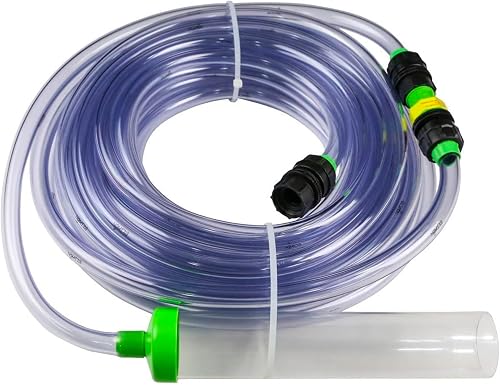
- A gravel vacuum (siphon): drains water and pulls debris out of the substrate at the same time. There are manual models with a squeeze bulb and battery-powered ones for small tanks. You can compare options in our roundup of aquarium gravel vacuums.
- One or two buckets used only for the aquarium, never washed with soap or household cleaners.
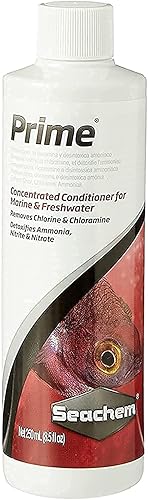
- Water conditioner: neutralizes chlorine, chloramine and heavy metals in tap water. Brands such as Seachem, API, Tetra, Fluval or Sera make highly concentrated versions.
- A thermometer to check the temperature of the new water.
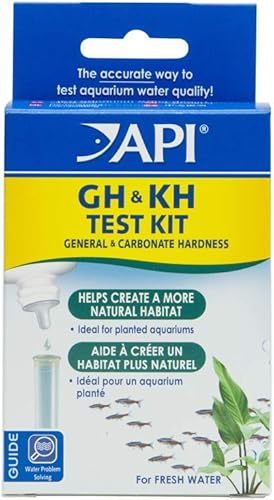
- A test kit, at least for nitrate, so you know your routine is working.
- An old towel, because there are always drips.
If you change a lot of water, a hose-style water changer that connects to a faucet saves carrying buckets. Just remember to dose conditioner for the full tank volume before refilling.
How to do a water change step by step
- Unplug the heater and the filter. A heater can crack if it is exposed to air while hot, and a filter should never run dry.
- Remove visible debris: dead leaves, leftover food and any algae you have scraped off the glass.
- Vacuum the gravel. Push the siphon tube into the substrate, let the gravel tumble and drop, and work your way across in sections. On sand, hover just above the surface so you don't suck it up. You don't need to vacuum the whole bottom every week: rotate areas and stay clear of plant roots.
- Stop once you have removed the planned amount. Mark the 25% level on the glass so you don't have to work it out every time.
- Prepare the new water. Fill the bucket from the tap and mix hot and cold until it is within 2-3 °F (1-2 °C) of the tank. Check with a thermometer, not your hand.
- Add water conditioner dosed for the bucket volume (or for the whole tank if you refill straight from a hose, as the label explains).
- Pour slowly onto a plate, a rock or your hand so you don't blast the substrate or uproot plants.
- Plug the filter and heater back in and make sure everything is running.
Never add untreated tap water. Chlorine and chloramine burn fish gills and kill part of your beneficial bacteria. And never use straight hot tap water: in older plumbing it can carry copper, which is toxic to shrimp and snails.
Temperature, conditioner and water source
Temperature is what fish feel most: a 5-7 °F (3-4 °C) difference during a big change causes stress and can trigger diseases such as ich. In a tropical tank at 75-80 °F (24-27 °C), the new water should be in the same range. In coldwater tanks, such as those for goldfish, it just shouldn't be much colder than the tank.
Always add conditioner, even if your water barely smells of chlorine. Many US utilities use chloramine, which does not gas off if you let the water sit. Dose for the volume of new water; a slight overdose is harmless, but never underdose.
If your tap water is very hard and you keep soft-water fish, you can blend it with reverse osmosis (RO) water. Always use the same ratio so pH and hardness don't swing from week to week. Pure distilled or RO water that hasn't been mixed or remineralized is not suitable for fish: it has no minerals and destabilizes pH.
Common water change mistakes
- Changing 80-100% of the water at once: it causes a massive parameter shock. Only justified in emergencies, and even then with carefully matched water.
- Skipping changes for weeks, then doing a huge one: fish have slowly adapted to degraded water and a sudden switch stresses them. If you have fallen behind, get back on track with several 20% changes every other day.
- Rinsing filter media under the tap: it kills the bacteria. Swish it in the tank water you just removed instead.
- Cleaning the filter and deep-vacuuming on the same day: you remove too much bacteria at once. Space them a week apart.
- Using soap or detergent on buckets, siphons or glass.
- Forgetting the conditioner, or adding it after the untreated water is already in.
- Only topping off evaporated water: evaporation removes pure water and leaves the dissolved solids behind, so topping off is not a water change.
Special cases
After medicating
When a treatment is finished, do a 30-50% change and put activated carbon back in the filter if you removed it, to clear out any remaining medication.
If fish are gasping at the surface
Test for ammonia and nitrite. If either is above 0, do a 30-50% change that same day with well-matched water and repeat the next day if needed.
Tanks with bottom dwellers
Corydoras and other fish that forage in the substrate appreciate a clean bottom: vacuum more carefully wherever food tends to collect.
A weekly 15-20 minute routine gives you stable water, healthier fish and far less algae. To understand what you are correcting with every change, read our guide to aquarium water parameters.
Recommended gear for this guide
Frequently asked questions
How much water should I change in my aquarium?
Between 20 and 30% of the tank volume every week in a normal community tank. Heavily stocked tanks or goldfish tanks may need 30-50%, while shrimp tanks do better with gentler 10-15% changes. What matters is keeping nitrate below 25-40 ppm.
Should I take the fish out during a water change?
No, and it is not recommended. Netting fish stresses them far more than the water change itself. Leave them in the tank and work calmly without chasing them with the siphon.
Do I need to let tap water sit before adding it?
Not if you use a water conditioner. Letting water sit only removes free chlorine, not chloramine or heavy metals. With a good conditioner you can use tap water right away, as long as it is at the right temperature.
Can I use bottled water for my fish tank?
You can, but it is expensive and its mineral content varies a lot between brands. For most fish, conditioned tap water is perfectly fine. If you need soft water, blending RO water with tap water is more practical and consistent.
How often should I vacuum the gravel?
Ideally, vacuum part of the substrate at every weekly water change, rotating sections. In heavily planted tanks, just clean the surface and open areas so you don't damage the roots.
You may also like
- GuideHow Many Hours of Light Does an Aquarium Need? Photoperiod Guide
- GuideLeaving Your Fish Tank on Vacation: Food, Lights and Heat
- GuideHow to Move a Fish Tank Without Losing Fish or Your Cycle
- GuideAquarium Cycling: The Nitrogen Cycle, Testing and When to Add Fish
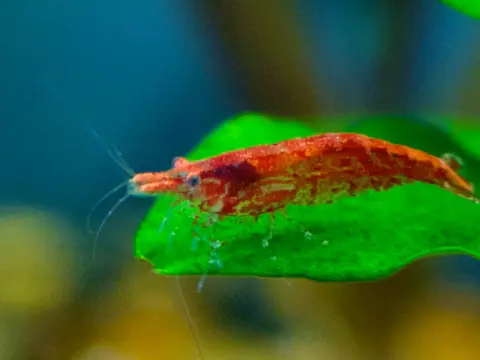 ProfileCherry shrimp
- GuideAmmonia, Nitrite and Nitrate in Aquariums: Safe Levels and Fixes
- Gear reviewAquarium gravel vacuums
- Gear reviewAquarium water conditioners
Water care & maintenance → See all guides → Complete aquarium guide →