If you buy through our links, Amazon pays us a small commission at no extra cost to you. That’s how we keep the site running. How we choose.
Contents
A coldwater aquarium is simply a tank without a heater, stocked with fish that do well at normal room temperature: roughly 60-72 °F (16-22 °C). It's a great choice if you want to save on electricity or your room runs cool, but it comes with a harmful myth: that coldwater is "easier" and that a goldfish can live in a bowl. For goldfish, the opposite is true: they are among the biggest, messiest fish sold to beginners. This guide covers the most common coldwater species, how much space they need, which filter to use and which plants survive their nibbling.
The short version: "coldwater" means no heater, not no care. The tank must be cycled, well filtered and get weekly water changes. For a pair of fancy goldfish, think 30-40 gallons (100-150 L); groups of white clouds or medaka are fine in 10-16 gallons (40-60 L).
Coldwater species and how much space they need
Not all coldwater fish are alike. Goldfish are big fish that produce a lot of waste; the others are small and far better suited to medium-sized tanks.
| Species | Adult size | Temperature | Suggested tank | Notes |
|---|---|---|---|---|
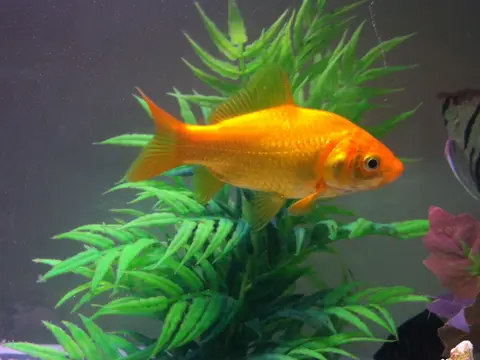
| Common and comet goldfish | 8-12 in (20-30 cm) | 50-75 °F (10-24 °C) | Pond or 80+ gallons (300+ L) | Fast swimmer; outgrows a normal aquarium |
| Fancy goldfish (oranda, lionhead, telescope) | 6-8 in (15-20 cm) | 64-73 °F (18-23 °C) | 30-40 gallons for two, plus 10-13 gallons per extra fish | Slow, struggles in strong current |
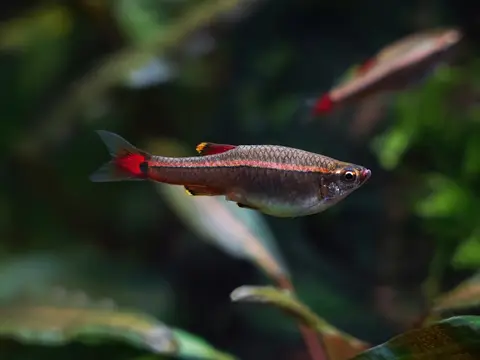
| White cloud mountain minnow | 1.5 in (4 cm) | 60-72 °F (16-22 °C) | 16 gallons (60 L) for a group of 8-10 | Peaceful schooling fish, very hardy |
| Medaka (ricefish) | 1.2-1.5 in (3-4 cm) | 60-79 °F (16-26 °C) | 10-16 gallons for a group | Tolerant, breeds readily |
| Paradise fish | 3-4 in (8-10 cm) | 60-79 °F (16-26 °C) | 16 gallons, one male only | Labyrinth fish, males fight each other |
To work out how many fish fit based on adult size and filtration, see our guide on how many fish you can keep in a tank.
Goldfish need space, not a bowl
A goldfish can live 10-15 years or more, and is sold at 1.5-2 inches when it easily reaches 8 inches (20 cm) as an adult. It eats a lot, digs through the substrate and produces large amounts of ammonia. In a small bowl the water turns toxic within hours, there's no room for an effective filter, and the fish ends up stunted with a much shorter life.
- Fancy varieties such as the oranda: round bodies, slow swimmers and the best fit for an aquarium. They need moderate flow and a substrate without sharp stones.
- Commons and comets: long bodies and real speed. An outdoor pond is ideal; indoors, only very large tanks work.
- Don't mix commons with fancies: the fast fish get all the food.
- Tankmates: goldfish-only is best. They eat any small fish that fits in their mouth, and tropical fish need a different temperature.
Feed a dedicated goldfish food, ideally sinking pellets so they don't gulp air, in small amounts: what they finish in 2-3 minutes. Add blanched vegetables (shelled peas, zucchini) now and then.
No unfiltered bowls for goldfish or any other fish. And never release a goldfish, or any aquarium fish or plant, into rivers, lakes or public ponds: goldfish are invasive, they damage ecosystems and releasing them is illegal in many places. If you can't keep one, contact a fish store, a local aquarium club or a hobbyist with a pond.
White clouds, medaka and paradise fish
White cloud mountain minnow
The white cloud mountain minnow (Tanichthys albonubes) is probably the best coldwater fish for a mid-sized tank. It grows to about 1.5 inches, lives in groups of at least 6-8 and shows its best colors in cool water, below 72 °F (22 °C). It's peaceful, eats almost anything and can share a tank with medaka or adult cherry shrimp.
Medaka
The medaka, or Japanese ricefish, is small, handles temperature swings well and breeds easily: females carry their eggs for a few hours before attaching them to plants. There are gold, white and shiny-scaled strains. It prefers gentle flow and fine-leaved plants.
Paradise fish
The paradise fish (Macropodus opercularis) is a labyrinth fish that gulps air at the surface like a betta and is comfortable in cool water. It's stunning but territorial: one male per tank, kept with females or fast fish of similar size. Don't house it with long-finned goldfish or very small fish.
Temperature and filtration
Most of these species live at 60-72 °F (16-22 °C) without a heater. The real problem is usually summer: above 77-79 °F (25-26 °C) the water holds less oxygen and goldfish and white clouds struggle. A clip-on fan, extra aeration and moving the tank away from windows all help. Our aquarium temperature guide explains how to bring it down without sudden swings. In winter, a 59 °F (15 °C) room is no problem for goldfish, but it is for any tropical fish you try to add.
Filtration should be generous. For goldfish, aim for a flow rate of 5-10 times the tank volume per hour, with the outlet aimed at the surface or a spray bar to add oxygen, without creating a current that tosses fancy varieties around. A canister filter is the most convenient choice for tanks of 26 gallons (100 L) or more, since it holds plenty of biological media and needs cleaning less often. For white clouds and medaka, an internal or hang-on-back filter with normal flow (3-5 times the volume per hour) is enough.
- Water changes: 20-30% weekly; in heavily stocked goldfish tanks, up to 40-50%.
- Substrate: fine sand or large river stones. Medium gravel can get lodged in a goldfish's mouth.
- Lid: essential for paradise fish and white clouds, which jump.
Plants that stand up to goldfish
Goldfish uproot and nibble almost everything. The plants that hold up best have tough or bitter leaves and are tied to rocks or driftwood rather than planted in the substrate.
| Plant | Goldfish resistance | How to place it |
|---|---|---|
| Anubias | Very high: tough leaves | Tied to rock or wood, rhizome above the substrate |
| Java fern | Very high: they dislike the taste | Tied to decor |
| Cryptocoryne wendtii | Medium to high | Planted, with stones around the base |
| Vallisneria | Medium: grows fast enough to offset nibbling | Planted in the substrate |
| Hornwort | Medium: gets eaten but grows very quickly | Floating |
With white clouds, medaka and paradise fish the options are much wider: mosses, stem plants and floaters all do fine at room temperature.
Common mistakes
- Putting a goldfish in a bowl or a 5-8 gallon tank "because it's small".
- Assuming coldwater means no filter and no cycling.
- Mixing goldfish with tropical fish or small fish.
- Keeping two male paradise fish together.
- Overfeeding goldfish because they "always beg".
- Forgetting about summer heat and low oxygen.
- Releasing fish into the wild once they get too big.
Recommended gear for this guide


Frequently asked questions
How many gallons does a goldfish need?
For a pair of fancy goldfish such as orandas or lionheads, a sensible starting point is 30 to 40 gallons (100 to 150 liters), adding roughly 10 to 13 gallons for each extra fish. Common and comet goldfish grow so large that a pond or a tank over 80 gallons (300 liters) is ideal.
Can a goldfish live in a bowl?
No. In an unfiltered bowl ammonia builds up within hours, oxygen runs short and the fish lives stressed, grows poorly and dies long before its time. A well-kept goldfish can live more than ten years in a large, filtered tank.
Do coldwater fish need a heater?
Usually not: goldfish, white clouds, medaka and paradise fish do well at room temperature, around 60 to 72 °F (16 to 22 °C). Summer is the bigger concern: above 77 to 79 °F (25 to 26 °C), add a fan and extra aeration.
Can goldfish live with tropical fish?
It's not a good idea. Tropical fish need 75 to 80 °F (24 to 27 °C) while goldfish prefer cooler water, produce a lot of waste and eat any small fish. Keep each group in its own tank.
What coldwater fish suit a 15-gallon tank?
A group of 8 to 10 white cloud minnows, a group of medaka or one male paradise fish with a few females are good choices. A goldfish is not suitable for a tank that size.
You may also like
- GuideHow Many Fish Can You Put in a Tank? Stocking Done Right
- GuideCleaner fish for aquariums: the clean-up crew myth explained
- GuideHow to Breed Guppies: Ratio, Gestation, Fry Care and Surplus Fish
 ProfileCommon goldfish
- Gear reviewGoldfish food
 ProfileWhite cloud mountain minnow
- Gear reviewCanister filters
- Gear review29 gallon aquariums