If you buy through our links, Amazon pays us a small commission at no extra cost to you. That’s how we keep the site running. How we choose.
Contents
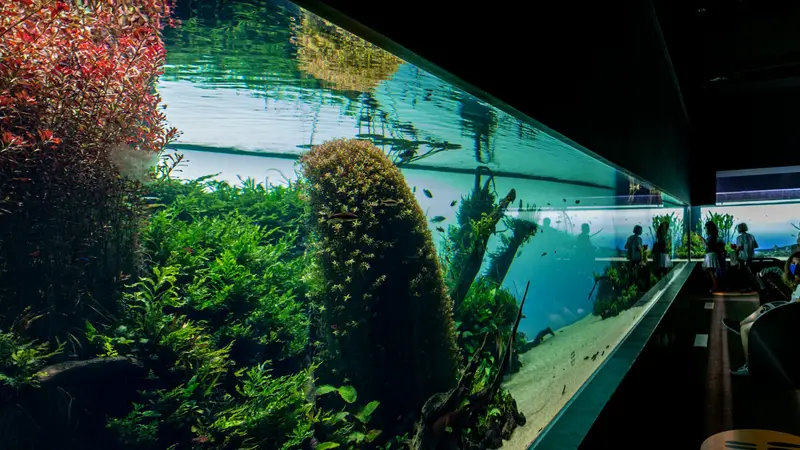
Every aquarium has algae. A little green on the glass or rocks is normal and even a sign of a living tank. The trouble starts when algae smother the plants, tint the water or come back every week no matter how much you scrub. It is nearly always a symptom of an imbalance between light, nutrients and plants, which is why algaecides alone rarely fix it. In this guide you will learn to identify each type of algae, what causes it and how to fix the real cause.
Golden rule: algae use whatever the plants do not. Run the lights 6-8 hours a day on a timer, change 20-30% of the water weekly, do not overfeed and keep plenty of fast-growing plants. That solves most algae problems.
Why algae grow
Like plants, algae need light, nutrients (nitrate, phosphate, iron and others) and CO2. The difference is that they adapt much faster. When something gets out of balance, they are the first to take advantage. The most common causes are:
- Too much light: more than 8-10 hours a day, a fixture that is too strong for the plants you keep, or direct sunlight on the tank.
- Excess nutrients: leftover food, infrequent water changes, a dirty filter or uncontrolled fertilizer dosing.
- Few plants, or plants that are not growing: without competition, algae win.
- Imbalance in planted tanks: lots of light and fertilizer but little CO2, or strong light with a nutrient deficiency.
- A young tank: in the first weeks after cycling it is normal to see diatoms and some green algae while the system settles.
Types of algae: cause and fix
Identifying the algae helps a lot, because each type points to a different cause. This table covers the most common ones in freshwater:
| Algae | How to recognize it | Usual cause | How to fight it |
|---|---|---|---|
| Green spot algae | Hard little green dots on the glass and on slow-growing leaves like anubias | Strong light, low phosphate, slow plants | Scrape the glass, cut light hours, fertilize in balance |
| Hair algae | Long green threads that tangle around plants and decor | Too much light and nutrients, unstable CO2 | Remove by hand with a toothbrush, less light, more fast-growing plants |
| Black beard / black brush algae | Very tough black or gray tufts on leaf edges, driftwood and tubing | Low or fluctuating CO2, built-up organic waste, poor flow | Trim affected leaves, stabilize CO2, clean the filter and improve circulation |
| Diatoms (brown algae) | Dusty brown film that wipes off with a finger | New tank, silicates, low light | Patience: they usually disappear on their own within weeks; wipe and let otocinclus and snails work |
| Cyanobacteria (blue-green algae) | Slimy blue-green or reddish sheets with a strong smell | Dead spots with no flow, very low nitrate, organic waste | Siphon it out, improve flow, frequent water changes, a 3-day blackout |
| Green water | Water turns green like pea soup | Free-floating microalgae fed by too much light plus ammonia or nutrients | Cut light, a blackout of several days, UV sterilizer, water changes |
Note that cyanobacteria are not algae at all but photosynthetic bacteria. That is why algae-eating fish and snails leave them alone, and why they respond to different fixes, such as better water circulation.
Light and nutrients: the balance that matters
Light is the fastest and cheapest thing to adjust. Keep a photoperiod of 6-8 hours a day on a timer, starting at 6 in new tanks or tanks with algae. If you already have an outbreak, dropping to 5-6 hours for two or three weeks usually slows the algae without hurting the plants. Dimmable LED aquarium lights help a lot: often the problem is not the hours but the intensity. The details are in how many hours of light an aquarium needs.
As for nutrients, the goal is not to strip the water to zero but to give plants what they need with nothing left over. Some guidelines:
- Nitrate between 10 and 25 ppm in a planted tank; near 0 encourages cyanobacteria and green spot, and above 40 ppm feeds algae.
- Phosphate in moderation: in well-growing planted tanks, low but detectable levels prevent green spot algae.
- Fertilizer: dose liquid fertilizer according to how many plants you have and how strong the light is. More light needs more fertilizer and, above a certain intensity, CO2.
- Food: only what the fish eat in 2-3 minutes. Leftover food is the main source of phosphate.
Plants are your best algae control. Fast growers such as Hygrophila difformis, limnophila or floating plants like salvinia take up nutrients quickly and provide shade. Slow plants such as anubias and ferns look great but compete very little.
Algae eaters: realistic expectations
Algae-eating animals are an excellent helper, but they do not fix the cause. If the tank has too much light or too many nutrients, algae will grow faster than they can eat it. These are the most useful in community tanks:
| Animal | Eats well | Does not eat | Keep in mind |
|---|---|---|---|
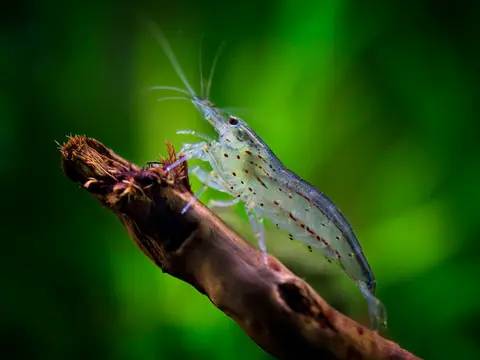
| Amano shrimp | Fine hair algae, leftovers and biofilm | Mature black beard, green spot | Works best in groups (about 1 per 3-5 gallons); needs tankmates that will not eat it |
| Otocinclus | Diatoms and soft algae film on leaves and glass | Hair algae, black beard | A schooling fish (6 or more) and delicate; only for mature tanks with algae or supplemental food |
| Nerite snail | Diatoms, soft green spot, film on glass and rocks | Long hair algae, black beard | Does not breed in freshwater, but leaves white eggs on decor |
Avoid buying fish just "to clean": some, like the common pleco, grow far bigger than most home aquariums can hold. We cover this in fish that clean the aquarium.
Chemical algaecides: the last resort
Algaecides can knock back a severe outbreak, but as long as the cause remains, the algae will return. They also have side effects: dying algae decompose and can cause oxygen drops, and some products harm sensitive plants, shrimp or the biological filter.
Before using any algaecide: fix the lighting, water changes and feeding first; read the label to check whether it is safe with shrimp and plants; dose for the real water volume and increase aeration. Never use algaecides in a tank that is still cycling, and never mix products.
For green water, a UV sterilizer works better than any chemical. For black beard algae, liquid carbon products spot-dosed onto the affected areas work in many cases, always following the manufacturer's directions.
Common mistakes
- Leaving the lights on 10-12 hours "so the fish can see."
- Placing the tank next to a window with direct sun.
- Using an algaecide without changing anything else: the outbreak returns within weeks.
- Suddenly stopping fertilizer in a planted tank: plants stall and algae take over.
- Buying a pleco for a 15-gallon tank expecting it to clean everything.
- Deep-cleaning the filter and substrate at the same time, which unsettles the bacteria and spikes nutrients.
- Changing many things at once: make one adjustment, wait two weeks and observe.
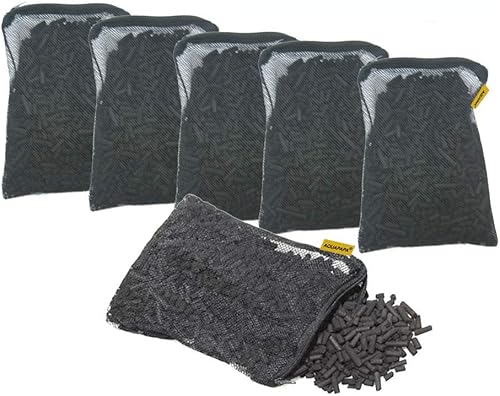
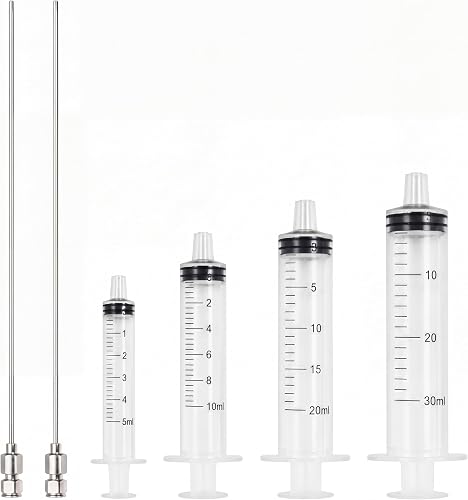
Recommended gear for this guide

Frequently asked questions
Is it bad to have algae in the aquarium?
A little algae is normal and does not harm fish; it is even food for shrimp and snails. It only becomes a problem when it covers plants, tints the water or grows out of control, because that signals an imbalance between light and nutrients.
How many hours of light prevent algae?
Six to eight hours a day on a timer suits most aquariums. If you have an algae outbreak, drop to 5 or 6 hours for two or three weeks while you correct the cause.
What eats black beard algae?
Mature black beard algae is very tough and almost no community tank animal eats it reliably. What works is trimming the affected leaves, stabilizing CO2 in planted tanks and improving cleanliness and water flow.
Why is there brown algae in my new tank?
Those are diatoms, and they show up in almost every tank during the first weeks. They usually disappear on their own as the tank matures. You can wipe them off the glass and add nerite snails once the tank is fully cycled.
Does a blackout get rid of algae?
A total blackout of three or four days helps against green water and cyanobacteria. Plants handle it well, but do a water change before and after, and fix the cause so it does not come back.
You may also like
- GuideCloudy Aquarium Water: White, Green or Brown and How to Clear It
- GuidePest Snails in Your Aquarium: Why They Appear and How to Control Them
- GuideAquarium Fish Diseases: Symptoms, Causes and What to Do
- Gear reviewAquarium LED lights
- GuideHow Many Hours of Light Does an Aquarium Need? Photoperiod Guide
 ProfileAmano shrimp
- Gear reviewAquarium algae control products
- Gear reviewAquarium plant fertilizers
CO₂, fertilizers & aquascaping → See all guides → Complete aquarium guide →