If you buy through our links, Amazon pays us a small commission at no extra cost to you. That’s how we keep the site running. How we choose.
Contents
Overview
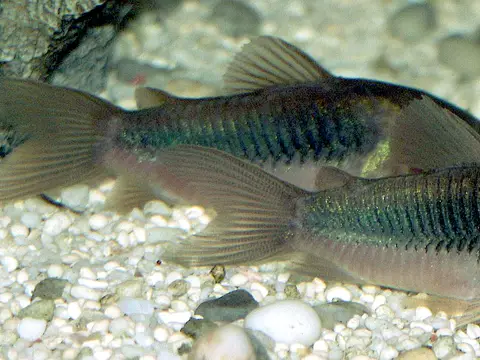
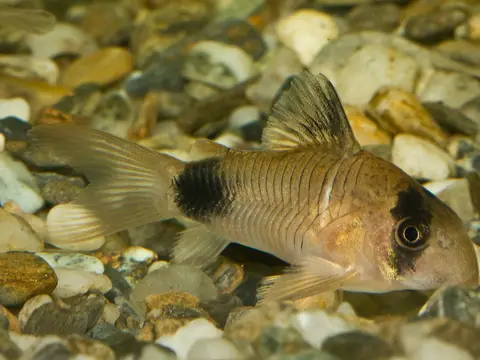
The bronze cory is the classic corydoras and one of the toughest. It reaches about 2.5 inches (6-7 cm) and has an armored, tan body with a metallic green-to-bronze sheen on the flanks that glows under good lighting. The albino form, pink with red eyes, is just as common and needs exactly the same care.
Its natural range is huge, covering rivers, creeks and pools across much of South America, which explains its tolerance of different water types. Nearly all fish in stores are captive-bred. Peaceful, curious and always busy on the bottom, it is one of the best choices for a first community aquarium.
Care and tank setup
A group of six or more needs about a 20-gallon (80-litre) tank with plenty of floor space. Use soft, fine sand in at least part of the tank: corys dig with their barbels, and coarse or sharp gravel wears them down and invites infection. A cycled tank, filter and heater are essential.
- Aquascape: open sand in front, with plants, driftwood and a cave or two in the back for resting.
- Behavior: it occasionally darts to the surface to gulp air; that is normal, since it absorbs some oxygen through its gut. If it does it constantly, test your water.
- Tankmates: almost any small to medium peaceful fish, plus shrimp and snails.
A common mistake is a dirty substrate or high nitrate. Short or reddened barbels are the first sign the bottom is not being maintained well.
Feeding
Bronze corys eat almost anything they find on the bottom. Base the diet on fast-sinking wafers or pellets, with frequent treats of frozen bloodworms, brine shrimp, daphnia or tubifex. Make sure food actually reaches the bottom before upper-level fish grab it, and remove leftovers after a few hours.
Breeding
This is one of the easiest corys to breed. A well-fed group with more males than females often spawns after a cooler water change. The female sticks eggs to the glass and plants, and the adults may eat them, so move the eggs to a separate container with gentle aeration. The fry take baby brine shrimp and fine powdered food.
Compatible tank mates
Species from our database that share water parameters, size and temperament with the Bronze cory. Calculated from the data in each profile.
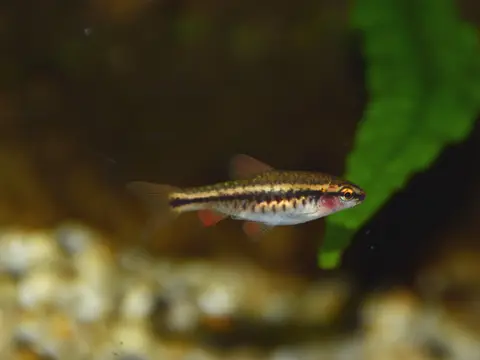 Cherry barb Puntius titteya 16 gal (60 L) · 73–81 °F (23–27 °C)
 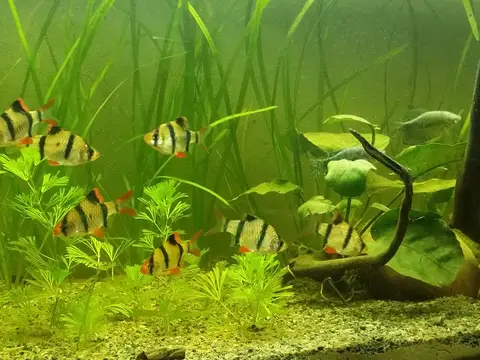 Tiger barb Puntigrus tetrazona 26 gal (100 L) · 72–79 °F (22–26 °C)
 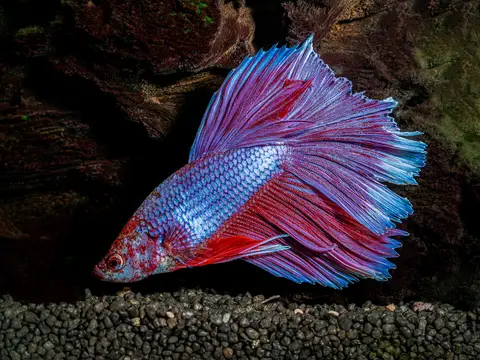 Betta fish Betta splendens 7 gal (25 L) · 75–82 °F (24–28 °C)
 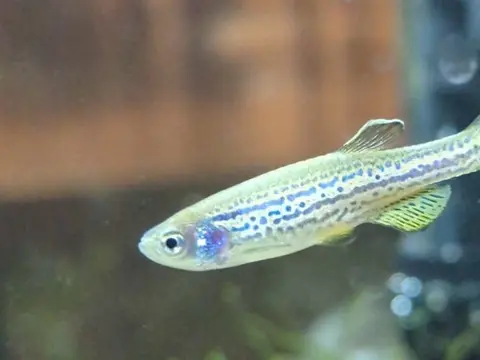 Zebra danio Danio rerio 16 gal (60 L) · 64–77 °F (18–25 °C)
 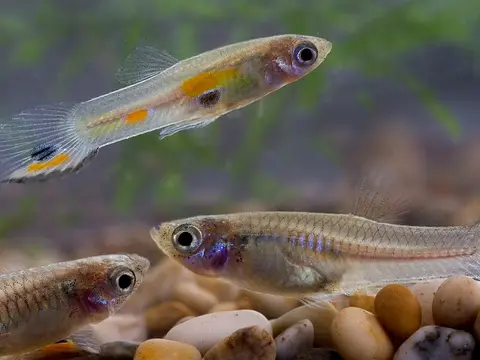 Guppy Poecilia reticulata 14 gal (54 L) · 72–82 °F (22–28 °C)
 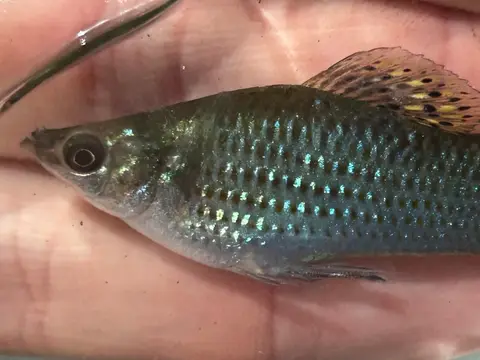 Molly Poecilia sphenops 26 gal (100 L) · 75–82 °F (24–28 °C)
 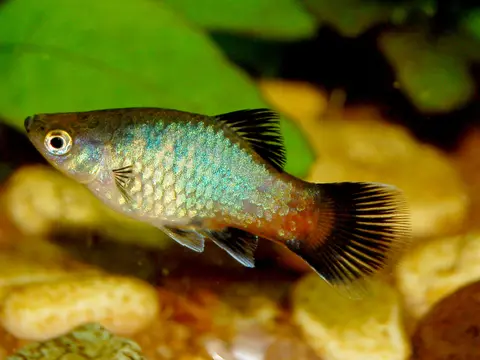 Platy Xiphophorus maculatus 16 gal (60 L) · 68–79 °F (20–26 °C)
 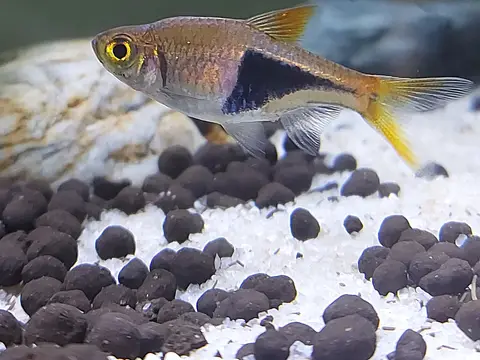 Harlequin rasbora Trigonostigma heteromorpha 16 gal (60 L) · 72–81 °F (22–27 °C)
 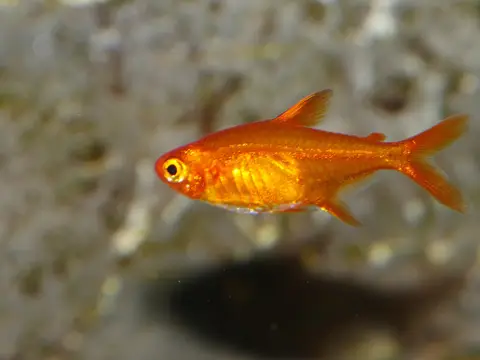 Ember tetra Hyphessobrycon amandae 11 gal (40 L) · 73–82 °F (23–28 °C)
 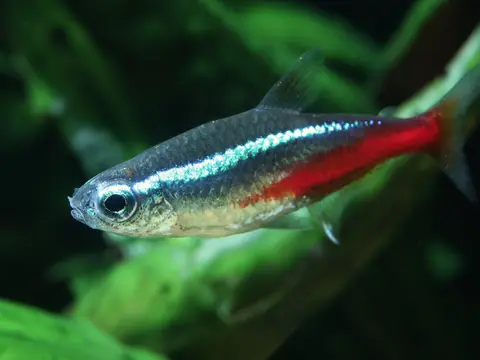 Neon tetra Paracheirodon innesi 16 gal (60 L) · 68–79 °F (20–26 °C)
 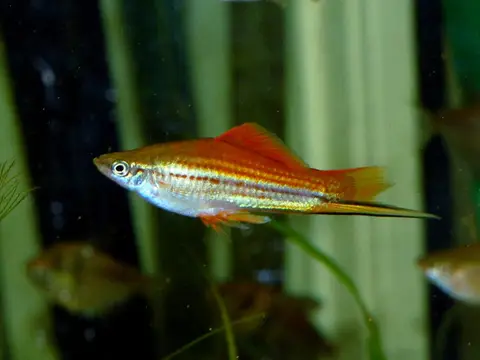 Swordtail Xiphophorus hellerii 32 gal (120 L) · 72–81 °F (22–27 °C)
 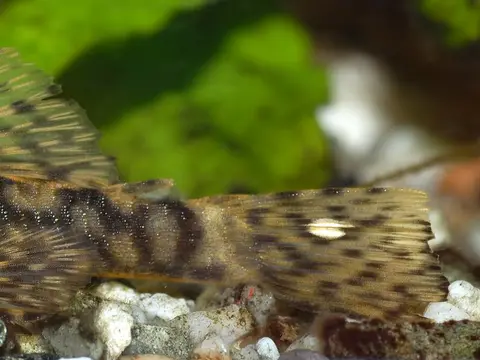 Bristlenose pleco Ancistrus sp. 26 gal (100 L) · 72–81 °F (22–27 °C)
 Check the compatibility of your whole tank →
What not to keep it with
Popular species you shouldn’t house with the Bronze cory, and why.
- Discus: incompatible temperatures
- Oscar: one may eat the other due to size, incompatible temperaments
Recommended equipment
What you need to keep the Bronze cory healthy, checked against Amazon stock.


Frequently asked questions
How many liters does a Bronze cory need?
At least about 80 liters for a group of at least 6 fish. More space always helps keep the water stable.
What water temperature does the Bronze cory need?
Between 22 and 27 °C, with a pH of 6 to 8.
What fish can live with the Bronze cory?
Based on water, size and temperament, it fits with species such as Cherry barb, Tiger barb, Betta fish, Zebra danio and Guppy. Use our compatibility calculator to check your whole tank.
Can the Bronze cory be kept with shrimp?
Yes: it usually won’t eat adult shrimp, though some shrimplets may get picked off. A tank with plenty of moss gives the babies cover.
You may also like
Corydoras catfish → Freshwater fish → Complete aquarium guide →