If you buy through our links, Amazon pays us a small commission at no extra cost to you. That’s how we keep the site running. How we choose.
Contents
Overview
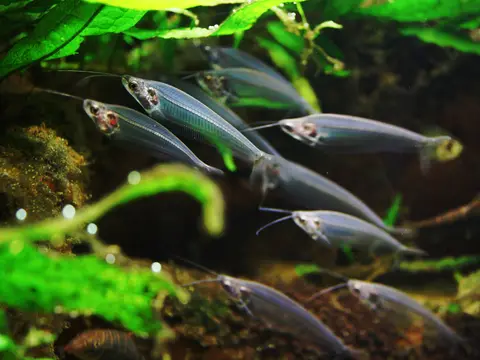
The glass catfish is so transparent you can see its backbone and fin rays; only the head, where the organs sit, is somewhat opaque. Under the right light its body flashes with iridescent shimmer. It has two long whiskers pointing forward and hangs at an angle, almost motionless, as if suspended in the current.
It comes from rivers in Thailand and was sold for decades as Kryptopterus bicirrhis, a larger species that rarely reaches the trade. Unlike most catfish, it is a midwater schooling fish and extremely peaceful. It shines in calm community tanks, but it is not a first fish: it gets very stressed when kept alone or in unstable water.
Care and tank setup
Keep a group of at least six. Alone or in pairs it hides, stops eating and often dies within weeks, which is the most common mistake. For a group like that, a 30-gallon (120-liter) tank with decent length is a sensible minimum.
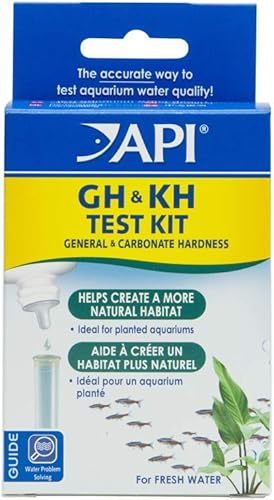
- A mature, cycled tank: it is sensitive to ammonia, nitrite and sudden changes. Never add it to a newly set-up aquarium.
- Moderate flow; it likes to hold position facing a gentle current.
- Plenty of plants, driftwood and shaded areas, with open swimming space at mid-height.
- Regular partial water changes at 72-79°F (22-26°C), avoiding big temperature swings.
Tankmates: peaceful fish that do not compete aggressively for food, such as rasboras, small tetras, corydoras, dwarf gouramis or shrimp. Avoid boisterous barbs, territorial cichlids and anything big enough to swallow it. If the group sulks near the bottom or hides all day, check your water and tankmates.
Feeding
In the wild it hunts tiny invertebrates in open water. In the aquarium it takes frozen brine shrimp, daphnia and bloodworms, plus quality micro-pellets or flakes once settled. It feeds slowly at midwater, so spread food so it reaches them before faster fish grab it all. Several small feedings a day work better than one large one.
Breeding
Breeding in home aquariums is exceptional and barely documented. Fish in stores are wild-caught or come from Asian farms that use hormone techniques. There is no obvious difference between the sexes, so even forming pairs is hard. The real challenge at home is not breeding them, but keeping a healthy, stable group for many years.
Compatible tank mates
Species from our database that share water parameters, size and temperament with the Glass catfish. Calculated from the data in each profile.
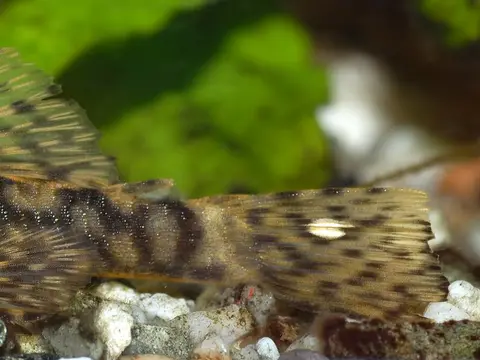 Bristlenose pleco Ancistrus sp. 26 gal (100 L) · 72–81 °F (22–27 °C)
 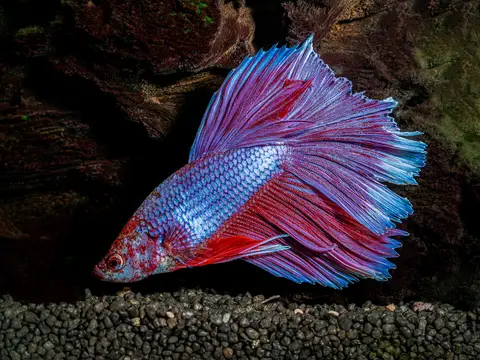 Betta fish Betta splendens 7 gal (25 L) · 75–82 °F (24–28 °C)
 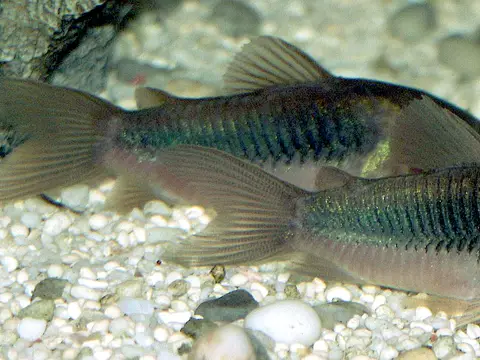 Bronze cory Corydoras aeneus 21 gal (80 L) · 72–81 °F (22–27 °C)
 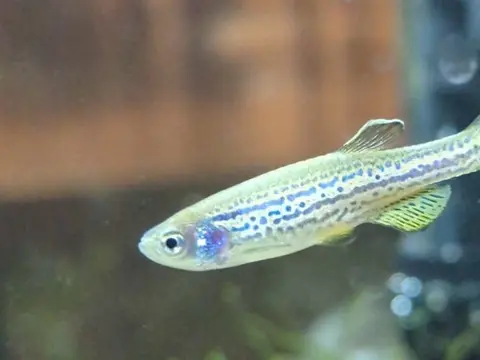 Zebra danio Danio rerio 16 gal (60 L) · 64–77 °F (18–25 °C)
 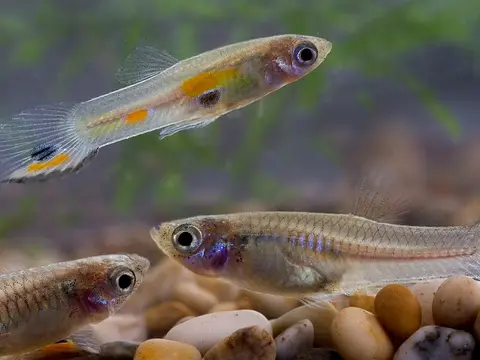 Guppy Poecilia reticulata 14 gal (54 L) · 72–82 °F (22–28 °C)
 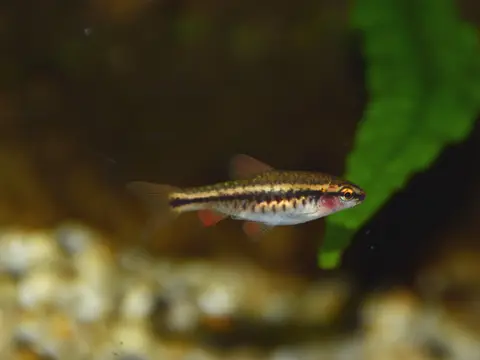 Cherry barb Puntius titteya 16 gal (60 L) · 73–81 °F (23–27 °C)
 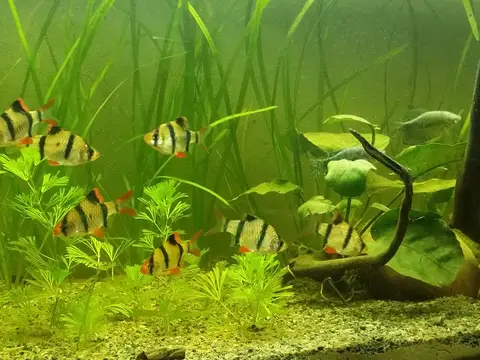 Tiger barb Puntigrus tetrazona 26 gal (100 L) · 72–79 °F (22–26 °C)
 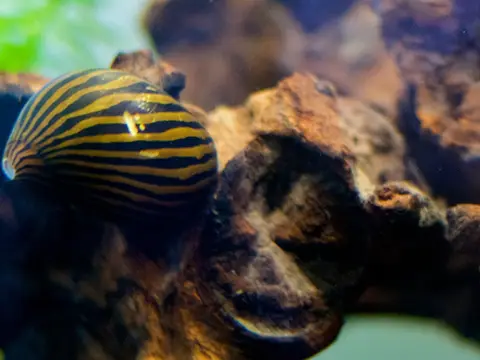 Nerite snail Neritina natalensis 5 gal (20 L) · 72–82 °F (22–28 °C)
 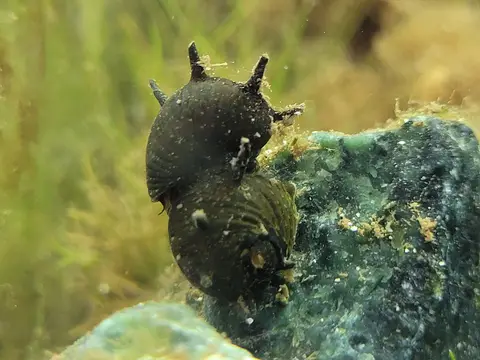 Horned nerite snail Clithon corona 5 gal (20 L) · 72–82 °F (22–28 °C)
 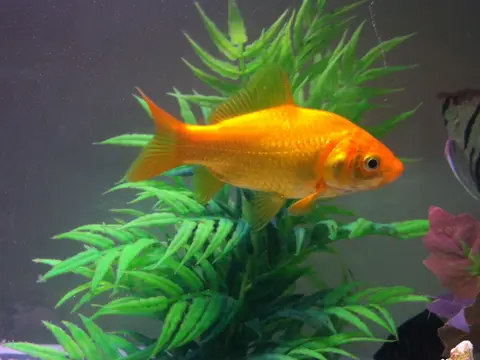 Common goldfish Carassius auratus 79 gal (300 L) · 50–75 °F (10–24 °C)
 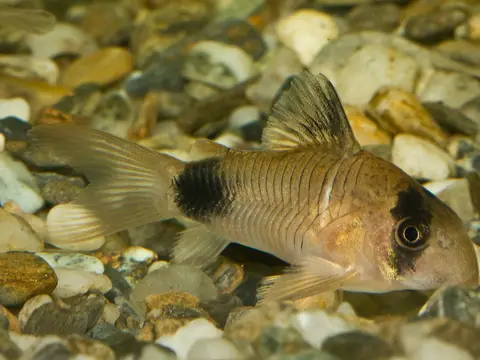 Panda cory Corydoras panda 16 gal (60 L) · 68–77 °F (20–25 °C)
 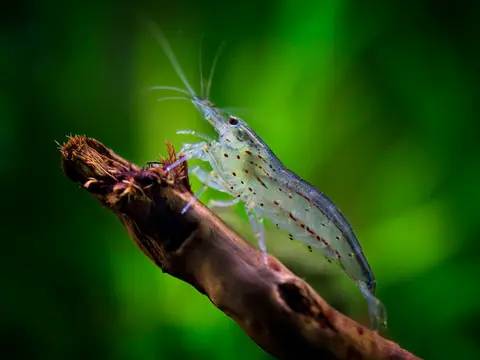 Amano shrimp Caridina multidentata 11 gal (40 L) · 64–82 °F (18–28 °C)
 Check the compatibility of your whole tank →
What not to keep it with
Popular species you shouldn’t house with the Glass catfish, and why.
- Discus: incompatible temperatures
- Oscar: one may eat the other due to size, incompatible temperaments
Recommended equipment
What you need to keep the Glass catfish healthy, checked against Amazon stock.



Frequently asked questions
How many liters does a Glass catfish need?
At least about 120 liters for a group of at least 6 fish. More space always helps keep the water stable.
What water temperature does the Glass catfish need?
Between 22 and 26 °C, with a pH of 6 to 7.5.
What fish can live with the Glass catfish?
Based on water, size and temperament, it fits with species such as Bristlenose pleco, Betta fish, Bronze cory, Zebra danio and Guppy. Use our compatibility calculator to check your whole tank.
Can the Glass catfish be kept with shrimp?
Yes: it usually won’t eat adult shrimp, though some shrimplets may get picked off. A tank with plenty of moss gives the babies cover.