If you buy through our links, Amazon pays us a small commission at no extra cost to you. That’s how we keep the site running. How we choose.
Contents
Our top 3 picks
Stock checked on October 8, 2026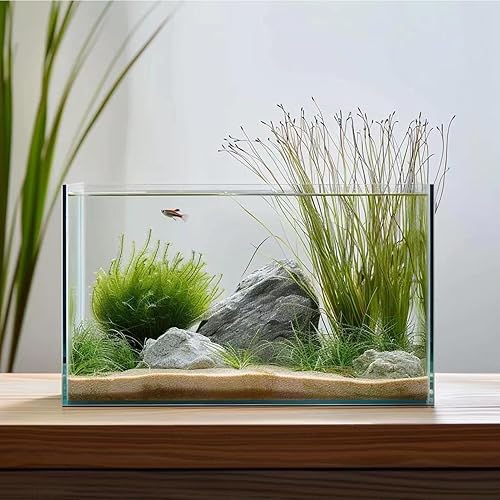


nano aquariums comparison, in stock
Vimvins 3 Gallon Glass Fish Tank, Easy to Maintain Small Aquarium for Betta/Goldfish/Snails/Shrimp and Aquatic Planting.
Tetra 5.5 Gallon Glass Aquarium, Rectangular Fish Tank
Marineland Portrait Glass LED Aquarium Kit, 5 Gallons, Hidden Filtration,Black

Koller Products Plastic 6-Gallon AquaView 360 Aquarium Kit for Tropical Fish, Betta Fish with LED Lighting and Power…
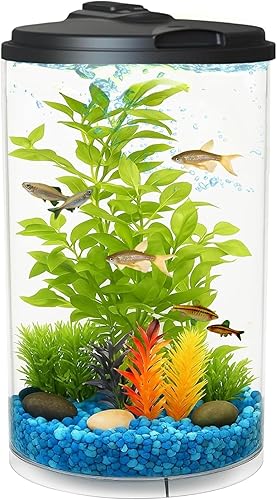
Koller Products 3-Gallon 360 Aquarium with LED Lighting (7 Color Selections) and Power Filter, Impact-Resistant…
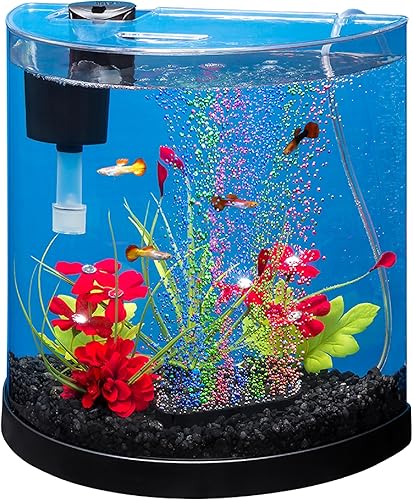
Tetra Half-Moon 3 Gallon Starter Fish Tank Kit
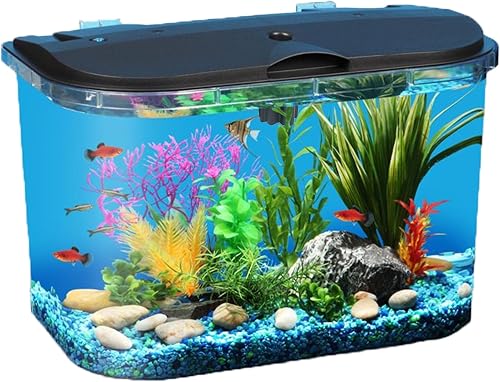
Koller Products 5-Gallon Aquarium Kit with LED Lighting and Power Filter, Ideal for a Variety of Tropical Fish

Fluval SPEC Freshwater Aquarium Kit, 2.6 Gallon, Black
AcuarioSano rating: combines the average rating and the number of buyer reviews on Amazon. No brand pays to be featured.
What a nano aquarium is and who it suits
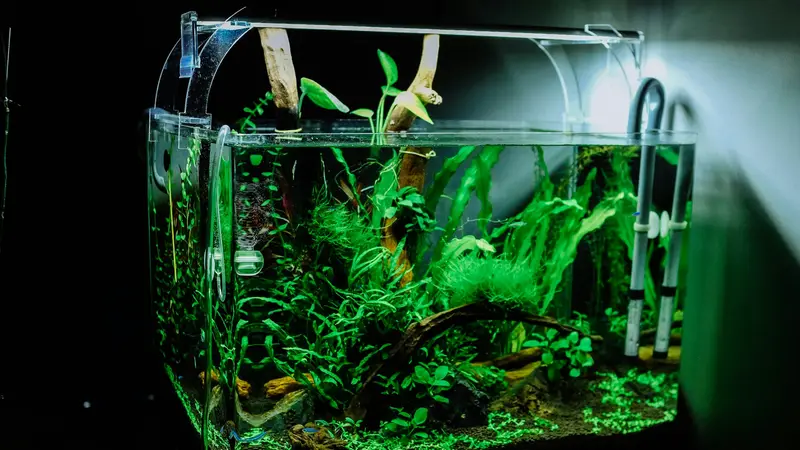
A nano aquarium is a tank of roughly 2.5 to 8 gallons (10-30 L), usually a cube or 12-16 inches wide. It fits on a desk or a shelf, sets up quickly and lets you build beautiful scapes with just a few plants. It is ideal for a shrimp tank, for a single betta or as a second aquarium once you have some experience.
What it is not, despite appearances, is "easier". With so little water every mistake shows up sooner: overfeeding, a heater stuck on or a dead snail left behind can spike ammonia within hours. If this is your first tank and you dream of a school of fish, a 15-20 gallon setup gives you far more margin.
What really fits in a nano
| Volume | Sensible options | Better to avoid |
|---|---|---|
| 2.5-4 gal (10-15 L) | dwarf shrimp and nerite snails | any fish |
| 4-5 gal (15-20 L) | a shrimp colony; one male betta on his own, with gentle flow | schooling fish, groups of guppies |
| 5-8 gal (20-30 L) | one betta, or a group of 8-10 micro rasboras with shrimp | neon tetras, full-size corydoras, plecos, goldfish |
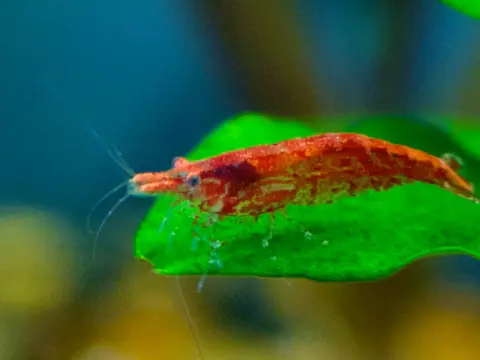
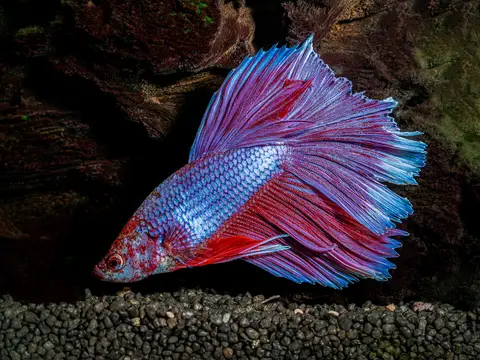
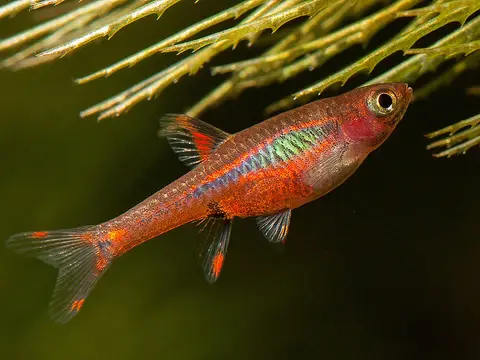
Cherry shrimp are the stars of nano tanks: they breed on their own, clean up leftovers and do well as long as the water is stable. A male betta lives comfortably in 5 gallons or more with plants and gentle flow (see betta tanks for the best-suited models). If you would rather have a tiny school, the chili rasbora barely reaches 0.8 in (2 cm) and looks great in a group in a well-planted nano.
The honest limits of a nano
- Stability: ammonia, nitrite and pH swing much faster than in 15 or 30 gallons. Weekly water changes of 20-30% are mandatory, not optional.
- Temperature: a nano heats up in summer and cools at night. Use a small adjustable heater of about 25-50 W (here roughly 1.5 W per liter, or 5-6 W per gallon, makes sense) and a thermometer.
- Evaporation: it concentrates minerals. Top off with conditioned water, never untreated tap water.
- Stocking: very limited. A few small fish or invertebrates only; no "a bit of everything".
- Flow: the filter should turn the volume over 3-4 times an hour, but gently, especially for bettas and shrimp.
What a good nano kit should include
A good nano comes with a lid or glass cover (bettas and shrimp jump), an LED light you can dim or schedule, and a filter whose intake is protected by a sponge so it doesn't swallow baby shrimp. Few kits include a heater; if yours doesn't, add a compact one. Fluval, Aqueon, Marineland and Dennerle all sell popular nano kits; rimless ultra-clear cubes look better but lose more water and need a separate cover.
Tip: a nano needs cycling for 4-6 weeks before any livestock goes in, just like a big tank. You will find every step in our guides to setting up a nano tank and aquarium cycling.
Common nano tank mistakes
- Choosing a nano as a first tank because "small means less work".
- Adding schooling fish that need more room, such as neon tetras or regular corydoras.
- Overfeeding: in 5 gallons a few extra flakes foul the water fast.
- Running a filter that is too strong for a betta, or with no sponge guard around shrimp.
- Putting it in direct sun or on top of something that gives off heat.
Warning: a goldfish should never live in a nano: it grows large and produces a lot of waste. Unfiltered, unheated bowls aren't suitable for a betta either. And never release shrimp, snails or plants into the wild.
We compare spec sheets, verified reviews and real-world criteria, but we do not physically test the products: use the models above as a starting point and check each listing for the real volume and whether a heater is included.
Frequently asked questions
Is a nano aquarium good for beginners?
It can be if you choose livestock carefully and stay consistent, but it is less forgiving than a 15-20 gallon tank. With so little water, feeding or temperature mistakes show up much sooner.
What fish can live in a 5 gallon tank?
One male betta on his own or a small group of micro rasboras such as chili rasboras, plus dwarf shrimp and snails. Neon tetras, groups of guppies, regular corydoras and goldfish need more space.
Does a nano tank need a heater?
Yes, if it holds tropical fish or sensitive shrimp. Small volumes change temperature very quickly; a compact 25-50 W adjustable heater is enough.
How often should I change the water in a nano tank?
Every week, 20-30% of the volume, with conditioned water at a similar temperature. Skipping water changes shows up sooner in a nano than in a larger tank.