If you buy through our links, Amazon pays us a small commission at no extra cost to you. That’s how we keep the site running. How we choose.
Contents
Overview
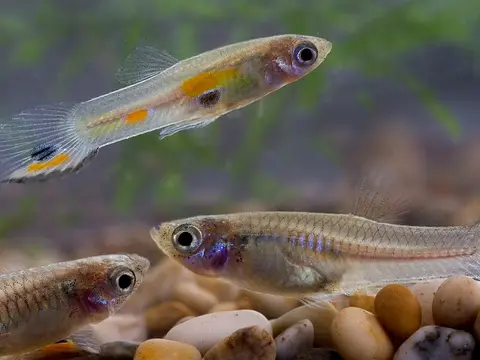
The guppy is probably the most famous aquarium fish in the world. Males, about 1.2 in (3 cm) long, show off huge tails in every color and pattern imaginable, the result of decades of selective breeding; females are larger, up to 2-2.4 in (5-6 cm), and plainer. Wild guppies live in streams, ponds and ditches of northeastern South America and Trinidad, and the species has been introduced around the globe.
People love guppies because they are lively, hardy in the right water, breed easily and are inexpensive. They make good beginner fish, as long as you know that long-tailed fancy lines are more delicate and that, left unchecked, a tank fills with fry within weeks.
Care and tank setup
A cycled 15-gallon (57 L) tank is a good starting point for a small group; at 20-26 gallons (80-100 L) it is easier to keep water quality high and manage the population.
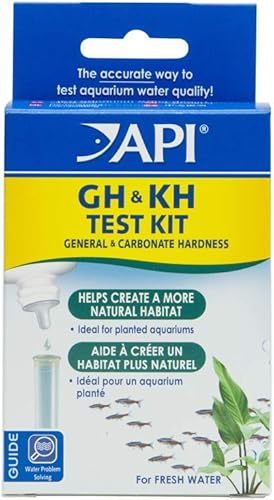
- Water: moderately hard to hard, neutral to alkaline pH, at 72-82 °F (22-28 °C). Very soft, acidic water does not suit them. Change 20-30% weekly; farmed guppies suffer with high nitrate.
- Ratio: 1 male to 2-3 females, or males only if you do not want fry. Several males with one female wear her out.
- Decor: plenty of plants (moss, elodea, floaters) to shelter females and fry. Keep flow gentle, since long tails make swimming hard.
- Tank mates: peaceful fish such as corydoras, platies, rasboras, calm tetras or shrimp. Never with tiger barbs, serpae tetras or other fin nippers.
Never release guppies into rivers or ponds: they are invasive in many countries.
Feeding
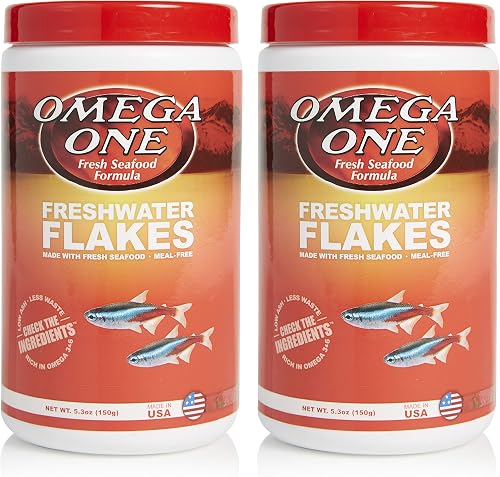
Guppies are omnivores that eat almost anything, mostly at the surface. Use a quality flake or micro pellet as the staple and add brine shrimp, daphnia or bloodworms a few times a week, plus some plant matter such as spirulina. Feed little and often, two small meals a day. Overfeeding is the most common cause of dirty water in guppy tanks.
Breeding
Guppies are livebearers: after about four weeks of gestation the female gives birth to fully formed fry, usually 20 to 50 per batch, and she can store sperm for several broods. Adults eat the fry, so if you want to raise them, add lots of moss and floating plants or move the heavily pregnant female to a separate tank. Fry eat powdered food and baby brine shrimp from day one.
Compatible tank mates
Species from our database that share water parameters, size and temperament with the Guppy. Calculated from the data in each profile.
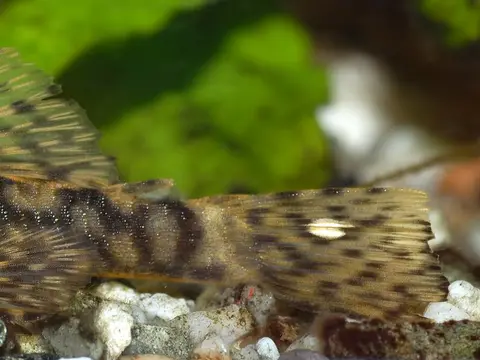 Bristlenose pleco Ancistrus sp. 26 gal (100 L) · 72–81 °F (22–27 °C)
 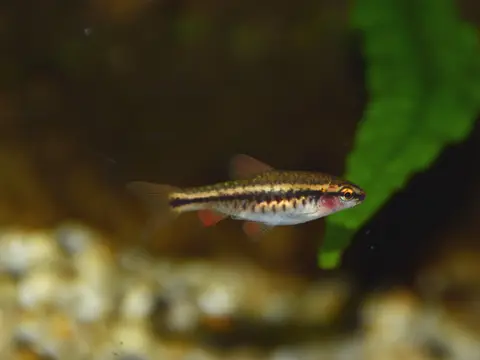 Cherry barb Puntius titteya 16 gal (60 L) · 73–81 °F (23–27 °C)
 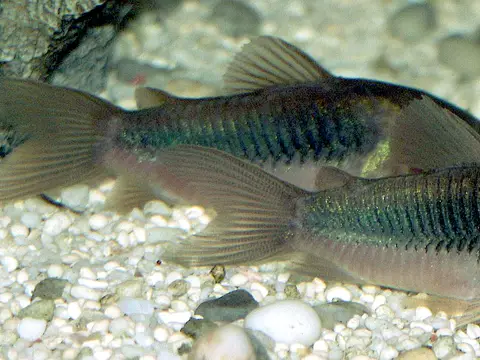 Bronze cory Corydoras aeneus 21 gal (80 L) · 72–81 °F (22–27 °C)
 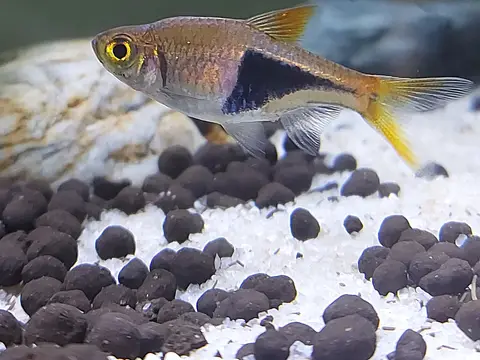 Harlequin rasbora Trigonostigma heteromorpha 16 gal (60 L) · 72–81 °F (22–27 °C)
 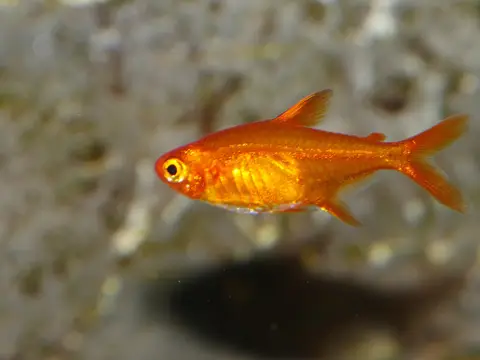 Ember tetra Hyphessobrycon amandae 11 gal (40 L) · 73–82 °F (23–28 °C)
 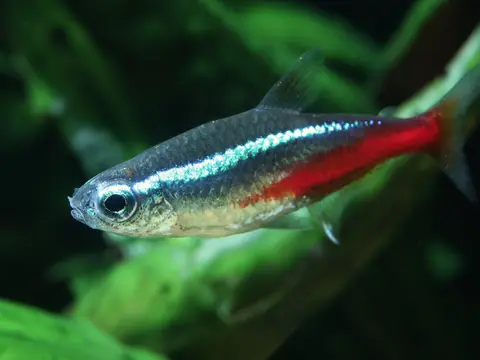 Neon tetra Paracheirodon innesi 16 gal (60 L) · 68–79 °F (20–26 °C)
 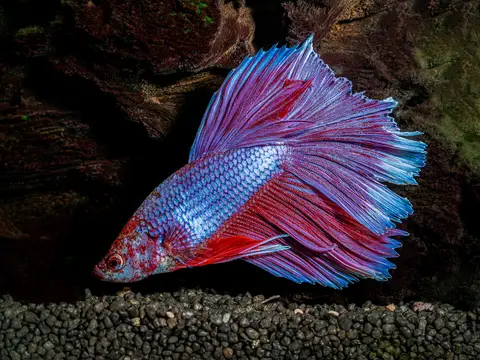 Betta fish Betta splendens 7 gal (25 L) · 75–82 °F (24–28 °C)
 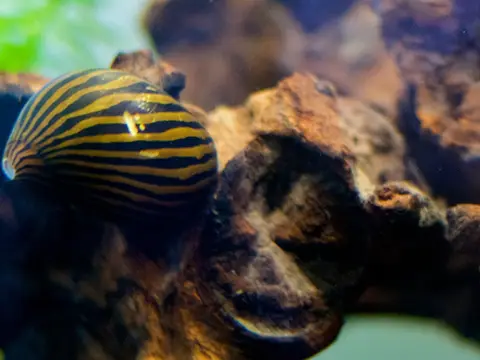 Nerite snail Neritina natalensis 5 gal (20 L) · 72–82 °F (22–28 °C)
 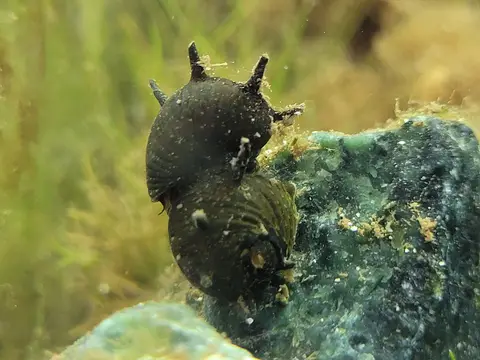 Horned nerite snail Clithon corona 5 gal (20 L) · 72–82 °F (22–28 °C)
 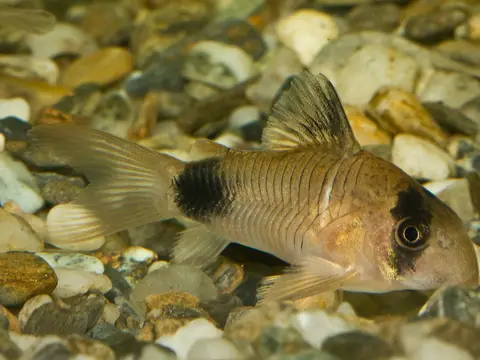 Panda cory Corydoras panda 16 gal (60 L) · 68–77 °F (20–25 °C)
 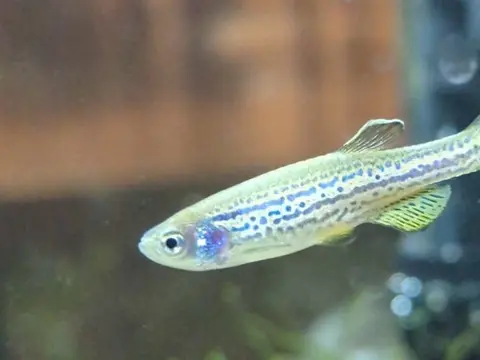 Zebra danio Danio rerio 16 gal (60 L) · 64–77 °F (18–25 °C)
 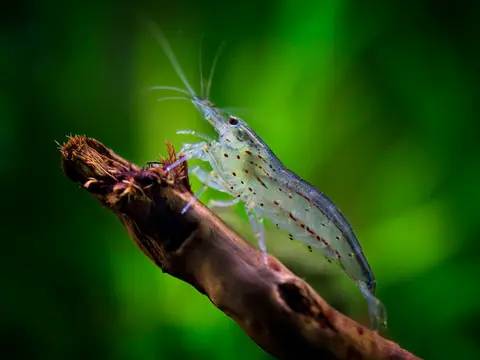 Amano shrimp Caridina multidentata 11 gal (40 L) · 64–82 °F (18–28 °C)
 Check the compatibility of your whole tank →
What not to keep it with
Popular species you shouldn’t house with the Guppy, and why.
- Tiger barb: nips long fins
- Common goldfish: one may eat the other due to size
- Angelfish: one may eat the other due to size
- Clown loach: one may eat the other due to size
- Oscar: one may eat the other due to size, incompatible temperaments
Recommended equipment
What you need to keep the Guppy healthy, checked against Amazon stock.


Frequently asked questions
How many liters does a Guppy need?
At least about 54 liters for a group of at least 3 fish. More space always helps keep the water stable.
What water temperature does the Guppy need?
Between 22 and 28 °C, with a pH of 6.8 to 8.
What fish can live with the Guppy?
Based on water, size and temperament, it fits with species such as Bristlenose pleco, Cherry barb, Bronze cory, Harlequin rasbora and Ember tetra. Use our compatibility calculator to check your whole tank.
Can the Guppy be kept with shrimp?
Yes: it usually won’t eat adult shrimp, though some shrimplets may get picked off. A tank with plenty of moss gives the babies cover.