If you buy through our links, Amazon pays us a small commission at no extra cost to you. That’s how we keep the site running. How we choose.
Contents
Overview
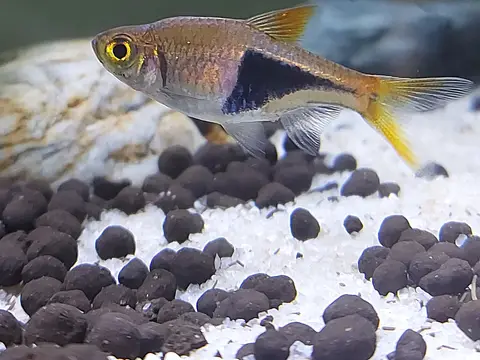
The harlequin rasbora has been an aquarium classic for nearly a century. It comes from blackwater streams and peat swamps in Malaysia, Singapore, Thailand and Sumatra, and you'll recognize it instantly by its coppery body with a black triangular patch, shaped like a wedge, on the rear half.
It is peaceful and hardy, and it lives in tight schools that move in unison through the middle of the tank, a real showpiece in a planted aquarium. Captive-bred fish adapt to almost any reasonable tap water, which makes the harlequin one of the best choices for a first planted community tank.
Care and tank setup
A school of ten or more does well in a tank 24 inches long, around 15 to 20 gallons (60 liters). The bigger the group, the more natural and confident they act.
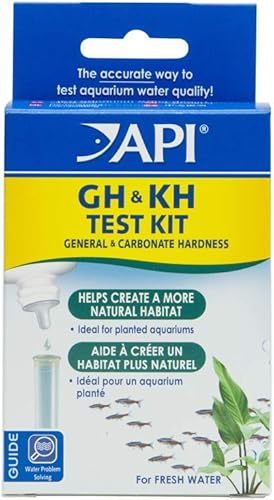
- Water: they prefer soft, slightly acidic water, though captive-bred fish handle somewhat harder water. Stability and a mature, cycled tank matter most.
- Decor: dense planting at the back and sides, broad-leaved species (crypts, anubias) and open water in front. Indian almond leaves and a dark substrate deepen their color.
- Lighting: moderate, or softened with floating plants.
- Tank mates: small tetras, corydoras, otocinclus, dwarf gouramis, bettas and shrimp.
Harlequins are calm and don't nip fins, so they even work with bettas. Avoid large fish that could eat them and very hyperactive species that keep them on edge.
Feeding
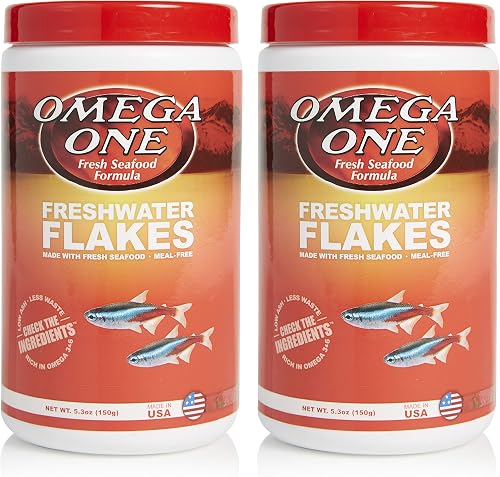
Easygoing omnivores. Use a quality fine flake or micro pellet as the staple and add small live or frozen foods (baby brine shrimp, daphnia, cyclops, chopped bloodworms) several times a week. They feed in mid-water and rarely pick leftovers off the bottom, so feed small amounts more often.
Breeding
Unlike most cyprinids, harlequins don't scatter their eggs. The pair swims upside down beneath a broad leaf and sticks a few dozen eggs to its underside. To breed them, set up a separate tank with very soft, acidic water, crypts or anubias and a well-conditioned pair. Remove the parents after spawning and feed the fry infusoria.
Compatible tank mates
Species from our database that share water parameters, size and temperament with the Harlequin rasbora. Calculated from the data in each profile.
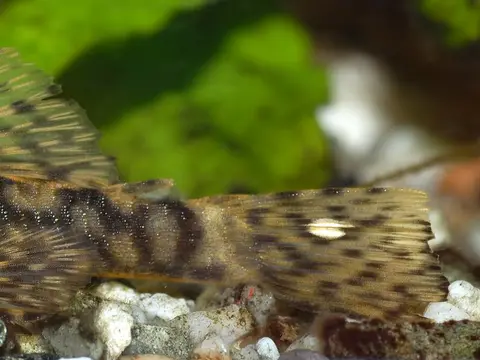 Bristlenose pleco Ancistrus sp. 26 gal (100 L) · 72–81 °F (22–27 °C)
 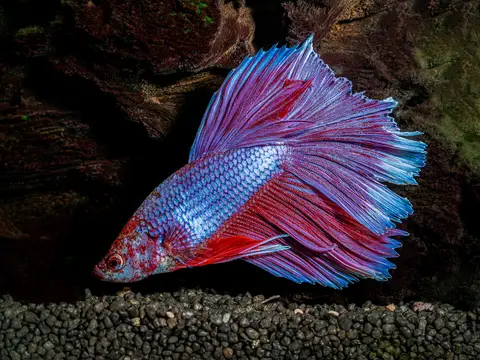 Betta fish Betta splendens 7 gal (25 L) · 75–82 °F (24–28 °C)
 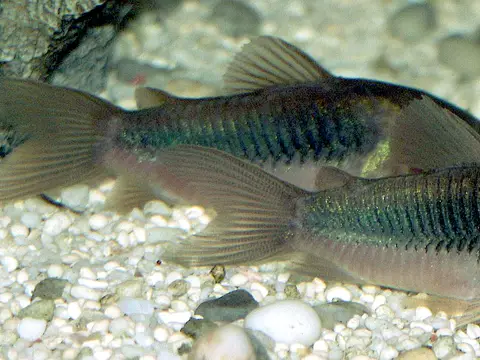 Bronze cory Corydoras aeneus 21 gal (80 L) · 72–81 °F (22–27 °C)
 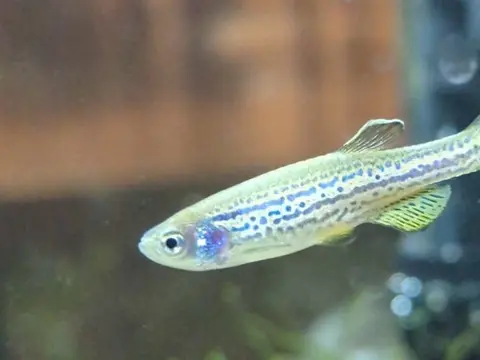 Zebra danio Danio rerio 16 gal (60 L) · 64–77 °F (18–25 °C)
 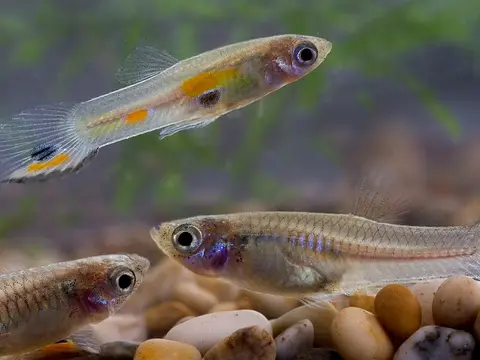 Guppy Poecilia reticulata 14 gal (54 L) · 72–82 °F (22–28 °C)
 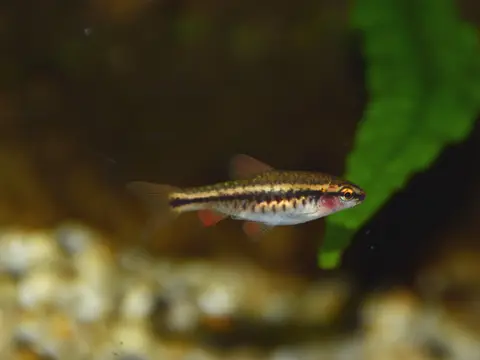 Cherry barb Puntius titteya 16 gal (60 L) · 73–81 °F (23–27 °C)
 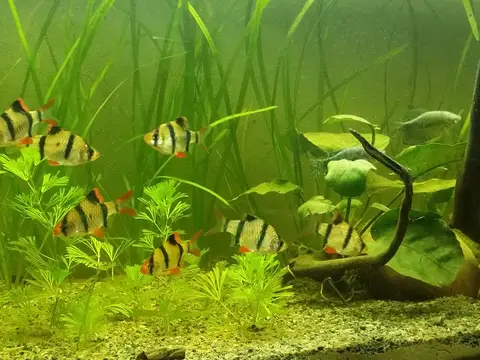 Tiger barb Puntigrus tetrazona 26 gal (100 L) · 72–79 °F (22–26 °C)
 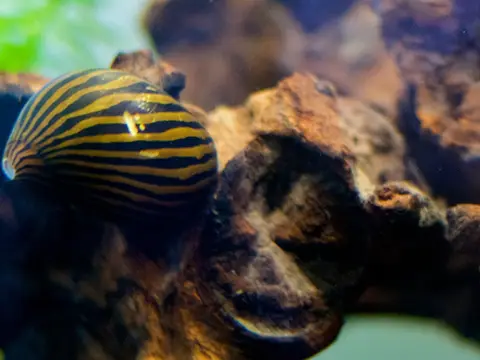 Nerite snail Neritina natalensis 5 gal (20 L) · 72–82 °F (22–28 °C)
 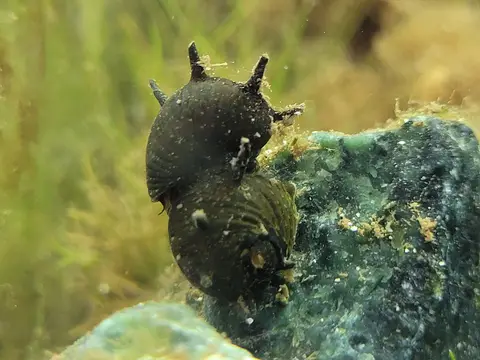 Horned nerite snail Clithon corona 5 gal (20 L) · 72–82 °F (22–28 °C)
 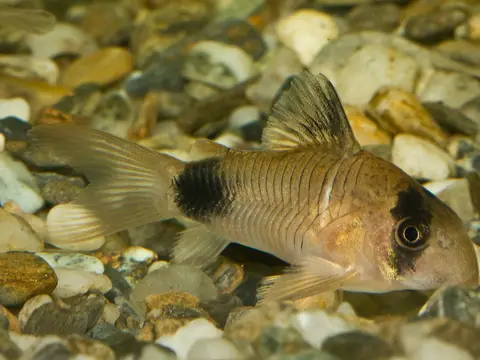 Panda cory Corydoras panda 16 gal (60 L) · 68–77 °F (20–25 °C)
 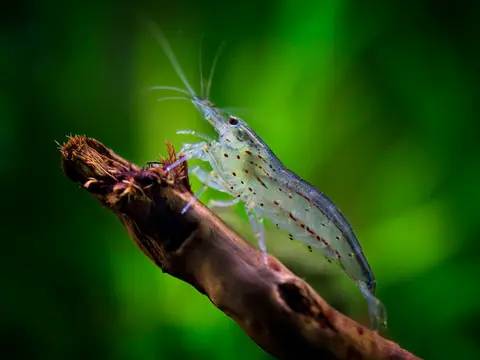 Amano shrimp Caridina multidentata 11 gal (40 L) · 64–82 °F (18–28 °C)
 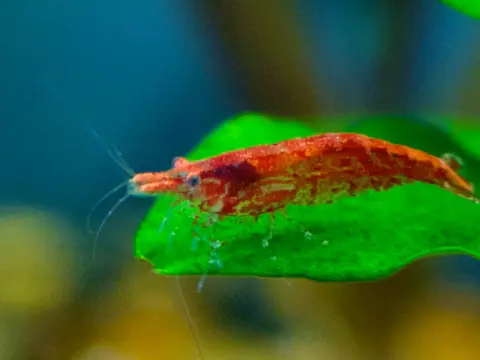 Cherry shrimp Neocaridina davidi 5 gal (20 L) · 64–81 °F (18–27 °C)
 Check the compatibility of your whole tank →
What not to keep it with
Popular species you shouldn’t house with the Harlequin rasbora, and why.
- Common goldfish: one may eat the other due to size
- Discus: incompatible temperatures
- Angelfish: one may eat the other due to size
- Clown loach: one may eat the other due to size
- Oranda goldfish: one may eat the other due to size
- Oscar: one may eat the other due to size, incompatible temperaments
Recommended equipment
What you need to keep the Harlequin rasbora healthy, checked against Amazon stock.


Frequently asked questions
How many liters does a Harlequin rasbora need?
At least about 60 liters for a group of at least 10 fish. More space always helps keep the water stable.
What water temperature does the Harlequin rasbora need?
Between 22 and 27 °C, with a pH of 5 to 7.5.
What fish can live with the Harlequin rasbora?
Based on water, size and temperament, it fits with species such as Bristlenose pleco, Betta fish, Bronze cory, Zebra danio and Guppy. Use our compatibility calculator to check your whole tank.
Can the Harlequin rasbora be kept with shrimp?
Yes: it usually won’t eat adult shrimp, though some shrimplets may get picked off. A tank with plenty of moss gives the babies cover.