If you buy through our links, Amazon pays us a small commission at no extra cost to you. That’s how we keep the site running. How we choose.
Contents
The price of the tank is only part of the bill. Most people walk into a store thinking about "a 15-gallon tank," remember the price on the box, and only later discover the stand, the heater, the test kit, the plants, the fish and, month after month, the electricity and the food. None of it is expensive on its own, but together it changes the budget a lot. This guide breaks down the startup cost by tank size, works out the monthly running cost with realistic numbers, and tells you where you can save and where you really should not.
Quick answer: a well-equipped tank of about 15 gallons (60 L) costs roughly $250-720 to set up and $9-17 a month to run. Prices in this guide are approximate as of 2026 and vary by brand, store and sales; treat them as ranges, not exact prices.
Startup budget by tank size
The table shows typical price ranges for new, mid-range equipment from brands such as Fluval, Aqueon, Tetra, Marineland, Hygger, Eheim or API. The low end covers simple kits and basic gear; the high end, longer-lasting or more feature-rich equipment. Many kits already include a filter, a light and sometimes a heater, which is why some rows start at $0.
| Item | Nano (5-8 gal / 20-30 L) | 15 gal (60 L) | 25-32 gal (100-120 L) | 55 gal+ (200 L+) |
|---|---|---|---|---|
| Tank or kit | $40-120 | $70-180 | $150-350 | $300-900 |
| Stand | $0-60 | $60-150 | $100-250 | $200-500 |
| Filter (if not included) | $0-30 | $0-50 | $50-150 | $120-300 |
| Heater | $15-25 | $20-35 | $25-45 | $40-90 |
| Light (if not included) | $0-40 | $0-80 | $40-150 | $80-300 |
| Substrate | $10-25 | $15-40 | $25-70 | $50-130 |
| Liquid test kit and water conditioner | $25-45 | $25-45 | $25-45 | $25-45 |
| Fish and invertebrates | $20-50 | $40-90 | $60-150 | $120-350 |
| Plants | $15-35 | $20-50 | $30-80 | $50-150 |
| Rough total | $125-430 | $250-720 | $500-1,300 | $1,000-2,800 |
Two things the table does not capture well. First, hardscape (driftwood, rocks) can cost next to nothing or more than the tank itself once you get into aquascaping. Second, the first month always brings small extras: a thermometer, a gravel vacuum, a net, bottled bacteria for cycling. Add about 10% and you will not get caught out.
All-in-one kit or separate equipment?
For a first tank, an all-in-one aquarium kit is usually the cheapest option with the least risk of mismatched gear: the filter and light are sized for the tank. Buying separately pays off from about 30 gallons up, when you want a specific canister filter or a light for demanding plants. If you are unsure about size, our first aquarium guide for beginners explains why 15-30 gallons forgives more mistakes than a nano.
Monthly costs: electricity, food and consumables
Running a tank is cheaper than many people fear, but it is not free. These are the recurring costs of a tropical tank with 20-30% weekly water changes:
| Monthly cost | Nano | 15 gal | 25-32 gal | 55 gal+ |
|---|---|---|---|---|
| Electricity (heater, filter, light) | $2-3 | $3-6 | $6-10 | $10-16 |
| Food | $2-4 | $3-5 | $4-8 | $6-12 |
| Water conditioner | $1-2 | $1-2 | $2-3 | $3-5 |
| Consumables (filter media, test refills, fertilizer) | $1-3 | $2-4 | $3-6 | $4-8 |
| Approximate total | $6-12 | $9-17 | $15-27 | $23-41 |
How to estimate your tank's electricity use
The formula is simple: watts × hours per day ÷ 1,000 = kWh per day, then multiply by 30 and by your utility rate (in much of the US, roughly $0.15-0.20 per kWh, higher in some states). Example for a 15-gallon tank in winter:
- 50-75 W heater, which cycles on about a third of the time (around 8 hours): 0.4-0.6 kWh a day.
- 15 W LED light for 8 hours: 0.12 kWh a day.
- 5 W filter running 24 hours: 0.12 kWh a day.
Total: about 0.65-0.85 kWh a day, or 20-25 kWh a month, which at $0.15-0.20/kWh comes to roughly $3-5. In summer, with the room at 75-79 °F (24-26 °C), the heater barely runs and the cost drops by about half. The heater is by far the biggest user: a tank in a cold room can double the figure. That is why it pays to choose the right aquarium heater (the rule of thumb is about 4-5 W per gallon, or ~1 W per liter) and to keep the tank away from drafty windows and exterior doors.
Do not save money by switching off the filter or heater. The filter must run 24/7: if it stops for several hours, the bacteria that process ammonia start to die. And a tropical tank that drops below 72 °F (22 °C) at night stresses fish and invites diseases such as ich.
Where you can save safely
- A used tank: this can save a lot. Check that the silicone is not peeling or yellowed, and run a 24-48 hour leak test outdoors or on a surface that will not be damaged.
- Decorations: one good piece of driftwood and a few rocks look better than a pile of ornaments. Avoid rocks collected outdoors that may contain limestone or metals unless you can identify them.
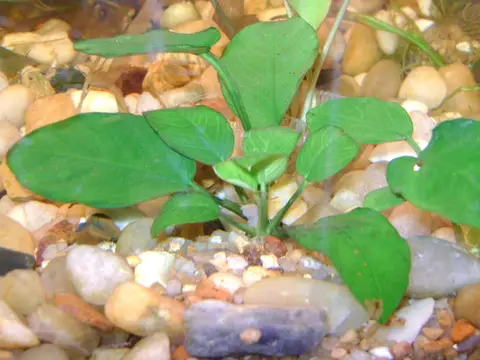
- Easy plants and cuttings: species like Anubias nana, Java fern or Cryptocoryne grow under modest light without CO2 and spread on their own. Local hobbyists often give cuttings away.
- Young fish and fewer at first: there is no need to fill the tank on day one; stocking gradually is actually better.
- Medium-size food containers: giant tubs go stale and lose vitamins before you finish them. Buy what you will use in 2-3 months.
- A kit instead of individual parts for small and mid-size tanks.
Where not to cut corners
- The stand: water weighs about 8.3 lb per gallon; a 30-gallon tank with gravel and glass tops 330 lb (150 kg). Ordinary furniture can sag or give way. Use an aquarium stand rated for that weight and make sure it is level.
- The heater: a thermostat that sticks "on" can cook your fish overnight. Pay for a reliable brand and double-check with a separate thermometer.
- The filter: it is the heart of the tank. It should turn over 3-5 times the tank volume per hour and have room for biological media.
- The test kit: a liquid kit costs about the same as two or three fish and is the only way to know whether cycling is finished or why something is going wrong.
- Cycling time: it costs nothing, but skipping it is expensive. The 4-6 week wait prevents replacing dead fish, the most common hidden cost.
Hidden costs to plan for
Beyond the above, some costs show up sooner or later. A medication for common diseases is cheap, but it is worth having on hand. Old fluorescent tubes needed replacing every year; modern LEDs last far longer, but cables and power adapters do fail. And then there is the famous "multiple tank syndrome": almost every hobbyist ends up wanting a bigger tank or a second one for shrimp or quarantine. If you suspect that will be you, starting with 30 gallons may cost less than setting up twice.
A nano looks like the budget option, but its parameters swing quickly and it forgives very little; it is great for a single betta or some shrimp, but too small for a varied community.
Common budgeting mistakes
- Counting only the tank price and forgetting the stand, test kit, heater and plants.
- Buying the cheapest heater or filter and replacing it a few months later.
- Using furniture that is not built for the weight.
- Buying all the fish on day one in an uncycled tank and having to replace them.
- Choosing a tank that is too small to save money and upgrading within a year.
- Forgetting the winter electricity bill when the tank sits in a cold room.
Once your budget is set, the next step is putting it together in the right order: see our guide on how to set up a fish tank step by step.
Recommended gear for this guide


Frequently asked questions
How much does it cost to set up a 15-gallon tank?
Roughly 250 to 720 dollars including the stand, filter, heater, light, substrate, test kit, plants and fish, depending on brand and whether you buy a kit or separate equipment. These are approximate 2026 prices and can change with sales.
How much electricity does a fish tank use per month?
A 15-gallon tank uses about 20 to 25 kWh a month in winter, which usually works out to 3 to 5 dollars depending on your rate. It uses much less in summer because the heater barely runs. The heater is the biggest power user.
Is a nano tank cheaper?
The upfront cost is lower, but a nano is harder to keep stable because temperature and water quality change quickly. For beginners, a 15 to 30 gallon tank is usually the better value because it forgives more mistakes.
Is it worth buying a used aquarium?
It can save quite a bit, especially on larger tanks. Check that the silicone is intact, run a leak test for a day or two, and disinfect or replace the filter media and gravel if you do not know where they came from.
What should I not skimp on when setting up a tank?
The stand, the heater, the filter and the test kit. A weak stand or a failed heater can cause disasters, and without a test kit you cannot know whether the tank is cycled. Also respect the four to six weeks of cycling.
You may also like
- GuideFirst Aquarium for Beginners: Tank Size, Equipment and Easy Fish
- GuideHow to Set Up a Fish Tank Step by Step: From Stand to First Fish
- GuideHow to Set Up a Nano Tank: Equipment, Stocking and Maintenance
- Gear reviewAquarium kits
 Gear reviewAquarium heaters
 ProfileAnubias nana
- Gear review15 gallon aquariums
- Gear review29 gallon aquariums