If you buy through our links, Amazon pays us a small commission at no extra cost to you. That’s how we keep the site running. How we choose.
Contents
Our top 3 picks
Stock checked on October 7, 2026

aquarium kits comparison, in stock
Marineland Portrait Glass LED Aquarium Kit, 5 Gallons, Hidden Filtration,Black
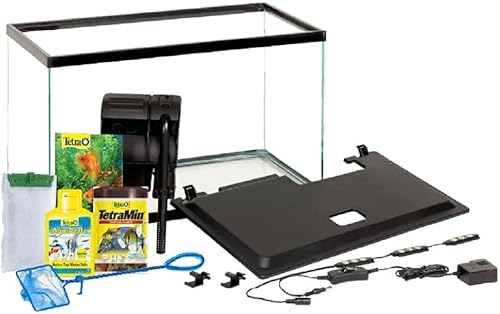
Tetra LED 10 Gallon Complete Fish Tank Kit

Tetra 29 Gallon Complete Tropical Fish Tank Kit
Koller Products Plastic 6-Gallon AquaView 360 Aquarium Kit for Tropical Fish, Betta Fish with LED Lighting and Power…
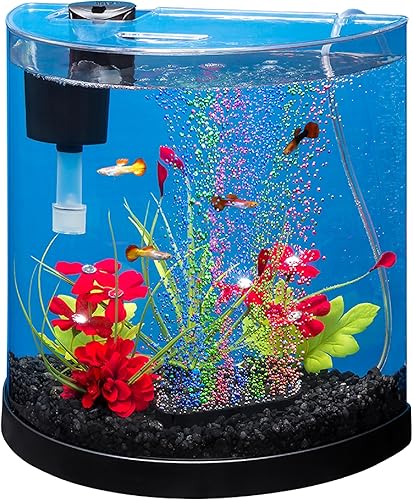
Tetra Half-Moon 3 Gallon Starter Fish Tank Kit
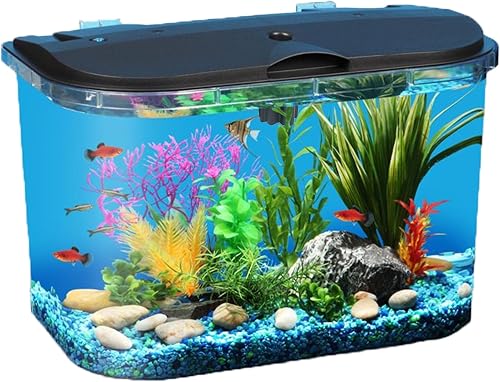
Koller Products 5-Gallon Aquarium Kit with LED Lighting and Power Filter, Ideal for a Variety of Tropical Fish


Fluval SPEC Freshwater Aquarium Kit, 2.6 Gallon, Black
AcuarioSano rating: combines the average rating and the number of buyer reviews on Amazon. No brand pays to be featured.
What a good aquarium kit should include
An aquarium kit is a tank sold with the basic equipment it needs to run from day one. It is a smart way to start: the parts are sized for that volume, the filter fits under the lid and there is nothing to calculate. But the word "complete" varies a lot between brands, so it pays to go through the listing line by line.
- Tank and lid: a lid stops fish from jumping, cuts evaporation and keeps splashes off the light. Ideally it has a feeding hatch so you don't have to lift the whole thing.
- LED lighting: nearly every current kit has one. It is fine for fish and easy plants, but usually too weak for a demanding planted tank.
- Filter: internal, hang-on-back (the most common in US kits) or, in bigger kits, a canister. Look for a flow of roughly 3-5 times the tank volume per hour and room for biological media, not just a thin cartridge.
- Heater: essential for tropical fish (75-80 °F / 24-27 °C), yet many kits leave it out. Rule of thumb: about 4 watts per gallon (1 W per liter).
- Extras: some add water conditioner, sample food, a net or a thermometer. Nice to have, but they shouldn't decide the purchase.
Fluval, Tetra, Aqueon, Marineland and similar brands all sell kits on Amazon. Treat them as examples, not a closed list: what matters is the real volume and the exact equipment in each box.
Which size to choose
It sounds backwards, but a bigger tank is easier to keep: water quality degrades more slowly, temperature is steadier and a feeding mistake gets diluted. That is why for a first aquarium we suggest 15 to 30 gallons (55-110 L) rather than a nano. Keep the weight in mind too: count a little over 10 lb per gallon once water, glass, gravel and decor are in.
| Size | Typical footprint | Filled weight (approx.) | Best for |
|---|---|---|---|
| Nano (2.5-8 gal / 10-30 L) | 10-16 in wide | 30-90 lb (15-40 kg) | shrimp, one betta or micro rasboras; better with some experience |
| 15-20 gal (55-75 L) | 24 × 12 × 12 in (60 × 30 × 30 cm) | 150-225 lb (70-100 kg) | the classic first tank |
| 29 gal (about 110 L) | 30 × 12 × 18 in | 300-330 lb (135-150 kg) | a first tank with more margin and a varied community |
| 55 gal and up (200 L+) | 48 in wide or more | 600 lb (270 kg) or more | cichlids and big schools; needs a proper stand |
If you are torn between sizes, check our guides to nano aquariums, 15-gallon aquariums and 29-gallon aquariums: each one covers which fish fit and what equipment comes with that format.
Glass or acrylic
Most freshwater kits are glass (standard float glass, sometimes low-iron "ultra clear" in premium lines). It doesn't scratch easily, any algae scraper works on it and it ages well. Its weak points are weight and the fact that a hard knock on a corner can crack it.
Acrylic is lighter, handles knocks better and allows curved shapes, but a single grain of sand trapped in a sponge will scratch it, and it can yellow over the years. If you go acrylic, use acrylic-safe, non-abrasive cleaners. For a first tank glass is the low-stress choice; ultra-clear glass only really matters in large or aquascaped tanks.
What is almost never in the box
Even if the kit says complete, plan to buy separately:
- A heater, if the kit doesn't include one and you want tropical fish.
- A test kit (ammonia, nitrite, nitrate and pH) to follow the cycle.
- Dechlorinating water conditioner for every water change.
- Substrate, plants and natural decor (driftwood, rocks).
- A gravel vacuum and a bucket used only for the aquarium.
- An outlet timer for the light (6-8 hours a day) and, from 15-20 gallons up, a stand rated for the weight.
Tip: add those extras to your budget before comparing. A slightly pricier kit that already includes a heater and a filter with biological media can end up cheaper than a bare-bones one you have to complete piece by piece.
Before adding fish: cycling
No kit ships with a mature filter. The bacteria that turn ammonia into nitrite and then nitrate take 4 to 6 weeks to colonize it (a bit less with bottled bacteria). Until ammonia and nitrite both read 0, don't add fish. We walk through it step by step in our guide to aquarium cycling.
After that, start with a few hardy species and add more gradually. In a 15-gallon tank or larger, a school of neon tetras with a group of panda corydoras is a classic, peaceful combination.
Common mistakes when buying an aquarium kit
- Picking the smallest one "to start with": nano tanks are far less forgiving.
- Trusting the nominal gallons: once substrate and decor are in, you hold 10-20% less water.
- Buying the fish the same day as the tank.
- Placing it by a window or a heat vent: more algae and sudden temperature swings.
- Setting the tank on any piece of furniture that isn't built for the weight.
Warning: a bowl with no filter or heater is not a complete kit, nor a suitable home for a betta or a goldfish. And never release fish or plants into rivers or ponds: it harms local ecosystems and is illegal in many places.
We compare spec sheets, verified reviews and real-world criteria, but we do not physically test the products: use the models above as a starting point and check the real volume and included equipment in each listing.
Frequently asked questions
What size aquarium is best for a beginner?
Somewhere between 15 and 30 gallons (55-110 liters). A larger volume keeps water quality and temperature more stable and forgives feeding or maintenance mistakes far better than a nano tank.
Does an aquarium kit include everything I need?
Rarely. Most kits include the tank, lid, LED light and filter; the heater, test kit, water conditioner, substrate, plants and stand usually have to be bought separately.
How long should I wait before adding fish to a new tank?
Usually 4 to 6 weeks of cycling, until ammonia and nitrite both test at 0. Bottled bacteria or media from a mature filter can shorten that.
Is a glass or acrylic aquarium better?
For most people, glass: it scratches less and is easy to clean. Acrylic is lighter and more impact resistant, but it scratches easily and needs acrylic-safe cleaning tools.
You may also like
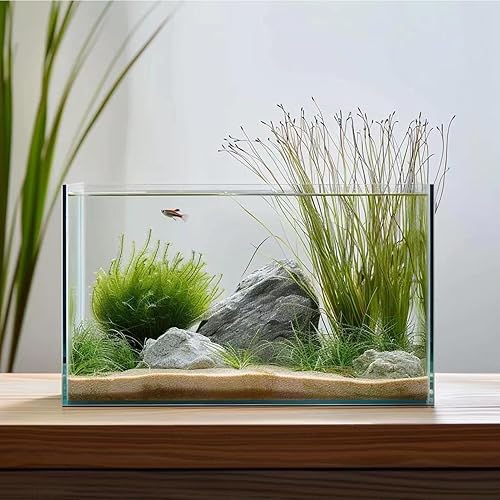 Gear reviewNano aquariums
 Gear review15 gallon aquariums
 Gear review29 gallon aquariums
- GuideAquarium Cycling: The Nitrogen Cycle, Testing and When to Add Fish
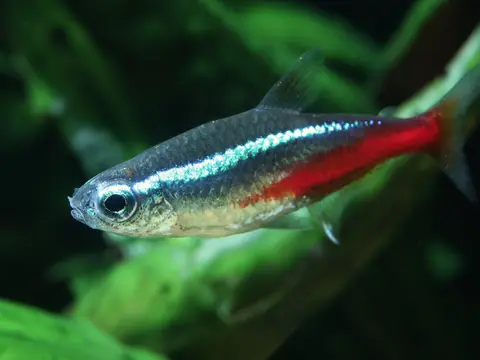 ProfileNeon tetra
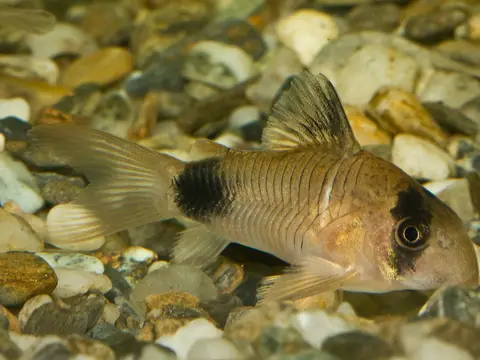 ProfilePanda cory
- GuideFirst Aquarium for Beginners: Tank Size, Equipment and Easy Fish
- GuideHow Much Does an Aquarium Cost? Setup Budget and Real Monthly Costs