If you buy through our links, Amazon pays us a small commission at no extra cost to you. That’s how we keep the site running. How we choose.
Contents
Overview
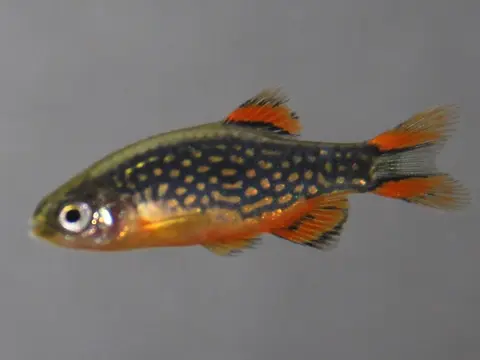
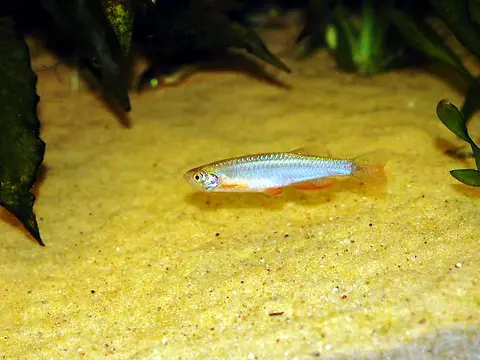
The pearl danio comes from clear streams across Southeast Asia, from Myanmar to Thailand and Laos. At first glance it looks plain, but under good lighting its body flashes mother-of-pearl, violet and blue, and males show an orange stripe that glows brighter during courtship.
It grows a little larger than the zebra danio and is just as tough, but it moves with more grace: loose schools cruise the surface while males show off to one another without doing any harm. It is an underrated alternative to the zebra for anyone who wants an active, hardy schooling fish that is easy to keep in a mid-sized community tank.
Care and tank setup
Pearl danios never stop swimming, so give a group of eight or more a tank about 30 inches long, roughly 20 gallons long or larger (80 liters), with lots of open surface. Tall, short tanks don't suit them.
- Tight lid: they are excellent jumpers.
- Water: they tolerate a wide range but appreciate clean, oxygen-rich water, weekly partial changes and moderate flow.
- Decor: gravel or sand, rounded stones and plants along the back and sides. Lighting that isn't too harsh shows off the iridescence.
- Tank mates: other danios, small barbs, corydoras, loaches and similar-sized rasboras.
Avoid very slow or shy fish, which their constant activity can stress, and very warm-water species. In small groups the males chase each other too much.
Feeding
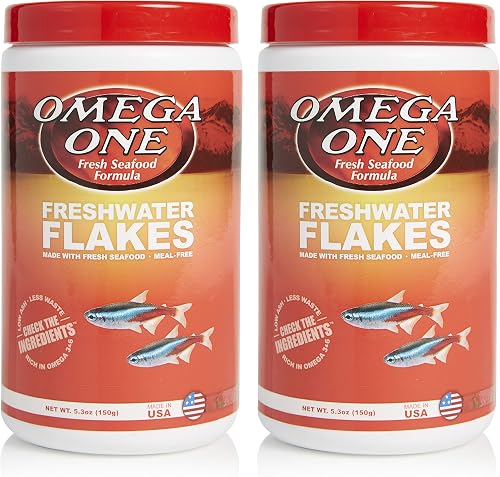
An omnivore that feeds mostly at the surface. Offer a quality fine flake or floating micro-pellet and add frozen or live brine shrimp, daphnia and bloodworms. In the wild it snaps up insects that fall onto the water, so live food really brings out its color.
Breeding
Breeding works just like the zebra danio: it is an egg scatterer that drops non-sticky eggs and eats them given the chance. Set up a shallow breeding tank with marbles or dense moss on the bottom and a group with more males than females. Remove the adults after spawning; the fry take infusoria, then baby brine shrimp.
Compatible tank mates
Species from our database that share water parameters, size and temperament with the Pearl danio. Calculated from the data in each profile.
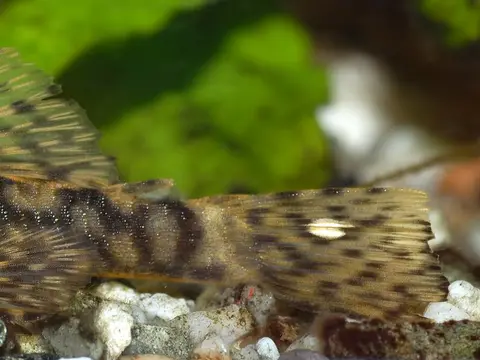 Bristlenose pleco Ancistrus sp. 26 gal (100 L) · 72–81 °F (22–27 °C)
 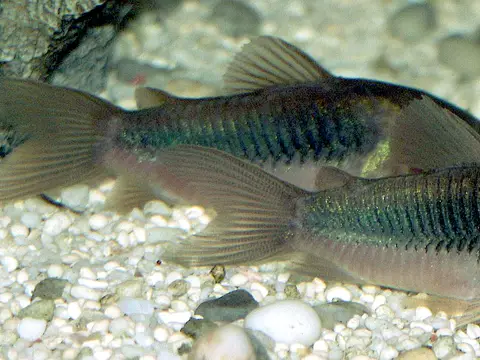 Bronze cory Corydoras aeneus 21 gal (80 L) · 72–81 °F (22–27 °C)
 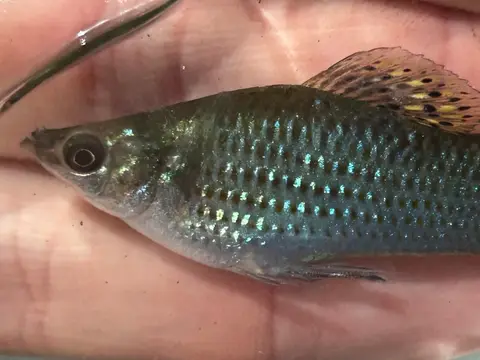 Molly Poecilia sphenops 26 gal (100 L) · 75–82 °F (24–28 °C)
 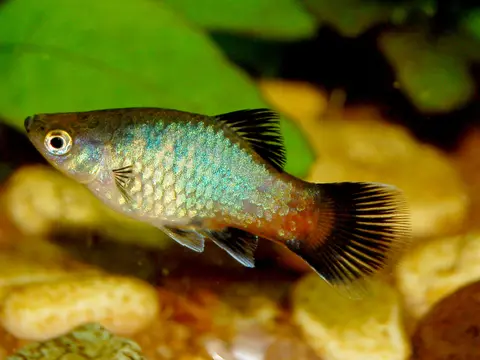 Platy Xiphophorus maculatus 16 gal (60 L) · 68–79 °F (20–26 °C)
 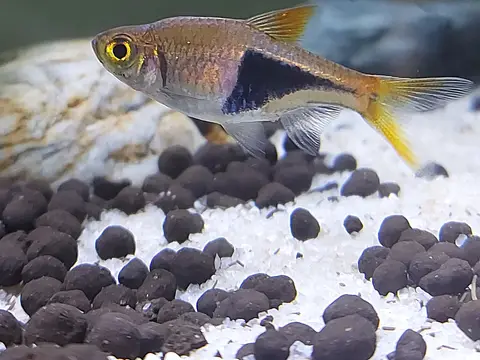 Harlequin rasbora Trigonostigma heteromorpha 16 gal (60 L) · 72–81 °F (22–27 °C)
 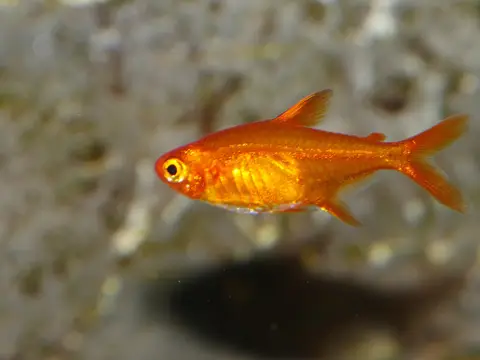 Ember tetra Hyphessobrycon amandae 11 gal (40 L) · 73–82 °F (23–28 °C)
 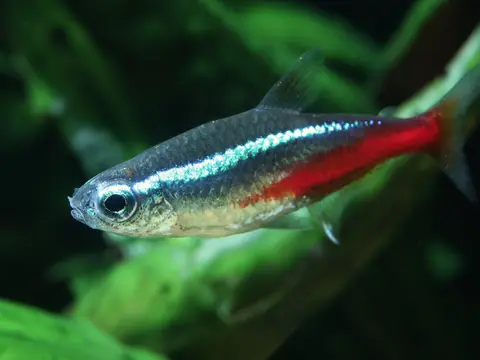 Neon tetra Paracheirodon innesi 16 gal (60 L) · 68–79 °F (20–26 °C)
 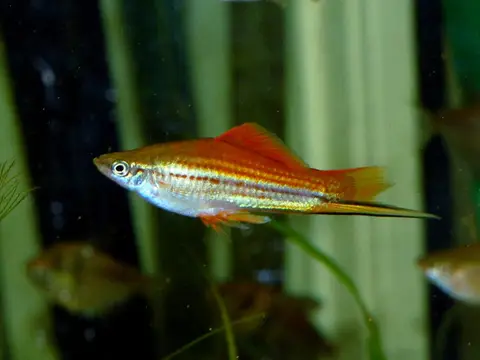 Swordtail Xiphophorus hellerii 32 gal (120 L) · 72–81 °F (22–27 °C)
 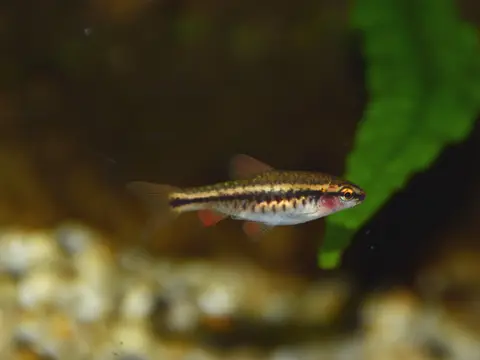 Cherry barb Puntius titteya 16 gal (60 L) · 73–81 °F (23–27 °C)
 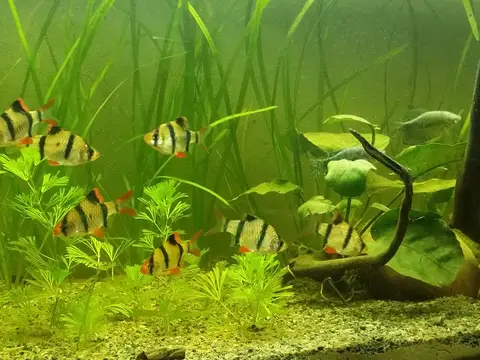 Tiger barb Puntigrus tetrazona 26 gal (100 L) · 72–79 °F (22–26 °C)
 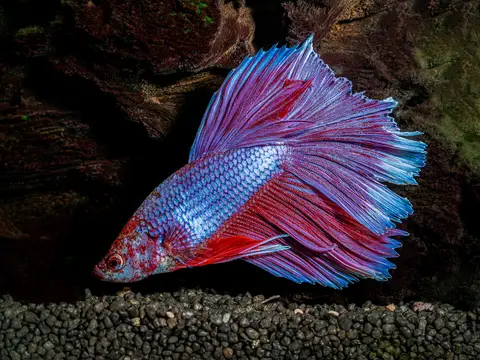 Betta fish Betta splendens 7 gal (25 L) · 75–82 °F (24–28 °C)
 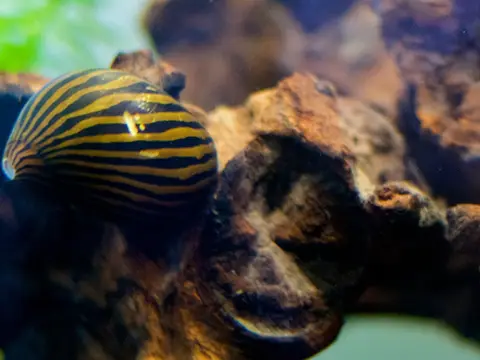 Nerite snail Neritina natalensis 5 gal (20 L) · 72–82 °F (22–28 °C)
 Check the compatibility of your whole tank →
What not to keep it with
Popular species you shouldn’t house with the Pearl danio, and why.
- Discus: incompatible temperatures
- Clown loach: incompatible temperatures, one may eat the other due to size
- Oscar: one may eat the other due to size, incompatible temperaments
Recommended equipment
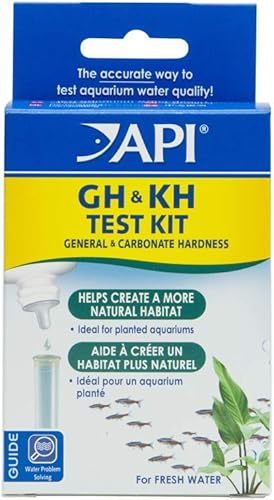
What you need to keep the Pearl danio healthy, checked against Amazon stock.


Frequently asked questions
How many liters does a Pearl danio need?
At least about 80 liters for a group of at least 8 fish. More space always helps keep the water stable.
What water temperature does the Pearl danio need?
Between 20 and 26 °C, with a pH of 6 to 8.
What fish can live with the Pearl danio?
Based on water, size and temperament, it fits with species such as Bristlenose pleco, Bronze cory, Molly, Platy and Harlequin rasbora. Use our compatibility calculator to check your whole tank.
Can the Pearl danio be kept with shrimp?
Yes: it usually won’t eat adult shrimp, though some shrimplets may get picked off. A tank with plenty of moss gives the babies cover.