If you buy through our links, Amazon pays us a small commission at no extra cost to you. That’s how we keep the site running. How we choose.
Contents
Overview
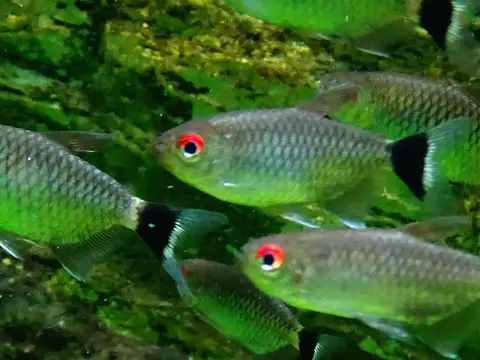
The red eye tetra is a silvery characin with neatly outlined scales, a bright red upper half to the eye and a black band edged in white at the base of the tail. It looks simple, but in a large school that color contrast is genuinely striking.
It lives in rivers in Paraguay, Bolivia, Peru and Brazil, and it is one of the toughest, most adaptable tetras in the trade, bred in huge numbers. It is active, social and forgives beginner mistakes better than many tiny tetras. Keep in mind that it is larger and busier than a neon, and it may nip long fins when kept in a small group or with slow-moving fish.
Care and tank setup
A school of eight needs around 26 gallons (100 L), ideally a 29-gallon or larger at least 30 inches (75 cm) long, because they swim a lot. Use a cycled tank, efficient filtration and a heater.
- Decor: plants along the sides and back, driftwood and an open central area. Floating plants soften the light and make the red eyes stand out.
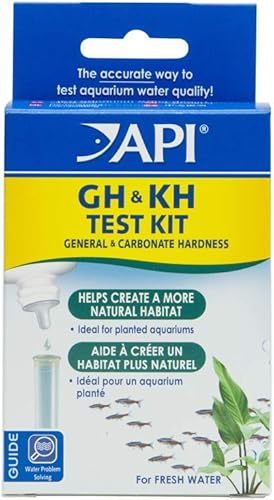
- Water: they handle soft to moderately hard water with ease. Change 25-30% weekly and keep conditions stable.
- Tank mates: similar-sized tetras, peaceful barbs, danios, corydoras, plecos and sturdy dwarf cichlids. Avoid angelfish, bettas and long-finned guppies.
In groups of three or four they tend to chase and nip other fish; in a school of eight or more, most of that energy stays within the group. They may nibble very tender shoots, but generally leave plants alone.
Feeding
A greedy omnivore that will take just about anything. Offer quality flakes and pellets as a staple and supplement with mosquito larvae, brine shrimp or daphnia, plus some spirulina-based food. Two small feedings a day keep them from hogging food meant for shyer tank mates.
Breeding
An egg scatterer that breeds fairly readily. A well-conditioned pair in a breeding tank with soft water, moss or fine-leaved plants and dim light usually spawns at dawn. They provide no care and eat their eggs, so remove the parents right away. Fry are free-swimming after a few days and take infusoria, followed by baby brine shrimp.
Compatible tank mates
Species from our database that share water parameters, size and temperament with the Red eye tetra. Calculated from the data in each profile.
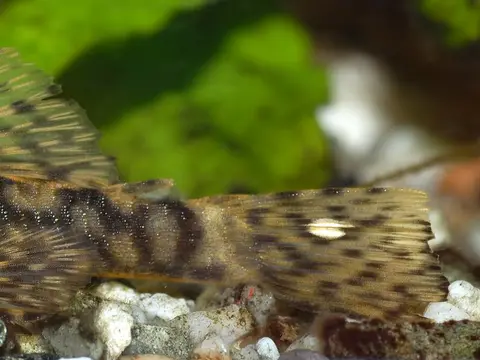 Bristlenose pleco Ancistrus sp. 26 gal (100 L) · 72–81 °F (22–27 °C)
 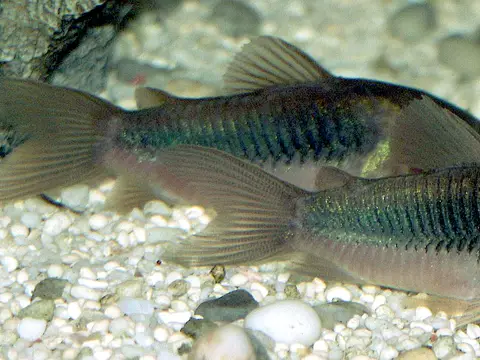 Bronze cory Corydoras aeneus 21 gal (80 L) · 72–81 °F (22–27 °C)
 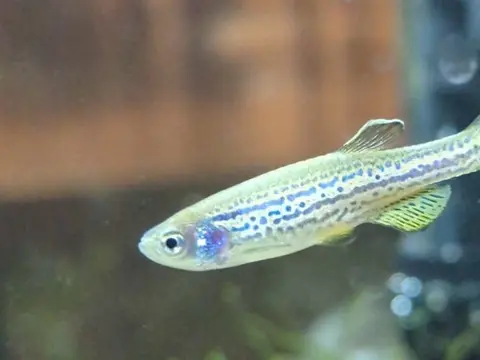 Zebra danio Danio rerio 16 gal (60 L) · 64–77 °F (18–25 °C)
 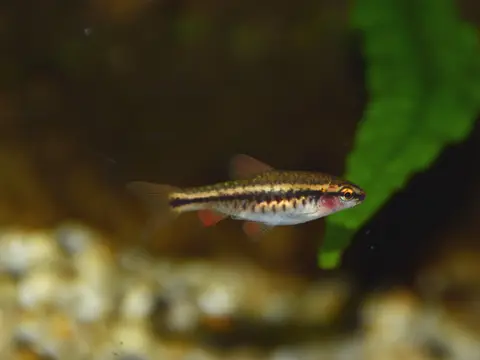 Cherry barb Puntius titteya 16 gal (60 L) · 73–81 °F (23–27 °C)
 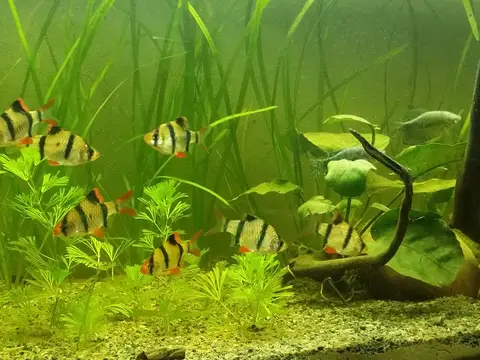 Tiger barb Puntigrus tetrazona 26 gal (100 L) · 72–79 °F (22–26 °C)
 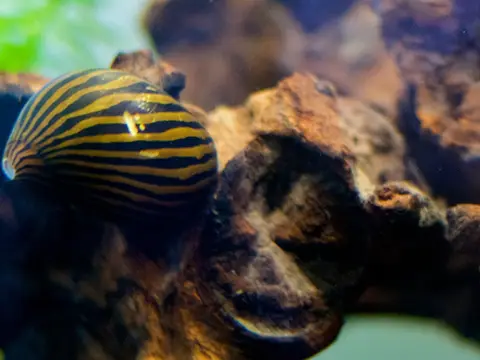 Nerite snail Neritina natalensis 5 gal (20 L) · 72–82 °F (22–28 °C)
 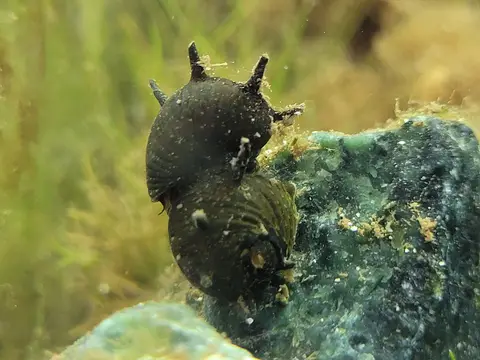 Horned nerite snail Clithon corona 5 gal (20 L) · 72–82 °F (22–28 °C)
 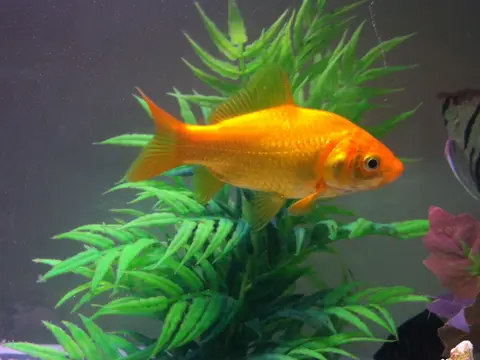 Common goldfish Carassius auratus 79 gal (300 L) · 50–75 °F (10–24 °C)
 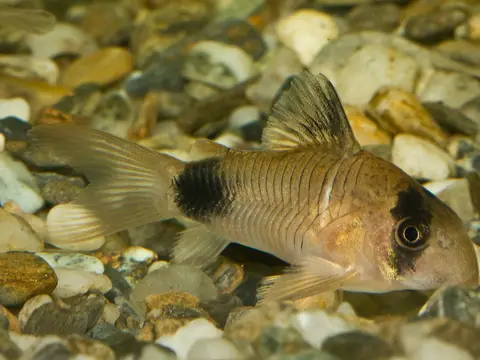 Panda cory Corydoras panda 16 gal (60 L) · 68–77 °F (20–25 °C)
 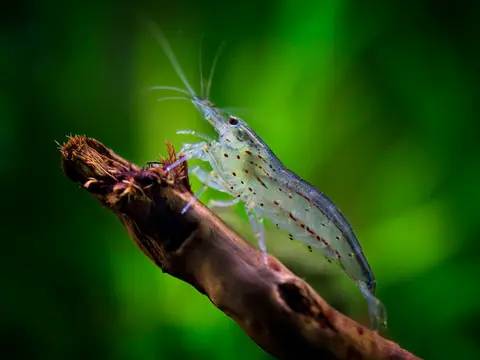 Amano shrimp Caridina multidentata 11 gal (40 L) · 64–82 °F (18–28 °C)
 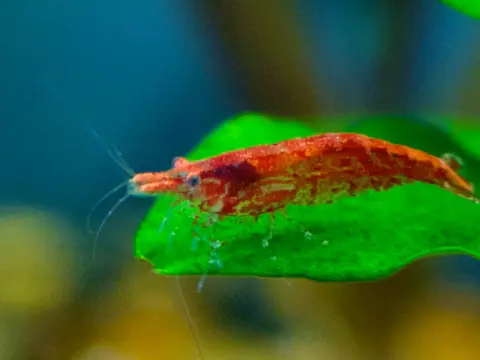 Cherry shrimp Neocaridina davidi 5 gal (20 L) · 64–81 °F (18–27 °C)
 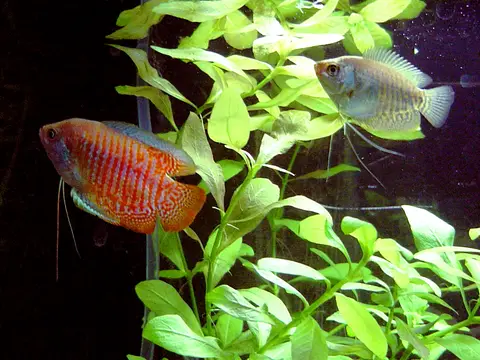 Dwarf gourami Trichogaster lalius 16 gal (60 L) · 75–82 °F (24–28 °C)
 Check the compatibility of your whole tank →
What not to keep it with
Popular species you shouldn’t house with the Red eye tetra, and why.
- Betta fish: nips long fins
- Angelfish: one may eat the other due to size, nips long fins
- Guppy: nips long fins
- Clown loach: one may eat the other due to size
- Oranda goldfish: nips long fins
- Oscar: one may eat the other due to size, incompatible temperaments
Recommended equipment
What you need to keep the Red eye tetra healthy, checked against Amazon stock.



Frequently asked questions
How many liters does a Red eye tetra need?
At least about 100 liters for a group of at least 8 fish. More space always helps keep the water stable.
What water temperature does the Red eye tetra need?
Between 22 and 28 °C, with a pH of 6 to 7.5.
What fish can live with the Red eye tetra?
Based on water, size and temperament, it fits with species such as Bristlenose pleco, Bronze cory, Zebra danio, Cherry barb and Tiger barb. Use our compatibility calculator to check your whole tank.
Can the Red eye tetra be kept with shrimp?
Yes: it usually won’t eat adult shrimp, though some shrimplets may get picked off. A tank with plenty of moss gives the babies cover.