If you buy through our links, Amazon pays us a small commission at no extra cost to you. That’s how we keep the site running. How we choose.
Contents
Overview
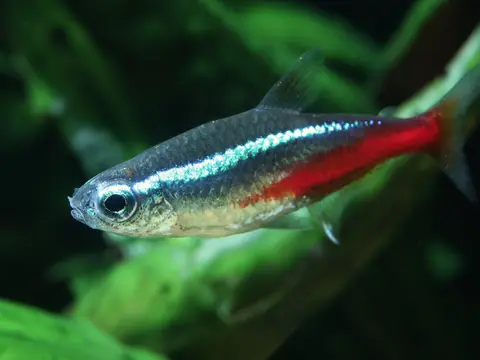
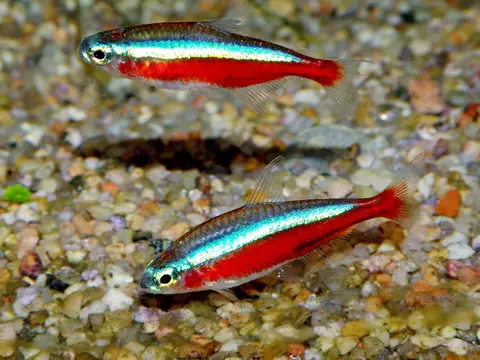
The cardinal tetra looks a lot like the neon, but it grows a little larger (up to 1.8-2 inches, 4.5-5 cm) and its red band covers the entire lower body from head to tail. That is the easiest way to tell them apart. It lives in the blackwater rivers of the Rio Negro and Orinoco basins in Brazil, Colombia and Venezuela, where the water is very soft, acidic and stained by tannins.
Many cardinals in the trade are still wild-caught through an artisanal fishery that supports local communities. It is a gorgeous, calm fish, but slightly more delicate than the neon, so it suits hobbyists with a mature, stable tank who can provide warm, soft water.
Care and tank setup
A school of ten needs about 20 gallons (80 L) with good swimming length, gentle filtration and a heater. Unlike the neon, it prefers warmer water, which makes it a perfect match for discus, German blue rams and other warm-water Amazon fish.
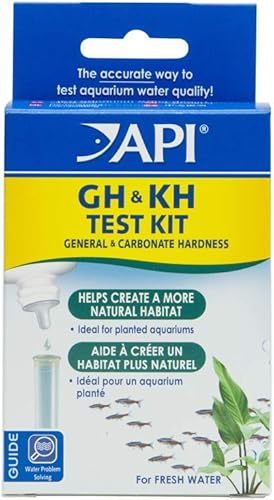
- Water: soft and acidic; blending in RO water, peat or Indian almond leaves helps. Stability matters more than chasing exact numbers.
- Aquascape: driftwood, leaf litter, plants and subdued light or floating plants. In a bright, bare tank it looks washed out.
- Tank mates: corydoras, otocinclus, Apistogramma, pencilfish, hatchetfish and shrimp. Avoid large fish that could eat it.
Wild fish arrive stressed: drip-acclimate them, quarantine if you can and never add them to an uncycled tank. High nitrates and hard water weaken them over time. Never release them into the wild.
Feeding
An omnivore that feeds on tiny crustaceans, insect larvae and worms in the wild. In the aquarium it takes quality fine flakes and micro pellets, but it does much better with frozen or live foods several times a week: brine shrimp, daphnia, cyclops and bloodworms. Newly imported fish sometimes accept only live or frozen food at first. Offer small portions once or twice daily.
Breeding
Cardinals scatter their eggs over fine plants or moss, usually around dusk. Breeding them at home is challenging: it calls for extremely soft, acidic water with almost no hardness, near-total darkness for the light-sensitive eggs, and microscopic first foods for the fry. They are bred commercially, but you should not expect fry to appear in a community tank.
Compatible tank mates
Species from our database that share water parameters, size and temperament with the Cardinal tetra. Calculated from the data in each profile.
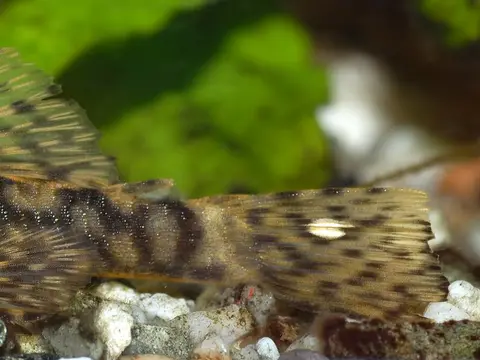 Bristlenose pleco Ancistrus sp. 26 gal (100 L) · 72–81 °F (22–27 °C)
 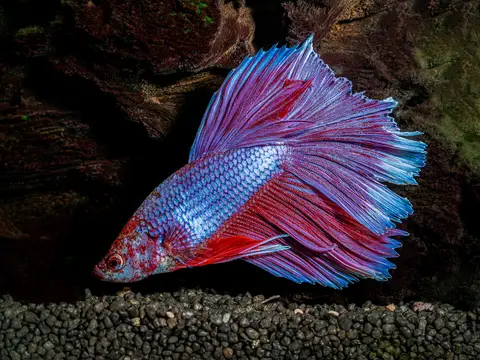 Betta fish Betta splendens 7 gal (25 L) · 75–82 °F (24–28 °C)
 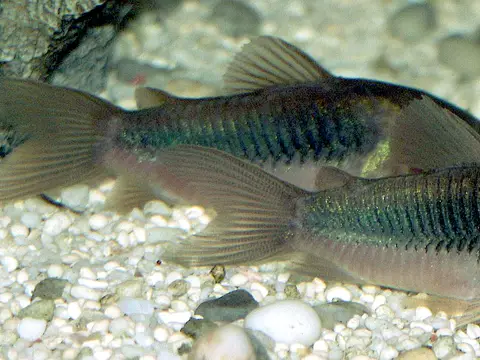 Bronze cory Corydoras aeneus 21 gal (80 L) · 72–81 °F (22–27 °C)
 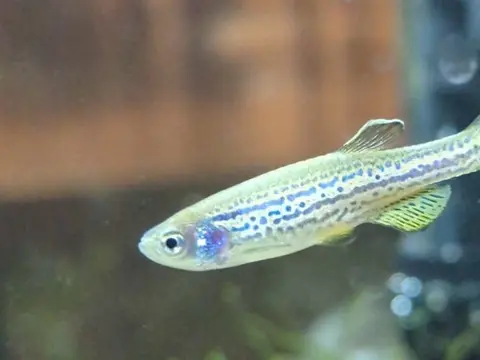 Zebra danio Danio rerio 16 gal (60 L) · 64–77 °F (18–25 °C)
 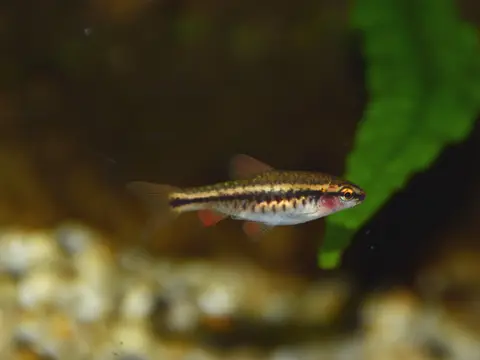 Cherry barb Puntius titteya 16 gal (60 L) · 73–81 °F (23–27 °C)
 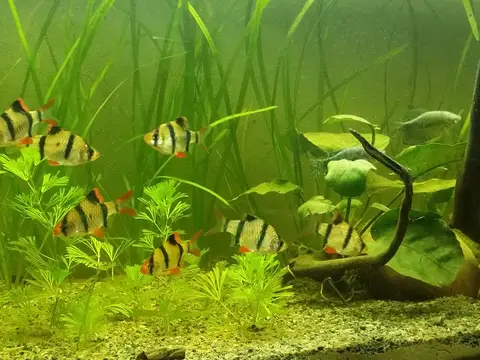 Tiger barb Puntigrus tetrazona 26 gal (100 L) · 72–79 °F (22–26 °C)
 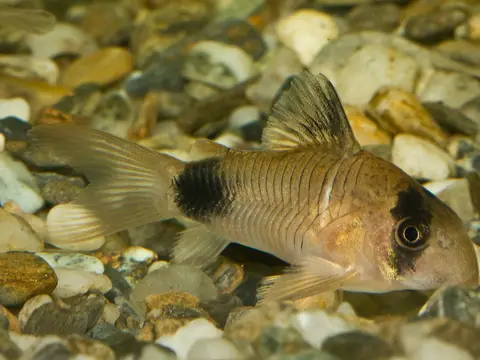 Panda cory Corydoras panda 16 gal (60 L) · 68–77 °F (20–25 °C)
 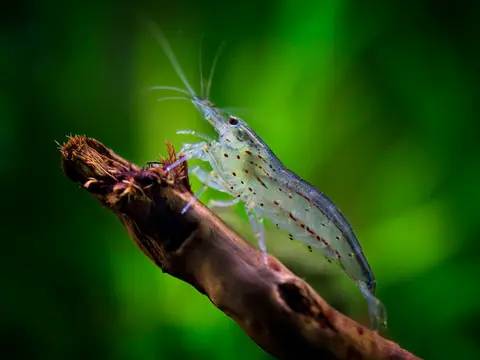 Amano shrimp Caridina multidentata 11 gal (40 L) · 64–82 °F (18–28 °C)
 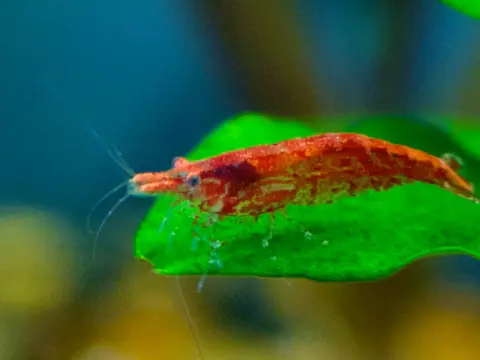 Cherry shrimp Neocaridina davidi 5 gal (20 L) · 64–81 °F (18–27 °C)
 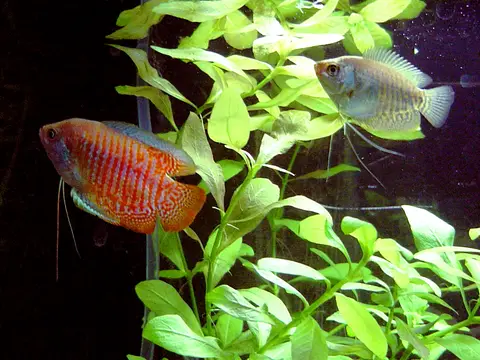 Dwarf gourami Trichogaster lalius 16 gal (60 L) · 75–82 °F (24–28 °C)
 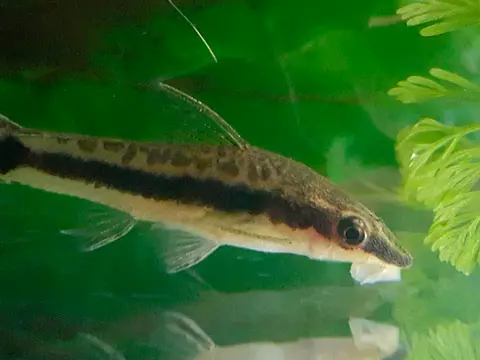 Otocinclus catfish Otocinclus vestitus 16 gal (60 L) · 70–79 °F (21–26 °C)
 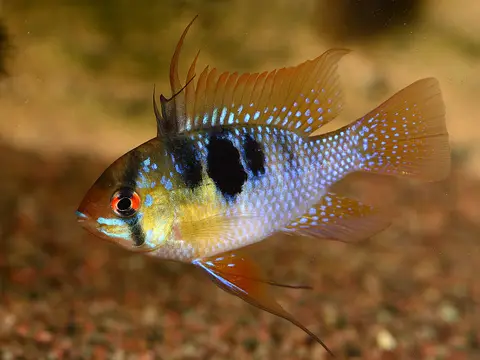 Ram cichlid Mikrogeophagus ramirezi 16 gal (60 L) · 79–86 °F (26–30 °C)
 Check the compatibility of your whole tank →
What not to keep it with
Popular species you shouldn’t house with the Cardinal tetra, and why.
- Common goldfish: incompatible temperatures, one may eat the other due to size
- Angelfish: one may eat the other due to size
- Yellow lab cichlid: incompatible pH, incompatible water hardness
- Clown loach: one may eat the other due to size
- Molly: incompatible pH, incompatible water hardness
- Oranda goldfish: incompatible temperatures, one may eat the other due to size
- Oscar: one may eat the other due to size, incompatible temperaments
- Platy: incompatible pH, incompatible water hardness
Recommended equipment
What you need to keep the Cardinal tetra healthy, checked against Amazon stock.



Frequently asked questions
How many liters does a Cardinal tetra need?
At least about 80 liters for a group of at least 10 fish. More space always helps keep the water stable.
What water temperature does the Cardinal tetra need?
Between 23 and 29 °C, with a pH of 4.5 to 7.
What fish can live with the Cardinal tetra?
Based on water, size and temperament, it fits with species such as Bristlenose pleco, Betta fish, Bronze cory, Zebra danio and Cherry barb. Use our compatibility calculator to check your whole tank.
Can the Cardinal tetra be kept with shrimp?
Yes: it usually won’t eat adult shrimp, though some shrimplets may get picked off. A tank with plenty of moss gives the babies cover.