If you buy through our links, Amazon pays us a small commission at no extra cost to you. That’s how we keep the site running. How we choose.
Contents
Overview
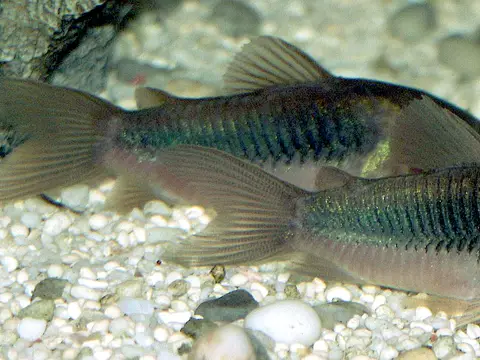
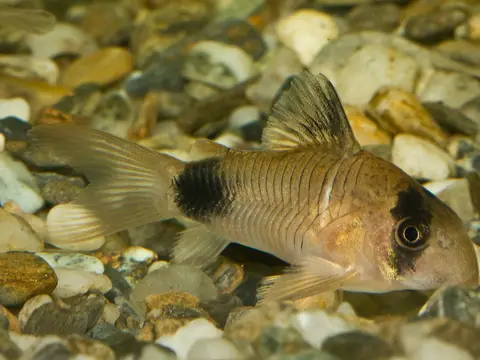
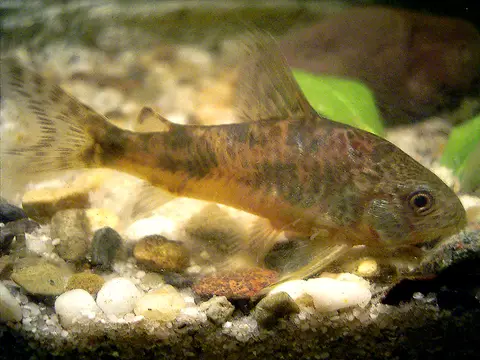
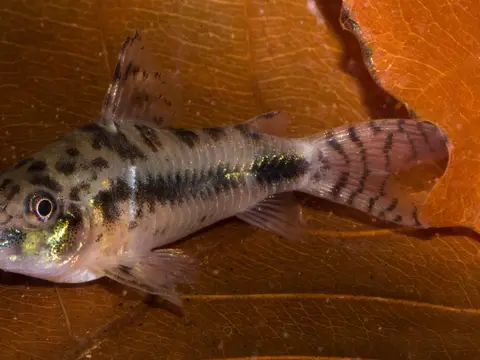
The salt and pepper cory (Corydoras habrosus) is one of the three well-known dwarf corys, alongside the pygmy and hastatus. It barely reaches 1.2 inches (3 cm) and has a sandy body with irregular dark blotches and a faint band along the flank, a subtle pattern that inspired its common name.
It comes from the Orinoco basin in Venezuela and Colombia. Unlike the pygmy cory, which swims in midwater, the habrosus behaves like a classic cory in miniature, spending almost all its time on the bottom sifting through sand as a group. It is an excellent choice for planted nano tanks and lives happily alongside dwarf shrimp.
Care and tank setup
A group of eight or more does well in a 10-gallon (40-litre) tank with a decent footprint; in 15 gallons (60 litres) the group can be larger and more settled. Because it is so small and lives right on the floor, the substrate matters most: clean, fine sand, never coarse gravel that traps waste.
- Water: mature and stable, in a cycled tank with a gentle, sponge-covered filter intake and a heater. Do not add them to a brand-new setup.
- Aquascape: plants, leaf litter and small pieces of driftwood for cover, with open patches of sand.
- Tankmates: chili rasboras, small tetras, otocinclus, dwarf shrimp and snails. Avoid anything that could swallow them or dominate the bottom.
A typical mistake is keeping too few, or housing them with large, boisterous bottom dwellers; they get stressed and rarely show themselves.
Feeding
With such a small mouth, it does best on sinking micro pellets, crumbled wafers and fine frozen foods such as baby brine shrimp, cyclops or chopped bloodworms. Offer several small meals a day and always check that food reaches the bottom instead of being grabbed by faster fish.
Breeding
They spawn in mature tanks, sometimes with no help at all. Females, slightly larger and rounder, stick a few eggs to the glass, plants or moss, and there is no parental care. To raise fry, move the eggs to a container of tank water and feed infusoria, then baby brine shrimp.
Compatible tank mates
Species from our database that share water parameters, size and temperament with the Salt and pepper cory. Calculated from the data in each profile.
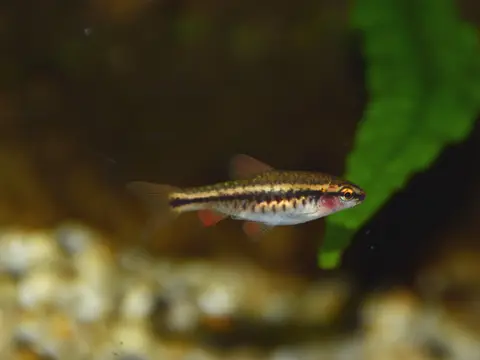 Cherry barb Puntius titteya 16 gal (60 L) · 73–81 °F (23–27 °C)
 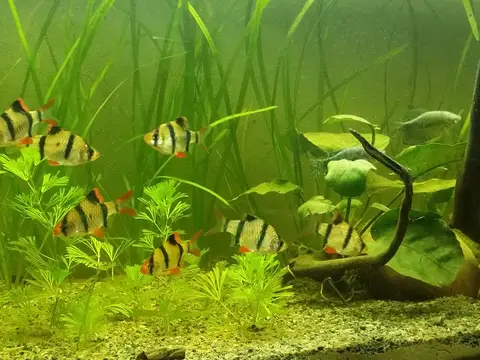 Tiger barb Puntigrus tetrazona 26 gal (100 L) · 72–79 °F (22–26 °C)
 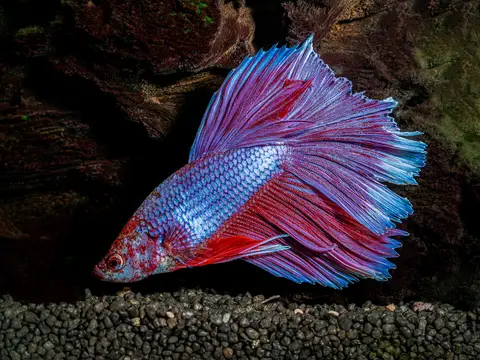 Betta fish Betta splendens 7 gal (25 L) · 75–82 °F (24–28 °C)
 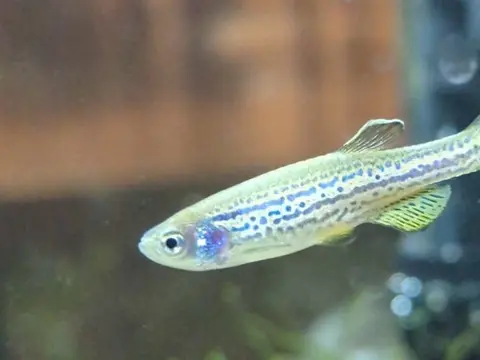 Zebra danio Danio rerio 16 gal (60 L) · 64–77 °F (18–25 °C)
 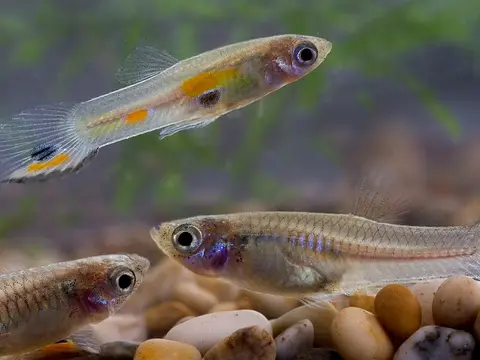 Guppy Poecilia reticulata 14 gal (54 L) · 72–82 °F (22–28 °C)
 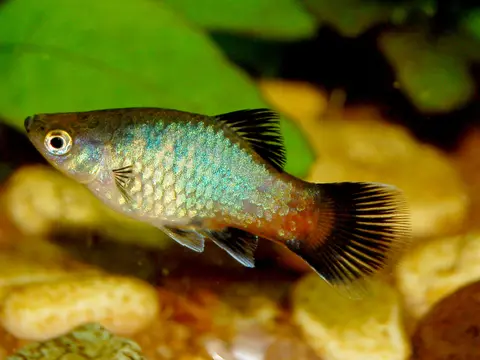 Platy Xiphophorus maculatus 16 gal (60 L) · 68–79 °F (20–26 °C)
 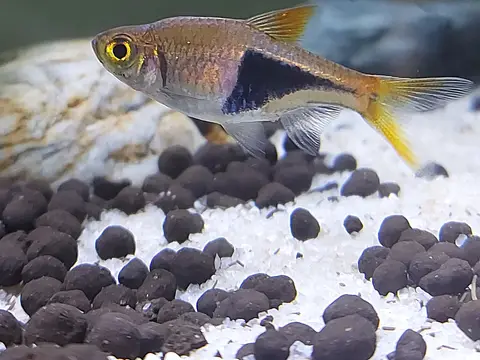 Harlequin rasbora Trigonostigma heteromorpha 16 gal (60 L) · 72–81 °F (22–27 °C)
 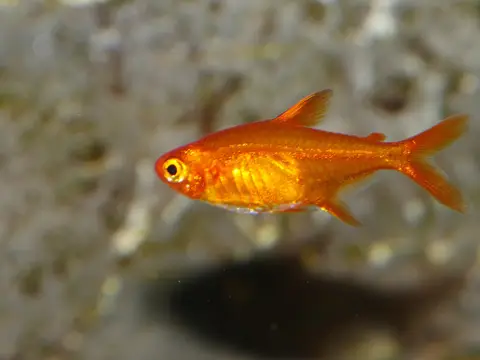 Ember tetra Hyphessobrycon amandae 11 gal (40 L) · 73–82 °F (23–28 °C)
 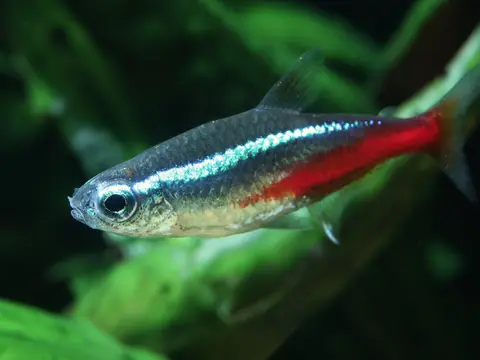 Neon tetra Paracheirodon innesi 16 gal (60 L) · 68–79 °F (20–26 °C)
 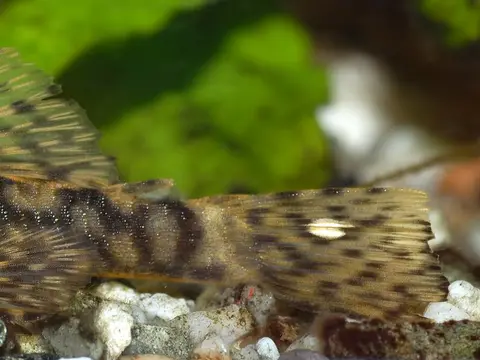 Bristlenose pleco Ancistrus sp. 26 gal (100 L) · 72–81 °F (22–27 °C)
 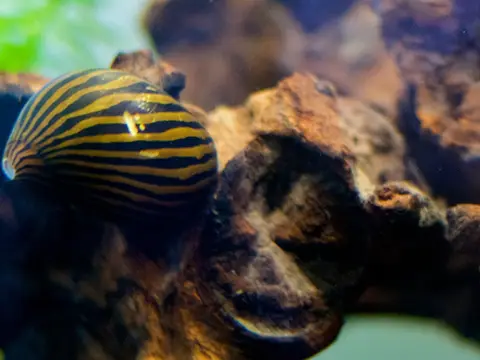 Nerite snail Neritina natalensis 5 gal (20 L) · 72–82 °F (22–28 °C)
 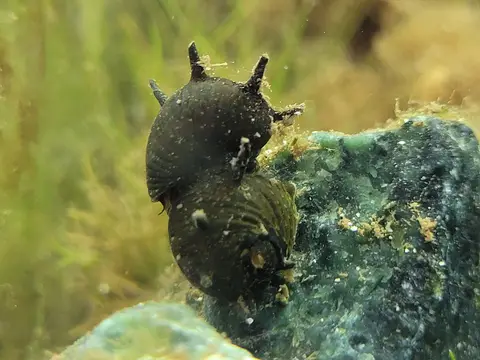 Horned nerite snail Clithon corona 5 gal (20 L) · 72–82 °F (22–28 °C)
 Check the compatibility of your whole tank →
What not to keep it with
Popular species you shouldn’t house with the Salt and pepper cory, and why.
- Common goldfish: one may eat the other due to size
- Discus: incompatible temperatures, one may eat the other due to size
- Angelfish: one may eat the other due to size
- Yellow lab cichlid: incompatible pH, one may eat the other due to size
- Clown loach: incompatible temperatures, one may eat the other due to size
- Oranda goldfish: one may eat the other due to size
- Oscar: one may eat the other due to size, incompatible temperaments
- Swordtail: one may eat the other due to size
Recommended equipment
What you need to keep the Salt and pepper cory healthy, checked against Amazon stock.


Frequently asked questions
How many liters does a Salt and pepper cory need?
At least about 40 liters for a group of at least 8 fish. More space always helps keep the water stable.
What water temperature does the Salt and pepper cory need?
Between 22 and 26 °C, with a pH of 6 to 7.5.
What fish can live with the Salt and pepper cory?
Based on water, size and temperament, it fits with species such as Cherry barb, Tiger barb, Betta fish, Zebra danio and Guppy. Use our compatibility calculator to check your whole tank.
Can the Salt and pepper cory be kept with shrimp?
Yes: it usually won’t eat adult shrimp, though some shrimplets may get picked off. A tank with plenty of moss gives the babies cover.