If you buy through our links, Amazon pays us a small commission at no extra cost to you. That’s how we keep the site running. How we choose.
Contents
Our top 3 picks
Stock checked on October 7, 2026


aquarium heaters comparison, in stock
hygger Mini Fish Tank Submersible Heater 20W for 1-5 Gallons Desktop Betta Aquarium Heater with Digital Display…
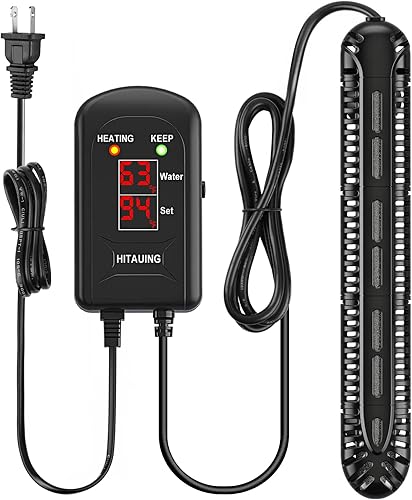
HiTauing Aquarium Heater, 300W Fish Tank Heater with LED Digital Display & 5 Safety Protection, Submersible Aquarium…

HITOP 200W Adjustable Aquarium Heater, Submersible Fish Tank Heater Thermostat with Suction Cups for 30-45Gal

HITOP 100W Adjustable Aquarium Heater, Submersible Fish Tank Heater Thermostat with Suction Cups for 12-30Gal

EHEIM Jager Aquarium Thermostat Heater 150W
Tetra HT Submersible Aquarium Heater With Electronic Thermostat, 50-Watt, 2-10 Gallon
HITOP 25W Adjustable Aquarium Heater, Submersible Fish Tank Heater Thermostat with Suction Cups for 5-10Gal
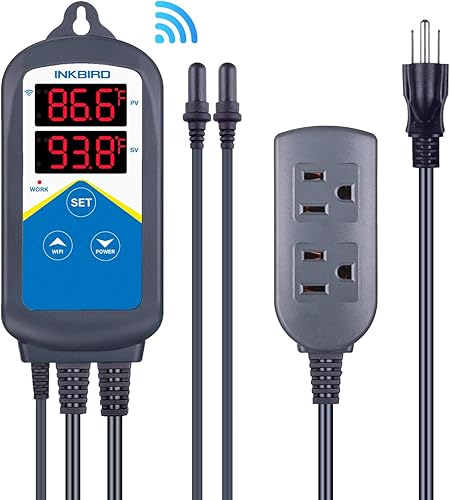
Inkbird ITC-306A WiFi Aquarium Thermostat with Two Probes only for Heater
AcuarioSano rating: combines the average rating and the number of buyer reviews on Amazon. No brand pays to be featured.
What a heater does and who needs one
Fish are cold-blooded: their metabolism, appetite and immune system all depend on water temperature. In a tropical tank most species do well between 75 and 80 °F (24-27 °C), and what really harms them isn't a degree either way but sudden swings between day and night or between seasons. A heater with a thermostat smooths those swings out automatically.
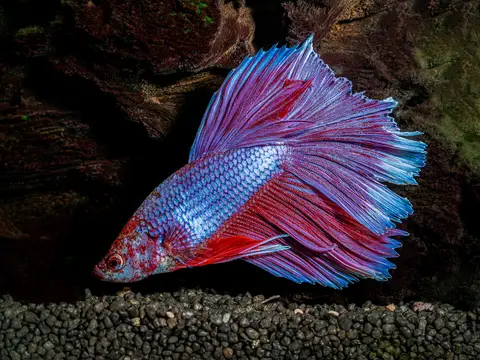
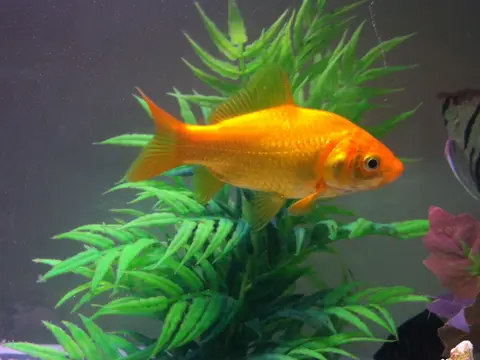
Almost every tropical tank needs one: tetras, guppies, corydoras and above all fish like the betta, which suffers badly in cold water. On the other hand, goldfish and other coldwater species live at room temperature and don't need a heater; forcing warmth on them only speeds up their metabolism and makes water quality worse. If you're unsure which range each species needs, check our aquarium temperature guide.
How many watts: the 5 watts per gallon rule
The rule of thumb is about 1 watt per liter, or roughly 3-5 watts per US gallon. If the room is cold (below 65 °F in winter) or the tank is small, lean toward 5 W/gal; in a warm home with a large tank, 2-3 W/gal may be enough. A slightly oversized heater is fine as long as the thermostat is reliable, but an undersized one will run nonstop and never reach the target.
| Tank size | Warm room | Cold room |
|---|---|---|
| 3-6 gal (10-25 L) | 25 W | 25-50 W |
| 8-15 gal (30-60 L) | 50 W | 75 W |
| 15-26 gal (60-100 L) | 75-100 W | 100-150 W |
| 26-40 gal (100-150 L) | 150 W | 200 W |
| 40-65 gal (150-250 L) | 200-250 W | 2 × 150 W |
| 65-105 gal (250-400 L) | 2 × 150 W | 2 × 200 W |
Heater types: glass, shatterproof and adjustable
Adjustable thermostat
Always pick a model with an adjustable thermostat and a clear temperature scale. Preset heaters fixed at 78 °F are cheap and fine for nano tanks, but you can't raise the temperature to treat ich or lower it for species that like cooler water. Brands such as Eheim, Fluval, Tetra, Aqueon, Hygger and Cobalt sell adjustable lines in every wattage.
Glass or shatterproof
Glass heaters are the classic choice: affordable and easy to find. Shatterproof bodies (engineered plastic or titanium) survive knocks and temperature shocks without cracking, which is very handy with big fish or if you work in the tank often. Titanium heaters usually come with an external controller, which is more accurate.
Guards for large fish
Cichlids, large plecos and fish that rest against the heater can get burned or break it. A plastic heater guard prevents direct contact and is close to essential with fish over 4-5 inches (10-12 cm).
Tip: in tanks over 55 gallons (200 L), run two heaters of half the wattage at opposite ends. Heat spreads more evenly and if one fails (stuck on or off), the other prevents a disaster.
Installation and safe use
Place it near the filter outlet or in an area with flow, diagonally or vertically, so warm water circulates through the whole tank. Always confirm the real temperature with a separate thermometer: the dials on many heaters are off by 2-4 °F.
Warning: never switch a heater on out of water or leave it exposed during a water change. Unplug it before draining and wait 15-20 minutes after resubmerging so the glass can adjust; otherwise it can crack or burn out.
Common mistakes
- Buying a cheap non-adjustable heater and being stuck with one temperature.
- Going too low on wattage in a cold room.
- Putting it in a corner with no flow, creating hot and cold spots.
- Never checking the thermometer: a stuck thermostat can cook a tank within hours.
- Heating a goldfish or other coldwater tank.
We compare spec sheets, verified reviews and real-world use criteria, but we don't physically test the products.
Frequently asked questions
How many watts does my aquarium need?
As a rule of thumb, about 1 watt per liter, which is roughly 3 to 5 watts per gallon. Go toward 5 W per gallon in a cold room or a small tank, and toward 2 to 3 W per gallon in a warm home with a large tank.
Can I leave the heater on all the time?
Yes. Aquarium heaters are designed to stay plugged in permanently: the thermostat switches them on and off to hold the set temperature.
Does a betta need a heater?
Yes. Bettas are tropical and do best at 78 to 82 °F (25-28 °C). In most homes they need a small adjustable heater of 25 to 50 watts depending on the tank.
Is one big heater or two small ones better?
In tanks over 55 gallons (200 L), two heaters of half the wattage are better: they spread heat more evenly and if one fails, the other limits the damage.