If you buy through our links, Amazon pays us a small commission at no extra cost to you. That’s how we keep the site running. How we choose.
Contents
Overview
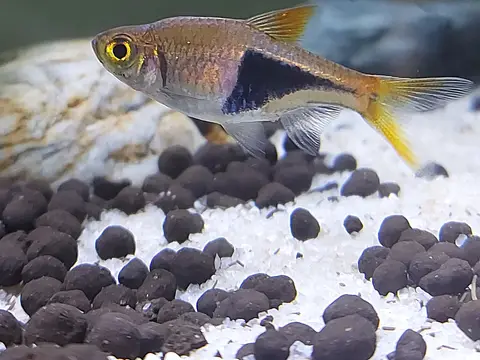
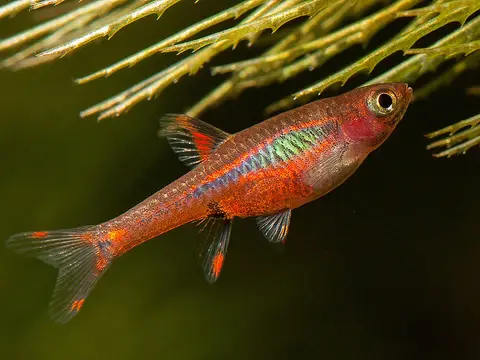
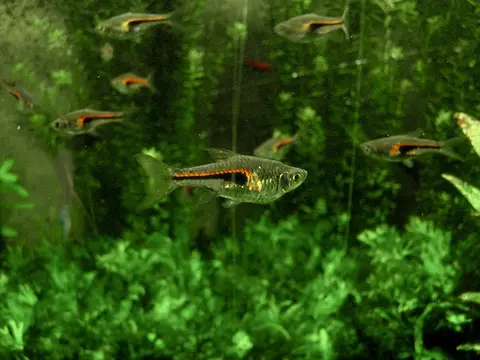
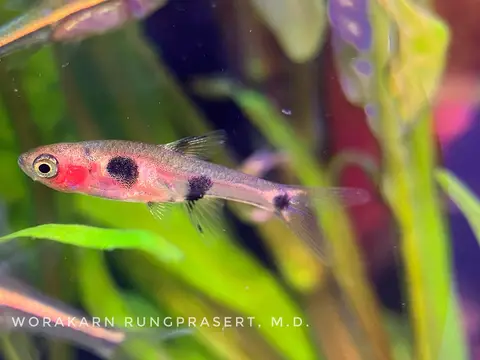
The dwarf rasbora, also called spotted or pygmy rasbora, is one of the classic Boraras: about 1 in (2.5 cm) long, with a reddish-orange body and three bold black spots, one on the flank, one above the anal fin and one at the base of the tail. It lives in blackwater streams, peat swamps and marshes of southern Thailand, Peninsular Malaysia and Sumatra.
It is slightly larger and hardier than the chili rasbora but just as peaceful. Keepers like it because a big school moves together through the plants and brings color to a nano without bothering shrimp or snails. It suits hobbyists with some experience who can provide soft, stable water in a well-matured tank.
Care and tank setup
Plan on 10 gallons (40 L) or more for a group of 10-12; the larger the school, the bolder and more colorful they become.
- Water: soft and acidic, warm and stable at about 75-82 °F (24-28 °C). Peat in the filter or leaf litter helps mimic their blackwater habitat.
- Setup: light dimmed by floating plants, dense vegetation, driftwood and open areas for schooling.
- Flow: minimal; a sponge filter or diffused outflow is ideal.
- Tank mates: dwarf shrimp, other Boraras, small rasboras, pygmy corydoras, otocinclus or a calm betta in a roomy planted tank.
Common mistakes: adding them to a newly set-up tank, mixing them with larger active fish such as barbs or big danios, and skipping water changes. Like all tiny fish, they react quickly to ammonia and nitrite, so always use a cycled tank with a filter and heater.
Feeding
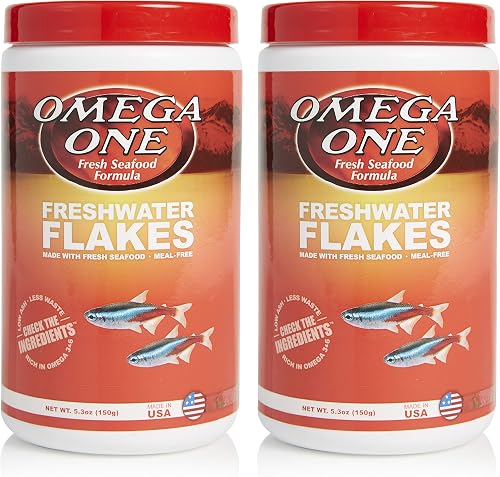
It feeds on tiny invertebrates, larvae and zooplankton. It accepts crushed fine flakes and powdered or micro foods, but stays in better condition with frequent baby brine shrimp, daphnia, cyclops or microworms. Offer small meals once or twice a day and remove any leftovers. A weekly fasting day does no harm and helps keep the water clean in small tanks, where waste builds up quickly.
Breeding
It scatters single eggs on fine-leaved plants or moss and provides no care. In a mature, densely planted species tank, fry turn up now and then. For planned breeding, use a small tank with moss and soft, acidic water, remove the parents after a few days and feed the fry infusoria during their first week.
Compatible tank mates
Species from our database that share water parameters, size and temperament with the Dwarf rasbora. Calculated from the data in each profile.
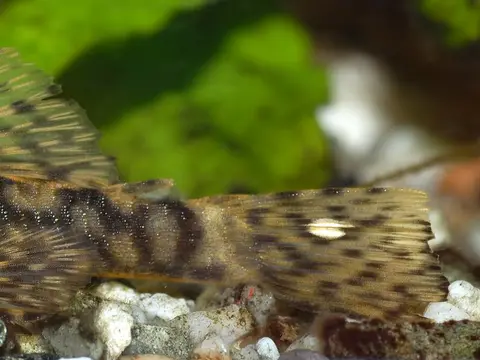 Bristlenose pleco Ancistrus sp. 26 gal (100 L) · 72–81 °F (22–27 °C)
 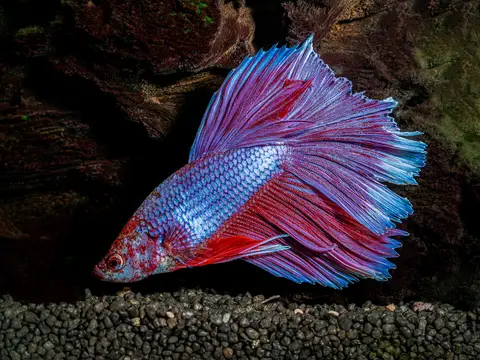 Betta fish Betta splendens 7 gal (25 L) · 75–82 °F (24–28 °C)
 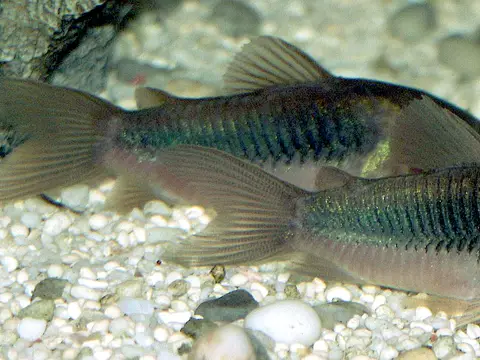 Bronze cory Corydoras aeneus 21 gal (80 L) · 72–81 °F (22–27 °C)
 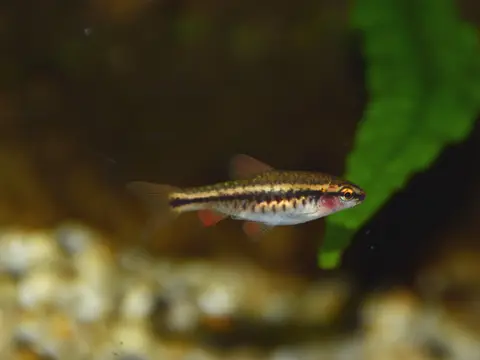 Cherry barb Puntius titteya 16 gal (60 L) · 73–81 °F (23–27 °C)
 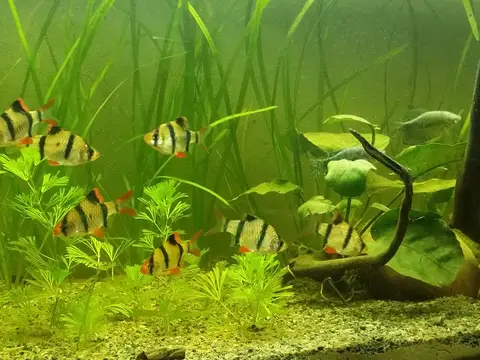 Tiger barb Puntigrus tetrazona 26 gal (100 L) · 72–79 °F (22–26 °C)
 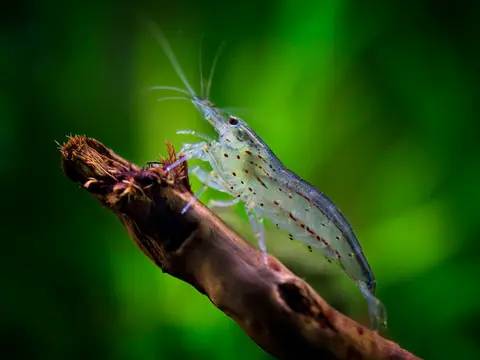 Amano shrimp Caridina multidentata 11 gal (40 L) · 64–82 °F (18–28 °C)
 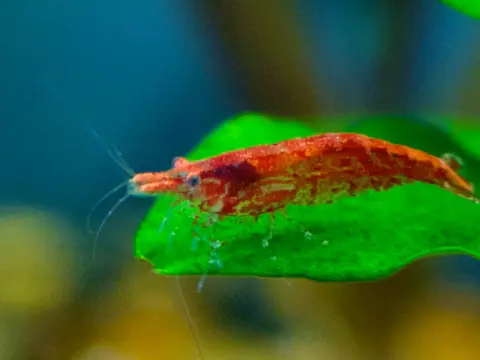 Cherry shrimp Neocaridina davidi 5 gal (20 L) · 64–81 °F (18–27 °C)
 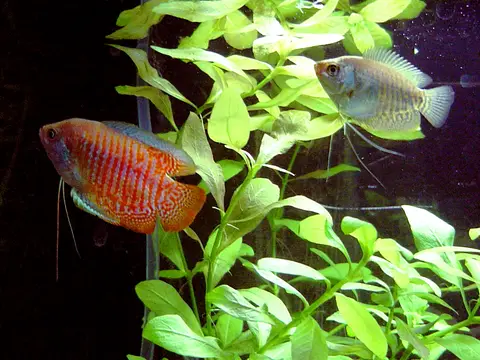 Dwarf gourami Trichogaster lalius 16 gal (60 L) · 75–82 °F (24–28 °C)
 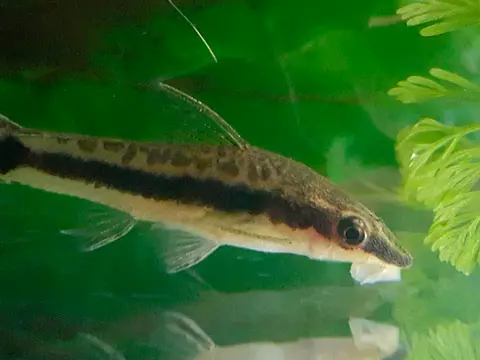 Otocinclus catfish Otocinclus vestitus 16 gal (60 L) · 70–79 °F (21–26 °C)
 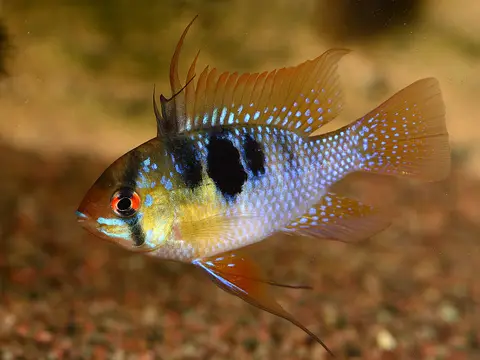 Ram cichlid Mikrogeophagus ramirezi 16 gal (60 L) · 79–86 °F (26–30 °C)
 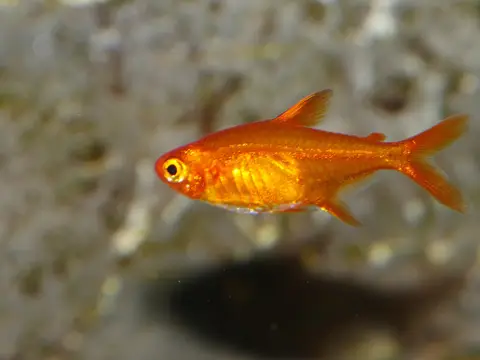 Ember tetra Hyphessobrycon amandae 11 gal (40 L) · 73–82 °F (23–28 °C)
 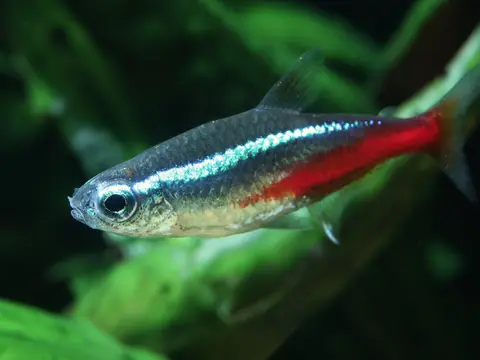 Neon tetra Paracheirodon innesi 16 gal (60 L) · 68–79 °F (20–26 °C)
 Check the compatibility of your whole tank →
What not to keep it with
Popular species you shouldn’t house with the Dwarf rasbora, and why.
- Common goldfish: incompatible temperatures, one may eat the other due to size
- Discus: incompatible temperatures, one may eat the other due to size
- Angelfish: one may eat the other due to size
- Yellow lab cichlid: incompatible pH, incompatible water hardness, one may eat the other due to size
- Clown loach: one may eat the other due to size
- Molly: incompatible pH, incompatible water hardness
- Oranda goldfish: incompatible temperatures, one may eat the other due to size
- Oscar: one may eat the other due to size, incompatible temperaments
Recommended equipment
What you need to keep the Dwarf rasbora healthy, checked against Amazon stock.



Frequently asked questions
How many liters does a Dwarf rasbora need?
At least about 40 liters for a group of at least 10 fish. More space always helps keep the water stable.
What water temperature does the Dwarf rasbora need?
Between 24 and 28 °C, with a pH of 5 to 7.
What fish can live with the Dwarf rasbora?
Based on water, size and temperament, it fits with species such as Bristlenose pleco, Betta fish, Bronze cory, Cherry barb and Tiger barb. Use our compatibility calculator to check your whole tank.
Can the Dwarf rasbora be kept with shrimp?
Yes: it usually won’t eat adult shrimp, though some shrimplets may get picked off. A tank with plenty of moss gives the babies cover.