If you buy through our links, Amazon pays us a small commission at no extra cost to you. That’s how we keep the site running. How we choose.
Bottom dwellers fill the lower layer of the aquarium and complete a community tank. This list is generated from our database and includes every fish whose main swimming zone is the bottom.
It covers very different fish, so read each profile:
- Corydoras: peaceful, social and best in groups of 6 or more over soft sand.
- Plecos and otocinclus: grazers that need driftwood, caves and vegetable food. Some grow very large.
- Loaches: from shy kuhli loaches to large clown loaches that need huge tanks.
- Territorial species: red-tail sharks and some cichlids defend their patch of bottom.
The biggest myth about bottom fish is that they "clean the tank" by eating leftovers. They do not. They need their own food: sinking pellets, wafers or frozen food, often given after the lights go out. A substrate of sand or smooth gravel protects the barbels of corydoras and loaches.
Because the bottom area is limited, avoid adding several territorial bottom dwellers to the same tank. Combine one peaceful group with midwater schooling fish, and confirm the mix with the compatibility checker and the stocking calculator.
Bottom dwellers
| Species | Min. liters | Size | Temp. | Difficulty |
|---|---|---|---|---|
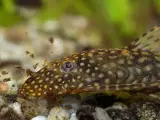 Bristlenose pleco Ancistrus sp. | 26 gal (100 L) | 5.1 in (13 cm) | 72–81 °F (22–27 °C) | Easy |
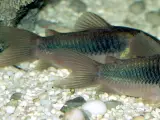 Bronze cory Corydoras aeneus | 21 gal (80 L) | 2.6 in (6.5 cm) | 72–81 °F (22–27 °C) | Easy |
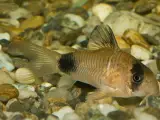 Panda cory Corydoras panda | 16 gal (60 L) | 1.8 in (4.5 cm) | 68–77 °F (20–25 °C) | Moderate |
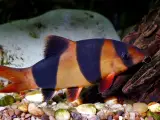 Clown loach Chromobotia macracanthus | 132 gal (500 L) | 9.8 in (25 cm) | 77–86 °F (25–30 °C) | Moderate |
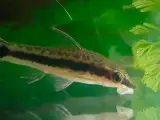 Otocinclus catfish Otocinclus vestitus | 16 gal (60 L) | 1.6 in (4 cm) | 70–79 °F (21–26 °C) | Moderate |
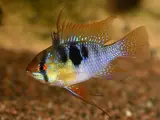 Ram cichlid Mikrogeophagus ramirezi | 16 gal (60 L) | 2 in (5 cm) | 79–86 °F (26–30 °C) | Moderate |
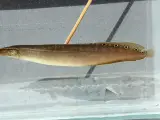 Peacock eel Macrognathus siamensis | 53 gal (200 L) | 9.8 in (25 cm) | 73–82 °F (23–28 °C) | Moderate |
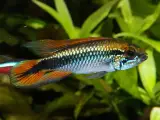 Agassiz's dwarf cichlid Apistogramma agassizii | 16 gal (60 L) | 3.1 in (8 cm) | 75–82 °F (24–28 °C) | Moderate |
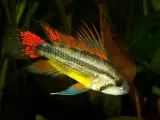 Cockatoo dwarf cichlid Apistogramma cacatuoides | 16 gal (60 L) | 3.1 in (8 cm) | 75–82 °F (24–28 °C) | Easy |
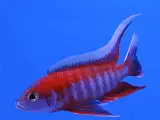 Peacock cichlid (Aulonocara) Aulonocara jacobfreibergi | 79 gal (300 L) | 5.1 in (13 cm) | 75–81 °F (24–27 °C) | Moderate |
 Badis Badis badis | 16 gal (60 L) | 2.4 in (6 cm) | 68–79 °F (20–26 °C) | Moderate |
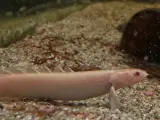 Senegal bichir Polypterus senegalus | 79 gal (300 L) | 11.8 in (30 cm) | 75–82 °F (24–28 °C) | Moderate |
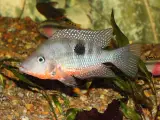 Firemouth cichlid Thorichthys meeki | 53 gal (200 L) | 5.9 in (15 cm) | 75–84 °F (24–29 °C) | Easy |
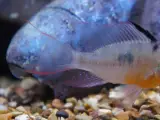 Bolivian ram Mikrogeophagus altispinosus | 26 gal (100 L) | 3.1 in (8 cm) | 72–79 °F (22–26 °C) | Easy |
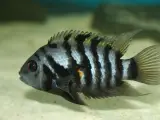 Convict cichlid Amatitlania nigrofasciata | 40 gal (150 L) | 4.7 in (12 cm) | 72–82 °F (22–28 °C) | Easy |
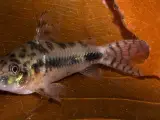 Salt and pepper cory Corydoras habrosus | 11 gal (40 L) | 1.2 in (3 cm) | 72–79 °F (22–26 °C) | Moderate |
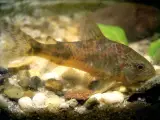 Peppered cory Corydoras paleatus | 21 gal (80 L) | 2.6 in (6.5 cm) | 64–75 °F (18–24 °C) | Easy |
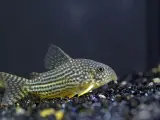 Sterbai cory Corydoras sterbai | 21 gal (80 L) | 2.6 in (6.5 cm) | 75–82 °F (24–28 °C) | Easy |
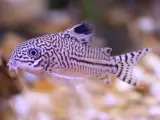 Three-stripe cory Corydoras trilineatus | 18 gal (70 L) | 2.2 in (5.5 cm) | 72–79 °F (22–26 °C) | Easy |
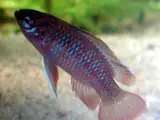 Scarlet badis Dario dario | 11 gal (40 L) | 0.8 in (2 cm) | 64–79 °F (18–26 °C) | Moderate |
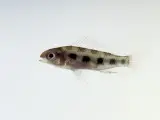 Chessboard cichlid Dicrossus filamentosus | 26 gal (100 L) | 3.1 in (8 cm) | 77–84 °F (25–29 °C) | Difficult |
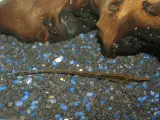 Twig catfish Farlowella vittata | 26 gal (100 L) | 5.9 in (15 cm) | 75–81 °F (24–27 °C) | Moderate |
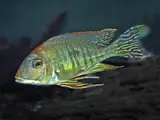 Geophagus altifrons Geophagus altifrons | 159 gal (600 L) | 9.8 in (25 cm) | 79–86 °F (26–30 °C) | Moderate |
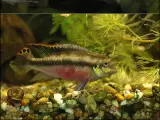 Kribensis Pelvicachromis pulcher | 21 gal (80 L) | 3.5 in (9 cm) | 75–82 °F (24–28 °C) | Easy |
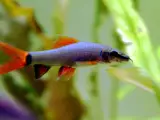 Rainbow shark Epalzeorhynchos frenatum | 53 gal (200 L) | 4.7 in (12 cm) | 72–81 °F (22–27 °C) | Moderate |
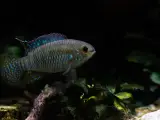 Flag acara Laetacara curviceps | 21 gal (80 L) | 2.8 in (7 cm) | 75–82 °F (24–28 °C) | Easy |
 Dojo loach Misgurnus anguillicaudatus | 53 gal (200 L) | 7.9 in (20 cm) | 50–75 °F (10–24 °C) | Easy |
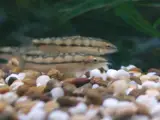 Dwarf chain loach Ambastaia sidthimunki | 21 gal (80 L) | 2.2 in (5.5 cm) | 77–82 °F (25–28 °C) | Moderate |
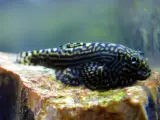 Reticulated hillstream loach Sewellia lineolata | 21 gal (80 L) | 2.4 in (6 cm) | 68–75 °F (20–24 °C) | Moderate |
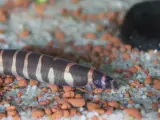 Kuhli loach Pangio kuhlii | 16 gal (60 L) | 3.5 in (9 cm) | 75–82 °F (24–28 °C) | Moderate |
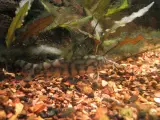 Yoyo loach Botia almorhae | 53 gal (200 L) | 5.1 in (13 cm) | 75–82 °F (24–28 °C) | Moderate |
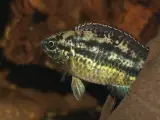 Golden dwarf cichlid Nannacara anomala | 16 gal (60 L) | 2.8 in (7 cm) | 72–81 °F (22–27 °C) | Easy |
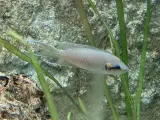 Princess cichlid Neolamprologus brichardi | 40 gal (150 L) | 3.5 in (9 cm) | 73–81 °F (23–27 °C) | Moderate |
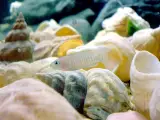 Multifasciatus (shell dweller) Neolamprologus multifasciatus | 16 gal (60 L) | 1.8 in (4.5 cm) | 75–81 °F (24–27 °C) | Moderate |
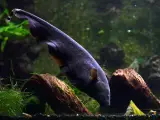 Black ghost knifefish Apteronotus albifrons | 132 gal (500 L) | 17.7 in (45 cm) | 73–82 °F (23–28 °C) | Difficult |
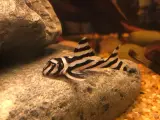 Zebra pleco (L046) Hypancistrus zebra | 26 gal (100 L) | 3.1 in (8 cm) | 79–88 °F (26–31 °C) | Difficult |
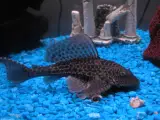 Common pleco Pterygoplichthys pardalis | 132 gal (500 L) | 15.7 in (40 cm) | 72–82 °F (22–28 °C) | Moderate |
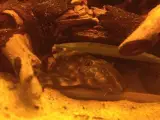 Clown pleco (L104) Panaqolus maccus | 21 gal (80 L) | 3.5 in (9 cm) | 75–82 °F (24–28 °C) | Easy |
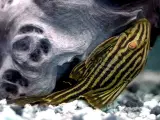 Royal pleco Panaque nigrolineatus | 106 gal (400 L) | 13.8 in (35 cm) | 72–82 °F (22–28 °C) | Moderate |
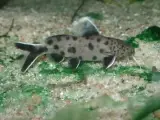 Synodontis petricola Synodontis petricola | 53 gal (200 L) | 4.3 in (11 cm) | 73–81 °F (23–27 °C) | Moderate |
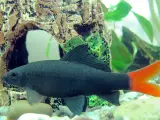 Red tail shark Epalzeorhynchos bicolor | 53 gal (200 L) | 4.7 in (12 cm) | 72–79 °F (22–26 °C) | Moderate |
No species match those filters.
Frequently asked questions
Do bottom feeders clean the tank?
Not really. They eat food that reaches the bottom, but they also produce waste. Gravel vacuuming and water changes are still necessary.
What substrate is best for bottom dwellers?
Fine sand or small, smooth gravel. Sharp gravel can damage the barbels of corydoras and loaches.
How many bottom dwellers can I add?
Usually one group of a peaceful species per tank, or two in larger tanks. Territorial species should be kept one per tank.
