If you buy through our links, Amazon pays us a small commission at no extra cost to you. That’s how we keep the site running. How we choose.
Contents
Overview
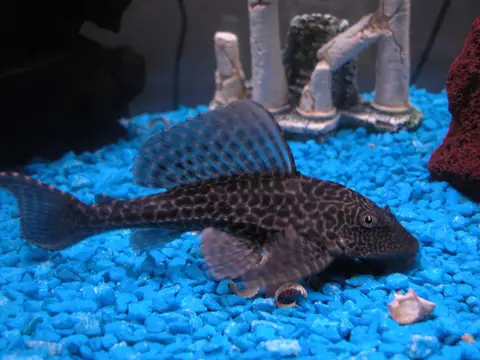
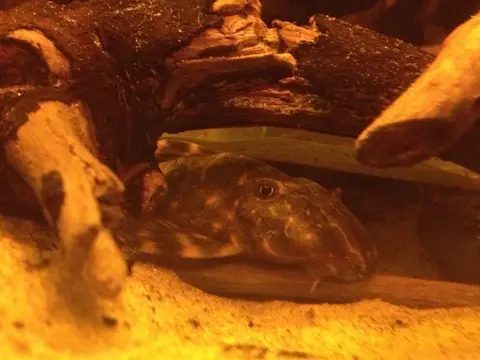
The common pleco is the little "sucker fish" sold at 2 in (5 cm) in big-box stores, and one of the most regretted purchases in the hobby. What is sold under this name is usually Pterygoplichthys pardalis or a close relative, an Amazon-basin loricariid that easily reaches 14-18 in (35-45 cm) in aquariums and can live well over 15 years.
It is an impressive animal: armored body with a leopard pattern, a tall sail-like dorsal fin and a big sucker mouth. It is hardy and fairly calm, but its size and heavy waste output make it suitable only for very large tanks. Released plecos have become invasive in Florida, Texas, Mexico and parts of Asia, where they burrow into riverbanks and damage ecosystems.
Care and tank setup
Let's be honest: an adult common pleco needs at least 125-150 gallons (500+ L) and a tank around 6 ft (180 cm) long. In a 10- or 30-gallon tank it is stunted, pollutes the water and lives poorly. Before buying one, ask yourself where it will live at 16 inches; for an average community tank, a bristlenose is the right choice.
- Very powerful filtration (a large canister or several filters) and big water changes.
- Large driftwood and roomy caves, set firmly so it cannot topple them.
- Tough plants tied to wood or rock; it uproots anything loose.
It is usually calm with other fish, but adults defend territory against other bottom dwellers and may rasp the slime coat of slow, flat-bodied fish such as angelfish or discus at night. If you can no longer keep it, rehome it through a store or local club. Never release it into the wild.
Feeding
It is an omnivore that leans herbivore and eats a lot. Offer large sinking algae wafers, blanched vegetables (zucchini, cucumber, sweet potato, peas) and an occasional protein food. Driftwood adds fibre. An adult eats heavily and produces a matching amount of waste, so portion carefully and remove leftovers to keep nitrates down.
Breeding
In the wild it digs burrows into muddy banks, where the male guards the eggs. That cannot be replicated in a home aquarium: the fish in stores come from outdoor pond farms in Asia and Florida. It is not a species you will breed at home, and its ability to reproduce in warm rivers is exactly what made it invasive.
Compatible tank mates
Species from our database that share water parameters, size and temperament with the Common pleco. Calculated from the data in each profile.
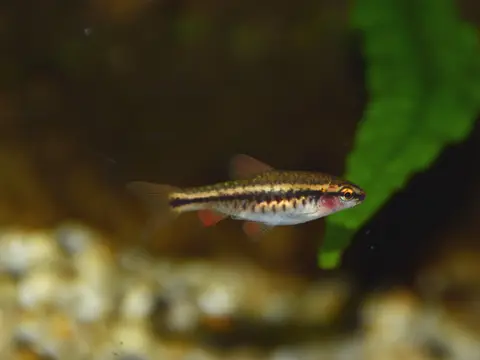 Cherry barb Puntius titteya 16 gal (60 L) · 73–81 °F (23–27 °C)
 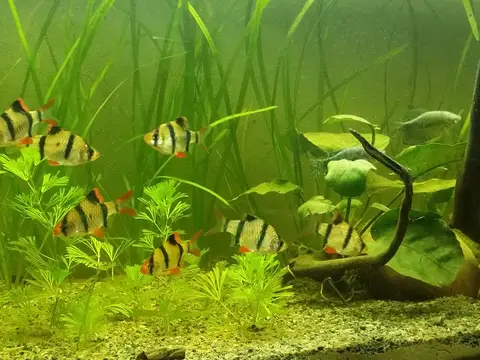 Tiger barb Puntigrus tetrazona 26 gal (100 L) · 72–79 °F (22–26 °C)
 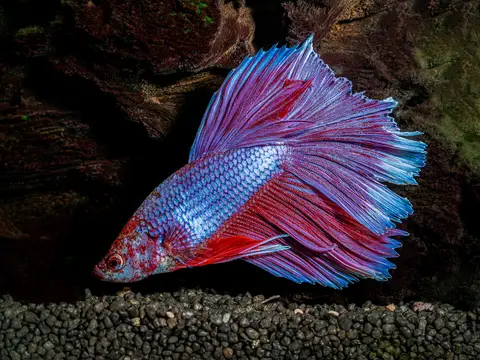 Betta fish Betta splendens 7 gal (25 L) · 75–82 °F (24–28 °C)
 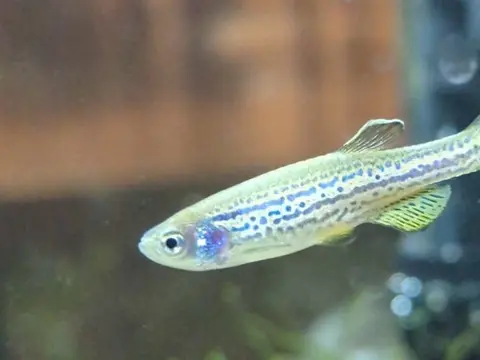 Zebra danio Danio rerio 16 gal (60 L) · 64–77 °F (18–25 °C)
 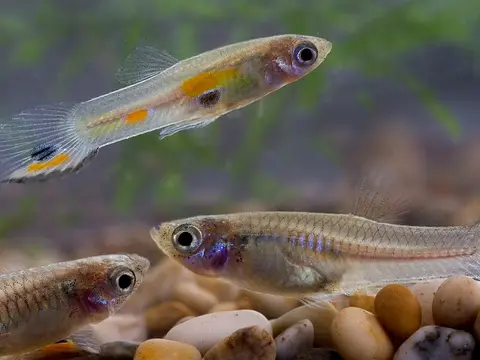 Guppy Poecilia reticulata 14 gal (54 L) · 72–82 °F (22–28 °C)
 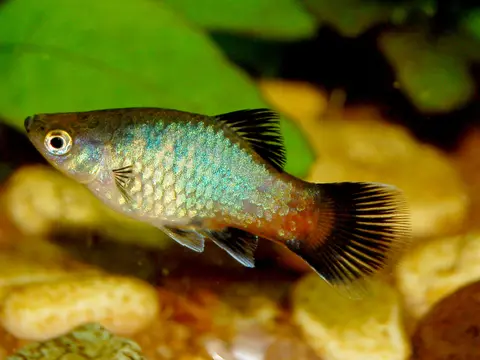 Platy Xiphophorus maculatus 16 gal (60 L) · 68–79 °F (20–26 °C)
 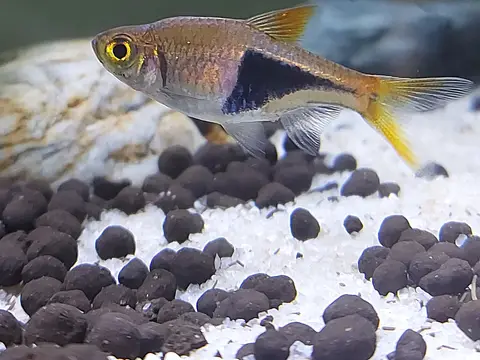 Harlequin rasbora Trigonostigma heteromorpha 16 gal (60 L) · 72–81 °F (22–27 °C)
 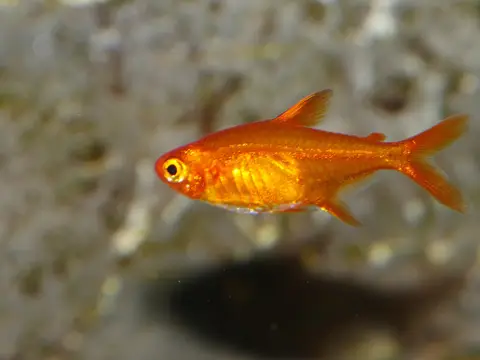 Ember tetra Hyphessobrycon amandae 11 gal (40 L) · 73–82 °F (23–28 °C)
 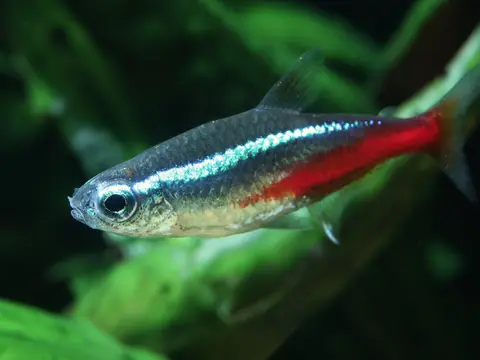 Neon tetra Paracheirodon innesi 16 gal (60 L) · 68–79 °F (20–26 °C)
 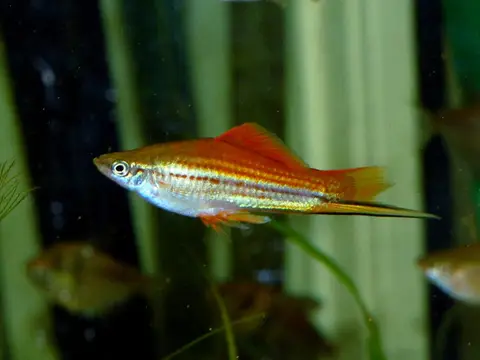 Swordtail Xiphophorus hellerii 32 gal (120 L) · 72–81 °F (22–27 °C)
 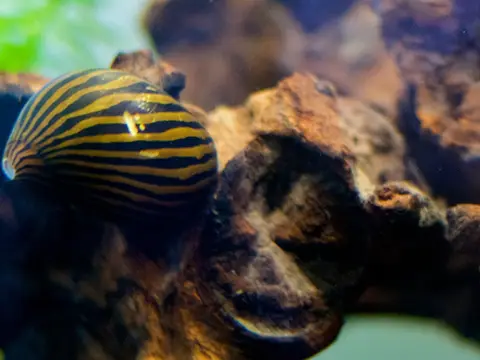 Nerite snail Neritina natalensis 5 gal (20 L) · 72–82 °F (22–28 °C)
 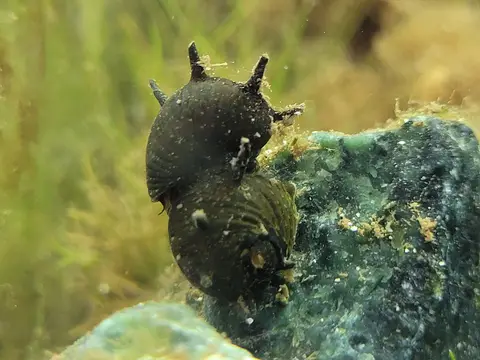 Horned nerite snail Clithon corona 5 gal (20 L) · 72–82 °F (22–28 °C)
 Check the compatibility of your whole tank →
Recommended equipment
What you need to keep the Common pleco healthy, checked against Amazon stock.


Frequently asked questions
How many liters does a Common pleco need?
At least about 500 liters. More space always helps keep the water stable.
What water temperature does the Common pleco need?
Between 22 and 28 °C, with a pH of 6.5 to 7.8.
What fish can live with the Common pleco?
Based on water, size and temperament, it fits with species such as Cherry barb, Tiger barb, Betta fish, Zebra danio and Guppy. Use our compatibility calculator to check your whole tank.
Can the Common pleco be kept with shrimp?
Yes: it usually won’t eat adult shrimp, though some shrimplets may get picked off. A tank with plenty of moss gives the babies cover.
You may also like
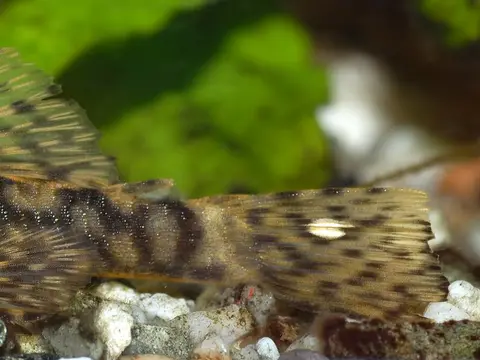 ProfileBristlenose pleco
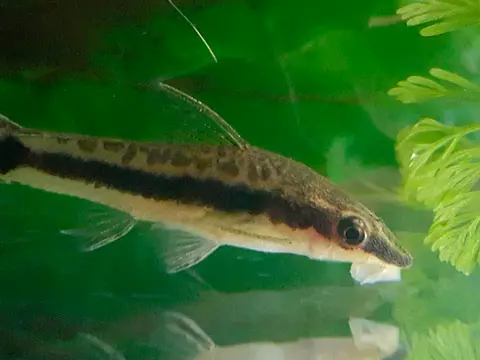 ProfileOtocinclus catfish
 ProfileClown pleco (L104)
- GuideHow Many Fish Can You Put in a Tank? Stocking Done Right
- GuideCleaner fish for aquariums: the clean-up crew myth explained
 Gear reviewLarge aquariums (55 gallons and up)
 Gear reviewCanister filters
- CalculatorFish compatibility checker
Plecos and suckermouth catfish → Freshwater fish → Complete aquarium guide →