If you buy through our links, Amazon pays us a small commission at no extra cost to you. That’s how we keep the site running. How we choose.
Contents
Overview
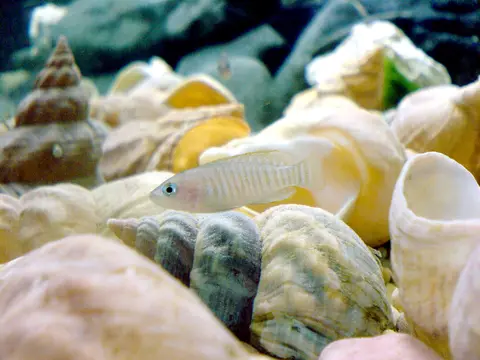
Multies, as hobbyists call them, are probably the smallest cichlids in the world: males reach about 2 inches (4-5 cm) and females stay closer to 1.2 inches (3 cm). They come from Lake Tanganyika, where they live in huge colonies on beds of empty snail shells that serve as shelter and spawning sites.
The pale body is crossed by thin dark vertical bars, and the bluish eyes are surprisingly expressive. Despite their size they have big personalities: they dig constantly, defend their shells and pop out to inspect everything going on. They are perfect if you want to watch complex social behavior in a fairly small, species-focused tank or alongside a few compatible Tanganyikans.
Care and tank setup
A trio or small group does well in a 15-gallon (60-litre) tank with a wide footprint; for a real colony, 25 gallons (100 litres) or more is better. The substrate is key: 2-3 inches (5-7 cm) of fine sand and plenty of empty shells, at least two or three per fish. Keep the water hard, alkaline and stable in a cycled tank with gentle filtration and a heater.
- Diggers: they move sand around their shells nonstop and will uproot rooted plants. Use anubias or Java fern on rocks.
- Tankmates: ideally a species tank; in larger setups, cyprichromis or small julidochromis that use other zones.
- Shrimp: not compatible; they eat shrimplets and harass small adults.
The most common mistake is providing too few shells. Without enough hiding spots fights escalate and subordinate fish have nowhere to retreat.
Feeding
Multies are micropredators that pick zooplankton from the water above the shell bed. They accept fine flakes and micro pellets for cichlids, but keep better color and condition with small live or frozen foods such as cyclops, baby brine shrimp, daphnia or chopped mysis. Several small feedings a day beat one large one.
Breeding
They breed readily when there are enough shells. The female spawns inside a shell and tends the eggs, while the male guards a territory that often includes several females. The fry stay within the colony and take baby brine shrimp. Over time one pair becomes a sizable group, so plan how you will manage the extra fish.
Compatible tank mates
Species from our database that share water parameters, size and temperament with the Multifasciatus (shell dweller). Calculated from the data in each profile.
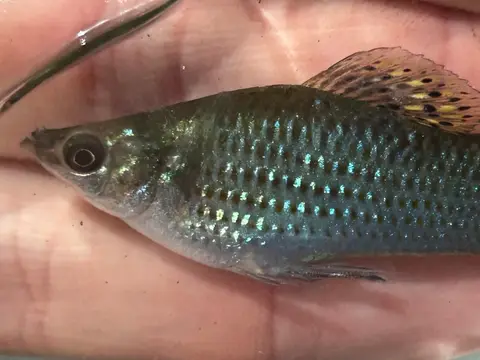 Molly Poecilia sphenops 26 gal (100 L) · 75–82 °F (24–28 °C)
 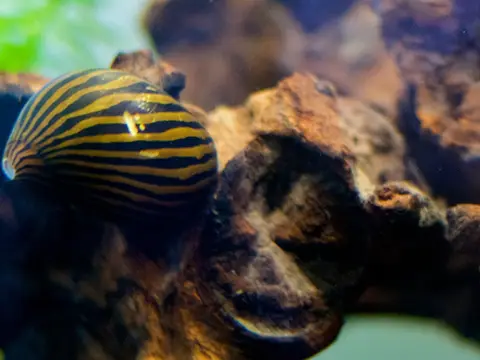 Nerite snail Neritina natalensis 5 gal (20 L) · 72–82 °F (22–28 °C)
 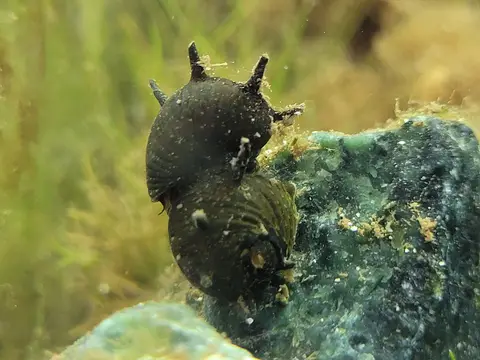 Horned nerite snail Clithon corona 5 gal (20 L) · 72–82 °F (22–28 °C)
 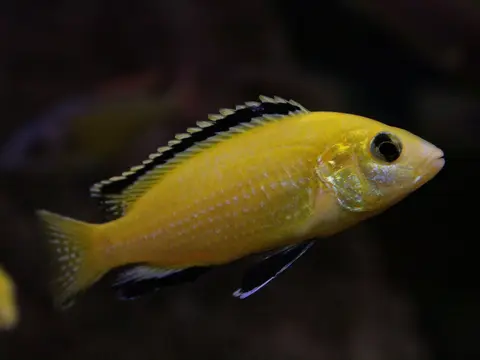 Yellow lab cichlid Labidochromis caeruleus 53 gal (200 L) · 75–82 °F (24–28 °C)
 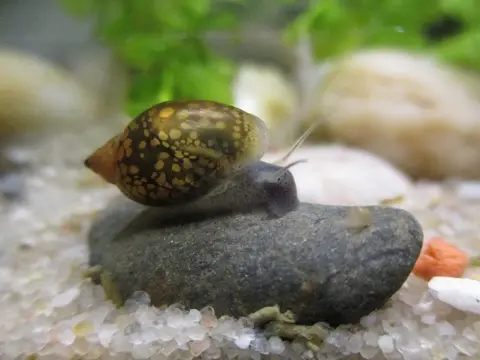 Bladder snail Physella acuta 3 gal (10 L) · 59–82 °F (15–28 °C)
 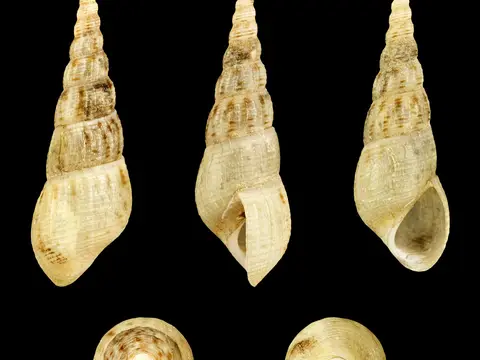 Malaysian trumpet snail Melanoides tuberculata 5 gal (20 L) · 68–86 °F (20–30 °C)
 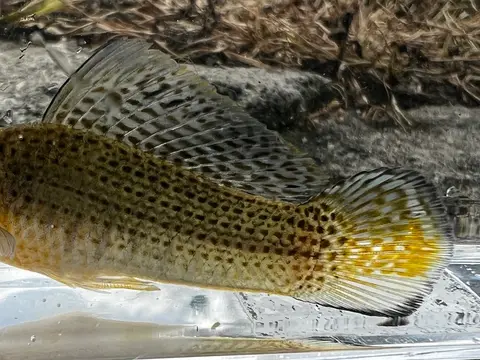 Sailfin molly Poecilia latipinna 40 gal (150 L) · 72–82 °F (22–28 °C)
 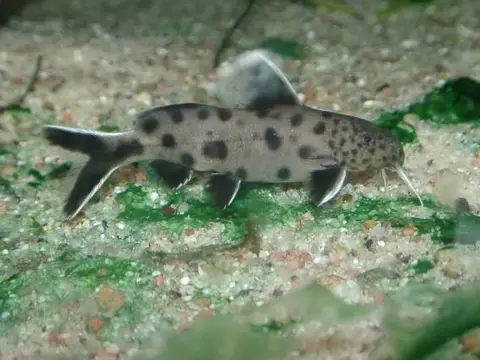 Synodontis petricola Synodontis petricola 53 gal (200 L) · 73–81 °F (23–27 °C)
 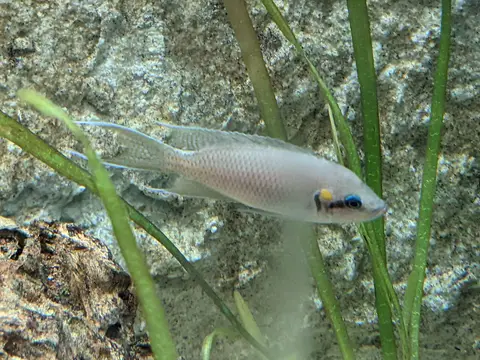 Princess cichlid Neolamprologus brichardi 40 gal (150 L) · 73–81 °F (23–27 °C)
 Check the compatibility of your whole tank →
What not to keep it with
Popular species you shouldn’t house with the Multifasciatus (shell dweller), and why.
- Bristlenose pleco: incompatible pH
- Cherry barb: incompatible pH
- Tiger barb: incompatible pH
- Betta fish: incompatible pH
- Common goldfish: incompatible temperatures, incompatible pH, one may eat the other due to size
- Panda cory: incompatible temperatures, incompatible pH
- Discus: incompatible temperatures, incompatible pH, incompatible water hardness
- Angelfish: incompatible pH, one may eat the other due to size
Recommended equipment
What you need to keep the Multifasciatus (shell dweller) healthy, checked against Amazon stock.



Frequently asked questions
How many liters does a Multifasciatus (shell dweller) need?
At least about 60 liters for a group of at least 3 fish. More space always helps keep the water stable.
What water temperature does the Multifasciatus (shell dweller) need?
Between 24 and 27 °C, with a pH of 7.8 to 9.
What fish can live with the Multifasciatus (shell dweller)?
Based on water, size and temperament, it fits with species such as Molly, Nerite snail, Horned nerite snail, Yellow lab cichlid and Bladder snail. Use our compatibility calculator to check your whole tank.
Can the Multifasciatus (shell dweller) be kept with shrimp?
Not recommended: because of its size or instinct, it will eat shrimp.
You may also like
African cichlids → Freshwater fish → Complete aquarium guide →