If you buy through our links, Amazon pays us a small commission at no extra cost to you. That’s how we keep the site running. How we choose.
Contents
Overview
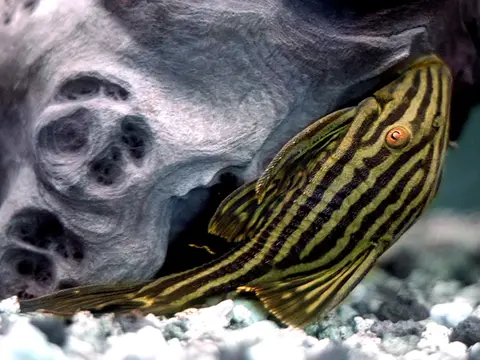
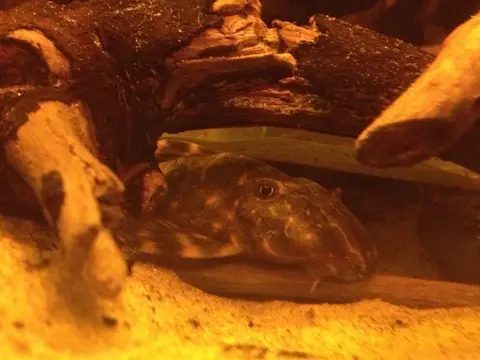
The royal pleco (Panaque nigrolineatus) is one of the most striking plecos: a heavy gray-green body covered in fine black lines, reddish eyes and a huge mouth with spoon-shaped teeth built for rasping wood. It comes from rivers in Colombia, Venezuela and the Amazon basin and is often sold under the L-number L190.
Do not let the 2.5-3 in juveniles in stores fool you: adults reach 14-16 in (35-40 cm) and easily live past 15 years. It is a fascinating centerpiece for a large South American tank and calm with similarly sized fish, but it is not an algae eater or a fish for an average community tank. Buy one only if you can give it room for the long haul.
Care and tank setup
An adult needs at least 100-125 gallons (400+ L) and a tank about 5 ft (150 cm) long, with heavy-duty filtration: it eats wood and turns out large amounts of sawdust and waste that foul the water quickly.
- Plenty of driftwood (mopani, mangrove root or similar) is essential for its digestion and behavior.
- Large caves and shaded areas; it is most active at dusk.
- Frequent water changes and gravel vacuuming to remove sawdust.
- Only tough plants attached to wood or rock, since it may damage them.
It is peaceful with medium-sized midwater fish but very territorial toward other plecos, especially its own genus, so one per tank is the norm. Avoid small bottom dwellers that would be pushed around. Like other large plecos it may rasp slow, flat-bodied fish, so watch it with angelfish or discus.
Feeding
Wood is an essential part of its diet, yet it gets little nutrition from it, so it also needs plenty of plant food. Offer sinking veggie wafers plus blanched zucchini, cucumber, sweet potato, peas and spinach several times a week. An occasional protein treat is fine, but protein-heavy diets do not suit it.
Breeding
Royal plecos rarely breed in home aquariums. In the wild they spawn in caves or holes in the riverbank, with the male guarding the eggs, but their size, territorial nature and demanding conditions make home breeding almost unheard of. Most fish in the trade are wild-caught or come from specialist farms.
Compatible tank mates
Species from our database that share water parameters, size and temperament with the Royal pleco. Calculated from the data in each profile.
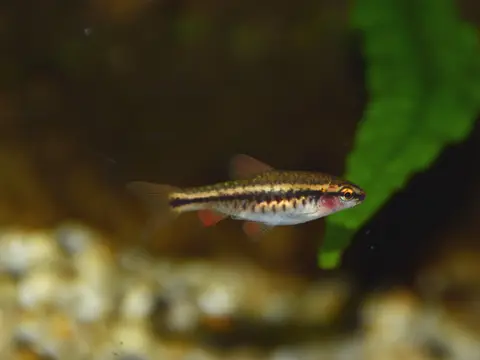 Cherry barb Puntius titteya 16 gal (60 L) · 73–81 °F (23–27 °C)
 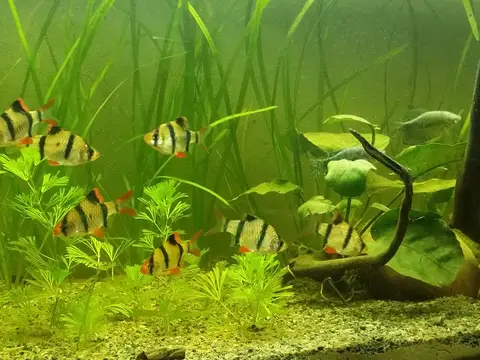 Tiger barb Puntigrus tetrazona 26 gal (100 L) · 72–79 °F (22–26 °C)
 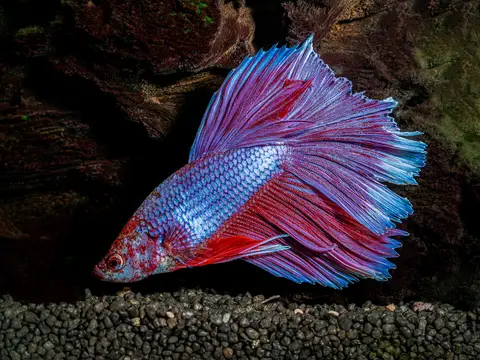 Betta fish Betta splendens 7 gal (25 L) · 75–82 °F (24–28 °C)
 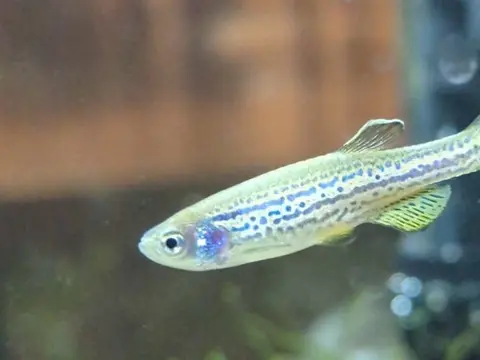 Zebra danio Danio rerio 16 gal (60 L) · 64–77 °F (18–25 °C)
 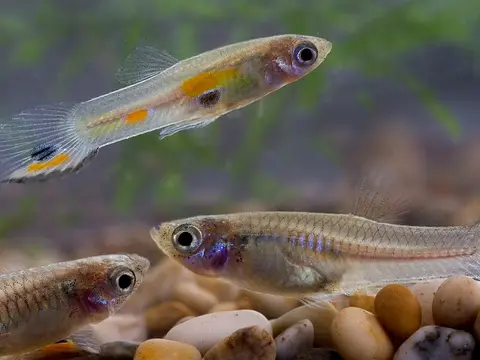 Guppy Poecilia reticulata 14 gal (54 L) · 72–82 °F (22–28 °C)
 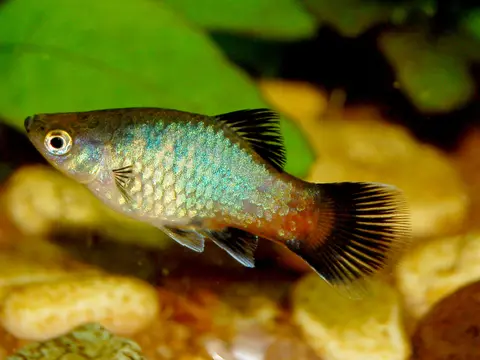 Platy Xiphophorus maculatus 16 gal (60 L) · 68–79 °F (20–26 °C)
 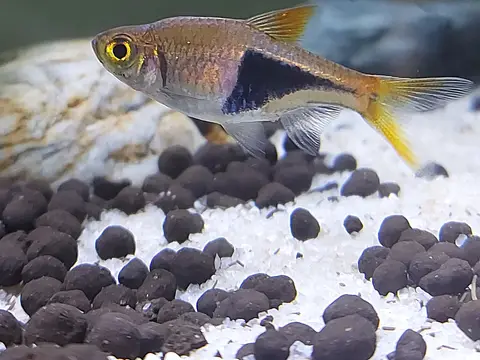 Harlequin rasbora Trigonostigma heteromorpha 16 gal (60 L) · 72–81 °F (22–27 °C)
 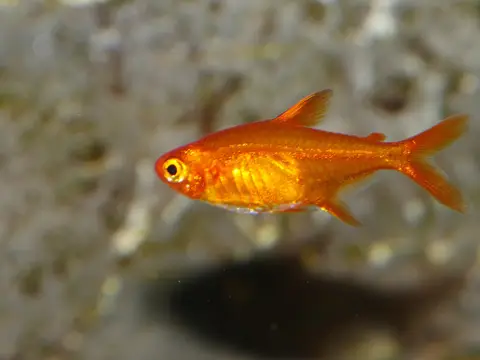 Ember tetra Hyphessobrycon amandae 11 gal (40 L) · 73–82 °F (23–28 °C)
 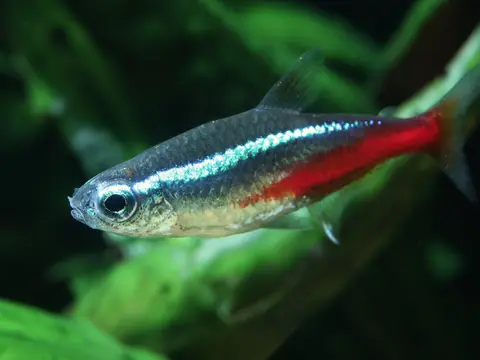 Neon tetra Paracheirodon innesi 16 gal (60 L) · 68–79 °F (20–26 °C)
 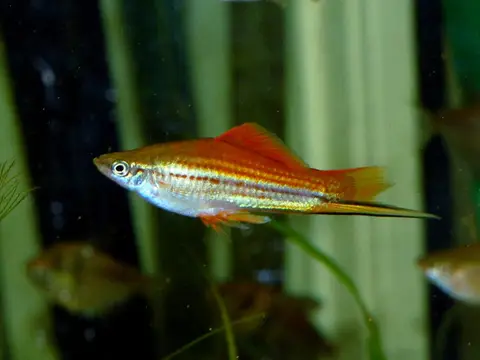 Swordtail Xiphophorus hellerii 32 gal (120 L) · 72–81 °F (22–27 °C)
 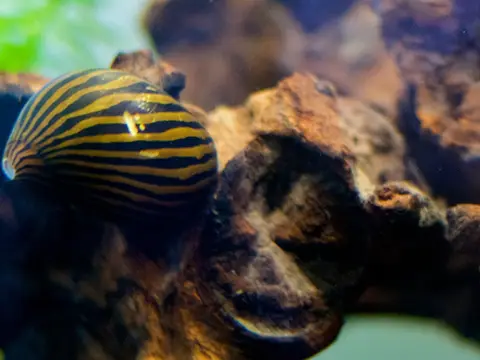 Nerite snail Neritina natalensis 5 gal (20 L) · 72–82 °F (22–28 °C)
 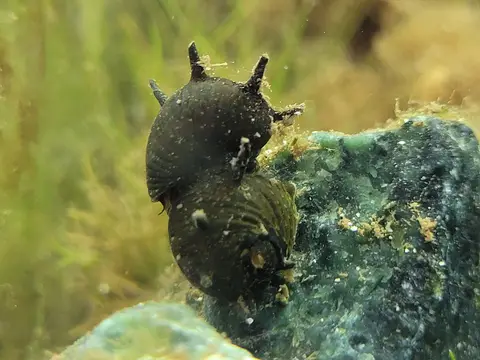 Horned nerite snail Clithon corona 5 gal (20 L) · 72–82 °F (22–28 °C)
 Check the compatibility of your whole tank →
Recommended equipment
What you need to keep the Royal pleco healthy, checked against Amazon stock.


Frequently asked questions
How many liters does a Royal pleco need?
At least about 400 liters. More space always helps keep the water stable.
What water temperature does the Royal pleco need?
Between 22 and 28 °C, with a pH of 6.5 to 7.5.
What fish can live with the Royal pleco?
Based on water, size and temperament, it fits with species such as Cherry barb, Tiger barb, Betta fish, Zebra danio and Guppy. Use our compatibility calculator to check your whole tank.
Can the Royal pleco be kept with shrimp?
Yes: it usually won’t eat adult shrimp, though some shrimplets may get picked off. A tank with plenty of moss gives the babies cover.
You may also like

Plecos and suckermouth catfish → Freshwater fish → Complete aquarium guide →