If you buy through our links, Amazon pays us a small commission at no extra cost to you. That’s how we keep the site running. How we choose.
Contents
Overview
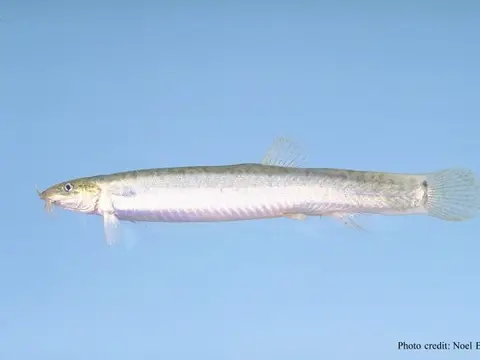
The dojo loach, or weather loach, is an elongated temperate to coldwater loach from East Asia, including China, Korea and Japan, where it lives in rice paddies, canals and soft-bottomed ponds. Its nickname comes from its habit of getting restless when barometric pressure drops before a storm. Wild fish are brownish and mottled, while golden and peach varieties are also common.
It is endearing, very hardy and can share a tank with other coldwater fish. Two things matter, though: it grows to about 8 inches (20 cm) and lives a decade or more, and it is an invasive species in Australia, several US states and parts of Europe. Some states and countries restrict its sale or possession, so check your local regulations before buying.
Care and tank setup
A group of 3 or more needs roughly a 55-gallon (200 L) tank, 4 feet (120 cm) long if possible, cycled and well filtered; indoors it usually needs no heater. It also lives in garden ponds in temperate climates, as long as they are fully enclosed and can't overflow into natural waterways.
- Substrate: fine sand is essential: it burrows constantly, and coarse gravel injures its barbels.
- Plants: its digging uproots anything loose. Use tough plants in pots or tied to rocks and driftwood.
- Lid: it jumps and squeezes through small gaps, so cover the tank tightly.
- Tank mates: calm coldwater fish such as white cloud minnows, medaka or common goldfish in large tanks. It will eat shrimp and fry.
Most importantly, never release it into streams, lakes or ponds. It breeds readily in the wild and harms native species. If you can't keep it, return it to a store or rehome it.
Feeding
An undemanding omnivore. It sifts through the substrate for food, so offer sinking pellets and wafers, plus frozen or live foods like bloodworms and brine shrimp and some blanched vegetables. It eats eagerly and can get chubby: two small meals a day are plenty, and in winter, when the water is cooler, cut portions back further.
Breeding
It rarely spawns in aquariums, but in outdoor ponds it can breed on its own after winter as temperatures rise. The female scatters thousands of sticky eggs among plants, and the parents provide no care. That ease of reproducing in the wild is exactly what makes it invasive, so if you keep it in a pond, make sure floods can never carry fish into natural waters.
Compatible tank mates
Species from our database that share water parameters, size and temperament with the Dojo loach. Calculated from the data in each profile.
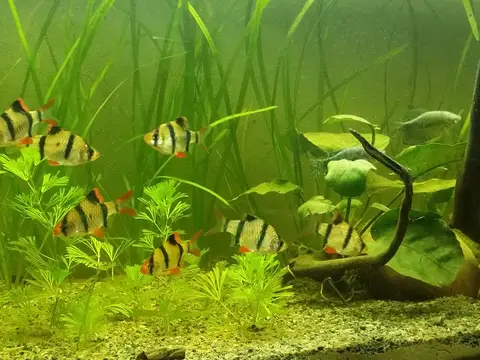 Tiger barb Puntigrus tetrazona 26 gal (100 L) · 72–79 °F (22–26 °C)
 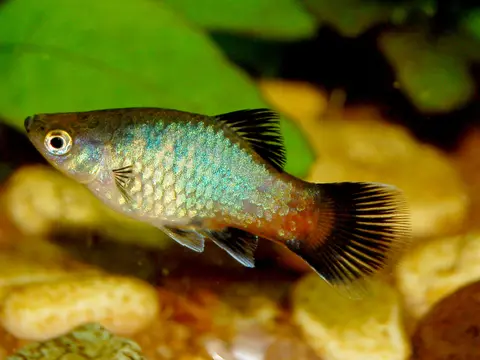 Platy Xiphophorus maculatus 16 gal (60 L) · 68–79 °F (20–26 °C)
 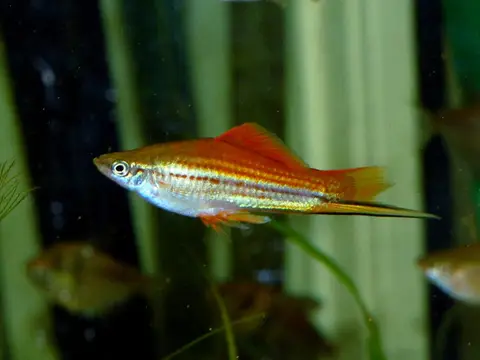 Swordtail Xiphophorus hellerii 32 gal (120 L) · 72–81 °F (22–27 °C)
 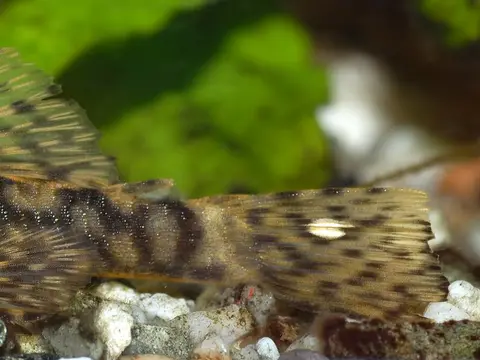 Bristlenose pleco Ancistrus sp. 26 gal (100 L) · 72–81 °F (22–27 °C)
 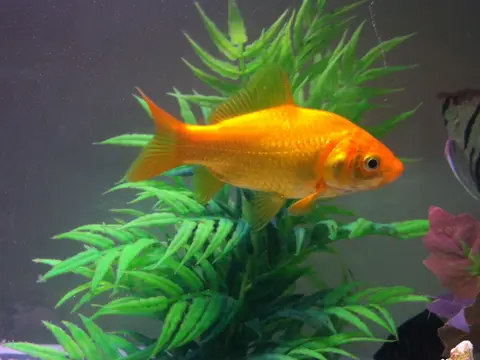 Common goldfish Carassius auratus 79 gal (300 L) · 50–75 °F (10–24 °C)
 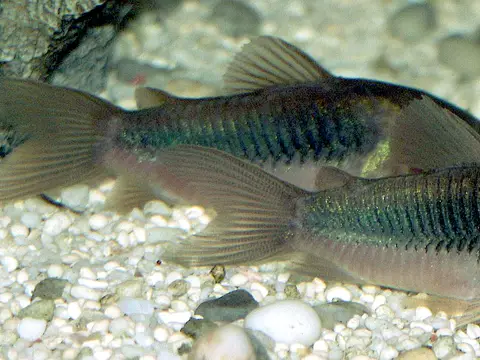 Bronze cory Corydoras aeneus 21 gal (80 L) · 72–81 °F (22–27 °C)
 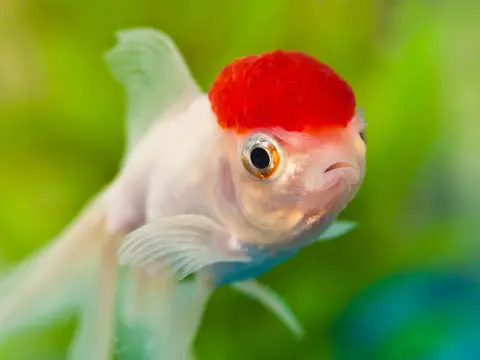 Oranda goldfish Carassius auratus 40 gal (150 L) · 59–75 °F (15–24 °C)
 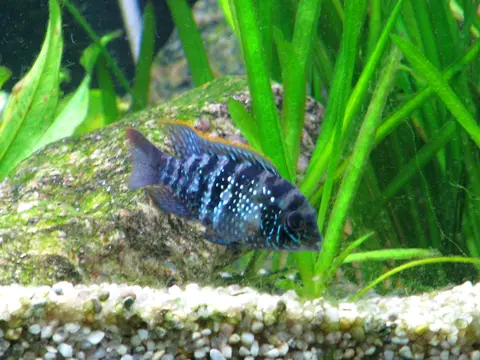 Blue acara Andinoacara pulcher 53 gal (200 L) · 72–82 °F (22–28 °C)
 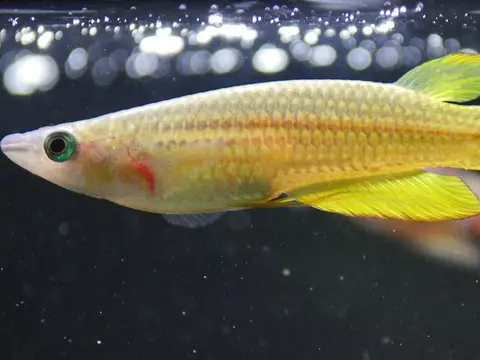 Golden wonder killifish (striped panchax) Aplocheilus lineatus 26 gal (100 L) · 72–81 °F (22–27 °C)
 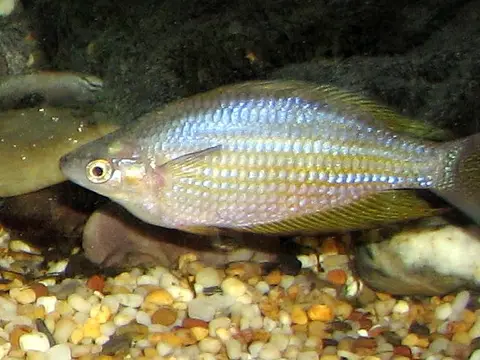 Eastern rainbowfish (splendid rainbowfish) Melanotaenia splendida 53 gal (200 L) · 72–82 °F (22–28 °C)
 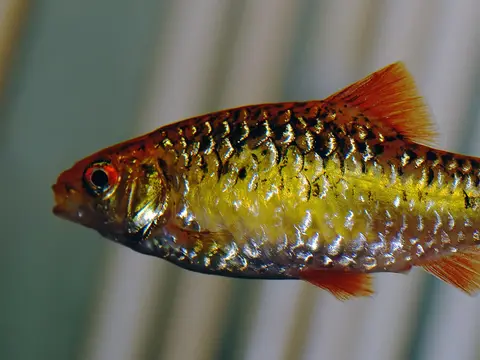 Gold barb Barbodes semifasciolatus 26 gal (100 L) · 64–75 °F (18–24 °C)
 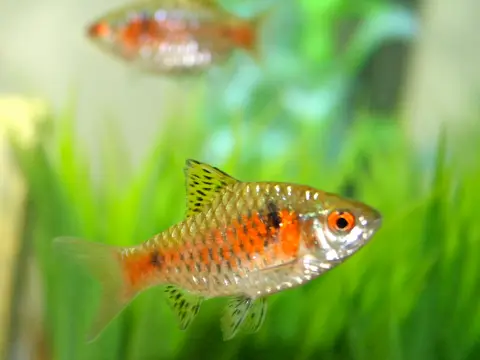 Odessa barb Pethia padamya 26 gal (100 L) · 68–79 °F (20–26 °C)
 Check the compatibility of your whole tank →
What not to keep it with
Popular species you shouldn’t house with the Dojo loach, and why.
- Cherry barb: incompatible temperatures, one may eat the other due to size
- Panda cory: one may eat the other due to size
- Zebra danio: one may eat the other due to size
- Discus: incompatible temperatures
- Guppy: one may eat the other due to size
- Clown loach: incompatible temperatures
- Oscar: incompatible temperatures, incompatible temperaments
- Otocinclus catfish: one may eat the other due to size
Recommended equipment
What you need to keep the Dojo loach healthy, checked against Amazon stock.



Frequently asked questions
How many liters does a Dojo loach need?
At least about 200 liters for a group of at least 3 fish. More space always helps keep the water stable.
What water temperature does the Dojo loach need?
Between 10 and 24 °C: it’s a coldwater species that doesn’t need a heater in a normal home. pH 6.5 to 8.
What fish can live with the Dojo loach?
Based on water, size and temperament, it fits with species such as Tiger barb, Platy, Swordtail, Bristlenose pleco and Common goldfish. Use our compatibility calculator to check your whole tank.
Can the Dojo loach be kept with shrimp?
Not recommended: because of its size or instinct, it will eat shrimp.