If you buy through our links, Amazon pays us a small commission at no extra cost to you. That’s how we keep the site running. How we choose.
Contents
Overview
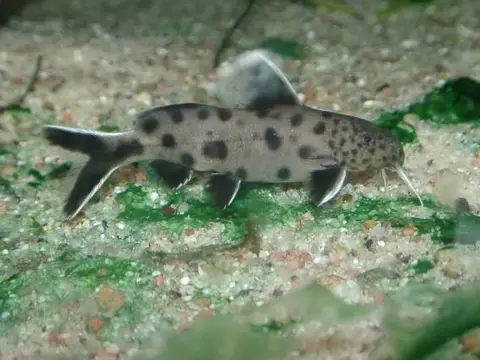
The Synodontis petricola is a small catfish from Lake Tanganyika with a cream body covered in black spots and black fins edged in white. It is active and hardy, and unlike many catfish it is often out and about during the day, especially when kept in a group.
It is a favorite companion for African cichlid tanks because it thrives in the same hard, alkaline water, and its armor and spines protect it from rowdy neighbors. A word of caution when buying: much of what is sold as "petricola" is actually a look-alike species (such as S. lucipinnis) or a farm-bred hybrid. Care is almost identical, but it is worth knowing if you want the pure species.
Care and tank setup
It is social, so keep a group of four or more. A single fish turns shy, and in pairs one may bully the other. For a group plus tankmates, a 55-gallon (200-liter) tank with good length is a sensible minimum.
- Hard, alkaline water at 73-81°F (23-27°C), like a Tanganyika or Malawi cichlid tank; it does not belong in a soft-water community.
- Plenty of rockwork with caves and crevices so every fish has its own retreat.
- Sand or fine, rounded gravel to protect its barbels.
- Strong filtration and oxygenation; it does poorly with built-up nitrate.
Tankmates: medium-sized African cichlids, other Tanganyika fish and robust hard-water species. At night it will eat fry, shrimp and very small fish. Handle with care: its pectoral spines snag easily in nets, so it is better to catch it with a container.
Feeding
It is an easygoing omnivore. Use quality sinking wafers and pellets as the staple, with bloodworms, brine shrimp, mysis and some plant matter as extras. It feeds most actively in the evening, so drop part of the ration at lights-out to make sure it gets some among greedy cichlids. Do not overfeed: it gains weight easily.
Breeding
It belongs to the "cuckoo catfish" group: in the wild these Synodontis slip their eggs into the spawning of mouthbrooding cichlids, which end up incubating them. It occasionally happens in Malawi cichlid tanks, but it is not something you can plan at home. Most fish in the trade come from farms that use hormone induction.
Compatible tank mates
Species from our database that share water parameters, size and temperament with the Synodontis petricola. Calculated from the data in each profile.
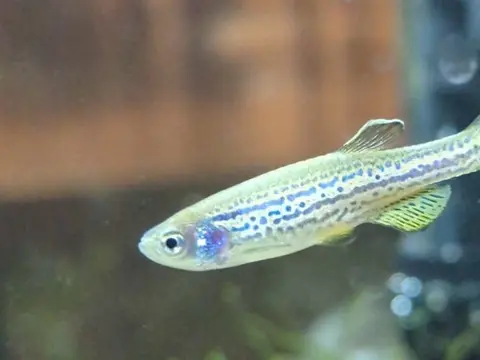 Zebra danio Danio rerio 16 gal (60 L) · 64–77 °F (18–25 °C)
 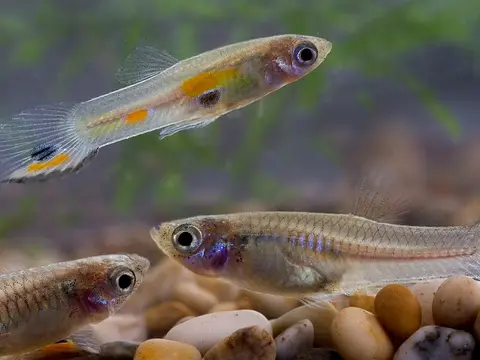 Guppy Poecilia reticulata 14 gal (54 L) · 72–82 °F (22–28 °C)
 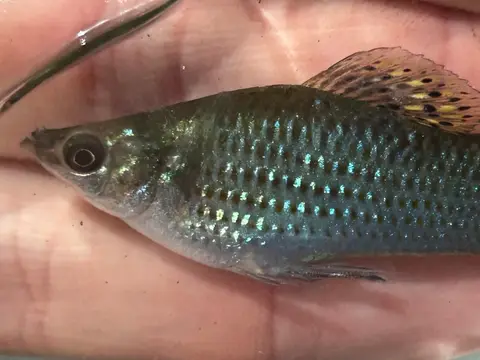 Molly Poecilia sphenops 26 gal (100 L) · 75–82 °F (24–28 °C)
 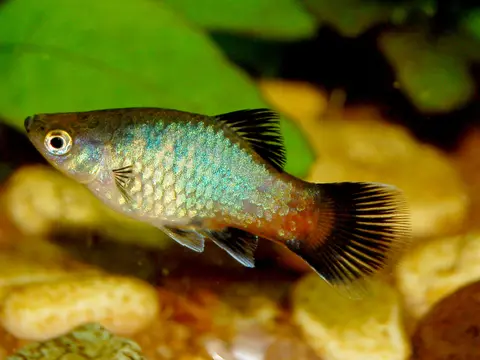 Platy Xiphophorus maculatus 16 gal (60 L) · 68–79 °F (20–26 °C)
 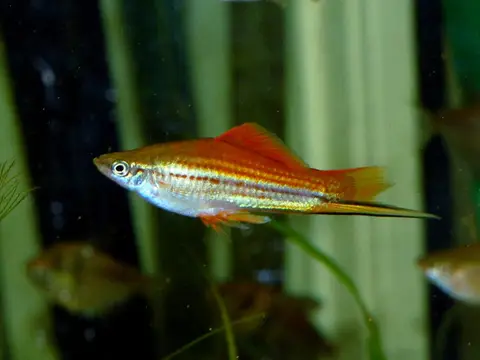 Swordtail Xiphophorus hellerii 32 gal (120 L) · 72–81 °F (22–27 °C)
 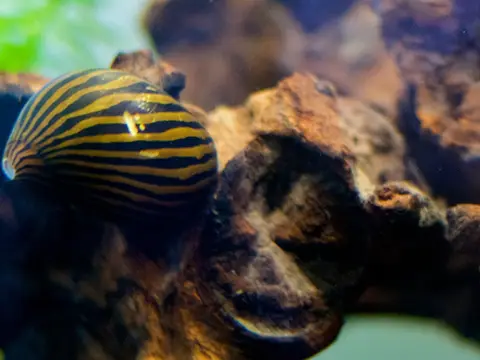 Nerite snail Neritina natalensis 5 gal (20 L) · 72–82 °F (22–28 °C)
 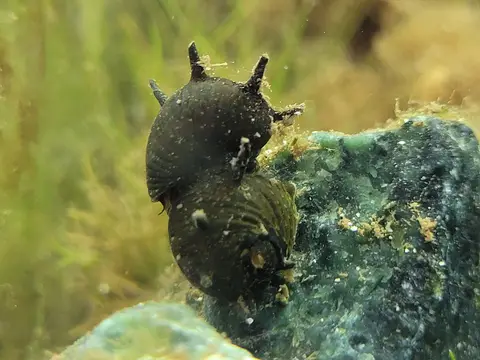 Horned nerite snail Clithon corona 5 gal (20 L) · 72–82 °F (22–28 °C)
 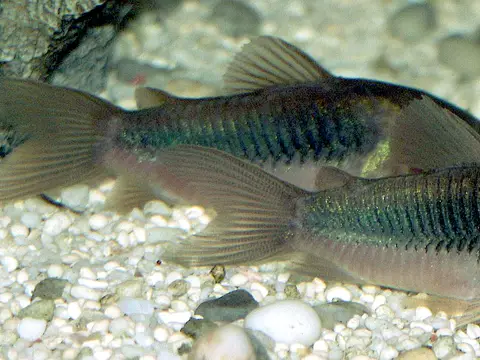 Bronze cory Corydoras aeneus 21 gal (80 L) · 72–81 °F (22–27 °C)
 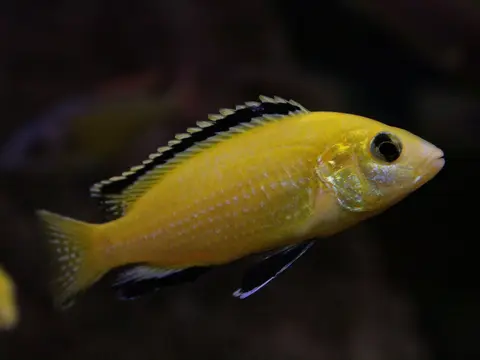 Yellow lab cichlid Labidochromis caeruleus 53 gal (200 L) · 75–82 °F (24–28 °C)
 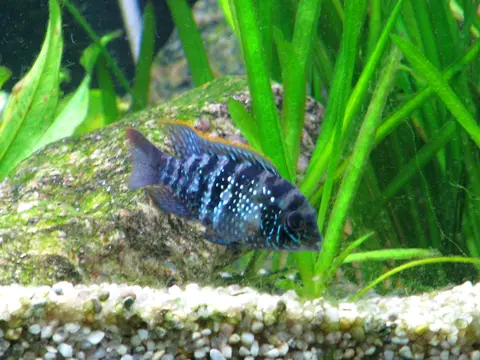 Blue acara Andinoacara pulcher 53 gal (200 L) · 72–82 °F (22–28 °C)
 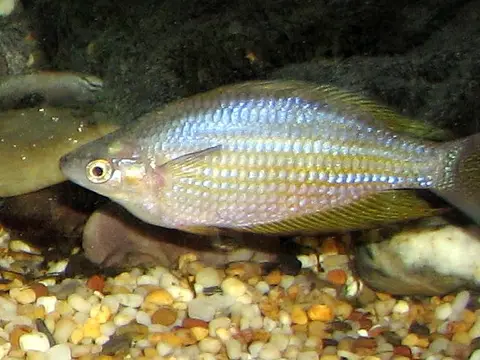 Eastern rainbowfish (splendid rainbowfish) Melanotaenia splendida 53 gal (200 L) · 72–82 °F (22–28 °C)
 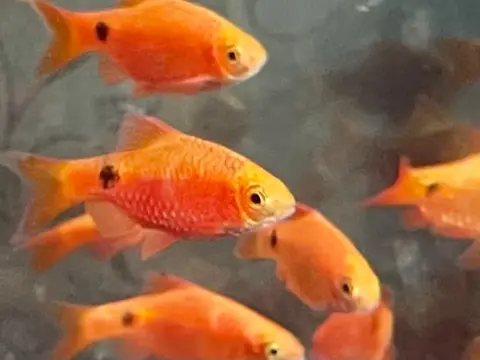 Rosy barb Pethia conchonius 40 gal (150 L) · 64–77 °F (18–25 °C)
 Check the compatibility of your whole tank →
What not to keep it with
Popular species you shouldn’t house with the Synodontis petricola, and why.
- Discus: incompatible temperatures, incompatible pH
- Oscar: incompatible pH, one may eat the other due to size, incompatible temperaments
- Ram cichlid: incompatible temperatures, incompatible pH
- Celestial pearl danio: incompatible pH, one may eat the other due to size
- Rummy-nose tetra: incompatible pH
- Cardinal tetra: incompatible pH
- Ember tetra: incompatible pH, one may eat the other due to size
- Amano shrimp: eats shrimp
Recommended equipment
What you need to keep the Synodontis petricola healthy, checked against Amazon stock.


Frequently asked questions
How many liters does a Synodontis petricola need?
At least about 200 liters for a group of at least 4 fish. More space always helps keep the water stable.
What water temperature does the Synodontis petricola need?
Between 23 and 27 °C, with a pH of 7.5 to 9.
What fish can live with the Synodontis petricola?
Based on water, size and temperament, it fits with species such as Zebra danio, Guppy, Molly, Platy and Swordtail. Use our compatibility calculator to check your whole tank.
Can the Synodontis petricola be kept with shrimp?
Not recommended: because of its size or instinct, it will eat shrimp.