If you buy through our links, Amazon pays us a small commission at no extra cost to you. That’s how we keep the site running. How we choose.
Contents
Overview
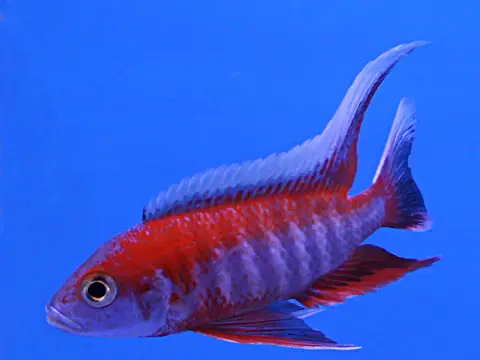
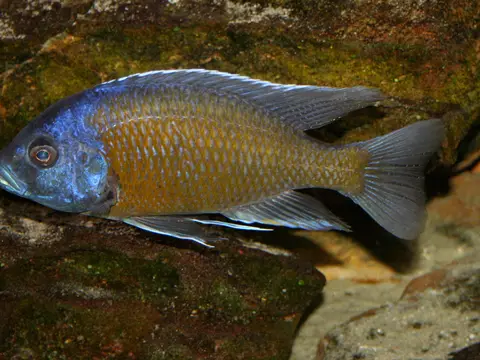
Peacock cichlids belong to the genus Aulonocara from Lake Malawi and are famous for their males' colors: metallic blue, yellow, orange or red depending on the species. We use Aulonocara jacobfreibergi as the reference here, but the care applies to almost the whole genus. Females, by contrast, are a plain brownish gray.
In the lake they live where rock meets sand, hunting buried invertebrates with enlarged sensory pores on the head. They are much calmer than mbuna, which makes them ideal for a peaceful hap tank. Be aware that many store varieties such as "OB," "Dragon Blood" or "Ruby Red" are hybrids or line-bred forms with no natural equivalent.
Care and tank setup
A male reaches about 5 to 6 inches (13-15 cm) and needs room to display: plan on 75-80 gallons (300 liters) with a 4-foot (120 cm) footprint for one male and three or four females. Keep the water hard and alkaline, with a stable temperature and generous filtration.
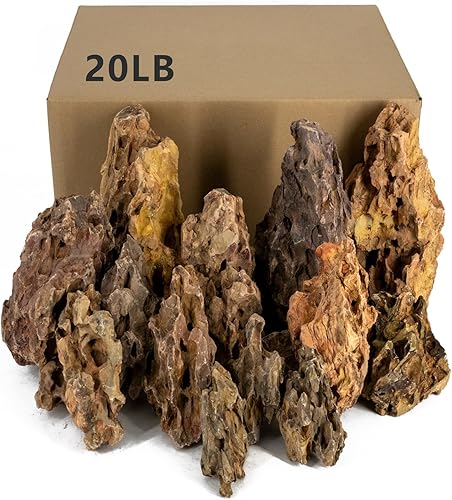
- Aquascape: a wide bed of fine sand for sifting, plus rock piles with caves and open areas in between.
- Plants: tough anubias, vallisneria or crypts may survive, though peacocks stir the sand.
- Tankmates: other peacocks (one male per color to avoid hybrids) and peaceful haps of similar size. Avoid aggressive mbuna, which stress them and steal their food.
- Common mistakes: several males in a small tank, coarse gravel, or mixing females of different species.
A cycled tank, a heater and weekly 30% water changes are essential.
Feeding
Peacocks are invertebrate-eating carnivores. Feed a quality sinking Malawi pellet based on krill or fish, supplemented with frozen mysis, brine shrimp or krill. They do not need beef heart or large amounts of plant matter. Offer small portions once or twice a day and make sure food reaches the bottom, where they feed.
Breeding
They are maternal mouthbrooders. The male digs a pit in the sand or beside a rock and courts the female with his colors. She holds 20 to 50 eggs in her mouth for about three weeks, then releases fully formed fry that eat crushed pellets. They breed well in aquariums; to avoid hybrids, keep only females of the same species as the male.
Compatible tank mates
Species from our database that share water parameters, size and temperament with the Peacock cichlid (Aulonocara). Calculated from the data in each profile.
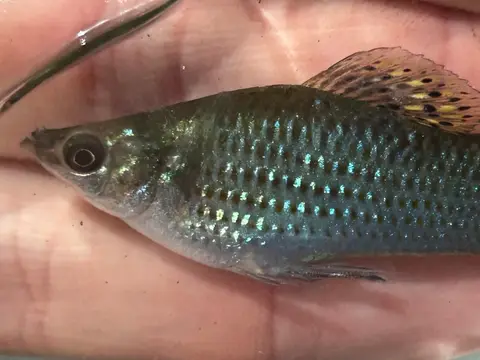 Molly Poecilia sphenops 26 gal (100 L) · 75–82 °F (24–28 °C)
 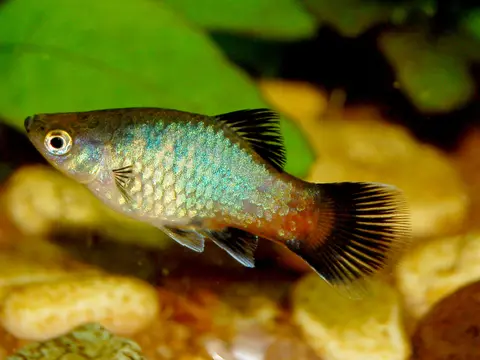 Platy Xiphophorus maculatus 16 gal (60 L) · 68–79 °F (20–26 °C)
 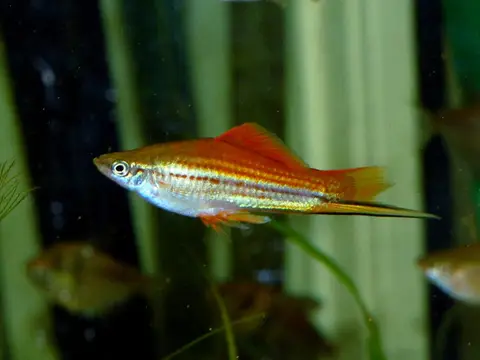 Swordtail Xiphophorus hellerii 32 gal (120 L) · 72–81 °F (22–27 °C)
 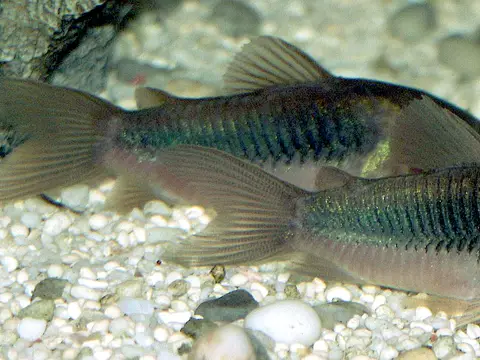 Bronze cory Corydoras aeneus 21 gal (80 L) · 72–81 °F (22–27 °C)
 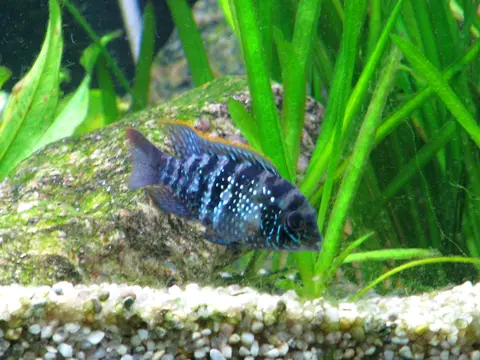 Blue acara Andinoacara pulcher 53 gal (200 L) · 72–82 °F (22–28 °C)
 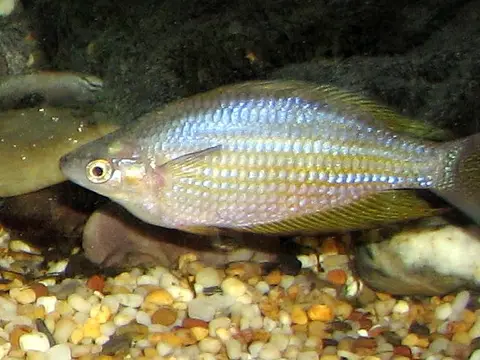 Eastern rainbowfish (splendid rainbowfish) Melanotaenia splendida 53 gal (200 L) · 72–82 °F (22–28 °C)
 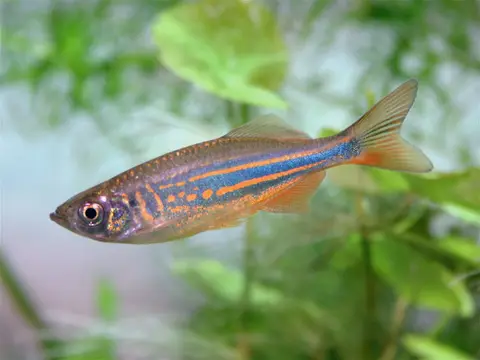 Giant danio Devario aequipinnatus 63 gal (240 L) · 68–79 °F (20–26 °C)
 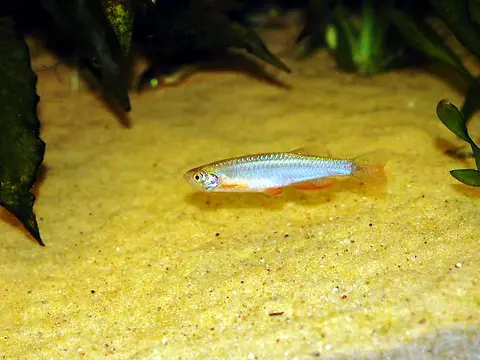 Pearl danio Danio albolineatus 21 gal (80 L) · 68–79 °F (20–26 °C)
 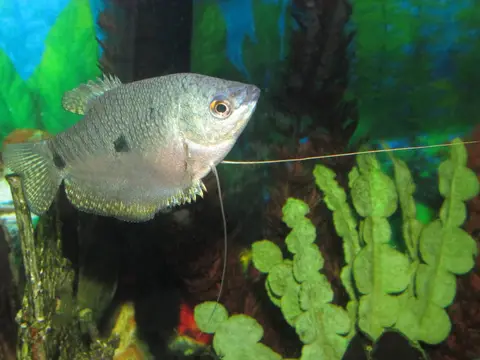 Blue gourami Trichopodus trichopterus 32 gal (120 L) · 72–82 °F (22–28 °C)
 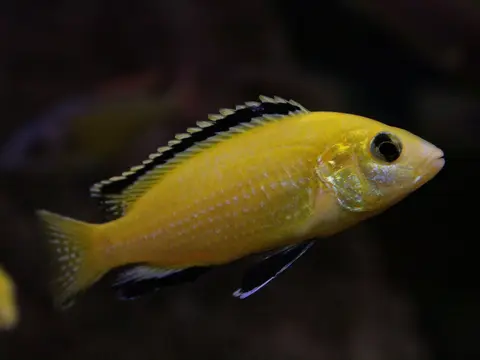 Yellow lab cichlid Labidochromis caeruleus 53 gal (200 L) · 75–82 °F (24–28 °C)
 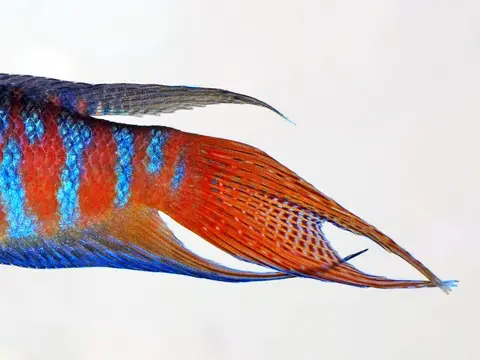 Paradise fish Macropodus opercularis 21 gal (80 L) · 61–79 °F (16–26 °C)
 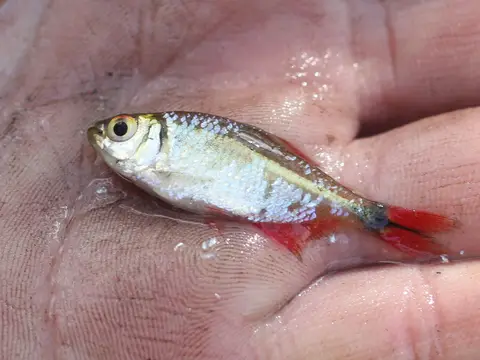 Buenos Aires tetra Hyphessobrycon anisitsi 40 gal (150 L) · 64–79 °F (18–26 °C)
 Check the compatibility of your whole tank →
What not to keep it with
Popular species you shouldn’t house with the Peacock cichlid (Aulonocara), and why.
- Discus: incompatible temperatures, incompatible pH
- Otocinclus catfish: incompatible pH, one may eat the other due to size
- Ram cichlid: incompatible temperatures, incompatible pH, one may eat the other due to size
- Celestial pearl danio: incompatible temperatures, incompatible pH, one may eat the other due to size
- Rummy-nose tetra: incompatible pH, one may eat the other due to size
- Cardinal tetra: incompatible pH, one may eat the other due to size
- Ember tetra: incompatible pH, one may eat the other due to size
- Neon tetra: incompatible pH, one may eat the other due to size
Recommended equipment
What you need to keep the Peacock cichlid (Aulonocara) healthy, checked against Amazon stock.


Frequently asked questions
How many liters does a Peacock cichlid (Aulonocara) need?
At least about 300 liters for a group of at least 4 fish. More space always helps keep the water stable.
What water temperature does the Peacock cichlid (Aulonocara) need?
Between 24 and 27 °C, with a pH of 7.5 to 8.5.
What fish can live with the Peacock cichlid (Aulonocara)?
Based on water, size and temperament, it fits with species such as Molly, Platy, Swordtail, Bronze cory and Blue acara. Use our compatibility calculator to check your whole tank.
Can the Peacock cichlid (Aulonocara) be kept with shrimp?
Not recommended: because of its size or instinct, it will eat shrimp.
You may also like
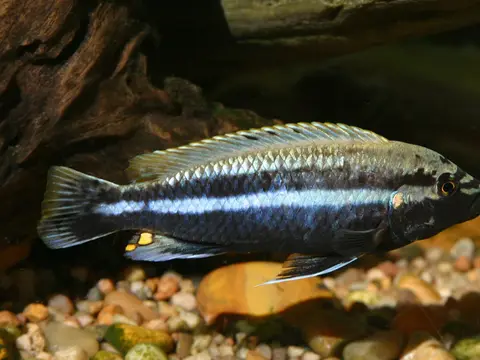
African cichlids → Freshwater fish → Complete aquarium guide →