If you buy through our links, Amazon pays us a small commission at no extra cost to you. That’s how we keep the site running. How we choose.
Contents
You'll hear it in almost every fish store: "Get this one, it'll keep your tank clean." Corydoras, plecos, otocinclus, shrimp and snails are sold as if they were a cleaning service with fins. It's one of the most widespread myths in the hobby and one of the deadliest, because many of these "cleaners" end up starving or outgrowing tanks that are far too small. The truth is simple: no fish or invertebrate cleans the tank for you. Some help with algae or pick up leftover food, but they also eat, produce waste and have their own needs. This guide covers what each one really does.
The short version: choose corydoras, plecos or shrimp because you like them and can meet their needs, not to save yourself work. All of them need their own food, and none replaces gravel vacuuming, water changes and glass cleaning.
Why the "cleaner fish" is a myth
What we call dirt in a tank is really three different things: waste (fish poop, uneaten food, dead leaves), dissolved compounds (ammonia, nitrite, nitrate) and algae. No animal eats poop or removes nitrate. Quite the opposite: every fish you add produces more waste and more nitrate. Algae appear because light and nutrients are out of balance; an algae eater can slow them down, but if you don't fix the cause they come back.
| Animal | What it really does | What it doesn't do | Adult size | Suggested tank |
|---|---|---|---|---|
| Corydoras | Sifts sand and picks up leftover food | Doesn't eat poop or algae | 1-3 in (3-7 cm) | 15 gallons (group of 6+) |
| Bristlenose pleco | Rasps soft algae and biofilm off glass and wood | Doesn't clean the substrate or remove tough algae | 5-6 in (12-15 cm) | 26-30 gallons |
| Common pleco | Eats algae when young; as an adult, mostly food and wood | Makes far more mess than it cleans | 12-20 in (30-50 cm) | 100+ gallons |
| Otocinclus | Grazes diatoms and soft algae on leaves and glass | Can't survive without algae and extra food | 1.5-2 in (4-5 cm) | 15 gallons, mature (group of 6) |
| Amano shrimp | Eats soft hair algae and leftovers | Won't wipe out a major algae outbreak | 1.5-2 in (4-5 cm) | 10 gallons |
| Nerite snail | Scrapes diatoms and green algae off glass and rocks | Doesn't eat poop or large debris | 1 in (2-3 cm) | 5 gallons |
Corydoras: scavengers, not janitors
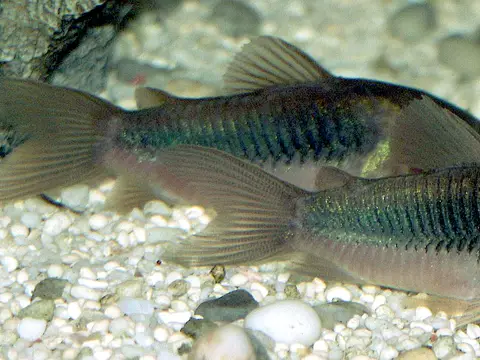
Corydoras such as the bronze cory or the panda cory spend all day rooting through the substrate with their barbels. It looks like cleaning, but they are hunting for food: they eat leftovers that fall to the bottom and leave poop alone. They are social fish that need groups of at least 6 of the same species, fine sand or smooth gravel (sharp, dirty gravel wears down their barbels) and clean water, because they are sensitive to high nitrate.
The big mistake is not feeding them "because they eat the leftovers". If the other fish are fast at the surface, almost nothing reaches the corys. They need a sinking bottom feeder food such as wafers or pellets, ideally right after lights out.
Plecos and otocinclus: size and hunger
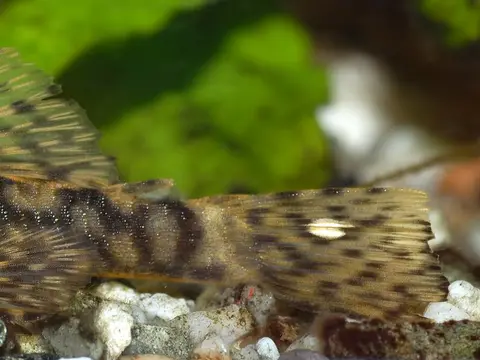
With plecos, size is everything. The bristlenose pleco tops out at 5-6 inches (12-15 cm) and is a good choice for tanks of around 30 gallons: it rasps soft algae but also needs driftwood to chew on, algae wafers and blanched vegetables (zucchini, cucumber). The common pleco (Pterygoplichthys), on the other hand, is sold at 2 inches and easily reaches 12-20 inches (30-50 cm). As an adult it loses interest in algae, eats everything and produces a huge amount of waste.
Don't buy a common pleco for a regular aquarium. It needs 100 gallons (400 L) or more and lives well over 15 years. Many end up rehomed or, worse, released into waterways, where they are a serious invasive species. If you want a pleco for a mid-sized tank, get a bristlenose. And never release any fish into the wild.
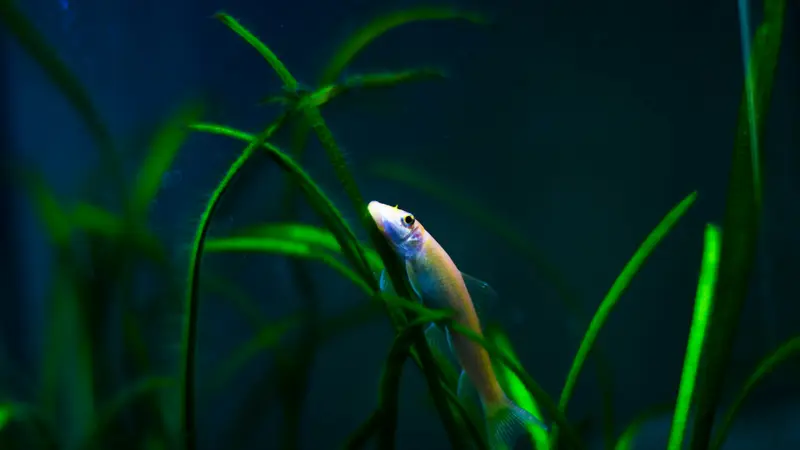
The otocinclus is a tiny 1.5-2 inch catfish that excels at eating diatoms (the brown algae of new tanks) and soft algae. Its problem is the opposite: it's so small and specialized that many starve, and plenty arrive at the store already weak. Add them only to a mature, planted tank with some algae, in a group of 6 or more, and offer algae wafers and blanched zucchini from day one.
Amano shrimp and nerite snails
The Amano shrimp is probably the best real clean-up crew: it eats soft hair algae, biofilm and leftover food, and works in groups. Even so, it won't perform miracles on tough algae like black beard algae, and if you feed lots of prepared food it will prefer that to algae. It needs a copper-free tank without large fish that would eat it.
Nerite snails scrape diatoms and green algae off glass, rocks and tough leaves without harming plants. They don't breed in freshwater, although females leave small, hard white eggs on decor that never hatch and are hard to remove. They like to escape, so keep a lid on. If the tank doesn't have enough algae, they also need algae wafers or vegetables.
They all need their own food
This is the most overlooked point. A well-kept tank has little algae and little leftover food, so the cleaners can't find enough to eat on their own. And once you feed them properly, they eat less algae, which is normal.
- Corydoras: sinking wafers or pellets, frozen food now and then.
- Bristlenose and otocinclus: algae or spirulina wafers, blanched vegetables and, for the bristlenose, driftwood.
- Shrimp and snails: biofilm, a little shrimp food and vegetables.
To get portions right without fouling the water, our guide on how much and how often to feed fish gives general rules.
No animal replaces maintenance
What really keeps a tank clean is a simple routine, and no fish can do it for you:
| Task | How often | Tool |
|---|---|---|
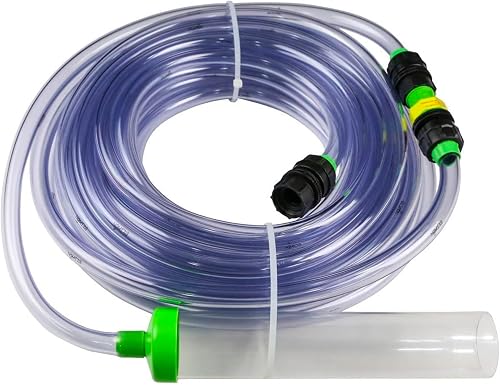
| 20-30% water change while vacuuming the substrate | Weekly | Gravel vacuum |
| Clean the glass | Weekly or as needed | Magnetic algae cleaner or scraper |
| Rinse filter media in tank water | Every 3-6 weeks depending on the filter | Bucket of old tank water |
| Trim plants and remove dead leaves | Every 1-2 weeks | Scissors and tweezers |
| Test ammonia, nitrite and nitrate | Weekly at first, then monthly | Water test kit |
Our water change guide walks through the routine step by step, and if algae are what's bothering you, start with our guide to aquarium algae: fixing light and nutrients works far better than adding more animals.
Common mistakes
- Buying a fish "to clean" without checking its adult size.
- Putting a common pleco in a 15-30 gallon tank.
- Keeping one or two corydoras alone instead of a group.
- Not feeding cleaners because "they eat the leftovers".
- Adding otocinclus to a freshly cycled tank with no algae.
- Stacking up clean-up crew to hide an overfeeding problem.
- Skipping gravel vacuuming and water changes because you have "cleaners".
Recommended gear for this guide
Frequently asked questions
Is there a fish that eats other fish's poop?
No. No aquarium fish or invertebrate lives on poop. Waste is removed with a gravel vacuum during water changes, and part of it is trapped by the filter. Adding more fish only increases the amount of waste.
Which fish cleans aquarium glass?
Bristlenose plecos, otocinclus and nerite snails scrape soft algae and diatoms off the glass, but they won't leave it spotless or remove tough algae. A magnetic algae cleaner or a scraper once a week is still necessary.
How many corydoras should I keep?
At least 6 of the same species. They are social fish that get stressed and hide when kept alone or in pairs. A tank of around 15 gallons with a sand substrate is a good starting point for a group of a small species.
Can I keep a pleco in a 15-gallon tank?
Not a common pleco, which reaches 12 to 20 inches. A bristlenose stays at 5 to 6 inches and suits tanks of around 30 gallons. For 15 gallons, a group of otocinclus or a few nerite snails is a better fit.
Do snails clean the tank?
Some help: nerites eat algae off the glass and other snails pick at leftover food. But they also produce waste, and a snail population boom usually means too much food. None of them replaces gravel vacuuming and water changes.
You may also like
- GuideHow Many Fish Can You Put in a Tank? Stocking Done Right
- GuideHow to set up a coldwater aquarium: tank size, filter, plants, fish
- GuideHow to Breed Guppies: Ratio, Gestation, Fry Care and Surplus Fish
 ProfileBronze cory
 Gear reviewFood for bottom feeders
 ProfileBristlenose pleco
 Gear reviewAquarium algae scrapers and magnets
 Gear reviewAquarium gravel vacuums
Water care & maintenance → See all guides → Complete aquarium guide →