If you buy through our links, Amazon pays us a small commission at no extra cost to you. That’s how we keep the site running. How we choose.
Contents
Overview
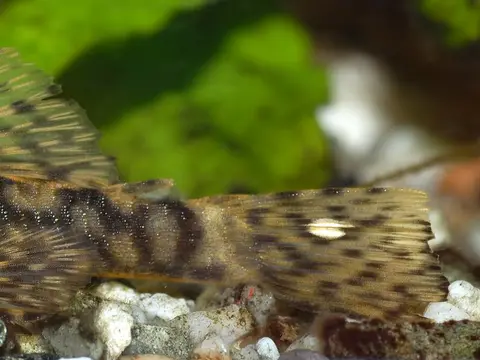
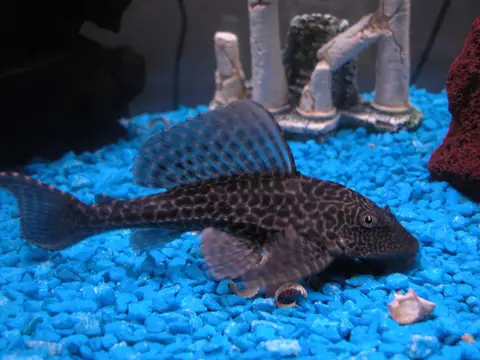
The bristlenose pleco is the pleco most aquarists should actually buy. This armored, sucker-mouthed catfish comes from South American rivers and usually stays around 5 in (12-13 cm) in the aquarium. Adult males grow fleshy, branching tentacles on the snout, the "bristles" that give the fish its name; females have only a few short ones along the edge of the mouth.
Almost all bristlenoses sold today are captive-bred, so they are hardy and adaptable. Besides the classic brown form you will find albino, calico and long-fin varieties. Hobbyists love them because they graze algae constantly, stay peaceful and, unlike the common pleco, never turn into a foot-long monster. A great choice for beginners who want a real algae eater.
Care and tank setup
One fish does well in about 26-30 gallons (100 L) with plenty of floor space. The key item is real driftwood: bristlenoses rasp on it and the fibre seems to help their digestion. Add caves or ceramic tubes too, since they hide during the day and become active at dusk.
- Strong filtration, good oxygen and some water movement.
- Weekly water changes of 25-30%; plecos produce a lot of waste.
- Sand or fine, rounded gravel to protect the mouth.
They are peaceful with fish and shrimp, but two males in a small tank will fight over caves. The classic mistake is assuming they "live off algae" and never feeding them; in a clean tank they slowly starve. Avoid large, pushy cichlids that steal food and shelter.
Feeding
Bristlenoses are mainly herbivores. Offer sinking algae or spirulina wafers most days, plus blanched vegetables several times a week: zucchini, cucumber, shelled peas or spinach. Algae and driftwood round out the diet, and an occasional protein treat is fine. Feed right after lights-out and remove leftover vegetables within 24 hours so they do not foul the water.
Breeding
This is one of the easiest plecos to breed. The male claims a snug cave, lures in a female and she sticks a clutch of orange eggs to the ceiling. He guards and fans them and keeps watch over the fry until they wander off, a few days after hatching. The young eat wafers and veggies from the start. Give a pair enough caves and they will often breed without any help.
Compatible tank mates
Species from our database that share water parameters, size and temperament with the Bristlenose pleco. Calculated from the data in each profile.
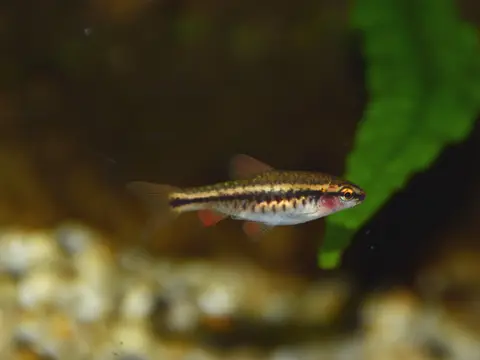 Cherry barb Puntius titteya 16 gal (60 L) · 73–81 °F (23–27 °C)
 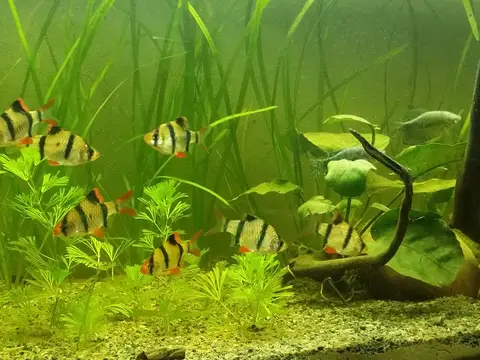 Tiger barb Puntigrus tetrazona 26 gal (100 L) · 72–79 °F (22–26 °C)
 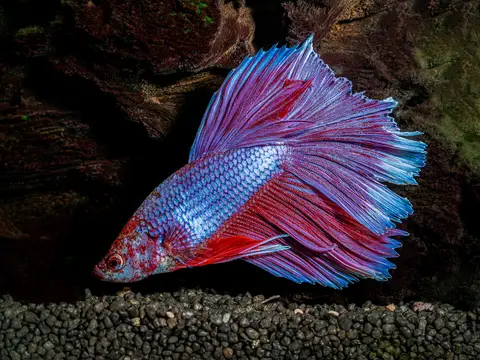 Betta fish Betta splendens 7 gal (25 L) · 75–82 °F (24–28 °C)
 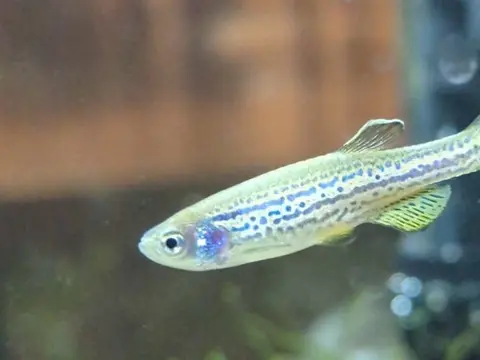 Zebra danio Danio rerio 16 gal (60 L) · 64–77 °F (18–25 °C)
 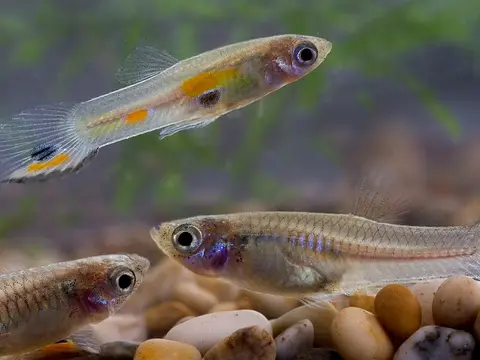 Guppy Poecilia reticulata 14 gal (54 L) · 72–82 °F (22–28 °C)
 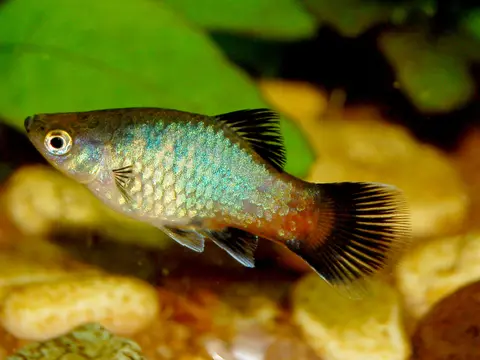 Platy Xiphophorus maculatus 16 gal (60 L) · 68–79 °F (20–26 °C)
 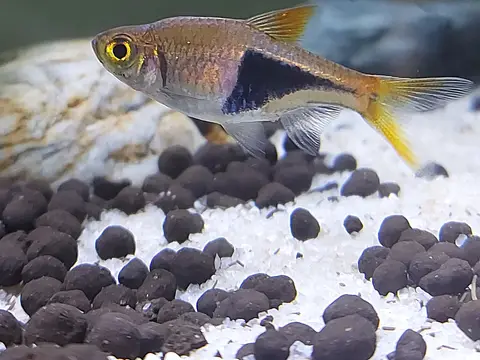 Harlequin rasbora Trigonostigma heteromorpha 16 gal (60 L) · 72–81 °F (22–27 °C)
 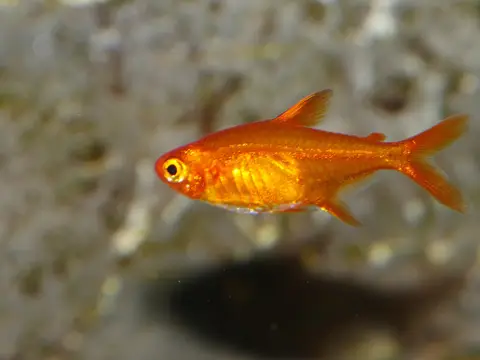 Ember tetra Hyphessobrycon amandae 11 gal (40 L) · 73–82 °F (23–28 °C)
 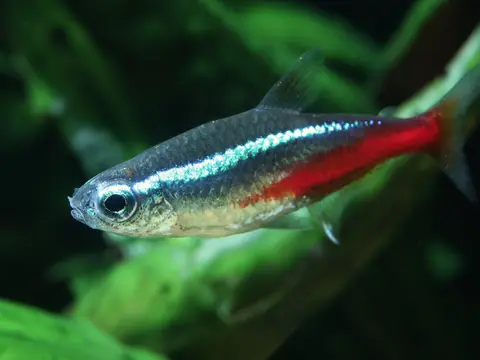 Neon tetra Paracheirodon innesi 16 gal (60 L) · 68–79 °F (20–26 °C)
 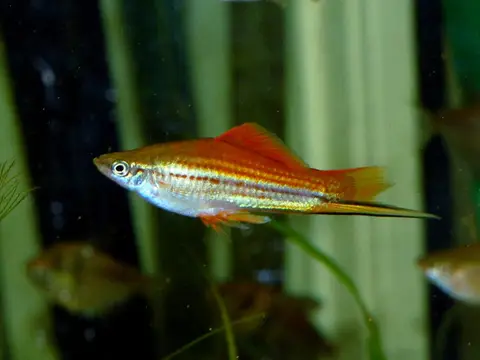 Swordtail Xiphophorus hellerii 32 gal (120 L) · 72–81 °F (22–27 °C)
 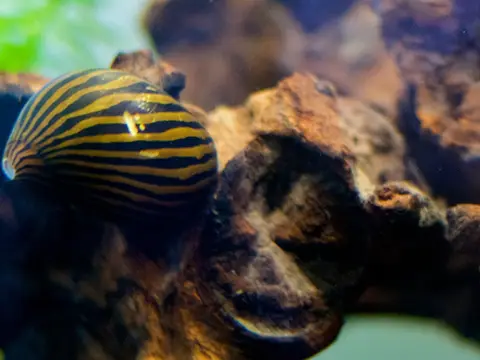 Nerite snail Neritina natalensis 5 gal (20 L) · 72–82 °F (22–28 °C)
 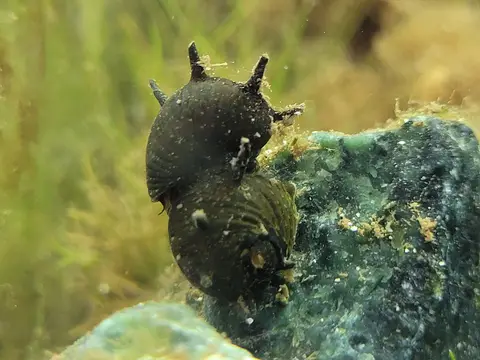 Horned nerite snail Clithon corona 5 gal (20 L) · 72–82 °F (22–28 °C)
 Check the compatibility of your whole tank →
What not to keep it with
Popular species you shouldn’t house with the Bristlenose pleco, and why.
Recommended equipment
What you need to keep the Bristlenose pleco healthy, checked against Amazon stock.


Frequently asked questions
How many liters does a Bristlenose pleco need?
At least about 100 liters. More space always helps keep the water stable.
What water temperature does the Bristlenose pleco need?
Between 22 and 27 °C, with a pH of 6 to 7.6.
What fish can live with the Bristlenose pleco?
Based on water, size and temperament, it fits with species such as Cherry barb, Tiger barb, Betta fish, Zebra danio and Guppy. Use our compatibility calculator to check your whole tank.
Can the Bristlenose pleco be kept with shrimp?
Yes: it usually won’t eat adult shrimp, though some shrimplets may get picked off. A tank with plenty of moss gives the babies cover.
You may also like
Plecos and suckermouth catfish → Freshwater fish → Complete aquarium guide →