If you buy through our links, Amazon pays us a small commission at no extra cost to you. That’s how we keep the site running. How we choose.
Contents
Overview
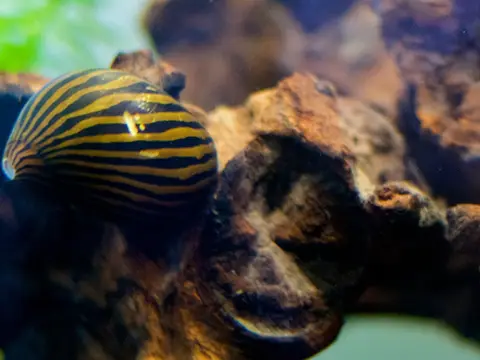
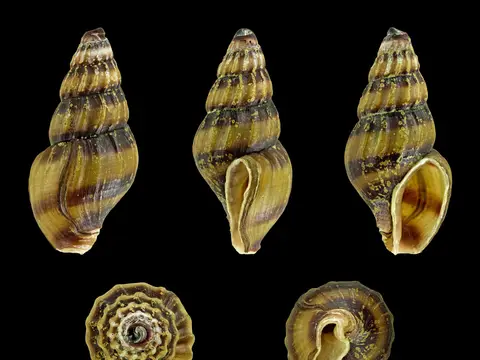
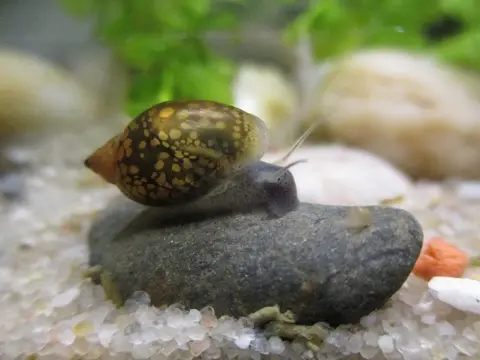
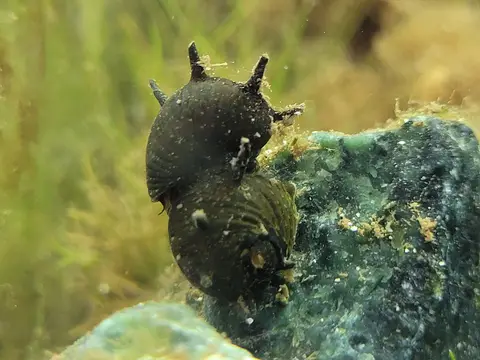
The horned nerite snail (Clithon corona) is a small snail from estuaries and coastal rivers of the Indo-Pacific. Its black or brown shell, sometimes banded with yellow, carries a crown of spines that gives it a very distinctive look. It stays at about 0.6-0.8 inch (1.5-2 cm).
It is one of the best algae eaters for small tanks: it scrapes glass, rocks and leaves nonstop, leaves plants alone and, unlike many snails, cannot breed in fresh water, so it never becomes a pest. Ideal for nano tanks, shrimp tanks and beginners who want help with algae without surprises.
Care and tank setup
It is hardy, but its shell needs mineral-rich water.
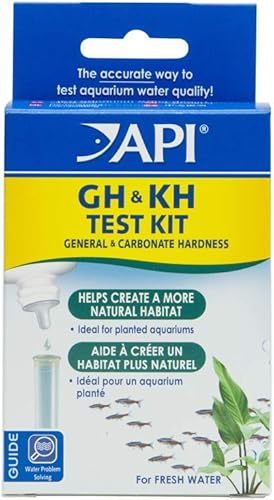
- Water: medium to hard with neutral to alkaline pH. In soft, acidic water the shell erodes, especially at the tip and spines.
- Calcium: if your water is soft, add a calcium source (mineral salts, limestone or cuttlebone) as long as it doesn't harm other tank inhabitants.
- Lid: essential. Nerites often crawl out and die once they dry out.
- Acclimation: slow drip. Copper is toxic to snails as well.
- Upside down: if one lands on its back on smooth substrate it may not flip itself; turn it over.
It lives well with peaceful fish and shrimp. Avoid loaches, pufferfish and crabs, which eat snails, and brand-new tanks with no algae.
Feeding
It is an herbivore that eats green algae, diatoms and biofilm. In very clean tanks, supplement with spirulina or algae wafers and blanched vegetables (zucchini). If it stops moving for days or the shell looks badly eroded, check the available food and your water hardness. One snail is plenty for a nano tank; more can run out of food.
Breeding
It does not breed in fresh water. Females lay small, hard white eggs on rocks, wood and glass, but the larvae need brackish water to develop and never make it in the aquarium. Those white dots are hard to remove and can spoil the look of your hardscape; scrape them off with a razor blade or plastic card.
Compatible tank mates
Species from our database that share water parameters, size and temperament with the Horned nerite snail. Calculated from the data in each profile.
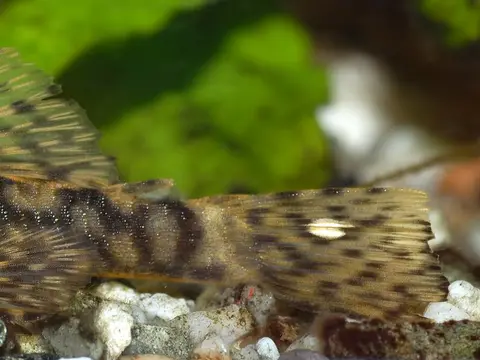 Bristlenose pleco Ancistrus sp. 26 gal (100 L) · 72–81 °F (22–27 °C)
 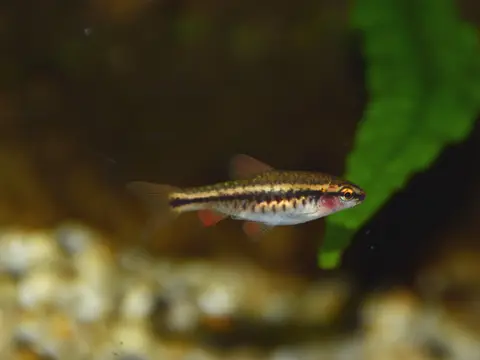 Cherry barb Puntius titteya 16 gal (60 L) · 73–81 °F (23–27 °C)
 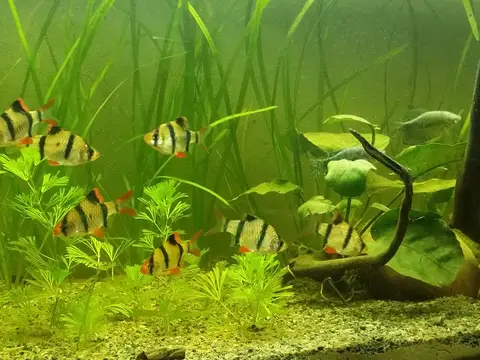 Tiger barb Puntigrus tetrazona 26 gal (100 L) · 72–79 °F (22–26 °C)
 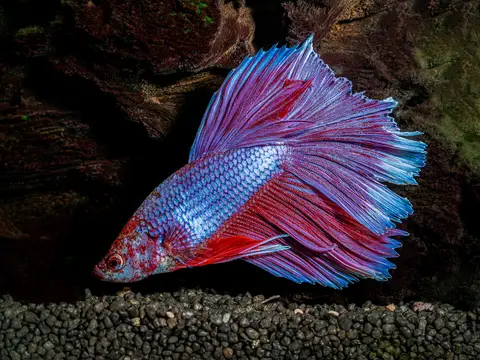 Betta fish Betta splendens 7 gal (25 L) · 75–82 °F (24–28 °C)
 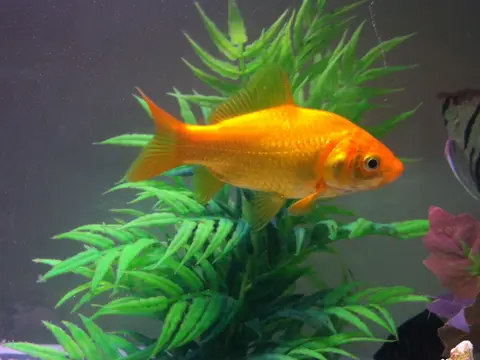 Common goldfish Carassius auratus 79 gal (300 L) · 50–75 °F (10–24 °C)
 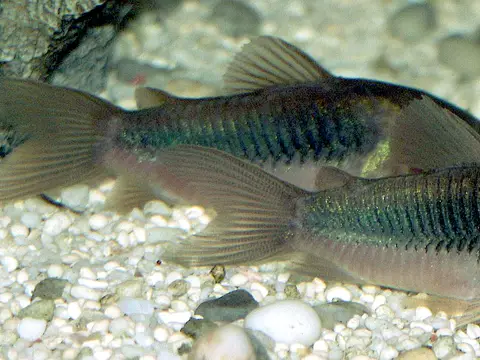 Bronze cory Corydoras aeneus 21 gal (80 L) · 72–81 °F (22–27 °C)
 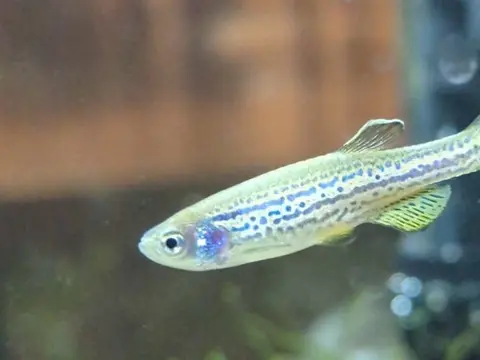 Zebra danio Danio rerio 16 gal (60 L) · 64–77 °F (18–25 °C)
 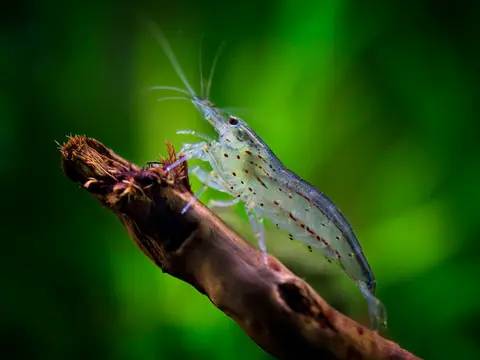 Amano shrimp Caridina multidentata 11 gal (40 L) · 64–82 °F (18–28 °C)
 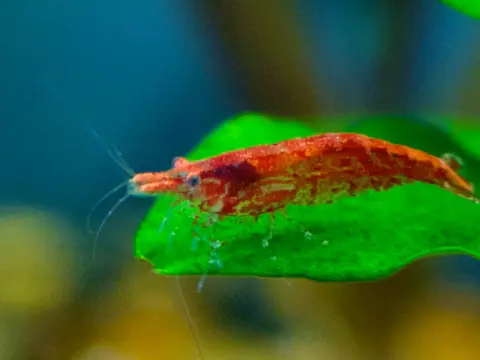 Cherry shrimp Neocaridina davidi 5 gal (20 L) · 64–81 °F (18–27 °C)
 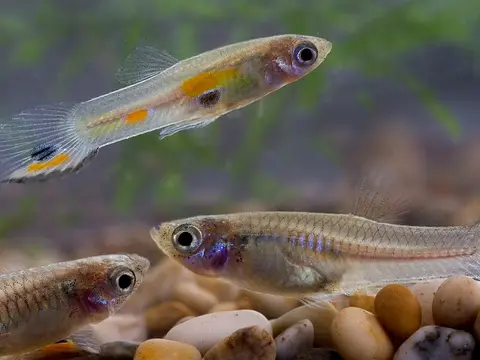 Guppy Poecilia reticulata 14 gal (54 L) · 72–82 °F (22–28 °C)
 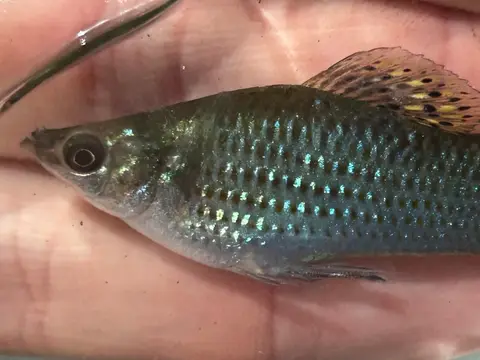 Molly Poecilia sphenops 26 gal (100 L) · 75–82 °F (24–28 °C)
 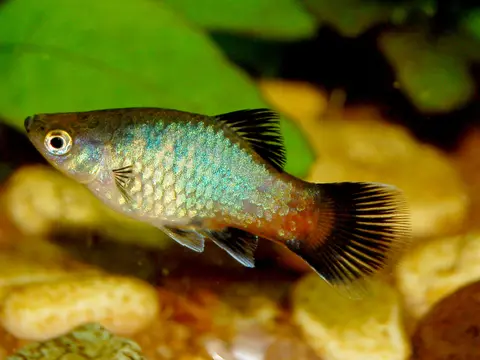 Platy Xiphophorus maculatus 16 gal (60 L) · 68–79 °F (20–26 °C)
 Check the compatibility of your whole tank →
What not to keep it with
Popular species you shouldn’t house with the Horned nerite snail, and why.
- Clown loach: eats snails
- Oscar: eats snails
Recommended equipment
What you need to keep the Horned nerite snail healthy, checked against Amazon stock.


Frequently asked questions
How many liters does a Horned nerite snail need?
At least about 20 liters. More space always helps keep the water stable.
What water temperature does the Horned nerite snail need?
Between 22 and 28 °C, with a pH of 7 to 8.5.
What fish can live with the Horned nerite snail?
Based on water, size and temperament, it fits with species such as Bristlenose pleco, Cherry barb, Tiger barb, Betta fish and Common goldfish. Use our compatibility calculator to check your whole tank.