If you buy through our links, Amazon pays us a small commission at no extra cost to you. That’s how we keep the site running. How we choose.
Contents
Overview
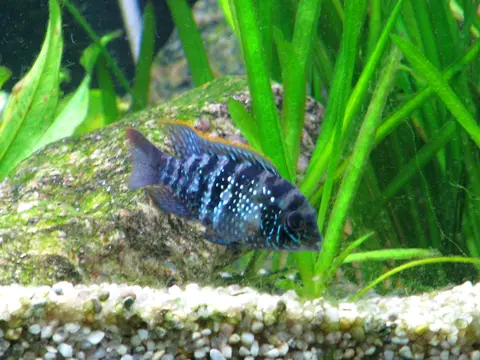
The blue acara (Andinoacara pulcher) has been an aquarium classic for nearly a century. It comes from northern South America (Colombia, Venezuela and Trinidad) and has a sturdy gray-green body covered in striking electric-blue spots and lines, especially on the face. A paler color form is also available.
It is a medium-sized cichlid, around 6 inches (15 cm), tough and relatively mellow for its family. It adapts to almost any tap water and quickly learns to recognize its owner. It is an excellent introduction to cichlids for anyone with a medium-to-large tank.
Care and tank setup
For a pair, plan on about a 55-gallon (200 L) tank, 4 feet (120 cm) long. If they share the tank with other cichlids, go bigger.
- Décor: sand or fine gravel, flat stones, caves and driftwood. They dig, especially when breeding.
- Plants: they usually leave sturdy, well-rooted plants alone, though they may uproot some; anubias, ferns and large crypts work well.
- Water: tolerates soft or hard water; what matters is clean water, good filtration and weekly 25-30% changes.
- Tankmates: medium, peaceful fish too big to swallow: large tetras, robust barbs, plecos, larger corydoras or angelfish in roomy tanks.
Avoid very small fish (neons, baby guppies) and shrimp. Pairs become territorial when spawning. Always keep the tank cycled, filtered and heated.
Feeding
An undemanding omnivore. A quality cichlid pellet makes a good staple, supplemented with frozen brine shrimp, bloodworms, mysis or krill and some plant-based food. Feed two small meals a day and avoid overfeeding, as leftovers foul the water quickly.
Breeding
Blue acaras breed readily. Once a pair forms, they clean a flat stone where the female lays several hundred eggs. Both parents guard them and, after hatching, move the wrigglers into pits dug in the sand until they swim freely. It is a great fish for watching cichlid parenting at home.
Compatible tank mates
Species from our database that share water parameters, size and temperament with the Blue acara. Calculated from the data in each profile.
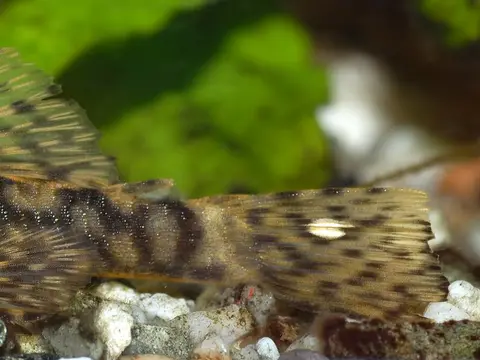 Bristlenose pleco Ancistrus sp. 26 gal (100 L) · 72–81 °F (22–27 °C)
 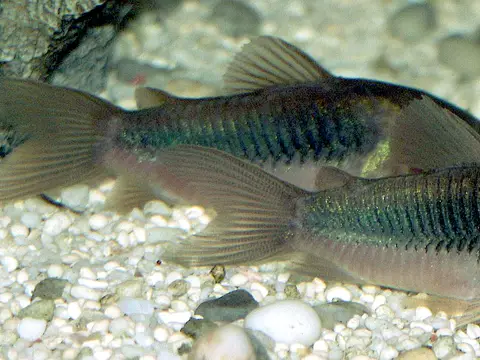 Bronze cory Corydoras aeneus 21 gal (80 L) · 72–81 °F (22–27 °C)
 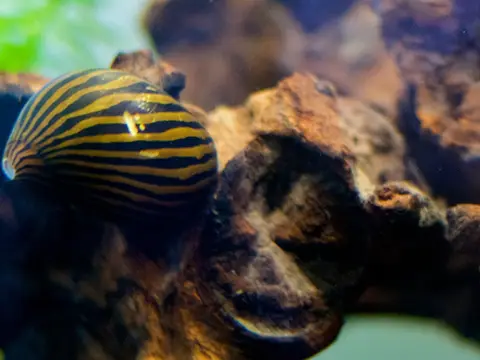 Nerite snail Neritina natalensis 5 gal (20 L) · 72–82 °F (22–28 °C)
 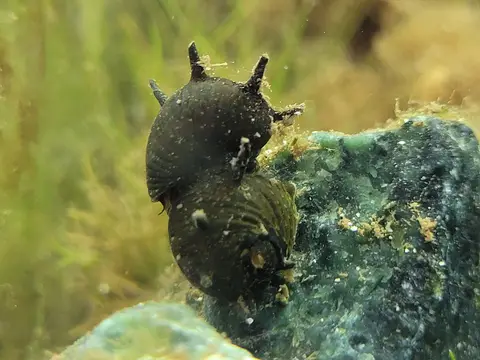 Horned nerite snail Clithon corona 5 gal (20 L) · 72–82 °F (22–28 °C)
 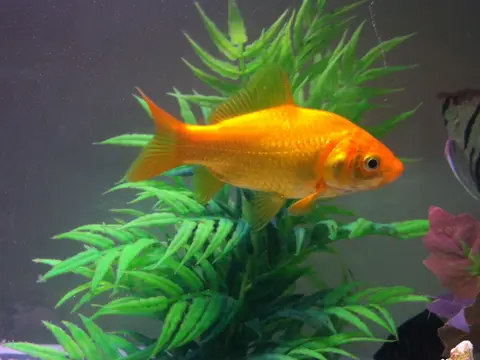 Common goldfish Carassius auratus 79 gal (300 L) · 50–75 °F (10–24 °C)
 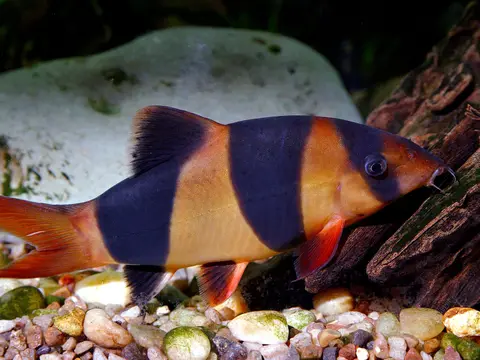 Clown loach Chromobotia macracanthus 132 gal (500 L) · 77–86 °F (25–30 °C)
 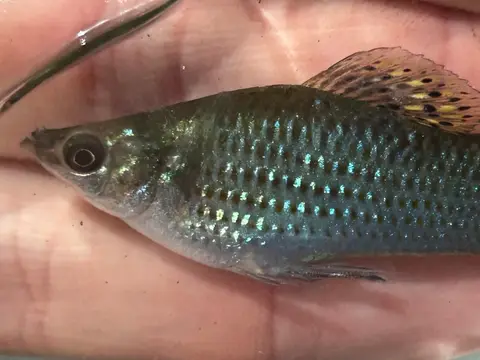 Molly Poecilia sphenops 26 gal (100 L) · 75–82 °F (24–28 °C)
 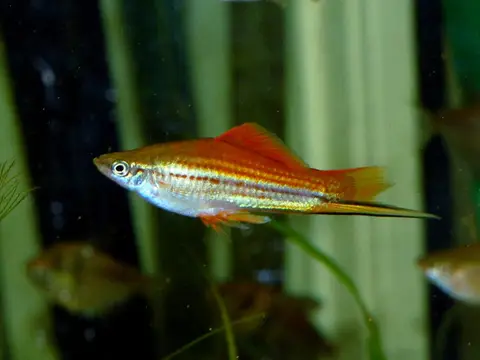 Swordtail Xiphophorus hellerii 32 gal (120 L) · 72–81 °F (22–27 °C)
 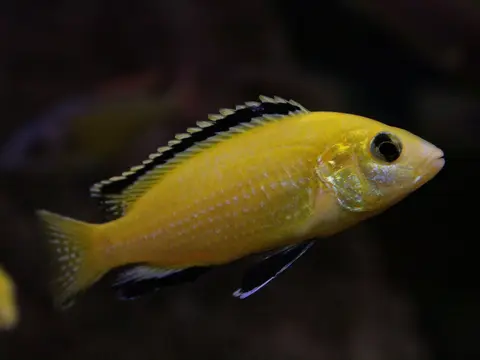 Yellow lab cichlid Labidochromis caeruleus 53 gal (200 L) · 75–82 °F (24–28 °C)
 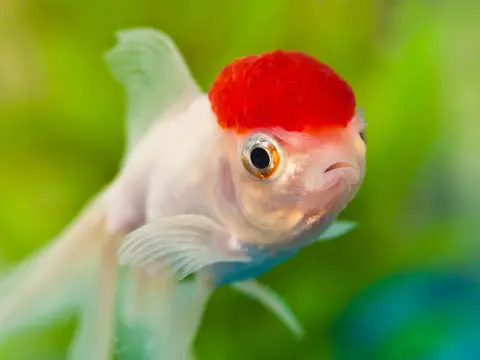 Oranda goldfish Carassius auratus 40 gal (150 L) · 59–75 °F (15–24 °C)
 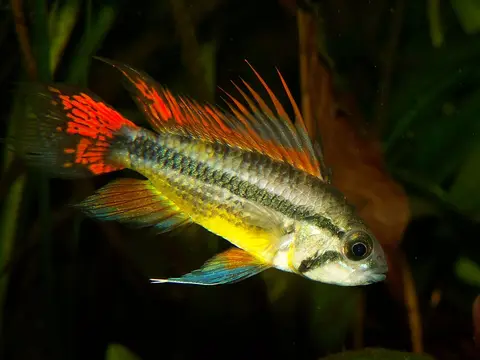 Cockatoo dwarf cichlid Apistogramma cacatuoides 16 gal (60 L) · 75–82 °F (24–28 °C)
 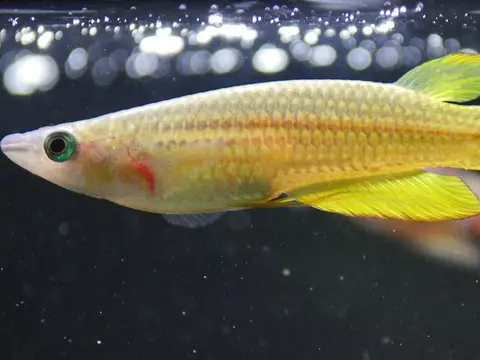 Golden wonder killifish (striped panchax) Aplocheilus lineatus 26 gal (100 L) · 72–81 °F (22–27 °C)
 Check the compatibility of your whole tank →
What not to keep it with
Popular species you shouldn’t house with the Blue acara, and why.
- Cherry barb: one may eat the other due to size
- Panda cory: one may eat the other due to size
- Zebra danio: one may eat the other due to size
- Guppy: one may eat the other due to size
- Otocinclus catfish: one may eat the other due to size
- Ram cichlid: one may eat the other due to size
- Harlequin rasbora: one may eat the other due to size
- Celestial pearl danio: one may eat the other due to size
Recommended equipment
What you need to keep the Blue acara healthy, checked against Amazon stock.


Frequently asked questions
How many liters does a Blue acara need?
At least about 200 liters. More space always helps keep the water stable.
What water temperature does the Blue acara need?
Between 22 and 28 °C, with a pH of 6.5 to 8.
What fish can live with the Blue acara?
Based on water, size and temperament, it fits with species such as Bristlenose pleco, Bronze cory, Nerite snail, Horned nerite snail and Common goldfish. Use our compatibility calculator to check your whole tank.
Can the Blue acara be kept with shrimp?
Not recommended: because of its size or instinct, it will eat shrimp.