If you buy through our links, Amazon pays us a small commission at no extra cost to you. That’s how we keep the site running. How we choose.
Contents
Overview
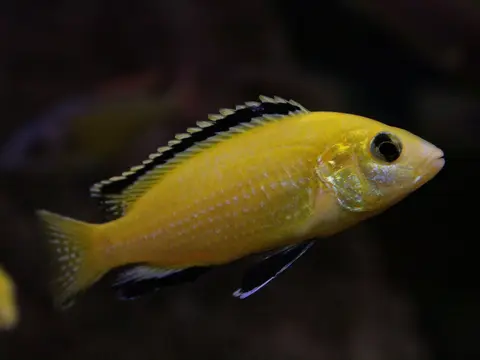
The yellow lab, also sold as the electric yellow cichlid, is the yellow form of Labidochromis caeruleus and probably the most recommended Lake Malawi cichlid for beginners. It is a mbuna, one of the rock-dwelling cichlids of the lake, lemon yellow with black edging on the dorsal and pelvic fins, strongest in dominant males.
People love it because males and females are both yellow, it is busy all day, and it is noticeably milder than most mbuna. That does not make it a tropical community fish: like everything from Lake Malawi it needs hard, alkaline water and should only live with other African cichlids of similar temperament. It is a great first fish for a Malawi rock tank.
Care and tank setup
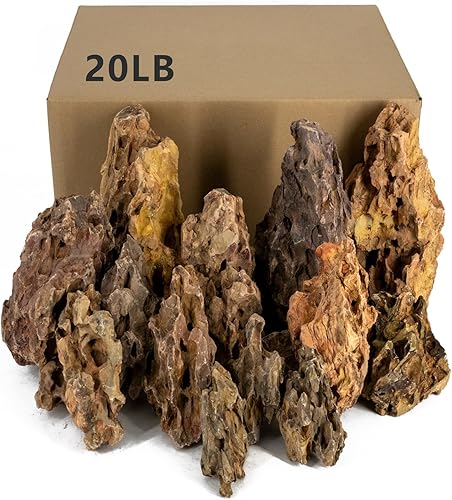
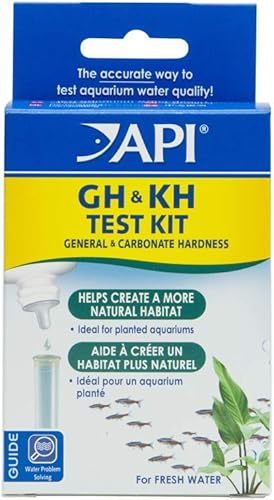
For a small group (one male and three or four females) plan on 55 gallons (200 liters) with at least 40 inches (100 cm) of length; if you mix it with other mbuna, 75 gallons (300 liters) or more is better. Water must be hard and alkaline: if your tap water is soft, use Malawi buffer salts or an aragonite or crushed coral substrate to hold the pH up.
- Aquascape: lots of securely stacked rock with crevices and caves over sand. This splits up territories and reduces aggression.
- Plants: few survive; anubias and vallisneria handle hard water best.
- Tankmates: other mild-mannered mbuna in different colors, such as blue species. Avoid same-colored fish that could hybridize.
- Common mistakes: mixing it with soft-water fish, keeping too many males, or offering too little rockwork.
A cycled tank, strong filtration, a heater and weekly 30% water changes are essential.
Feeding
Unlike the more herbivorous mbuna, yellow labs feed mostly on small invertebrates among the rocks in the wild, though they happily take plant matter too. Offer a quality Malawi cichlid pellet with spirulina, supplemented with frozen mysis or brine shrimp. Skip beef heart and avoid overfeeding: small portions once or twice a day help prevent Malawi bloat.
Breeding
Yellow labs are maternal mouthbrooders. After courtship the female picks up the eggs and holds them in her mouth for about three to four weeks, barely eating. She then releases 10 to 25 fully formed fry that eat crushed pellets from day one. They breed readily in aquariums. To save the fry, move the holding female to a separate tank shortly before release or provide plenty of hiding spots.
Compatible tank mates
Species from our database that share water parameters, size and temperament with the Yellow lab cichlid. Calculated from the data in each profile.
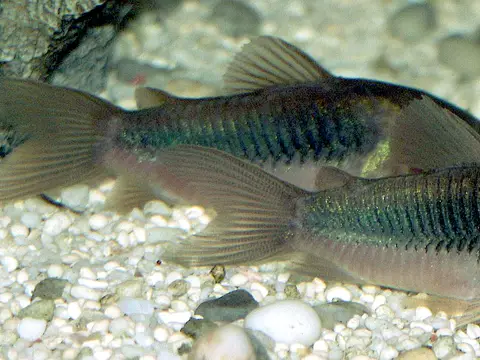 Bronze cory Corydoras aeneus 21 gal (80 L) · 72–81 °F (22–27 °C)
 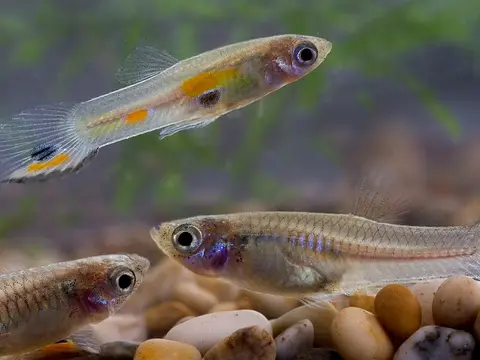 Guppy Poecilia reticulata 14 gal (54 L) · 72–82 °F (22–28 °C)
 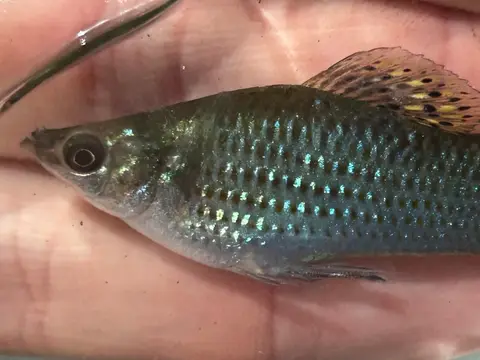 Molly Poecilia sphenops 26 gal (100 L) · 75–82 °F (24–28 °C)
 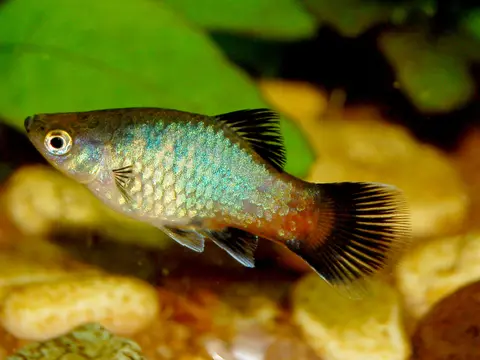 Platy Xiphophorus maculatus 16 gal (60 L) · 68–79 °F (20–26 °C)
 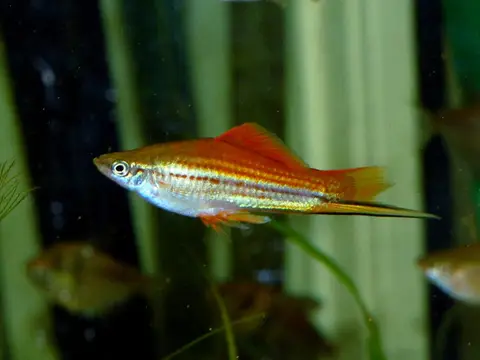 Swordtail Xiphophorus hellerii 32 gal (120 L) · 72–81 °F (22–27 °C)
 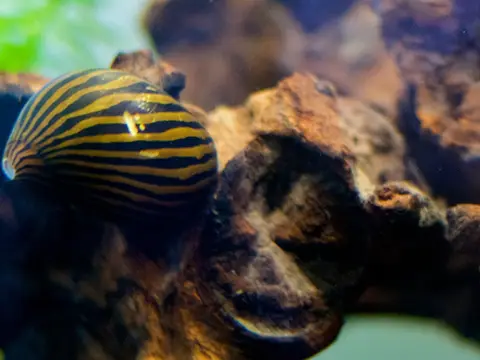 Nerite snail Neritina natalensis 5 gal (20 L) · 72–82 °F (22–28 °C)
 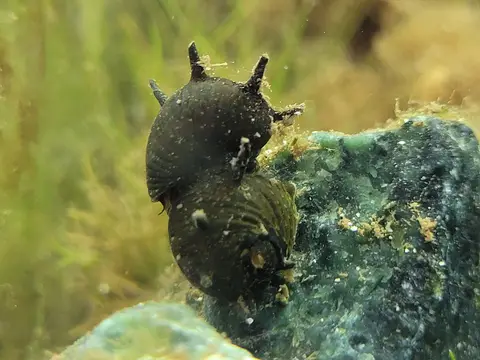 Horned nerite snail Clithon corona 5 gal (20 L) · 72–82 °F (22–28 °C)
 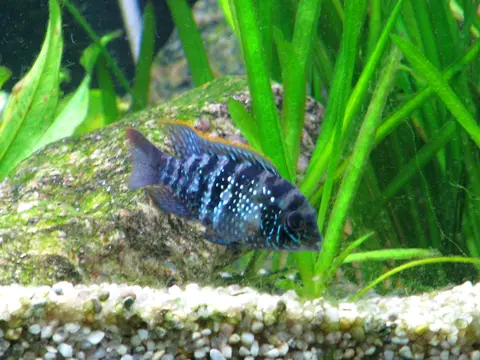 Blue acara Andinoacara pulcher 53 gal (200 L) · 72–82 °F (22–28 °C)
 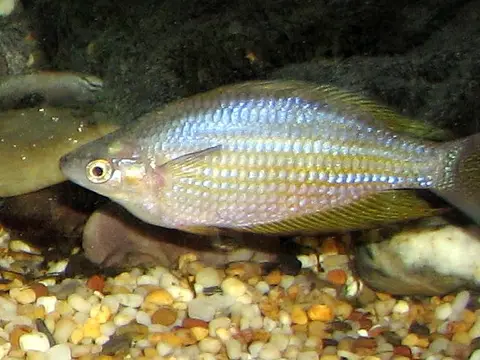 Eastern rainbowfish (splendid rainbowfish) Melanotaenia splendida 53 gal (200 L) · 72–82 °F (22–28 °C)
 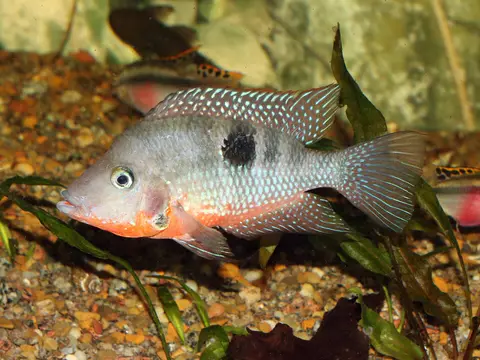 Firemouth cichlid Thorichthys meeki 53 gal (200 L) · 75–84 °F (24–29 °C)
 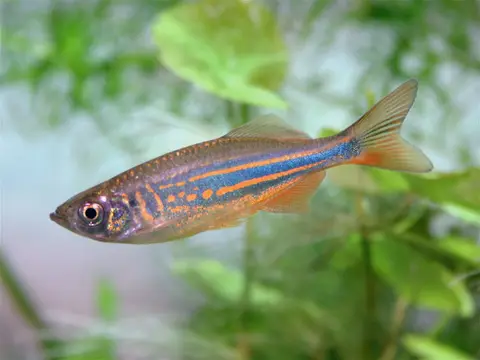 Giant danio Devario aequipinnatus 63 gal (240 L) · 68–79 °F (20–26 °C)
 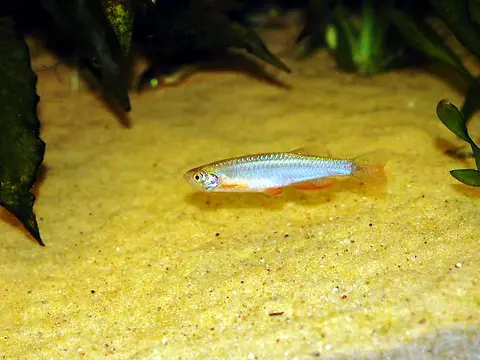 Pearl danio Danio albolineatus 21 gal (80 L) · 68–79 °F (20–26 °C)
 Check the compatibility of your whole tank →
What not to keep it with
Popular species you shouldn’t house with the Yellow lab cichlid, and why.
- Discus: incompatible temperatures, incompatible pH, incompatible water hardness
- Oscar: incompatible pH, one may eat the other due to size, incompatible temperaments
- Ram cichlid: incompatible pH
- Celestial pearl danio: incompatible temperatures, incompatible pH, one may eat the other due to size
- Rummy-nose tetra: incompatible pH
- Cardinal tetra: incompatible pH, incompatible water hardness
- Ember tetra: incompatible pH, one may eat the other due to size
- Amano shrimp: eats shrimp
Recommended equipment
What you need to keep the Yellow lab cichlid healthy, checked against Amazon stock.


Frequently asked questions
How many liters does a Yellow lab cichlid need?
At least about 200 liters for a group of at least 4 fish. More space always helps keep the water stable.
What water temperature does the Yellow lab cichlid need?
Between 24 and 28 °C, with a pH of 7.5 to 8.5.
What fish can live with the Yellow lab cichlid?
Based on water, size and temperament, it fits with species such as Bronze cory, Guppy, Molly, Platy and Swordtail. Use our compatibility calculator to check your whole tank.
Can the Yellow lab cichlid be kept with shrimp?
Not recommended: because of its size or instinct, it will eat shrimp.
You may also like
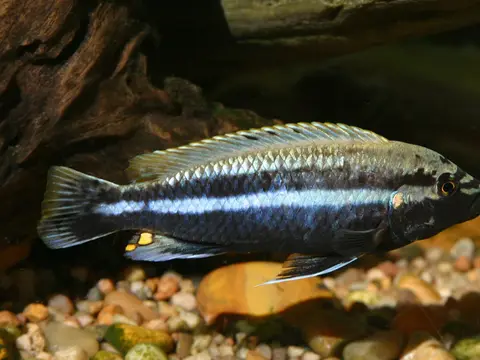 ProfileAuratus cichlid
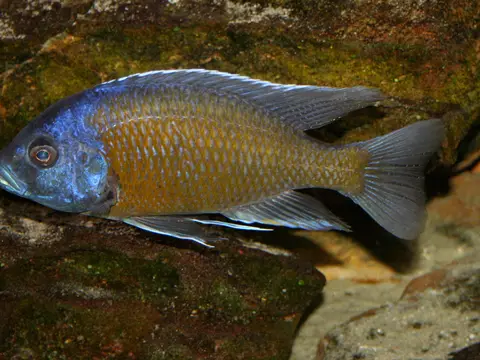 ProfileBorleyi (Copadichromis borleyi)
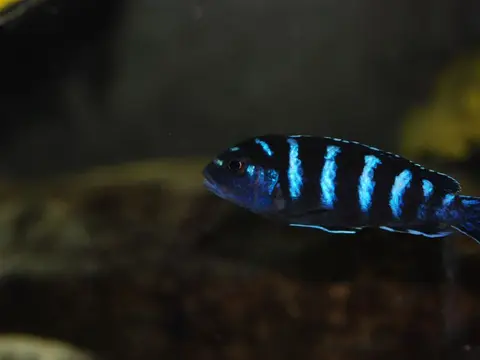 ProfileDemasoni cichlid
- GuideAquarium Water Parameters: Ideal Ranges and How to Test
- GuideHow to Raise or Lower Aquarium pH Safely (Plus KH and GH)
 Gear reviewLarge aquariums (55 gallons and up)
 Gear reviewCanister filters
- CalculatorFish compatibility checker
African cichlids → Freshwater fish → Complete aquarium guide →