If you buy through our links, Amazon pays us a small commission at no extra cost to you. That’s how we keep the site running. How we choose.
Contents
Overview
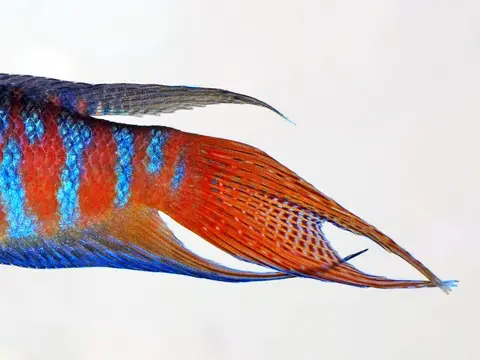
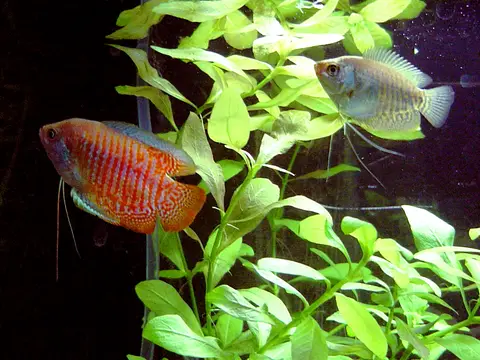
The paradise fish was one of the very first tropical fish kept in European aquariums, back in the late 1800s. It comes from southern China, Taiwan, Vietnam and the Korean peninsula, where it lives in rice paddies, ditches and slow ponds. Males are striking, with red-orange and blue-green bars, long pointed fins and a blue spot on the gill cover. Albino, blue and black forms are also available.
Its big selling point is toughness: it handles a wide temperature range and, in a heated home, can live without an aquarium heater. Its weak point is temperament. Males are very aggressive toward each other and may harass small or slow fish, so it does best in a tank planned around it rather than in a random community.
Care and tank setup
One male, alone or with one or two females, needs at least a 20-gallon (80 L) cycled tank with gentle filtration. Use a tight lid: it jumps, and it breathes air at the surface, so keep a pocket of warm air under the cover.
- Temperature: it thrives around 64-75 °F (18-24 °C), tolerating cooler water in winter and a bit warmer in summer. In a cold room, add a heater as a safety net.
- Decor: dense plants, floating cover and driftwood so females can get away from the male.
- One male per tank: two males will fight until injured.
- Tank mates: sturdy, fast fish of similar size, such as danios, rosy barbs or loaches. No bettas, fancy guppies, small gouramis or shrimp.
Don't pair it with goldfish just because both tolerate cooler water; their needs are very different. And never release it into ponds or streams.
Feeding
It is an omnivore with a predatory streak: in the wild it hunts mosquito larvae, small crustaceans and insects that fall into the water. It takes flakes and pellets, but keeps its best color with frozen or live foods several times a week, like bloodworms, brine shrimp, daphnia or mysis. Feed small portions once or twice a day and skip one day a week to prevent obesity.
Breeding
It is one of the easiest labyrinth fish to breed. At 75-79 °F (24-26 °C) the male builds a large bubble nest among floating plants, embraces the female and places the eggs in the nest, which he guards fiercely. Remove the female after spawning so she isn't injured, and the male once the fry swim freely a few days later. Start the fry on infusoria, then baby brine shrimp; they grow fast.
Compatible tank mates
Species from our database that share water parameters, size and temperament with the Paradise fish. Calculated from the data in each profile.
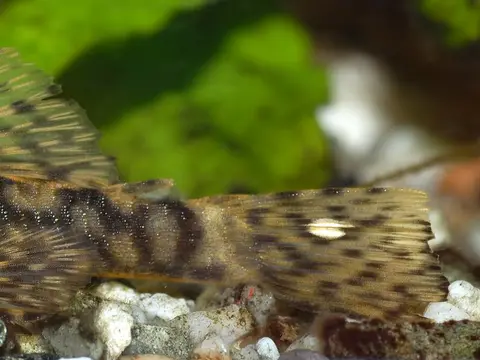 Bristlenose pleco Ancistrus sp. 26 gal (100 L) · 72–81 °F (22–27 °C)
 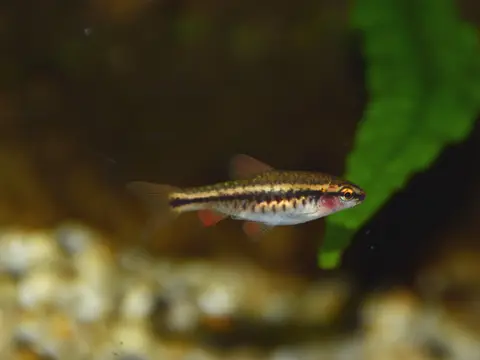 Cherry barb Puntius titteya 16 gal (60 L) · 73–81 °F (23–27 °C)
 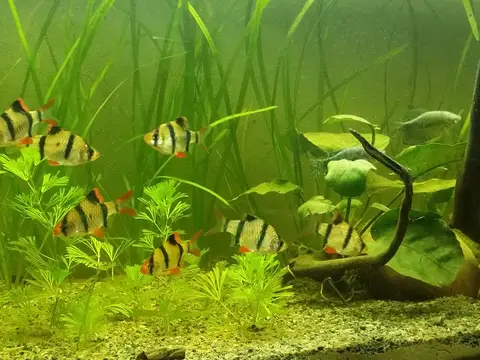 Tiger barb Puntigrus tetrazona 26 gal (100 L) · 72–79 °F (22–26 °C)
 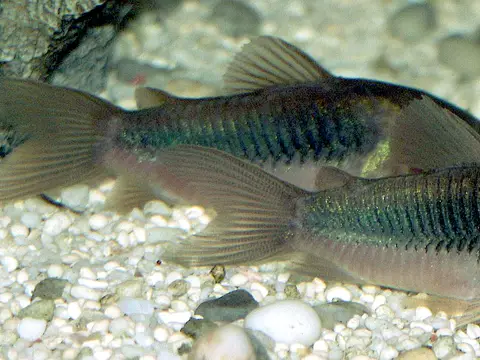 Bronze cory Corydoras aeneus 21 gal (80 L) · 72–81 °F (22–27 °C)
 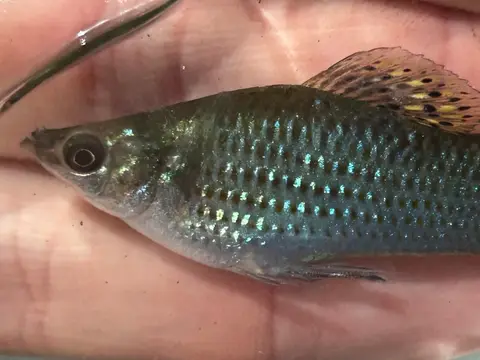 Molly Poecilia sphenops 26 gal (100 L) · 75–82 °F (24–28 °C)
 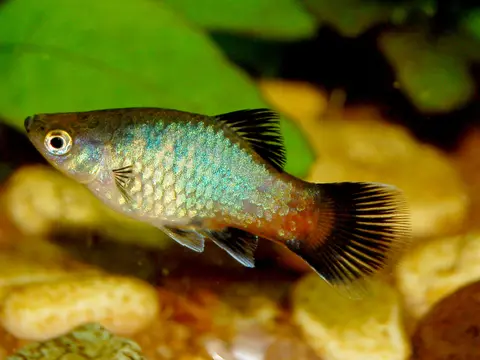 Platy Xiphophorus maculatus 16 gal (60 L) · 68–79 °F (20–26 °C)
 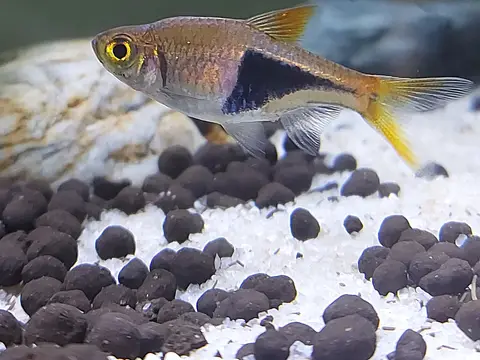 Harlequin rasbora Trigonostigma heteromorpha 16 gal (60 L) · 72–81 °F (22–27 °C)
 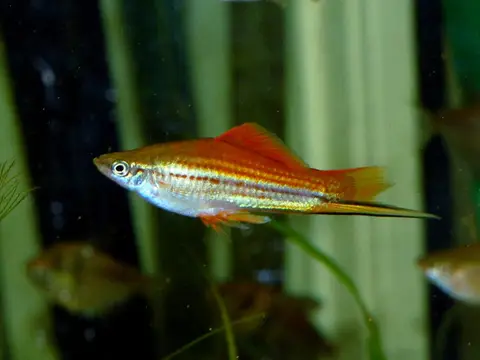 Swordtail Xiphophorus hellerii 32 gal (120 L) · 72–81 °F (22–27 °C)
 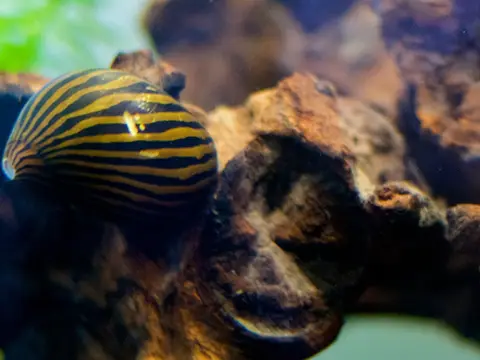 Nerite snail Neritina natalensis 5 gal (20 L) · 72–82 °F (22–28 °C)
 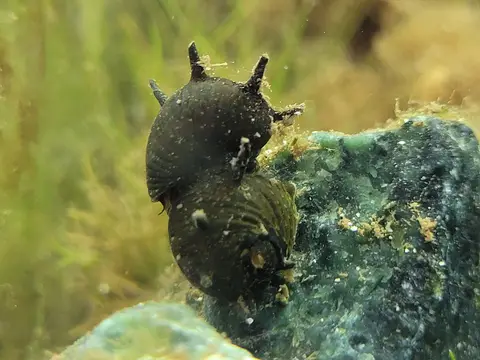 Horned nerite snail Clithon corona 5 gal (20 L) · 72–82 °F (22–28 °C)
 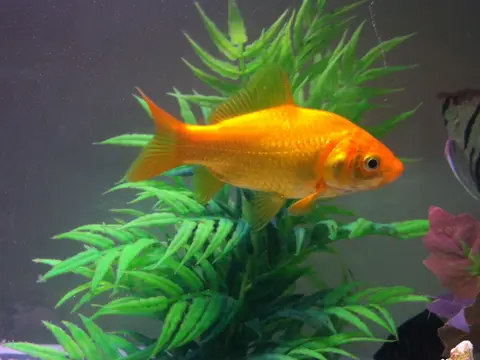 Common goldfish Carassius auratus 79 gal (300 L) · 50–75 °F (10–24 °C)
 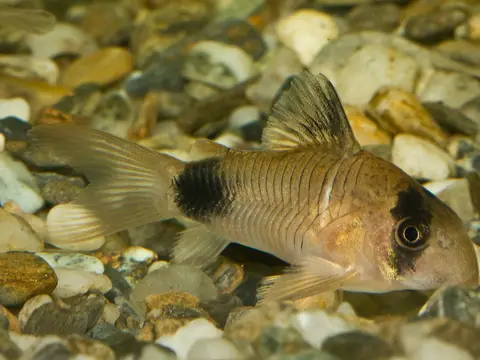 Panda cory Corydoras panda 16 gal (60 L) · 68–77 °F (20–25 °C)
 Check the compatibility of your whole tank →
What not to keep it with
Popular species you shouldn’t house with the Paradise fish, and why.
- Betta fish: nips long fins
- Discus: incompatible temperatures
- Angelfish: nips long fins
- Guppy: nips long fins
- Oranda goldfish: nips long fins
- Oscar: one may eat the other due to size, incompatible temperaments
- Celestial pearl danio: one may eat the other due to size
- Ember tetra: one may eat the other due to size
Recommended equipment
What you need to keep the Paradise fish healthy, checked against Amazon stock.


Frequently asked questions
How many liters does a Paradise fish need?
At least about 80 liters. More space always helps keep the water stable.
What water temperature does the Paradise fish need?
Between 16 and 26 °C: it’s a coldwater species that doesn’t need a heater in a normal home. pH 6 to 8.
What fish can live with the Paradise fish?
Based on water, size and temperament, it fits with species such as Bristlenose pleco, Cherry barb, Tiger barb, Bronze cory and Molly. Use our compatibility calculator to check your whole tank.
Can the Paradise fish be kept with shrimp?
Not recommended: because of its size or instinct, it will eat shrimp.
You may also like
Gouramis and bettas → Freshwater fish → Complete aquarium guide →