If you buy through our links, Amazon pays us a small commission at no extra cost to you. That’s how we keep the site running. How we choose.
Contents
Overview
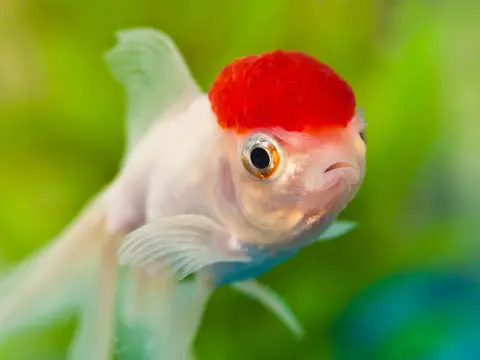
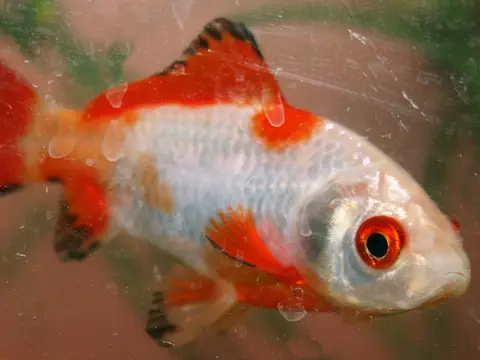
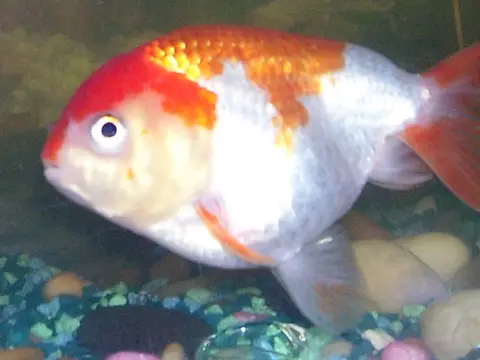
The oranda is one of the best-loved fancy goldfish. It has a short, rounded body, a dorsal fin, a long flowing twin tail and, above all, the wen: a fleshy hood on the head that develops over the years. Orandas come in red, orange, black, blue, calico and the classic "red cap", a white fish with a red hood.
It was developed in China and Japan from the goldfish, so it is the same species, but its compact body makes it a slow swimmer and more delicate than common goldfish. Orandas are calm, very tame and often beg for food at the glass. They are a good pick for anyone with a roomy coldwater aquarium who is willing to stay on top of maintenance.
Care and tank setup
Plan on at least 40 gallons (150 L) for a pair of orandas, plus 10-15 gallons for each extra fish. A wide tank that is not too tall beats a narrow one.
- Spotless water: the wen traps debris and is prone to bacterial and fungal infections when nitrates run high. Use a strong filter with a diffused outlet and change 30-50% of the water weekly.
- Gentle flow: the long tail and round body tire quickly in strong currents.
- Safe decor: no sharp rocks or ornaments with edges; sand or smooth coarse gravel and tough plants such as anubias or Java fern.
- Temperature: ideally steady at 64-72 °F (18-22 °C); indoors a heater is usually unnecessary, but avoid sudden swings.
Keep orandas only with other round-bodied fancy goldfish; never with comets or common goldfish, which outcompete them for food, and never with fin nippers. They do not belong in a bowl or in a pond with harsh winters, and they must never be released into the wild.
Feeding
Omnivorous. Feed a quality fancy-goldfish pellet that sinks, or soak it first: gulping air at the surface contributes to swim bladder problems in these compact bodies. Add blanched, shelled peas, spinach and frozen brine shrimp or daphnia. Small portions once or twice a day plus one fasting day per week help prevent constipation.
Breeding
Orandas breed like other goldfish: in spring, with rising temperatures and water changes, males chase females, which scatter sticky eggs over plants or a spawning mop. Parents eat the eggs. Breeding at home is possible, but only a small share of each spawn will develop the body shape and wen of a quality oranda, and the rest will still need homes.
Compatible tank mates
Species from our database that share water parameters, size and temperament with the Oranda goldfish. Calculated from the data in each profile.
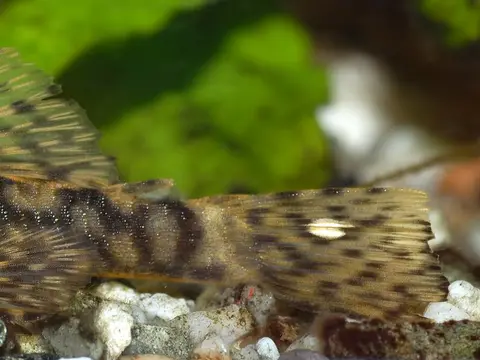 Bristlenose pleco Ancistrus sp. 26 gal (100 L) · 72–81 °F (22–27 °C)
 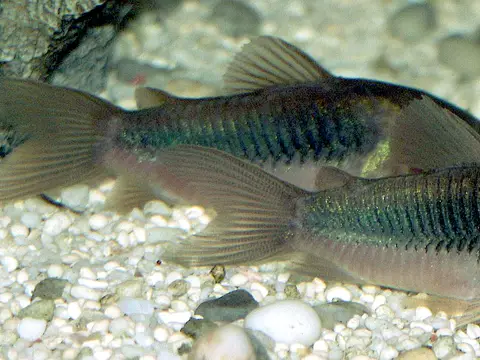 Bronze cory Corydoras aeneus 21 gal (80 L) · 72–81 °F (22–27 °C)
 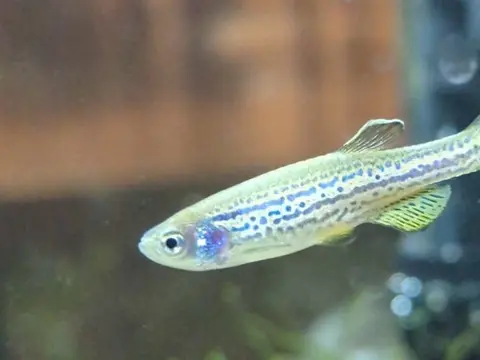 Zebra danio Danio rerio 16 gal (60 L) · 64–77 °F (18–25 °C)
 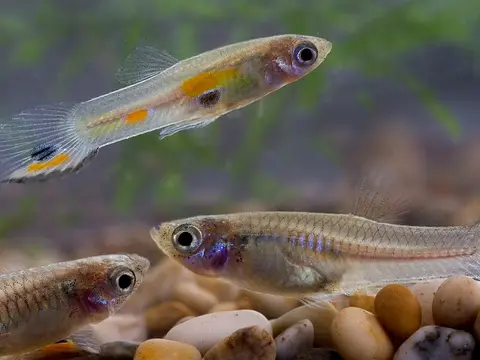 Guppy Poecilia reticulata 14 gal (54 L) · 72–82 °F (22–28 °C)
 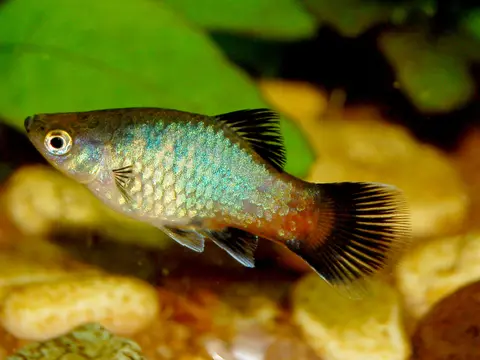 Platy Xiphophorus maculatus 16 gal (60 L) · 68–79 °F (20–26 °C)
 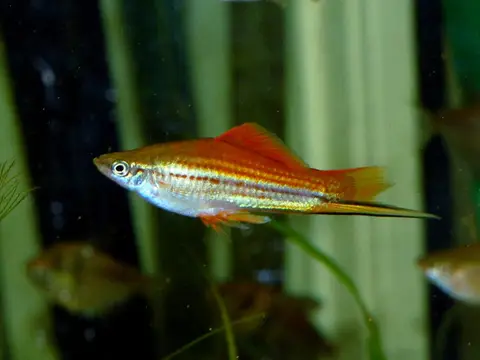 Swordtail Xiphophorus hellerii 32 gal (120 L) · 72–81 °F (22–27 °C)
 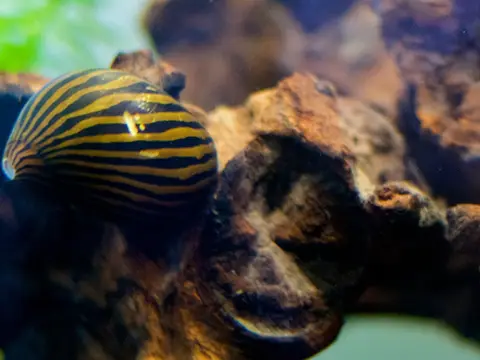 Nerite snail Neritina natalensis 5 gal (20 L) · 72–82 °F (22–28 °C)
 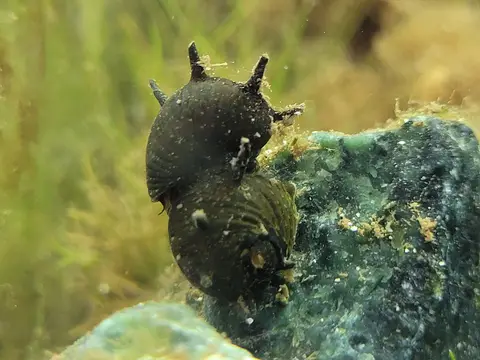 Horned nerite snail Clithon corona 5 gal (20 L) · 72–82 °F (22–28 °C)
 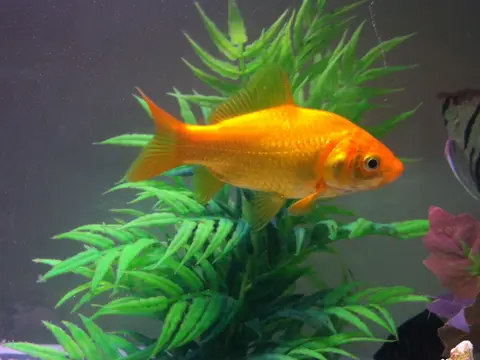 Common goldfish Carassius auratus 79 gal (300 L) · 50–75 °F (10–24 °C)
 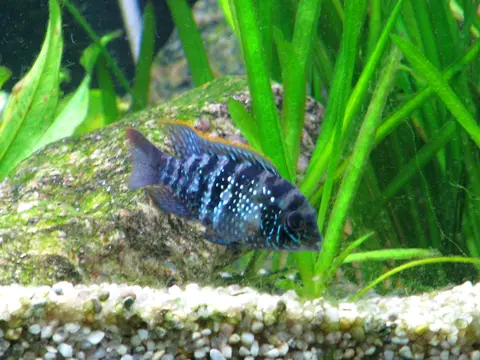 Blue acara Andinoacara pulcher 53 gal (200 L) · 72–82 °F (22–28 °C)
 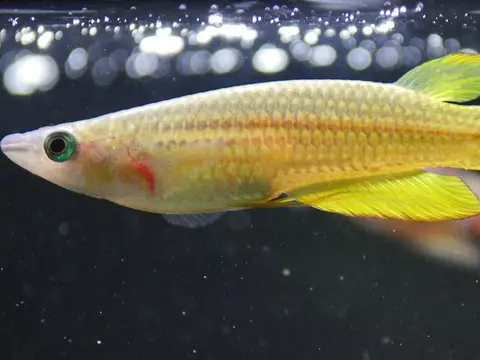 Golden wonder killifish (striped panchax) Aplocheilus lineatus 26 gal (100 L) · 72–81 °F (22–27 °C)
 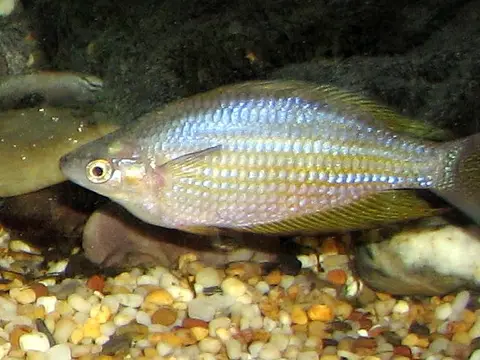 Eastern rainbowfish (splendid rainbowfish) Melanotaenia splendida 53 gal (200 L) · 72–82 °F (22–28 °C)
 Check the compatibility of your whole tank →
What not to keep it with
Popular species you shouldn’t house with the Oranda goldfish, and why.
- Tiger barb: nips long fins
- Panda cory: one may eat the other due to size
- Discus: incompatible temperatures
- Clown loach: incompatible temperatures
- Oscar: incompatible temperatures, incompatible temperaments
- Otocinclus catfish: one may eat the other due to size
- Ram cichlid: incompatible temperatures
- Harlequin rasbora: one may eat the other due to size
Recommended equipment
What you need to keep the Oranda goldfish healthy, checked against Amazon stock.


Frequently asked questions
How many liters does a Oranda goldfish need?
At least about 150 liters for a group of at least 2 fish. More space always helps keep the water stable.
What water temperature does the Oranda goldfish need?
Between 15 and 24 °C: it’s a coldwater species that doesn’t need a heater in a normal home. pH 6.5 to 8.
What fish can live with the Oranda goldfish?
Based on water, size and temperament, it fits with species such as Bristlenose pleco, Bronze cory, Zebra danio, Guppy and Platy. Use our compatibility calculator to check your whole tank.
Can the Oranda goldfish be kept with shrimp?
Not recommended: because of its size or instinct, it will eat shrimp.
You may also like
Coldwater fish → Freshwater fish → Complete aquarium guide →