If you buy through our links, Amazon pays us a small commission at no extra cost to you. That’s how we keep the site running. How we choose.
Contents
Overview
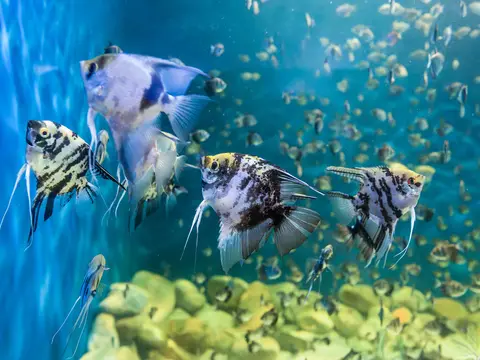
The freshwater angelfish (Pterophyllum scalare) is one of the most recognizable aquarium fish: a flat, disc-shaped body, very tall dorsal and anal fins and long trailing ventral fins. It comes from slow, heavily vegetated waters in the Amazon basin, but the fish sold today have been captive-bred for decades and come in many varieties, from silver and marble to black, koi and veil.
It is a cichlid, though far calmer than most of its relatives. People love its stately look and the way it learns to recognize its owner. What many buyers miss when they pick up a coin-sized juvenile is the adult size: about 6 inches (15 cm) long and more than 8 inches (20 cm) tall including fins. It suits hobbyists with a large, stable tank.
Care and tank setup
Because of their height, angelfish need a tall tank: at least 55 gallons (200 L) and about 20 inches (50 cm) deep for a pair or a young group. Short tanks lead to bent fins and stressed fish.
- Décor: tall plants (vallisneria, Amazon swords), vertical driftwood and open swimming space. Keep the current gentle.
- Group: juveniles school, but adults pair off and claim territory. A group of five or six needs a much larger tank; otherwise keep a single pair.
- Tankmates: medium tetras, corydoras, small plecos and calm gouramis. Neon tetras often end up as snacks.
- Avoid: tiger barbs, serpae tetras and other fin nippers.
An adult angelfish will eat any fish that fits in its mouth, including neons and baby guppies. Keep the tank cycled, filtered and heated, with weekly water changes.
Feeding
Angelfish are omnivores and easy to feed. A quality cichlid pellet or flake makes a good staple, supplemented several times a week with frozen or live foods such as brine shrimp, bloodworms and mysis. They feed mid-water and at the surface, so spread food around so every fish gets some. Two small meals a day beat one large one.
Breeding
A bonded pair will often spawn at home. They clean a broad leaf, a spawning cone or the glass, and the female lays hundreds of eggs that both parents fan and guard. In a community tank the other fish usually eat the eggs, so many breeders move the eggs or use a separate tank. The fry eat baby brine shrimp and grow quickly.
Compatible tank mates
Species from our database that share water parameters, size and temperament with the Angelfish. Calculated from the data in each profile.
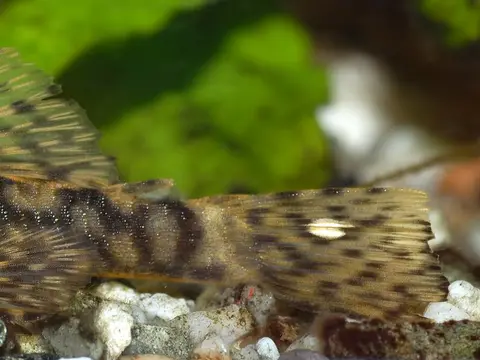 Bristlenose pleco Ancistrus sp. 26 gal (100 L) · 72–81 °F (22–27 °C)
 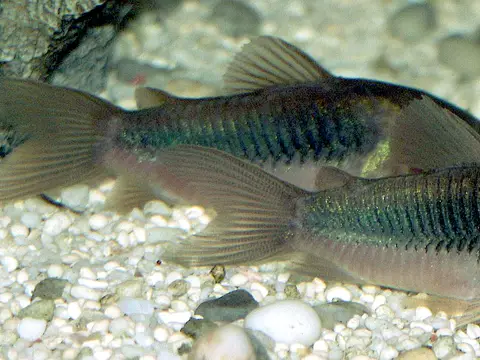 Bronze cory Corydoras aeneus 21 gal (80 L) · 72–81 °F (22–27 °C)
 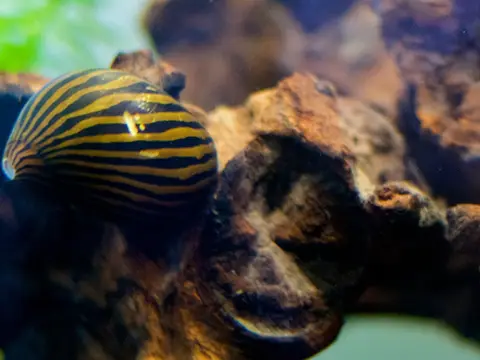 Nerite snail Neritina natalensis 5 gal (20 L) · 72–82 °F (22–28 °C)
 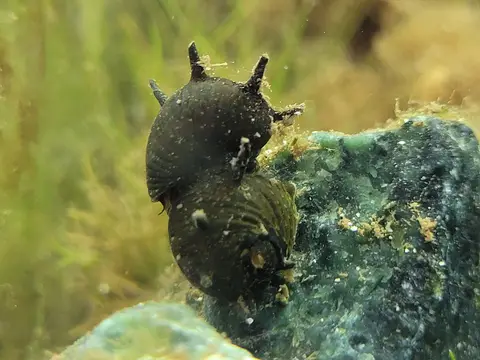 Horned nerite snail Clithon corona 5 gal (20 L) · 72–82 °F (22–28 °C)
 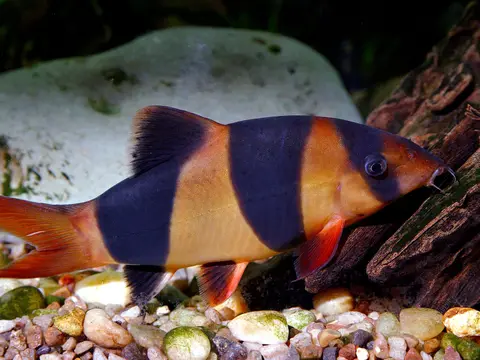 Clown loach Chromobotia macracanthus 132 gal (500 L) · 77–86 °F (25–30 °C)
 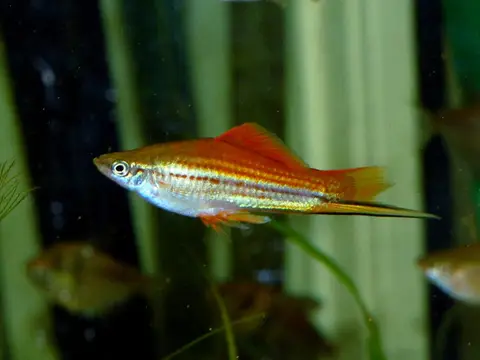 Swordtail Xiphophorus hellerii 32 gal (120 L) · 72–81 °F (22–27 °C)
 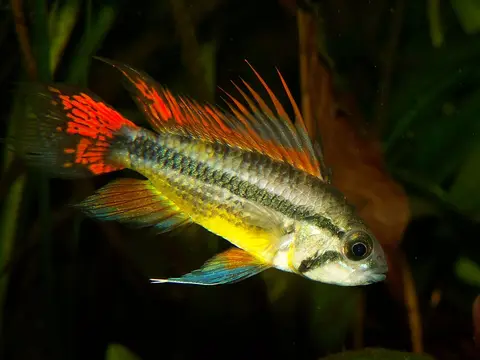 Cockatoo dwarf cichlid Apistogramma cacatuoides 16 gal (60 L) · 75–82 °F (24–28 °C)
 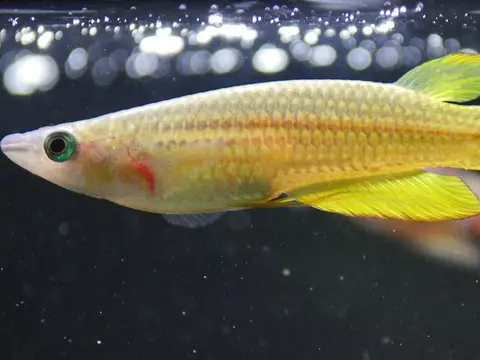 Golden wonder killifish (striped panchax) Aplocheilus lineatus 26 gal (100 L) · 72–81 °F (22–27 °C)
 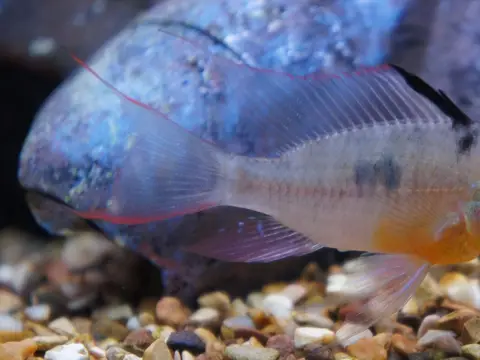 Bolivian ram Mikrogeophagus altispinosus 26 gal (100 L) · 72–79 °F (22–26 °C)
 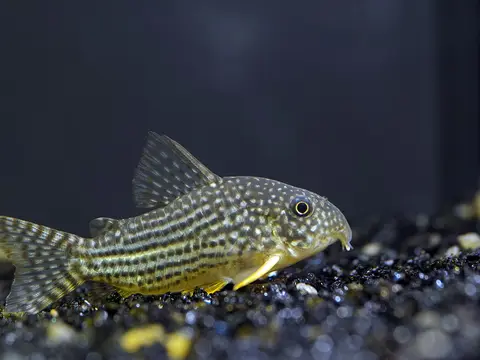 Sterbai cory Corydoras sterbai 21 gal (80 L) · 75–82 °F (24–28 °C)
 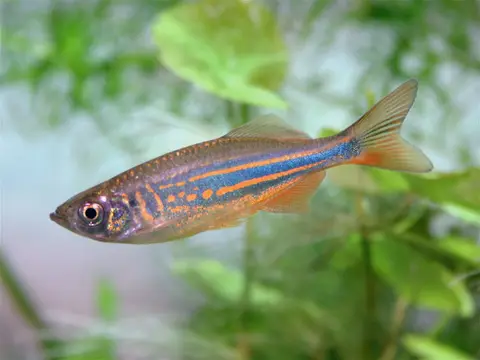 Giant danio Devario aequipinnatus 63 gal (240 L) · 68–79 °F (20–26 °C)
 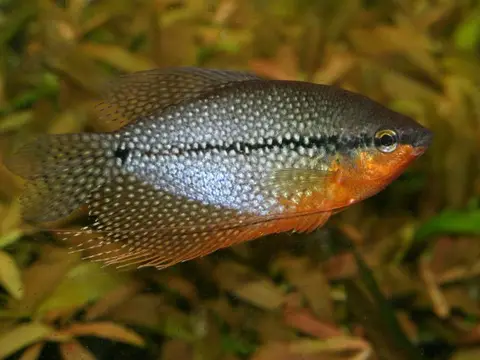 Pearl gourami Trichopodus leerii 32 gal (120 L) · 75–82 °F (24–28 °C)
 Check the compatibility of your whole tank →
What not to keep it with
Popular species you shouldn’t house with the Angelfish, and why.
- Cherry barb: one may eat the other due to size
- Tiger barb: one may eat the other due to size, nips long fins
- Panda cory: incompatible temperatures, one may eat the other due to size
- Zebra danio: incompatible temperatures, one may eat the other due to size
- Guppy: one may eat the other due to size
- Otocinclus catfish: one may eat the other due to size
- Ram cichlid: one may eat the other due to size
- Harlequin rasbora: one may eat the other due to size
Recommended equipment
What you need to keep the Angelfish healthy, checked against Amazon stock.


Frequently asked questions
How many liters does a Angelfish need?
At least about 200 liters for a group of at least 2 fish. More space always helps keep the water stable.
What water temperature does the Angelfish need?
Between 24 and 29 °C, with a pH of 6 to 7.5.
What fish can live with the Angelfish?
Based on water, size and temperament, it fits with species such as Bristlenose pleco, Bronze cory, Nerite snail, Horned nerite snail and Clown loach. Use our compatibility calculator to check your whole tank.
Can the Angelfish be kept with shrimp?
Not recommended: because of its size or instinct, it will eat shrimp.
You may also like
American cichlids → Freshwater fish → Complete aquarium guide →