If you buy through our links, Amazon pays us a small commission at no extra cost to you. That’s how we keep the site running. How we choose.
Contents
Overview
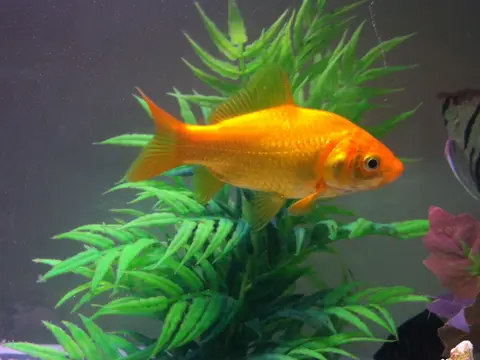
The common goldfish is the world's oldest domesticated fish, bred in China more than a thousand years ago from the Prussian carp. It has a streamlined body, a short forked tail and colors ranging from bright orange to red, yellow, white or mixed patterns.
Its reputation as an "easy" fish is only half true. It is extremely hardy and needs no heater, but it grows far bigger than most people expect: a healthy fish passes 8 inches (20 cm) and can live 15 to 20 years. It is active, learns to recognize whoever feeds it and is ideal for a large coldwater aquarium or, better still, a backyard pond. The one thing it should never be is a bowl fish.
Care and tank setup
Forget the bowl: it is tiny, cannot hold a proper filter and ammonia builds up within hours. A pair of common goldfish needs at least 75-80 gallons (300 L), and once they mature the ideal home is a pond of several hundred gallons or more.
- Filtration: goldfish are messy. Use a canister or pond filter that turns over the volume several times per hour, and change 30-50% of the water weekly.
- Temperature: cool water, no heater. Pond fish overwinter safely with 30-40 inches (80-100 cm) of depth and a surface that never freezes solid.
- Decor: smooth gravel or sand, large rocks and tough plants (anubias, Java fern, elodea) or artificial ones, since goldfish dig and eat tender greenery.
They get along with other common and comet goldfish, but not with slow fancy varieties, which lose out at feeding time, nor with tropical fish. Most important: never release goldfish into rivers, lakes or storm ponds; they are invasive and harm native wildlife.
Feeding
Goldfish are greedy omnivores. Use a quality goldfish pellet as the staple (sinking or pre-soaked is best) and add blanched vegetables such as shelled peas, zucchini or spinach, plus frozen brine shrimp or bloodworms. Feed only what they finish in one to two minutes, once or twice a day. Overfeeding is the most common mistake and leads to cloudy water and digestive trouble.
Breeding
They spawn mainly in ponds in spring as the water warms. Males develop white breeding tubercles on the gill covers and chase females until they scatter hundreds of sticky eggs among plants. Parents eat the eggs, so anyone hoping to raise fry must remove the egg-covered plants. Think it through first: every spawn produces lots of fry that need room and a responsible home.
Compatible tank mates
Species from our database that share water parameters, size and temperament with the Common goldfish. Calculated from the data in each profile.
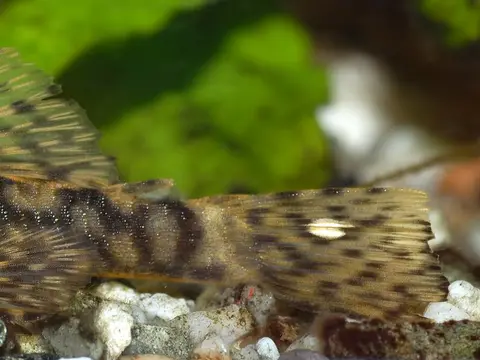 Bristlenose pleco Ancistrus sp. 26 gal (100 L) · 72–81 °F (22–27 °C)
 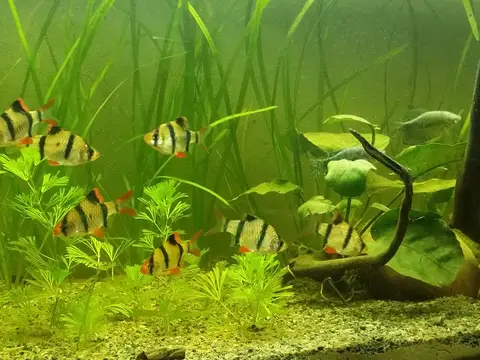 Tiger barb Puntigrus tetrazona 26 gal (100 L) · 72–79 °F (22–26 °C)
 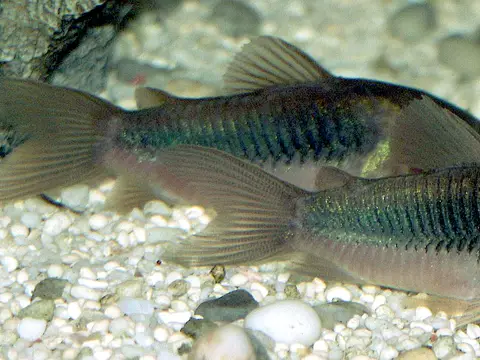 Bronze cory Corydoras aeneus 21 gal (80 L) · 72–81 °F (22–27 °C)
 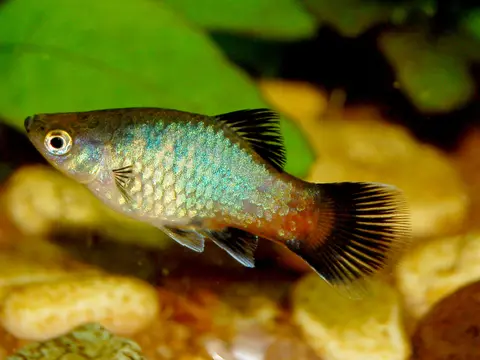 Platy Xiphophorus maculatus 16 gal (60 L) · 68–79 °F (20–26 °C)
 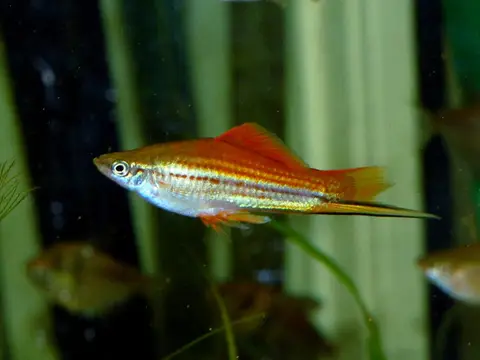 Swordtail Xiphophorus hellerii 32 gal (120 L) · 72–81 °F (22–27 °C)
 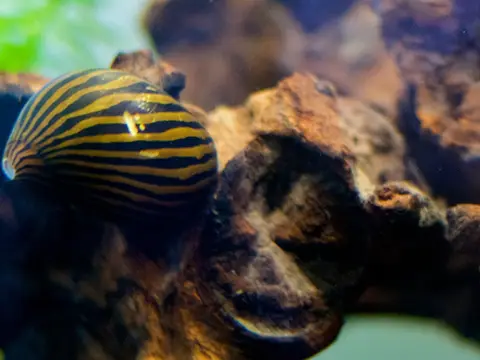 Nerite snail Neritina natalensis 5 gal (20 L) · 72–82 °F (22–28 °C)
 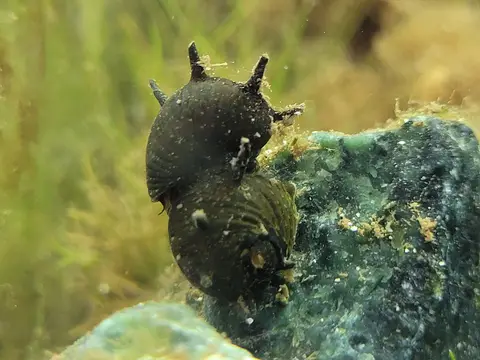 Horned nerite snail Clithon corona 5 gal (20 L) · 72–82 °F (22–28 °C)
 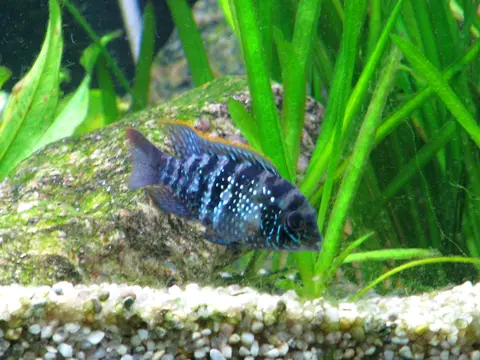 Blue acara Andinoacara pulcher 53 gal (200 L) · 72–82 °F (22–28 °C)
 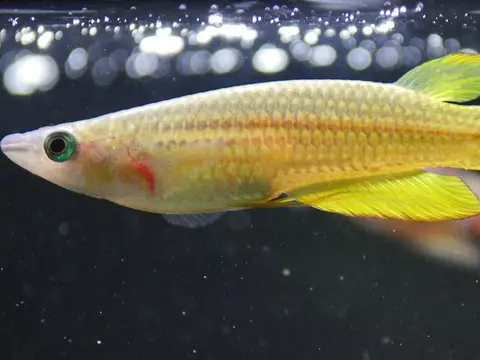 Golden wonder killifish (striped panchax) Aplocheilus lineatus 26 gal (100 L) · 72–81 °F (22–27 °C)
 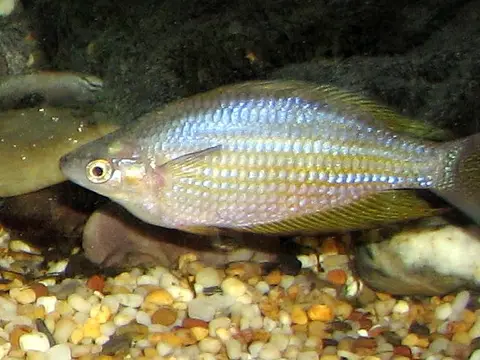 Eastern rainbowfish (splendid rainbowfish) Melanotaenia splendida 53 gal (200 L) · 72–82 °F (22–28 °C)
 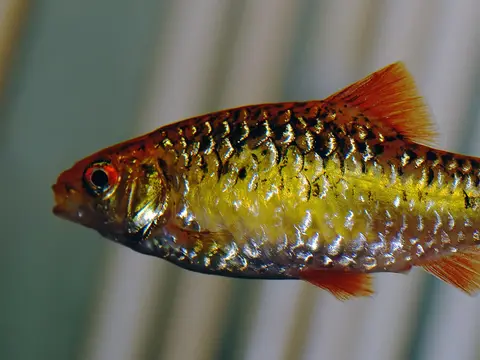 Gold barb Barbodes semifasciolatus 26 gal (100 L) · 64–75 °F (18–24 °C)
 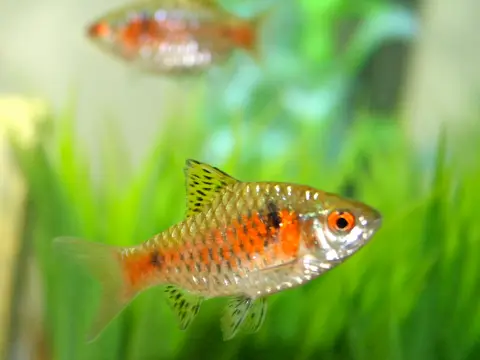 Odessa barb Pethia padamya 26 gal (100 L) · 68–79 °F (20–26 °C)
 Check the compatibility of your whole tank →
What not to keep it with
Popular species you shouldn’t house with the Common goldfish, and why.
- Cherry barb: incompatible temperatures, one may eat the other due to size
- Panda cory: one may eat the other due to size
- Zebra danio: one may eat the other due to size
- Discus: incompatible temperatures
- Guppy: one may eat the other due to size
- Clown loach: incompatible temperatures
- Oscar: incompatible temperatures, incompatible temperaments
- Otocinclus catfish: one may eat the other due to size
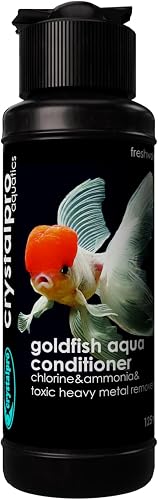
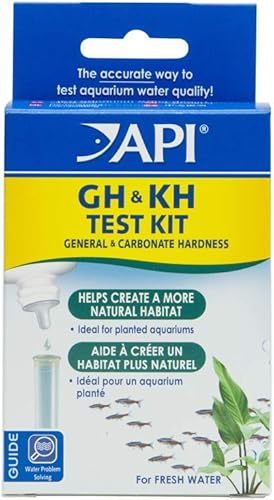
Recommended equipment
What you need to keep the Common goldfish healthy, checked against Amazon stock.
Frequently asked questions
How many liters does a Common goldfish need?
At least about 300 liters for a group of at least 2 fish. More space always helps keep the water stable.
What water temperature does the Common goldfish need?
Between 10 and 24 °C: it’s a coldwater species that doesn’t need a heater in a normal home. pH 6.5 to 8.
What fish can live with the Common goldfish?
Based on water, size and temperament, it fits with species such as Bristlenose pleco, Tiger barb, Bronze cory, Platy and Swordtail. Use our compatibility calculator to check your whole tank.
Can the Common goldfish be kept with shrimp?
Not recommended: because of its size or instinct, it will eat shrimp.
You may also like
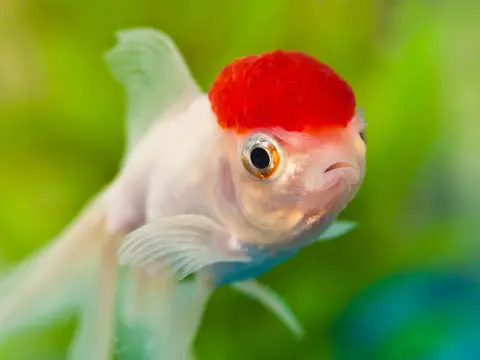 ProfileOranda goldfish
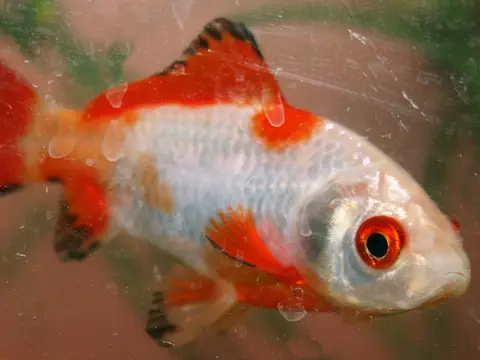 ProfileComet goldfish
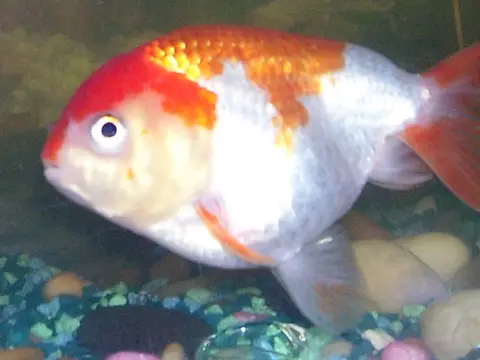 ProfileLionhead goldfish (ranchu)
- GuideHow to set up a coldwater aquarium: tank size, filter, plants, fish
- GuideAquarium Water Changes: How Much, How Often and How To
 Gear reviewLarge aquariums (55 gallons and up)
 Gear reviewCanister filters
- CalculatorFish compatibility checker
Coldwater fish → Freshwater fish → Complete aquarium guide →