If you buy through our links, Amazon pays us a small commission at no extra cost to you. That’s how we keep the site running. How we choose.
Contents
Overview
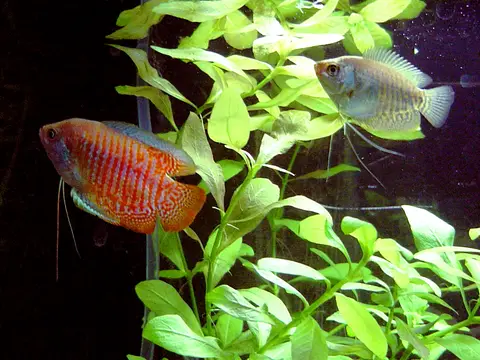
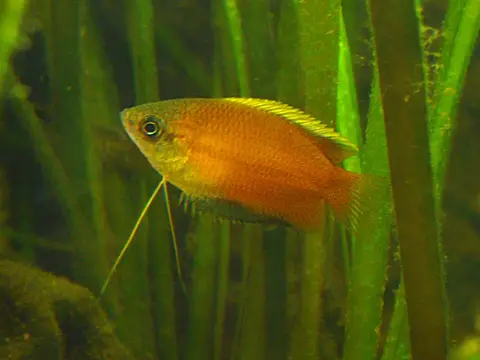
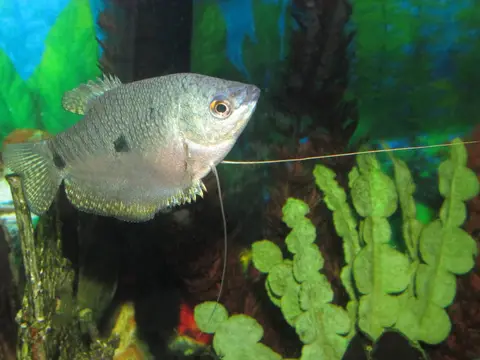
The blue gourami, also sold as the three spot gourami, is one of the most familiar labyrinth fish in the hobby. It comes from slow, heavily vegetated waters across Southeast Asia, from Thailand to Indonesia, and breathes air at the surface using its labyrinth organ. The wild form is silvery blue with two dark spots on each side; gold, opaline and platinum gouramis are simply captive-bred color forms of the same species.
People like it because it is tough, inquisitive and forgiving of small water swings, which makes it a reasonable beginner fish. Just be aware that it grows to 4.5-6 inches (12-15 cm) and adult males can turn territorial. In a medium-sized community tank with similarly sized fish, it makes a handsome centerpiece.
Care and tank setup
Plan on at least a 30-gallon (120 L) tank, ideally 32-40 inches long, fully cycled, with gentle filtration and a heater. Always leave an air gap under the lid: the fish gulps air at the surface, and cold, dry air can harm its labyrinth organ.
- Decor: plenty of plants, some floating cover and driftwood to break up sight lines and provide retreats.
- Social setup: one male per tank, alone or with one or two females. Two males in a small tank usually fight.
- Tank mates: medium, calm fish such as peaceful barbs, larger rasboras, corydoras or loaches. Avoid very small fish and long-finned species like bettas.
- Shrimp: adults will eat small shrimp.
The classic mistake is buying a 1.5-inch juvenile for a 15-gallon tank. Within months it runs out of room, and cramped males get noticeably more aggressive.
Feeding
It is an easygoing omnivore. Quality flakes or small pellets make a good staple, topped up several times a week with frozen or live foods such as brine shrimp, bloodworms and daphnia, plus some plant matter like spirulina flakes. Offer small portions once or twice a day that are eaten within a couple of minutes. It will graze on hair algae, but don't count on it to fix an algae problem.
Breeding
Breeding is easy in a separate 15-20 gallon (60-80 L) tank with little flow and floating plants. The male builds a bubble nest, wraps around the female beneath it and gathers the eggs, which can number in the hundreds. Remove the female after spawning, since the male gets very aggressive, and remove the male once the fry are free-swimming. Feed the fry infusoria for the first days, then baby brine shrimp.
Compatible tank mates
Species from our database that share water parameters, size and temperament with the Blue gourami. Calculated from the data in each profile.
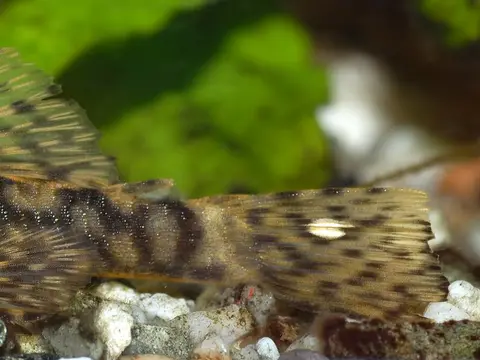 Bristlenose pleco Ancistrus sp. 26 gal (100 L) · 72–81 °F (22–27 °C)
 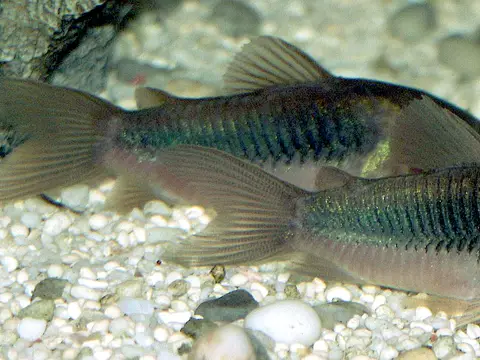 Bronze cory Corydoras aeneus 21 gal (80 L) · 72–81 °F (22–27 °C)
 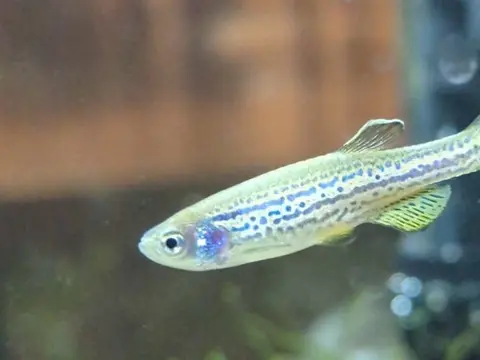 Zebra danio Danio rerio 16 gal (60 L) · 64–77 °F (18–25 °C)
 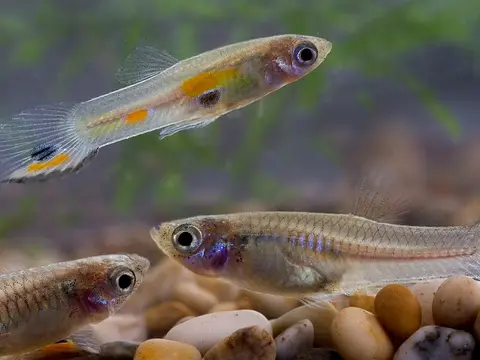 Guppy Poecilia reticulata 14 gal (54 L) · 72–82 °F (22–28 °C)
 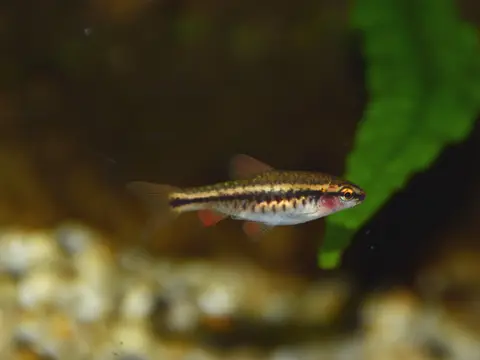 Cherry barb Puntius titteya 16 gal (60 L) · 73–81 °F (23–27 °C)
 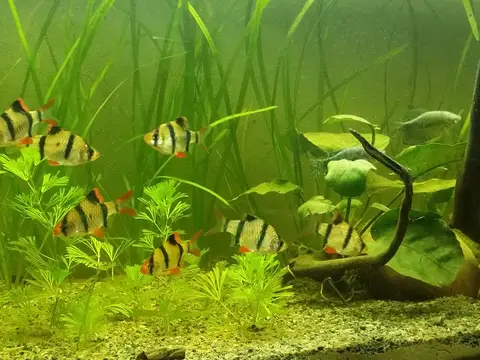 Tiger barb Puntigrus tetrazona 26 gal (100 L) · 72–79 °F (22–26 °C)
 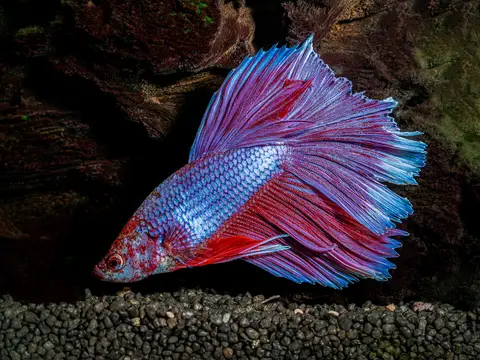 Betta fish Betta splendens 7 gal (25 L) · 75–82 °F (24–28 °C)
 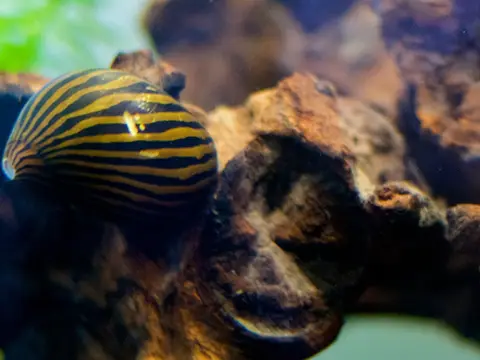 Nerite snail Neritina natalensis 5 gal (20 L) · 72–82 °F (22–28 °C)
 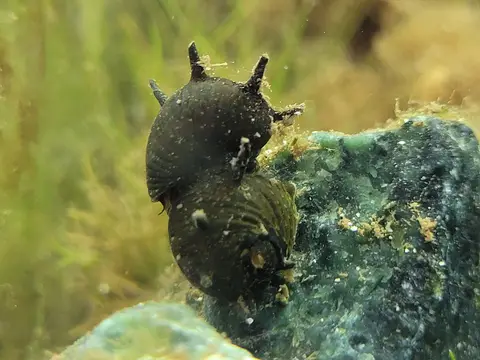 Horned nerite snail Clithon corona 5 gal (20 L) · 72–82 °F (22–28 °C)
 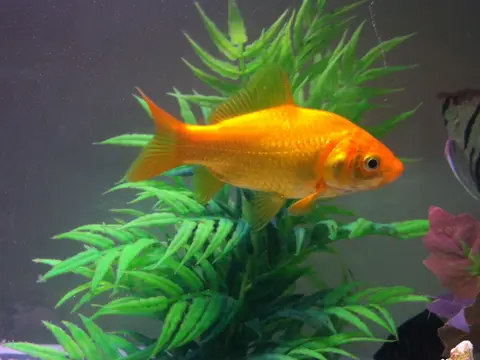 Common goldfish Carassius auratus 79 gal (300 L) · 50–75 °F (10–24 °C)
 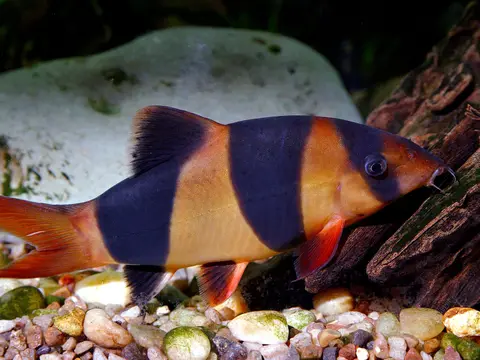 Clown loach Chromobotia macracanthus 132 gal (500 L) · 77–86 °F (25–30 °C)
 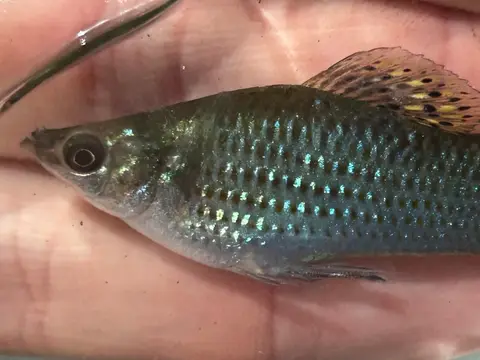 Molly Poecilia sphenops 26 gal (100 L) · 75–82 °F (24–28 °C)
 Check the compatibility of your whole tank →
What not to keep it with
Popular species you shouldn’t house with the Blue gourami, and why.
- Otocinclus catfish: one may eat the other due to size
- Celestial pearl danio: one may eat the other due to size
- Ember tetra: one may eat the other due to size
- Neon tetra: one may eat the other due to size
- Amano shrimp: eats shrimp
- Cherry shrimp: eats shrimp
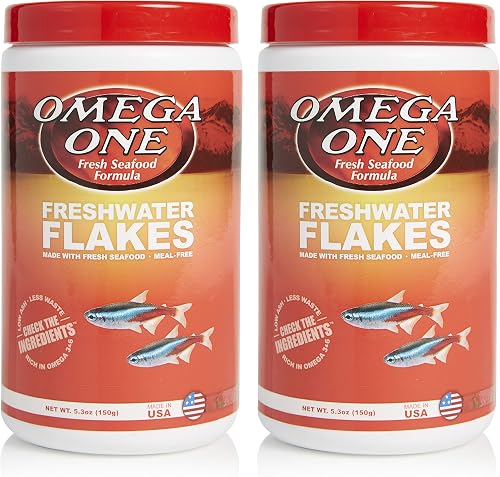
Recommended equipment
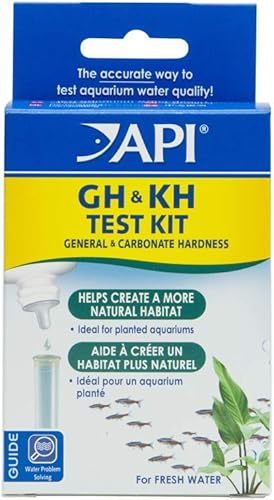
What you need to keep the Blue gourami healthy, checked against Amazon stock.


Frequently asked questions
How many liters does a Blue gourami need?
At least about 120 liters. More space always helps keep the water stable.
What water temperature does the Blue gourami need?
Between 22 and 28 °C, with a pH of 6 to 8.
What fish can live with the Blue gourami?
Based on water, size and temperament, it fits with species such as Bristlenose pleco, Bronze cory, Zebra danio, Guppy and Cherry barb. Use our compatibility calculator to check your whole tank.
Can the Blue gourami be kept with shrimp?
Not recommended: because of its size or instinct, it will eat shrimp.