If you buy through our links, Amazon pays us a small commission at no extra cost to you. That’s how we keep the site running. How we choose.
Contents
Overview
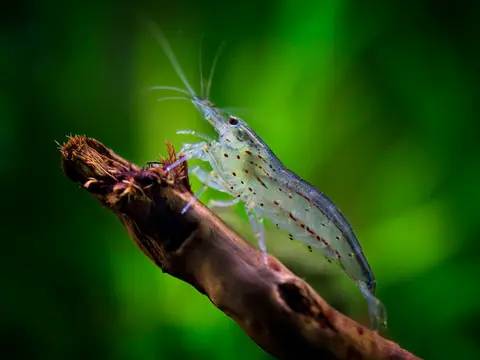
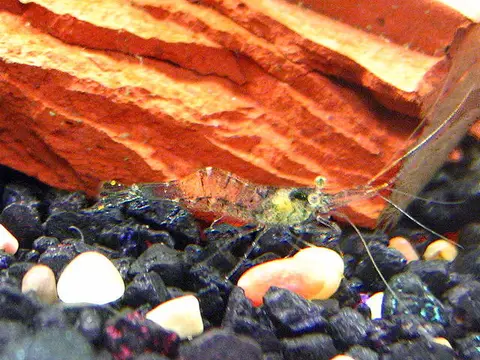
The ghost shrimp (Palaemonetes paludosus) is a freshwater shrimp from the southeastern United States, also called glass shrimp because its body is almost completely clear: you can watch its digestive tract at work, and sometimes only a few colored dots give away where it is.
It is sold cheaply and in bulk, often as feeder stock, but it is an interesting animal in its own right: active, curious and a good scavenger. It is very hardy and a fine way to start with invertebrates. Be aware that cheap batches sometimes include other genera, such as Macrobrachium, which have long claws and are far more aggressive.
Care and tank setup
It is tough and adapts to medium or hard water, but it won't forgive copper or dirty water.
- Tank: 10 gallons (40 L) or more for a group, with plants, wood and rocks to hide in while molting.
- Lid: recommended; they climb and may jump if they dislike the water.
- Acclimation: drip acclimate. Many losses happen in the first few days due to shipping stress.
- Copper: toxic, as for all shrimp.
- Quarantine: since many come from feeder suppliers, keep them separate for a few days.
It is peaceful toward fish but opportunistic: it eats fry and dwarf shrimp babies and may pester tiny fish while they sleep. It does well with small to mid-sized fish that won't see it as prey. Large fish (cichlids, big gouramis) will hunt it. Check for long claws on the second pair of legs: that animal is probably not a Palaemonetes.
Feeding
An omnivore and scavenger. It eats leftovers, detritus, soft algae and small invertebrates. Offer shrimp food or sinking wafers, crushed flakes and occasionally frozen foods like brine shrimp or daphnia. A well-fed ghost shrimp is bolder and hunts other animals' babies less. Don't overdo it: uneaten food rots between the plants and quickly degrades water quality.
Breeding
It breeds in fresh water. The female carries greenish eggs under her tail for 2-3 weeks, and tiny larvae hatch and swim in open water. Raising them takes a separate tank with no filter intake to suck them up and very fine food (infusoria, spirulina powder). In a community tank they almost never survive.
Compatible tank mates
Species from our database that share water parameters, size and temperament with the Ghost shrimp. Calculated from the data in each profile.
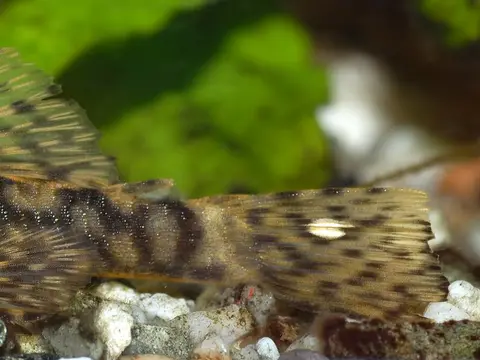 Bristlenose pleco Ancistrus sp. 26 gal (100 L) · 72–81 °F (22–27 °C)
 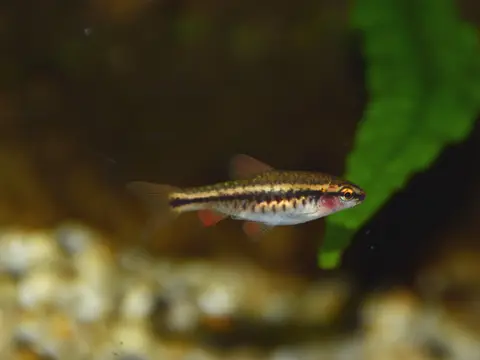 Cherry barb Puntius titteya 16 gal (60 L) · 73–81 °F (23–27 °C)
 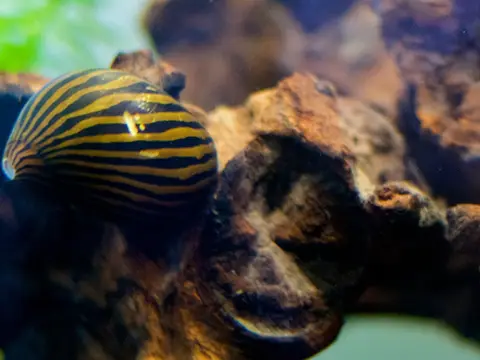 Nerite snail Neritina natalensis 5 gal (20 L) · 72–82 °F (22–28 °C)
 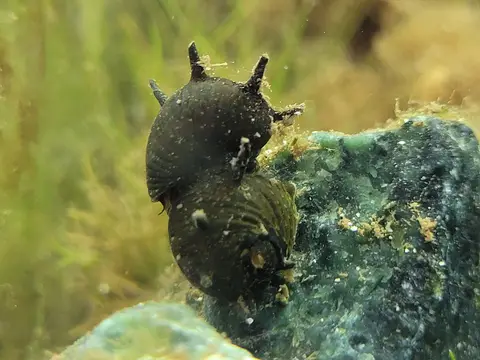 Horned nerite snail Clithon corona 5 gal (20 L) · 72–82 °F (22–28 °C)
 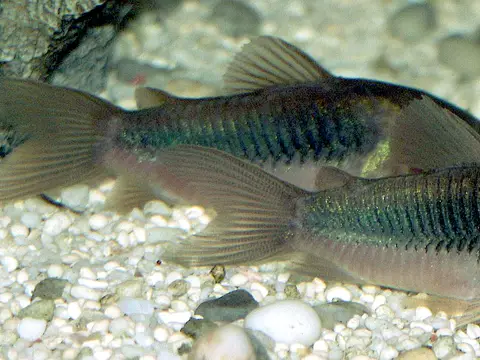 Bronze cory Corydoras aeneus 21 gal (80 L) · 72–81 °F (22–27 °C)
 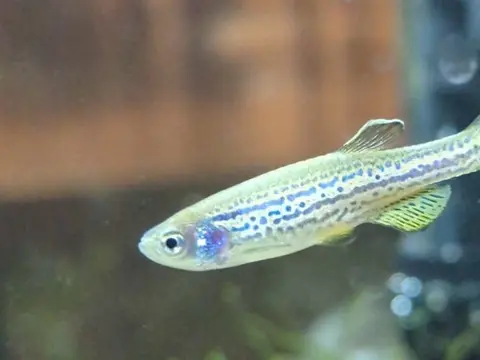 Zebra danio Danio rerio 16 gal (60 L) · 64–77 °F (18–25 °C)
 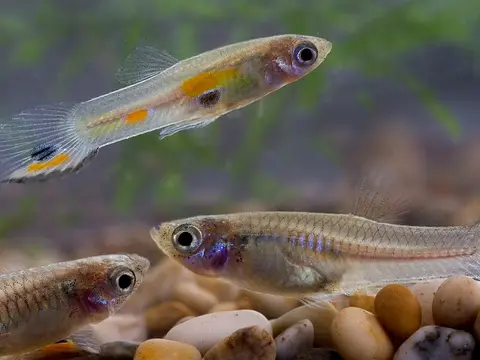 Guppy Poecilia reticulata 14 gal (54 L) · 72–82 °F (22–28 °C)
 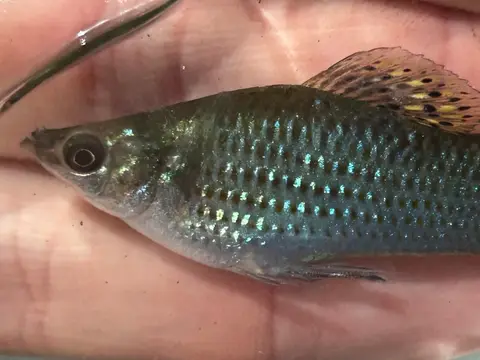 Molly Poecilia sphenops 26 gal (100 L) · 75–82 °F (24–28 °C)
 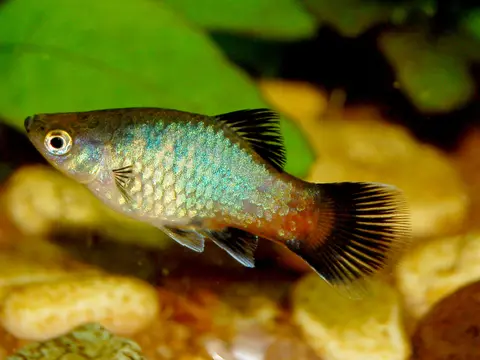 Platy Xiphophorus maculatus 16 gal (60 L) · 68–79 °F (20–26 °C)
 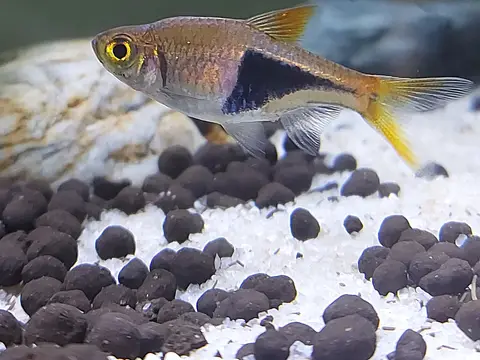 Harlequin rasbora Trigonostigma heteromorpha 16 gal (60 L) · 72–81 °F (22–27 °C)
 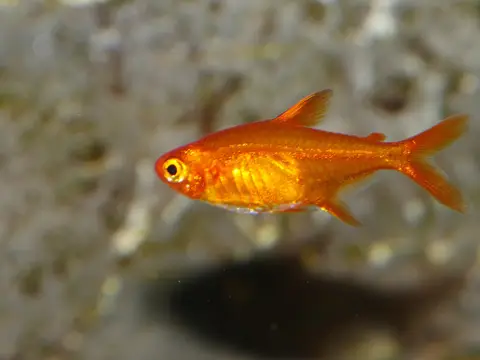 Ember tetra Hyphessobrycon amandae 11 gal (40 L) · 73–82 °F (23–28 °C)
 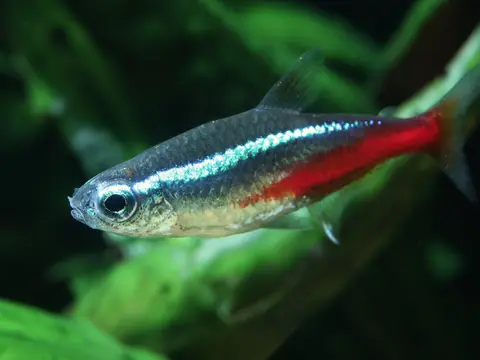 Neon tetra Paracheirodon innesi 16 gal (60 L) · 68–79 °F (20–26 °C)
 Check the compatibility of your whole tank →
What not to keep it with
Popular species you shouldn’t house with the Ghost shrimp, and why.
- Tiger barb: eats shrimp
- Betta fish: eats shrimp
- Common goldfish: eats shrimp
- Discus: incompatible temperatures, eats shrimp
- Angelfish: eats shrimp
- Yellow lab cichlid: eats shrimp
- Clown loach: eats shrimp
- Oranda goldfish: eats shrimp
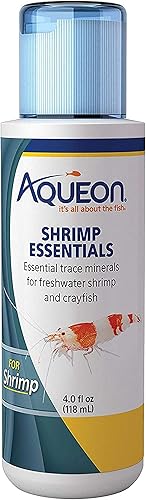
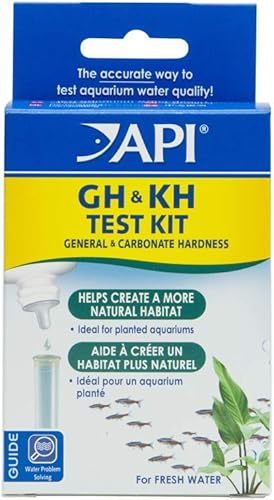
Recommended equipment
What you need to keep the Ghost shrimp healthy, checked against Amazon stock.


Frequently asked questions
How many liters does a Ghost shrimp need?
At least about 40 liters for a group of at least 3 fish. More space always helps keep the water stable.
What water temperature does the Ghost shrimp need?
Between 18 and 27 °C, with a pH of 6.5 to 8.
What fish can live with the Ghost shrimp?
Based on water, size and temperament, it fits with species such as Bristlenose pleco, Cherry barb, Nerite snail, Horned nerite snail and Bronze cory. Use our compatibility calculator to check your whole tank.